RV transport involves hiring professional drivers to move recreational vehicles—travel trailers, fifth wheels, toy haulers, motorhomes, and more—safely across long distances. The three primary methods are tow-away service, flatbed transport, and drive-away service, each suited to different RV types and situations. Interstate Haulers, a family-owned company founded in 1997, provides nationwide RV transport across the continental U.S., into and out of Canada, and to U.S. ports, with FMCSA-compliant drivers, proper insurance and bonding, and a personalized and reliable service approach.
Moving a recreational vehicle and other vehicles sound straightforward until you actually try to do it. The towing setup has to match the RV’s weight. The hitch has to be compatible. Brake systems need to be properly calibrated—and most states require a supplemental braking system for any towed vehicle. Route restrictions, fuel costs, driver fatigue, and weather can all derail a DIY attempt before you even leave the driveway.
At Interstate Haulers, we’ve been solving these problems for RV owners, dealerships, and manufacturers since 1997. As a family-owned transportation company, we’ve spent nearly three decades hauling travel trailers, fifth wheels, toy haulers, and other RVs across the country—and we’ve seen firsthand what happens when the wrong approach is taken.
This guide is for first-time RV owners, snowbirds, dealerships, and anyone who needs their recreational vehicle moved safely and efficiently. We’ll walk you through what RV transport actually involves, when it makes sense to hire professionals, how the process works, and what affects your cost—so you can make a confident, informed decision.
What Is RV Transport?
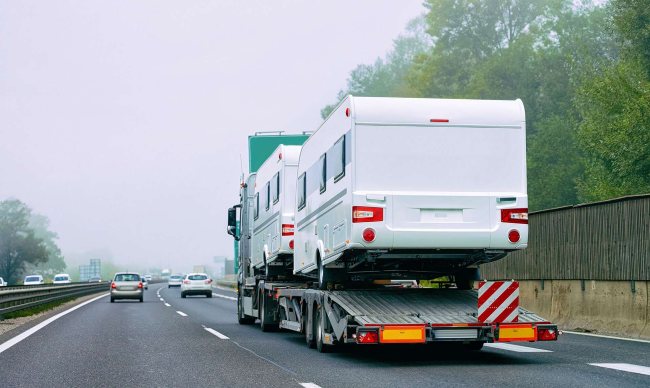
RV transport is the professional hauling of recreational vehicles from one location to another using specialized equipment and experienced drivers. Unlike standard freight, RVs—travel trailers, fifth wheels, bumper pulls, motorhomes, and pop-ups—require specific configurations, appropriate tow vehicles or flatbed trucks, and a driver who understands the weight distribution and road behavior of oversized loads.
There’s a meaningful difference between driving your RV yourself and hiring a professional transport company. When you tow your own RV, you’re responsible for all the logistics: route planning, fuel, rest stops, weather monitoring, and the mechanical setup. When you hire a professional RV hauler, they handle all of that—plus they bring commercial-grade trucks, proper equipment, and route knowledge to do it safely.
The Three Primary Methods of RV Transport
Understanding how your RV will be moved is the first step in choosing the right service. The three main methods are:
Tow-away service
A truck tows your RV using a standard or specialized hitch. This is the most common method for travel trailers and fifth wheels, and it’s what most people picture when they think of RV transport.
Flatbed service
Your RV is loaded onto and secured to a flatbed truck for transport. Flatbed transport is used for oversized RVs, inoperable units, or vehicles that can’t be safely towed. RV or camper transport companies frequently use flatbed trucks for safe, damage-free delivery of larger or more complex loads.
Drive-away service
A professional driver gets behind the wheel and drives your motorhome or drivable RV directly to its destination. Drive-away services are generally cheaper than flatbed or specialty tow options, but they add mileage to your RV—a trade-off worth considering for high-value or low-mileage units.
The right method depends on the type of RV, its condition, and the distance being covered. Interstate Haulers will help you determine the best approach for your specific situation.
Interstate Haulers transports a wide range of recreational vehicles, including:
- Travel trailers (bumper pull and standard configurations)
- Fifth wheel trailers
- Toy haulers
- Pop-up campers
- Cargo trailers
- Other towable and drivable recreational vehicles
Professional RV transport makes the most sense when the distance is long, the RV is high-value, the owner lacks the proper tow vehicle, or the logistics of a DIY move are simply too complex to manage alone.
📌 Helpful Resource: The RV Industry Association (RVIA) provides an overview of RV types and specifications that can help you identify your vehicle category before requesting a transport quote.
When Should You Hire Professional RV Transport Companies?
Buying an RV Out of State
Out-of-state RV purchases are one of the most common reasons people turn to professional RV transport companies. Buying from a dealer or private seller in another state often means flying to the location—and then needing a way to get the RV home without adding unnecessary miles before you’ve even used it. Interstate Haulers handles both dealer pickups and private sales, making the process straightforward regardless of where the transaction occurs.
Seasonal Relocations for Snowbirds
Snowbirds—retirees and seasonal travelers who split time between northern and southern states—often need to move their RVs twice a year. Hiring professional RV transport removes the burden of a twice-annual long-distance haul, protects the vehicle from unnecessary wear, and gives owners the flexibility to fly directly to their destination without worrying about the logistics.
Long-Distance Moves
Cross-country relocations, military moves, and job transfers regularly require RV transportation across multiple states. In these situations, the owner is often dealing with enough stress as it is. Handing off the RV to a reliable transport company simplifies the process considerably. It’s worth noting that cross-country RV transport is generally more expensive than regional transport—but for most long-distance scenarios, the cost is well justified.
Oversized or Inoperable RVs
Transporting oversized RVs often requires special permits and, in some cases, escort vehicles to comply with state and federal regulations. Flatbed transport is the standard solution for these situations. Professional transport companies navigate the permitting process on your behalf—something that’s difficult and time-consuming to handle independently.
Dealer and Manufacturer Deliveries
RV dealerships and manufacturers often need to move multiple units across the country—whether repositioning fleet inventory or delivering directly to a buyer’s home. Interstate Haulers works regularly with both dealers and manufacturers, offering the flexible scheduling and reliable communication that commercial clients need.
📌 Helpful Resource: The National RV Dealers Association (RVDA) offers resources for both dealers and buyers navigating the RV purchasing process.

What Types of RVs Does Interstate Haulers Transport?
Travel Trailers
Travel trailers are bumper-pull units that attach to a standard ball hitch on the back of a tow vehicle. They range widely in size and weight, from compact 16-foot models to large 40-foot units that require careful weight management during transport. Tow-away service is the most common method for travel trailers.
Fifth Wheel Trailers
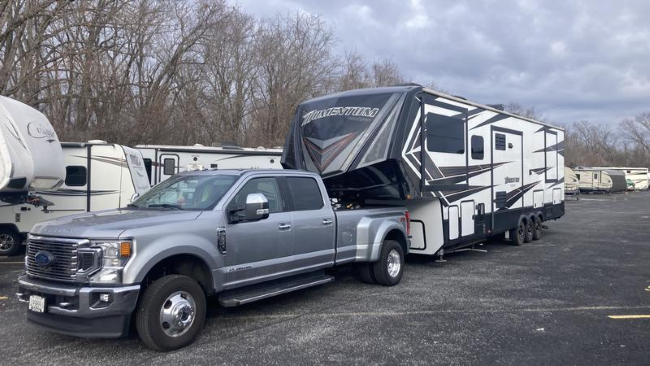
Fifth wheels attach to a specialized hitch mounted in the bed of a pickup truck, offering greater stability and higher weight capacity than standard bumper pulls. Transporting 5th wheels requires a properly equipped truck and an experienced driver familiar with the handling characteristics of this trailer type.
Toy Haulers
Toy haulers are designed to carry recreational gear—motorcycles, ATVs, jet skis—alongside living quarters. Their additional weight and length require precise weight distribution during towing and careful route planning to avoid low clearances and weight-restricted roads.
Pop-Up Campers
Pop-up campers are lightweight folding trailers that collapse for transport. While smaller than other RV types, they still require correct hitch setups and careful handling to prevent damage to their folding mechanisms and canvas walls.
Cargo Trailers
Enclosed and open cargo trailers transport personal belongings, equipment, and gear. Interstate Haulers moves cargo trailers alongside RVs, making it possible to coordinate multiple assets in a single shipment.
Motorhomes and Class A Units
Class A motorhomes are typically the most expensive RVs to transport. Their size, weight, and the specialized handling they require all contribute to higher transport costs. Drive-away service is a common option for drivable motorhomes, though owners should weigh the added mileage against the cost difference compared to flatbed transport.
Other Towable Recreational Vehicles
From teardrop campers to hybrid trailers, Interstate Haulers has the network and equipment to handle a broad range of towable recreational vehicles. Every transport begins with a review of the vehicle’s specifications to confirm proper equipment compatibility, weight ratings, and route suitability.
📌 Helpful Resource: RVshare’s RV type guide breaks down the differences between fifth wheels, travel trailers, toy haulers, and more.
How to Prepare Your RV for Transport
Proper preparation protects your RV during transit and helps prevent unnecessary damage claims. Before your scheduled pickup, take the following steps:
Inspect and Document the Vehicle
- Document any existing damage with photos before transport begins. Walk around the entire RV and photograph every scratch, dent, and scuff. This protects both you and the transport company if a dispute arises.
- Check that the RV is roadworthy with functioning lights, turn signals, and brake lights. Good tires in proper condition are essential.
- Ensure tires are properly inflated before transport. Under-inflated tires increase the risk of blowouts and uneven wear during the haul.
- Verify your vehicle’s Gross Vehicle Weight Rating (GVWR) before the transport company arrives. This helps confirm the appropriate tow vehicle or flatbed equipment will be used.
Secure the Interior and Exterior
- Remove or secure all loose items from inside the RV. Unsecured objects become projectiles during braking or sharp turns.
- Clean the RV interior and exterior before transport. A clean RV makes it easier to document pre-existing damage and simplifies the post-transport inspection.
- Secure all doors, windows, and compartments to prevent them from opening during transit. Exterior compartment doors that fly open can be damaged or cause debris hazards on the road.
- Retract all slide-outs and ensure awnings are fully secured.
- Turn off the propane supply and disconnect any shore power connections.
Confirm Mechanical Readiness
- Check that all running lights function correctly, including brake lights and turn signals. Most states require working lights on towed vehicles.
- Note that most states require a supplemental braking system for towed vehicles. If your RV is being towed and lacks a properly functioning brake system, address this before transport.
Weight distribution is important throughout the transport process. Improperly distributed weight is one of the leading causes of trailer sway—a dangerous condition that can result in loss of vehicle control. Your Interstate Haulers driver will verify proper load configuration before departure.
How to Choose a Reputable RV Transport Company
Not all RV transport companies operate at the same level. When evaluating your options, keep the following in mind:
Insurance and Bonding Are Non-Negotiable
Insurance and bonding are essential for any legitimate RV transport company. A properly insured carrier protects your vehicle against damage during transit—and protects you from liability if something goes wrong on the road. Always ask for proof of insurance and bonding before signing any transport agreement.
Get a Written Estimate
Reputable transporters should always provide a written estimate before the haul begins. Verbal quotes leave room for disputes and surprise charges. A written estimate clearly outlines the service scope, pricing, and any conditions that may affect the final cost. Interstate Haulers provides transparent, customized quotes for every transport.
Research Reviews and Reputation
Online platforms like uShip allow individual drivers and small carriers to bid on transport jobs. While this can lower upfront costs, uShip reviews indicate mixed experiences with RV transport services—quality can vary significantly depending on the individual driver selected. For high-value RVs or complex routes, working directly with an established, dedicated RV transport company provides more consistent results.
Companies like Heavy Haulers have over 15 years of RV transport experience, and Interstate Haulers has been operating since 1997—nearly three decades in the field. That kind of track record is a meaningful indicator of reliability.
Verify FMCSA Compliance
Any commercial transport company operating across state lines must be registered with the Federal Motor Carrier Safety Administration (FMCSA). You can verify a carrier’s licensing and safety record using the FMCSA’s online lookup tool before you commit.
📌 Helpful Resource: The Federal Motor Carrier Safety Administration (FMCSA) provides a carrier lookup tool to verify the licensing and safety record of any transport company you hire.
How Interstate Haulers’ RV Shipping Process Works
Step 1: Request a Quote
Start by submitting a quick quote request through our website or calling us directly at (910) 295-2244. Provide details about your RV type, dimensions, origin, and destination, and we’ll prepare a customized written estimate based on your specific needs.
Step 2: Schedule Pickup
Once you accept the quote, we’ll coordinate a pickup time that works with your schedule. Our team plans routes in advance, accounting for weight restrictions, clearance requirements, permit needs for oversized loads, and fuel stops across the haul.
Step 3: Vehicle Inspection
Before the RV leaves, our driver conducts a thorough inspection of the vehicle’s condition—confirming that doors and compartments are secured, tires are properly inflated, and any pre-existing damage is documented. This protects both the owner and Interstate Haulers by establishing a clear record of the RV’s state prior to transport.
Step 4: Safe Transport
Our professional drivers haul your RV using properly equipped commercial trucks with the correct setup for your trailer type—whether tow-away for travel trailers and fifth wheels, flatbed for oversized or inoperable units, or drive-away for drivable motorhomes. Throughout the journey, we maintain communication so you know where your RV is and when to expect delivery.
Step 5: Delivery at Your Destination
We deliver your RV to the agreed destination—whether that’s your home, a campground, a dealership, or a U.S. port. Interstate Haulers transports throughout the continental United States, into and out of Canada, and to U.S. departure ports for international moves.
Why Transporting RVs Yourself Isn’t Always the Best Option
DIY RV transport seems appealing—you save the service fee and keep control of the process. But the hidden costs and risks add up fast.
First, consider the equipment. Towing a fifth wheel or large travel trailer requires a truck rated for the tongue weight and gross trailer weight of your specific RV. Always verify the GVWR before attempting to tow—using an underequipped vehicle creates serious safety risks and potential liability.
Hitch compatibility is another common problem. Not every hitch works with every trailer. Mismatched setups can lead to trailer sway, reduced braking efficiency, and in the worst cases, complete separation on the highway. Weight distribution is critical: improper loading is one of the most common causes of dangerous trailer movement on the road.
Then there’s the driving itself. Long-distance RV towing is physically demanding. Driver fatigue is a real safety hazard over multi-day hauls, and navigating low bridges, weight-restricted roads, or narrow mountain passes requires route experience that most casual towers simply don’t have. Most states also require a supplemental braking system for towed vehicles—an additional requirement that many DIY movers overlook.
Factor in fuel costs for a commercial-grade truck (typically 8–12 miles per gallon when towing), overnight accommodations, and the wear on your personal vehicle, and the cost gap between DIY and professional transport narrows significantly.
Professional RV transport also includes cargo insurance coverage that protects your RV during the haul—a layer of protection that’s difficult to replicate with a personal vehicle policy.
📌 Helpful Resource: The Good Sam Club offers a comprehensive RV towing guide covering weight ratings, hitch types, and tow vehicle requirements.
Why Interstate Haulers Makes RV Transportation Easy
Interstate Haulers has been transporting RVs since 1997—nearly three decades of specialized experience that translates directly into better outcomes for customers.
Here’s what sets us apart from other RV transport companies:
- Family-owned and operated since 1997, with a reputation built on honest communication and consistent service
- Fully insured and bonded, with FMCSA-compliant drivers who meet federal safety standards
- Written estimates provided upfront — no surprise charges, no verbal-only quotes
- Nationwide coverage across the continental United States, into and out of Canada, and to U.S. ports
- Specialized expertise in travel trailers, fifth wheels, toy haulers, pop-up campers, cargo trailers, motorhomes, and industrial trailers
- Multiple transport methods available — tow-away, flatbed, and drive-away services depending on your RV type and needs
- Permitting handled for oversized loads — we coordinate special permits and escorts when required
- Personalized customer service — every haul is planned individually, not processed through an automated system
- Transparent scheduling — we give you realistic pickup and delivery windows and communicate throughout the process
Our clients include individual RV owners, snowbirds, dealerships, manufacturers, and freight forwarders. That range of experience means we’ve handled just about every transport scenario imaginable—and we know how to adapt when something unexpected comes up.
What Affects RV Transport Cost?
How Much Does It Cost to Transport an RV?
RV transport cost varies considerably based on several factors. Interstate Haulers provides customized written quotes rather than flat-rate pricing, because no two transports are exactly alike.
Here’s a general breakdown of how distance affects per-mile rates:
- Under 100 miles: approximately $3.32 per mile
- Under 1,000 miles: approximately $1.05 per mile
- Cross-country transport is generally more expensive than regional hauls in total cost, though the per-mile rate decreases with distance
The primary factors that influence cost per mile and overall price include:
- Distance — Longer hauls generally reduce the per-mile rate but increase the total cost
- RV type and size — Class A motorhomes are typically the most expensive to transport; larger and heavier units require more capable equipment and may trigger oversize load requirements
- Transport method — Flatbed service for oversized or inoperable RVs typically costs more than standard tow-away; drive-away service is often the most affordable option but adds mileage to the vehicle
- Pickup and delivery locations — Remote or rural destinations may require additional routing
- Season — Demand for RV transport peaks in spring and summer, which increases costs and can affect availability
- Fuel prices — Diesel fuel costs are factored into every quote and fluctuate with market conditions. Fuel costs directly impact transport pricing, especially on long-distance hauls
- Route difficulty — Mountain passes, ferry crossings, or weight-restricted roads can add complexity
- Special permits and escorts — Oversized RVs that exceed standard width or weight limits require special permits and sometimes escort vehicles, adding to the overall cost
The best way to get an accurate figure is to request a customized written quote directly from Interstate Haulers. Our team reviews your specific vehicle, route, and timeline before providing a price—so there are no surprises.
📌 Helpful Resource: The U.S. Energy Information Administration publishes current diesel fuel prices by region, which can help you understand fuel-related transport costs.
Understanding the 3-3-3 Rule for RV Travel
What Is the 3-3-3 Rule for RV Travel?
The 3-3-3 rule is a widely recommended travel guideline for RV owners: drive no more than 300 miles per day, arrive at your destination before 3 PM, and stay at each campsite for at least 3 nights.
The reasoning behind it is sound. Long towing days increase driver fatigue and the likelihood of mechanical stress on the tow vehicle and trailer. Arriving early gives you time to set up in daylight, troubleshoot any issues, and actually enjoy the destination instead of pulling in exhausted after dark.
Professional RV transport makes it possible to skip the difficult driving days entirely. Your RV arrives at the destination ready to use, and you travel separately at your own pace—following the 3-3-3 rule when you’re actually behind the wheel for recreational purposes.
What Does It Pay to Deliver RVs?
What Does It Pay to Deliver RVs as an Independent Contractor?
For those interested in hauling RVs professionally, pay varies widely based on distance, experience, the type of RV being transported, and the company involved. Independent contractors typically earn on a per-mile basis, with rates influenced by the complexity of the haul, the equipment required, and the driver’s experience level.
This is distinct from hiring a professional transportation company as a customer. When you hire Interstate Haulers, you’re paying for the full service—truck, driver, insurance, bonding, route planning, permitting where required, and communication—not just the driver’s rate.
Drivers interested in working in the RV transport industry should look for companies with strong safety records, proper insurance and bonding, fair compensation structures, clear scheduling expectations, and good communication practices. These factors significantly affect job satisfaction and long-term success in the field.
Who Is the Best RV Transport Company to Work For?
What Should You Look for in an RV Transport Company Employer?
For drivers evaluating RV transport companies as employers, several factors matter more than pay rate alone:
- Safety culture — Does the company prioritize driver safety and maintain properly equipped vehicles?
- Insurance and bonding — Is the company properly insured and bonded? This protects drivers as well as customers.
- Driver support — Are dispatchers responsive? Do drivers have clear points of contact?
- Equipment quality — Are trucks well-maintained and properly spec’d for the loads being hauled?
- Fair compensation — Is pay transparent and competitive for the routes and RV types involved?
- Scheduling clarity — Are drivers given realistic timelines and adequate rest between hauls?
- Company reputation — What do current and former drivers say about the experience?
Interstate Haulers focuses on dependable transportation and customer satisfaction. Our drivers represent our family-owned brand on every haul—so we prioritize professionalism, reliability, and communication from the team outward.
Why Customers Trust Interstate Haulers
Nearly 30 years is a long time in any industry. For Interstate Haulers, those years have produced thousands of successful transports, a nationwide network of professional drivers, and a reputation built on doing exactly what we say we’ll do.
Our clients return to us because the experience is consistent. They know their travel trailer, fifth wheel, or cargo trailer will be handled by a driver who understands the equipment, follows a carefully planned route, and communicates proactively throughout the haul. Every quote is provided in writing. Every transport is backed by proper insurance and bonding. And when a load requires special permits or escort vehicles, we handle it.
We’ve transported:
- Travel trailers and bumper-pull units
- Fifth wheel trailers
- Toy haulers and pop-up campers
- Class A motorhomes and other drivable RVs
- Cargo and industrial trailers
- Boats (with and without trailers)
Every transport—regardless of size or method—gets the same level of attention. That consistency is what a family-owned business is built on.
📌 Helpful Resource: Campendium offers campground reviews and destination guides that can help RV owners plan where their vehicle will be delivered.
Ready to Move Your RV? Here’s Your Next Step
Professional RV transport protects a significant investment. A travel trailer, fifth wheel, or toy hauler can represent tens of thousands of dollars—sometimes more. The right transport company brings the experience, equipment, proper insurance and bonding, and attention to detail that a valuable asset deserves.
Interstate Haulers has provided safe, efficient RV transportation for individual owners, dealerships, and manufacturers since 1997. We serve destinations throughout the continental United States, into and out of Canada, and to U.S. departure ports. Every quote is provided in writing, every carrier is insured and bonded, and every haul is handled by FMCSA-compliant drivers with the experience to get it right.
Frequently Asked Questions About RV Transport
What is RV transport?
RV transport is the professional hauling of recreational vehicles—travel trailers, fifth wheels, toy haulers, motorhomes, pop-up campers, and other towable or drivable units—from one location to another. The three primary methods are tow-away service (a truck tows the RV), flatbed service (the RV is loaded onto a flatbed truck), and drive-away service (a driver operates the RV directly). Professional RV transport companies are insured, bonded, and use experienced drivers to move RVs safely over long distances.
How much does RV transport cost?
RV transport cost depends on distance, RV type and size, the transport method used, pickup and delivery locations, seasonal demand, and fuel prices. As a general benchmark, transporting an RV under 100 miles costs approximately $3.32 per mile, while hauls under 1,000 miles run roughly $1.05 per mile. Cross-country transport is generally more expensive than regional hauls. Class A motorhomes are typically the most expensive RV type to transport. Interstate Haulers provides customized written quotes for every haul. Contact our team directly for an accurate estimate based on your specific vehicle and route.
Should I choose tow-away, flatbed, or drive-away service?
It depends on your RV type and situation. Tow-away service is the most common method for travel trailers and fifth wheels. Flatbed transport is used for oversized RVs, inoperable units, or vehicles that can’t be safely towed. Drive-away service is typically the most affordable option for drivable motorhomes, but it adds mileage to your vehicle. Interstate Haulers will help you determine the right method for your specific RV.
Is professional RV shipping worth it?
For most long-distance moves, yes. Professional RV shipping eliminates the need for a commercial-grade tow vehicle, reduces wear on your RV, protects against driver fatigue, and includes cargo insurance coverage. When you factor in fuel, accommodations, and vehicle wear, the cost difference between DIY and professional transport is often smaller than expected. For oversized loads requiring special permits and escorts, professional transport is essentially the only practical option.
Can you transport fifth wheel trailers?
Yes. Interstate Haulers is fully equipped to transport fifth wheel trailers. Fifth wheels require a specialized hitch mounted in a pickup truck bed, and our drivers have the equipment and experience to handle them correctly.
Do you transport travel trailers nationwide?
Yes. Interstate Haulers transports travel trailers across the continental United States, from coast to coast. We also transport into and out of Canada and to U.S. departure ports.
Can Interstate Haulers transport RVs to Canada?
Yes. Interstate Haulers provides RV transport into and out of Canada in addition to our continental U.S. service area. Contact our team for details on cross-border transport logistics and documentation requirements.
Do you deliver RVs to U.S. ports?
Yes. Interstate Haulers delivers RVs to U.S. ports for owners coordinating international moves or export shipments. Reach out to discuss your specific port destination and timeline.
How long does RV transportation usually take?
Transit time depends on distance, route complexity, and scheduling. Interstate Haulers will provide an estimated delivery timeline when you request a quote. We communicate throughout the haul so you always know your RV’s status.
Is my RV insured during transport?
Yes. Insurance and bonding are essential components of legitimate RV transport, and Interstate Haulers operates with full cargo insurance coverage as part of our FMCSA-compliant transportation service. Specific coverage details are best discussed directly with our team when you request a quote.
Will I receive a written estimate?
Yes. Reputable RV transport companies should always provide a written estimate before the haul begins, and Interstate Haulers does exactly that. Your written quote will clearly outline the scope of service and pricing before any commitment is made.
How do I prepare my RV for transport?
Before transport, take these key steps: document any existing damage with photos; ensure tires are properly inflated and in good condition; check that all lights are functioning; secure all doors, windows, and compartments; remove or secure all loose items inside; clean the interior and exterior; retract slide-outs and awnings; and turn off the propane.
Verify your vehicle’s Gross Vehicle Weight Rating before transport, and confirm that any required supplemental braking systems are functioning correctly. Your Interstate Haulers driver will conduct a pre-transport inspection and can advise on any additional preparation steps specific to your RV type.