Transportation is a critical but often overlooked component of disaster relief. When hurricanes, floods, and other disasters knock out power, water, and communications, utility companies depend on specialized transportation providers to move the generators, trailers, and heavy equipment needed to restore essential services. Interstate Haulers has supported this work for nearly 30 years.
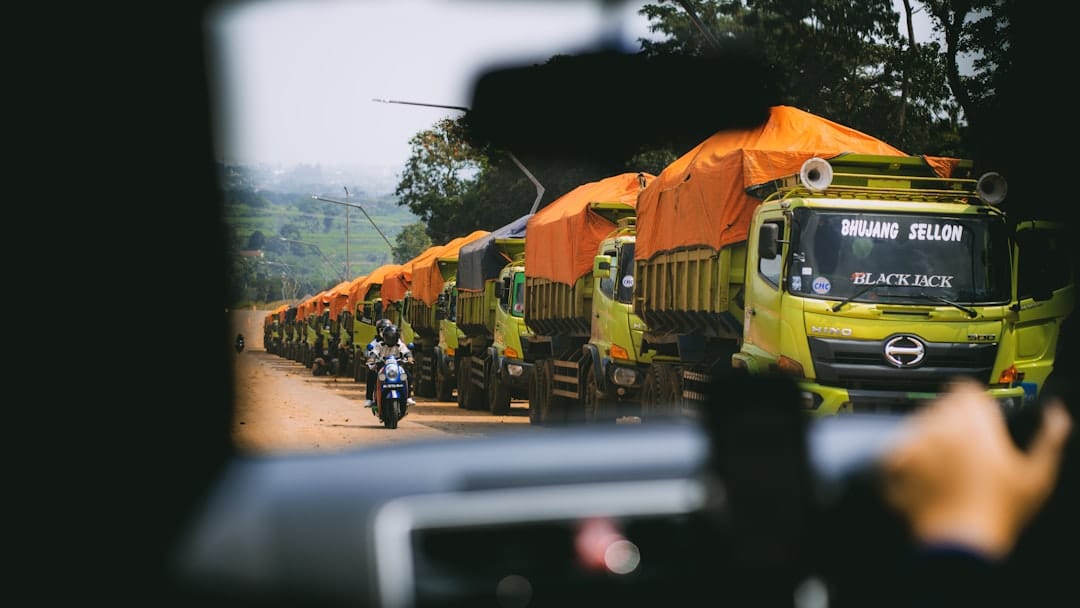
When a major disaster strikes, the images that define the response are usually the same: emergency crews wading through floodwater, volunteers handing out food, helicopters hovering over damaged neighborhoods. What rarely makes the frame is the convoy of flatbeds and specialty trailers moving down a highway at 3 a.m., hauling the generators, mobile command centers, and utility equipment that make recovery possible.
Disaster relief begins long before power is restored or water runs clean again. It begins the moment a need is identified and a phone call goes out to someone who can move equipment fast. Transportation is the backbone of that entire process—and without it, even the best-coordinated emergency response stalls.
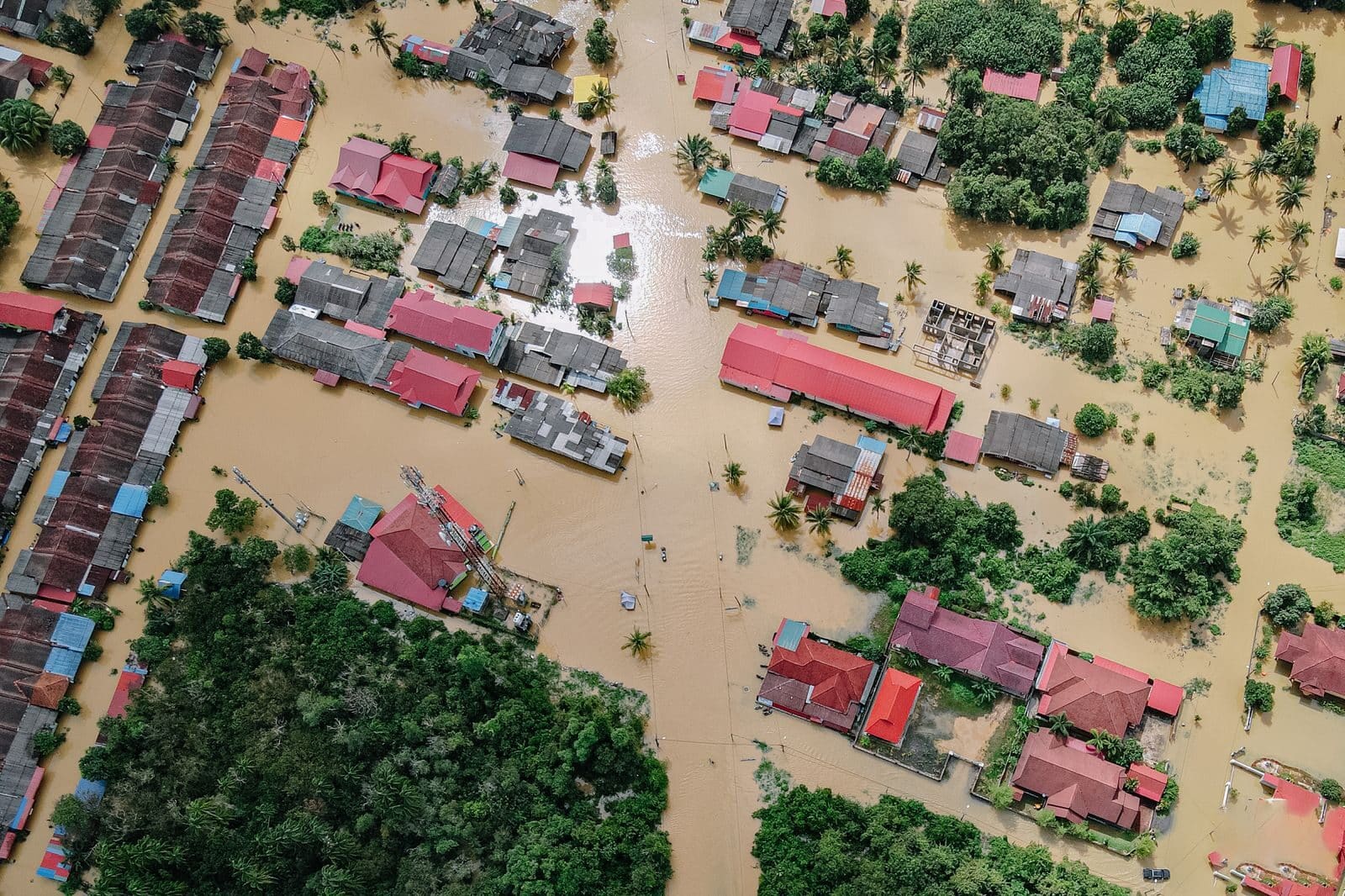
Hurricanes, tornadoes, flooding, chemical spills, and infrastructure failures all create the same fundamental problem: communities lose access to essential services, and utility companies must restore them under difficult, often dangerous conditions. Doing that requires getting the right equipment to the right place at the right time. For nearly 30 years, Interstate Haulers has supported that effort by transporting specialty trailers and utility equipment to disaster zones and staging areas across the country.
This post covers how disaster relief actually works, what role transportation plays in utility restoration, and why choosing the right hauling partner can make a measurable difference in how fast communities recover.

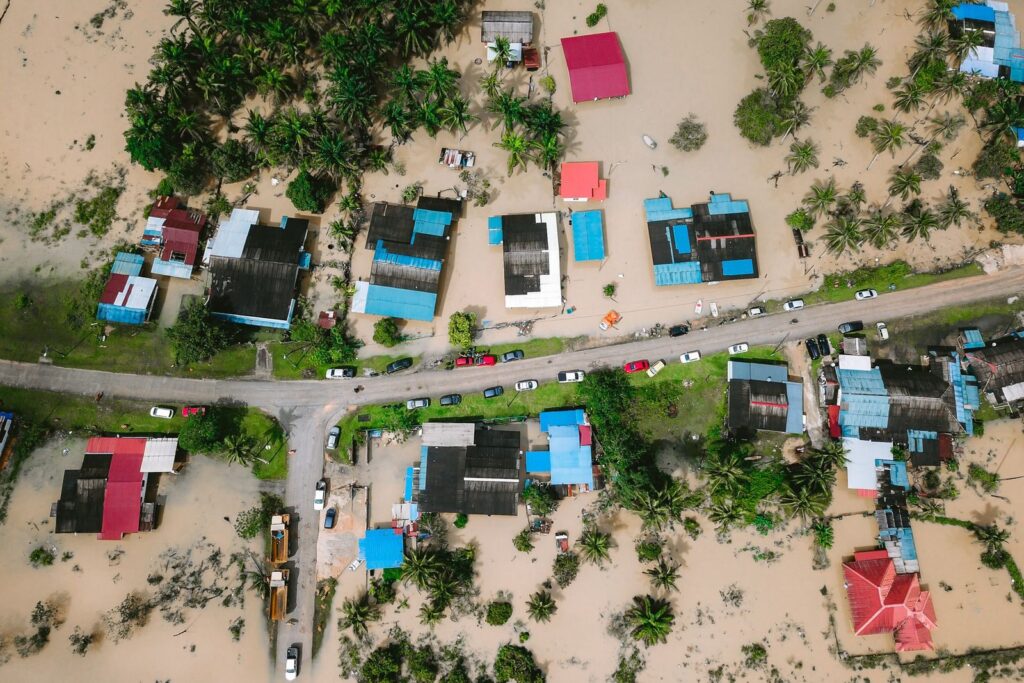
Photo by Jonathan Ford on Unsplash
What Disaster Relief Really Means
Disaster relief refers to the coordinated response that follows a catastrophic event—providing immediate assistance to affected populations while laying the groundwork for long-term recovery. It is not a single action but a multi-phase effort involving federal agencies, state and local governments, nonprofit organizations, utility companies, contractors, and private sector partners.
There is an important distinction between immediate emergency response and long-term disaster recovery. Emergency response focuses on life safety: search and rescue, emergency medical care, shelter, food, and water. Disaster recovery, by contrast, addresses the restoration of infrastructure—roads, power grids, water systems, telecommunications, and gas lines—over weeks, months, or sometimes years.
Both phases require transportation. Ambulances and supply trucks move during the emergency phase. Flatbeds carrying transformers, restroom trailers, and mobile command centers move during recovery.
When a presidential disaster declaration is issued under the Stafford Act, it triggers federal resources and funding that accelerate the recovery timeline. Major disaster declarations unlock FEMA programs, open disaster recovery centers, and authorize Public Assistance Grants to state and local governments. Without that infrastructure—and without the transportation network that supports it—communities face a much longer and more painful road back.
Recent history makes this urgency clear. Significant billion-dollar disasters increased from roughly 6 annually during the 1990s to approximately 23 annually today, according to data cited by U.S. Rep. Darren Soto. The events range from hurricanes and tornadoes to chemical spills and catastrophic flooding. Each one demands a fast, coordinated response—and each one depends on transportation to deliver it.
How Utility Companies Respond When A Natural Disaster Strikes
Utility companies follow a structured response protocol the moment a major event occurs. Speed matters at every stage, and each decision shapes how quickly services come back online.
\\
Initial Damage Assessments
Before any equipment moves, crews need to know what they’re dealing with. Rapid assessment teams deploy immediately after a disaster to survey affected areas, document damage, and identify which infrastructure is destroyed versus repairable. These assessments directly determine what equipment gets ordered and where it needs to go.
Establishing Staging Areas
Staging areas—often set up in parking lots, fairgrounds, or open land near the disaster zone—serve as operational hubs. Crews, equipment, and supplies concentrate at these locations before moving into affected neighborhoods. For transportation providers, staging areas are the primary delivery destination in the early phase of recovery.
Coordinating Utility Contractors
Utilities don’t handle major disasters alone. Mutual aid agreements between utility companies bring lineworkers, engineers, and support crews from across the country to the affected region. Each of those crews typically needs equipment transported to them. Coordination between utility operators, contractors, and transportation providers runs simultaneously, not sequentially.
Prioritizing Repairs
Hospitals, water treatment plants, emergency services, and communications infrastructure come first. Residential restoration follows. That tiered priority structure affects transportation scheduling—some loads are critical-path deliveries where delays have cascading consequences.
After Hurricane Helene made landfall as a Category 4 storm in September 2024, Duke Energy crews restored power to more than 1.1 million customers within 48 hours. Lineworkers logged 16–18 hour shifts. Three Duke Energy substations in Asheville were damaged or destroyed. According to the NC Chamber Foundation, entire roadways were washed away and landslides blocked critical routes, disconnecting communities and preventing the delivery of food, clean water, medicines, and fuel. Ninety-three water systems across western North Carolina were placed under boil-water advisories.
That scale of disruption illustrates exactly why transportation planning is as important as any other element of emergency response. Equipment that arrives late is equipment that can’t help.

Transportation’s Critical Role in Utility Restoration
Transportation is rarely the headline in disaster coverage, but it is almost always the deciding variable in how fast recovery happens. Utility companies can have the crews, the expertise, and the budget to restore services—but if the equipment doesn’t arrive, none of that matters.
The list of what needs to move after a major disaster is extensive:
- Utility trailers and service vehicles
- Backup generators and fuel trailers
- Mobile command centers and mobile offices
- Restroom trailers for field crews
- Transformer trailers and replacement components
- Bucket truck support equipment
- Temporary housing and crew facilities
- Water treatment and distribution equipment
- Communication trailers and emergency broadcast systems
- Heavy construction machinery
Delivering this equipment is not straightforward. Road closures, bridge weight restrictions, debris, and changing priorities create constant logistical challenges. Multiple delivery locations—sometimes dozens across a wide geographic area—require real-time coordination. Around-the-clock scheduling is standard, not exceptional.
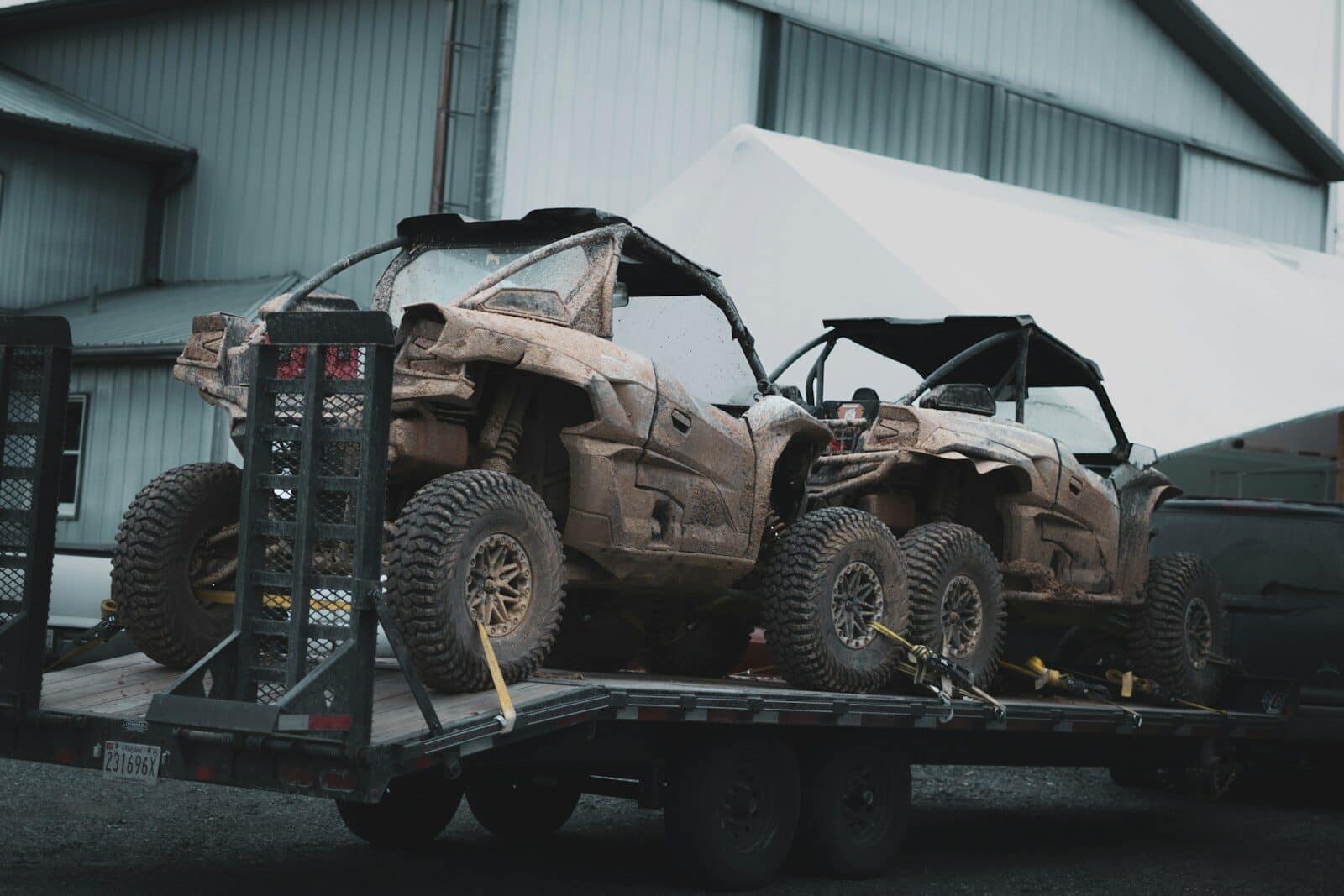
Specialty trailer experience matters here in a way that general freight hauling does not. Oversized loads require permits and escorts. Equipment with specific load-securing requirements demands drivers who understand those needs. A transportation partner unfamiliar with industrial trailer hauling introduces risk at exactly the moment when there is no margin for error.
Interstate Haulers specializes in this work. Our drivers have years of experience transporting industrial trailers, utility equipment, and specialty assets under time-sensitive conditions. We understand the logistics of disaster response because we’ve been part of it.
Specialized Equipment That Keeps Recovery Moving
Recovery operations depend on a specific category of equipment that most carriers are not equipped to handle. The following types of assets are commonly transported during large-scale disaster response:
Backup Generators — Often the first piece of equipment needed. Large industrial generators power hospitals, water treatment facilities, and communications infrastructure while the grid is restored.
Utility and FEMA Support Trailers — Mobile facilities deployed as field offices, equipment storage, and crew support.
Mobile Workshops — On-site repair facilities that allow crews to fabricate and fix components in the field rather than waiting for parts to ship.
Emergency Communication Systems — Satellite communication trailers and mobile broadcast equipment restore connectivity when cell towers and landlines are down.
Water Treatment Equipment — Portable water treatment systems provide safe drinking water when municipal systems are compromised or destroyed.
Restroom Trailers — Critical for large crews operating in the field for extended periods.
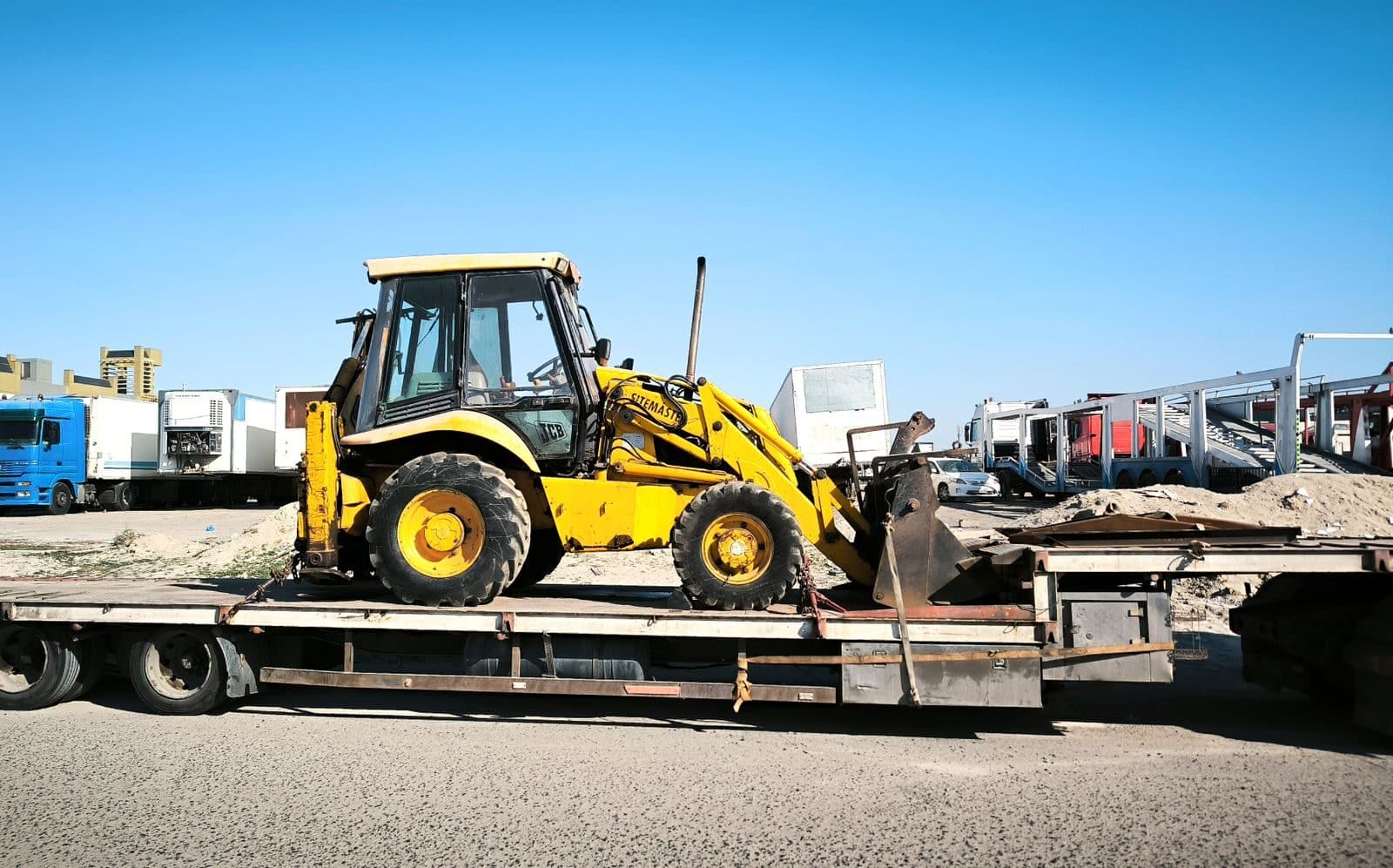
Construction and Heavy Machinery — Excavators, bulldozers, and cranes clear debris and rebuild damaged infrastructure.
Each of these asset types presents unique hauling challenges—weight, dimensions, load-securing requirements, and sensitivity to road conditions. Specialty haulers who understand these challenges deliver equipment safely and on schedule. Those who don’t create delays that ripple through the entire recovery operation.
Coordinating Transportation During Large-Scale Disaster Response
Large-scale disaster response is a dynamic environment. Priorities shift. Roads close unexpectedly. New damage assessments change delivery plans mid-execution. The transportation providers who perform best in this environment are those who adapt quickly and communicate clearly.
Key logistics challenges include:
Staging Area Management — Multiple carriers converging on a single staging area require precise coordination to avoid gridlock and ensure the highest-priority loads arrive first.
Road Closures and Bridge Restrictions — After flooding or high winds, weight limits on bridges and temporary road closures force drivers to reroute, sometimes significantly adding to transit time.
Permits and Escorts — Oversized loads require state-issued permits and, in many cases, law enforcement escorts. Experienced carriers build these requirements into their planning rather than discovering them mid-delivery.
Real-Time Communication — Utility operators need to know where their equipment is at all times. A transportation partner with strong communication protocols—proactive updates, accessible dispatch, accurate ETAs—allows field commanders to make better decisions.
Nationwide Coordination — Major disasters draw equipment from multiple states. Carriers who can source and coordinate transport from any point in the continental U.S. provide significant logistical advantages.
The National Weather Service and Ready.gov both publish guidance on preparing for natural disasters and monitoring developing weather events. For transportation providers, monitoring those same channels and pre-positioning resources before a storm makes landfall can shorten response times significantly.
The Organizations That Support Short and Long Term Disaster Relief
Effective disaster relief is never the work of a single organization. It is the product of coordination among federal agencies, state and local governments, utilities, contractors, nonprofits, and private sector partners.
FEMA is the primary federal emergency management agency coordinating disaster response under the U.S. Department of Homeland Security. FEMA’s Disaster Relief Fund accounted for 44% of federal disaster funding in FY 2025. FEMA administers three major programs: Public Assistance Grants support state and local governments in removing debris and repairing infrastructure; Individual Assistance Programs help families cover temporary housing assistance, repairs, and other disaster-related needs; and the Hazard Mitigation Grant Program funds projects that reduce the impact of future disasters. Applications for FEMA assistance are submitted at DisasterAssistance.gov.
State and Local Governments contribute emergency funding, coordinate with FEMA, and manage on-the-ground recovery operations. They often serve as the direct point of contact for utility companies and transportation contractors.
Public Utilities lead the restoration of electrical service, water systems, telecommunications, and gas infrastructure. Their logistical requirements drive much of the transportation activity in a disaster zone.
Emergency Management Agencies coordinate across organizations, ensuring that resources flow to where they’re needed and that no two agencies are working at cross-purposes.
Contractors and Private Sector Partners provide the labor, equipment, and services that government agencies cannot supply directly. Transportation companies like Interstate Haulers fall into this category.

How Nonprofit Organizations Support Long Term Recovery
Nonprofit organizations fill gaps that government programs and private contractors cannot. Their speed, flexibility, and community connections make them essential partners in disaster relief.
The American Red Cross responds to an emergency every 8 minutes. Ninety-one cents of every donated dollar supports disaster relief services, and the minimum online donation is $10. The Red Cross provides emergency shelter, food, and mental health support while coordinating with FEMA and local emergency management agencies.
The Salvation Army deploys mobile feeding units and coordinates with local churches and community organizations to provide supplies and emotional support in affected communities.
The North Carolina Community Foundation (NCCF) demonstrates how community-based philanthropy supports long-term recovery. NCCF has served North Carolina for over 35 years, awarding more than $360 million in grants and scholarships since 1988. Following Hurricane Helene, NCCF’s Disaster Relief Fund provided grants to affected communities and awarded Disaster Relief and Resilience Scholarships to students whose education was disrupted by the storm. Donations to NCCF are tax deductible.
Nonprofits excel at several things government agencies cannot easily replicate:
- Mobilizing trained volunteers quickly
- Establishing supply chains for food, water, and medical supplies
- Working within local communities and understanding local needs
- Providing long-term support for residents rebuilding their lives
Their effectiveness depends partly on reliable logistics—the same supply chains and transportation networks that carry equipment for utility companies also carry food and medical supplies for relief organizations. That overlap reinforces why transportation infrastructure is so fundamental to recovery success.
Why Experienced Specialty Transportation Partners Matter
Utility companies and emergency contractors don’t have time to vet transportation providers during an active disaster. They need partners they already trust—carriers with a proven record of handling specialty equipment under time pressure.
Several factors distinguish experienced specialty haulers from general freight carriers:
FMCSA Compliance — Federal Motor Carrier Safety Administration compliance is non-negotiable for carriers handling utility and government-adjacent loads. Compliance reflects not just legal standing but operational standards.
Oversized Hauling Expertise — Many of the assets moved during disaster response are oversized. Permits, escorts, route planning, and load-securing expertise require experience that general freight carriers typically don’t have.
Nationwide Coverage — A carrier that operates across the continental U.S. can respond to disasters anywhere without subcontracting to unknown providers.
Family-Owned Accountability — Family-owned businesses operate with a different level of accountability than large freight companies. When a single relationship matters, family ownership creates a direct line to decision-makers.
Communication — Real-time updates, accessible dispatch, and clear documentation reduce uncertainty for utility operators managing complex recovery operations.
Transportation delays slow recovery. A generator that arrives six hours late is six hours of darkness for a hospital. A restroom trailer that doesn’t show up on time strands crews in the field. The relationship between transportation performance and recovery outcomes is direct and measurable.
For businesses that have suffered economic losses from a declared disaster, the Small Business Administration offers low-interest disaster loans to help cover repair costs and operational recovery.
Lessons Learned from Hurricane Helene and Other Recent Disasters
Hurricane Helene’s impact on western North Carolina in September 2024 offered stark lessons about infrastructure vulnerability and the critical role of transportation in recovery.
The storm caused catastrophic flooding that washed away entire roadway sections and triggered landslides that cut off mountain communities entirely. Duke Energy lost three substations in Asheville to damage or destruction. Ninety-three water systems issued boil-water advisories. The disruption of transportation routes didn’t just inconvenience residents—it directly delayed the delivery of emergency supplies and the movement of utility crews and equipment into the affected zone.
The pattern is consistent across major disasters. When transportation infrastructure fails or becomes inaccessible, every downstream recovery function slows with it. Crew mobilization stalls. Equipment delivery is delayed. Staging areas become harder to supply. Communities wait longer.
The frequency of these events makes transportation planning more urgent, not less. Billion-dollar disasters have increased from roughly 6 annually during the 1990s to approximately 23 annually today. Climate-related events are becoming more severe and less predictable. For utility companies and their transportation partners, that trend demands better pre-event preparation—pre-qualified carrier relationships, flexible scheduling agreements, and established communication protocols before a storm is named.
How Interstate Haulers Supports Utility Restoration
At Interstate Haulers, we’ve been part of disaster recovery transportation for nearly 30 years. Since our founding in 1997, we’ve built our business around the kind of specialty hauling that matters most when communities need it most.
We are a family-owned company, and that matters. It means decisions get made quickly, communication happens directly, and accountability is personal. When a utility contractor calls us at midnight because a staging area just changed locations, they’re talking to people who care about getting it right—not a dispatch center that treats the call as a ticket number.
Our industrial trailer expertise covers the full range of equipment commonly deployed during disaster response: utility trailers, generators, mobile command centers, restroom trailers, fuel trailers, mobile offices, and heavy machinery. We haul nationwide across the continental United States, which means we can respond to disasters wherever they occur without subcontracting to carriers we don’t know.
We understand that transportation delays in a disaster zone have real consequences. Our scheduling is flexible, our communication is consistent, and our drivers are experienced with the specific demands of specialty and oversized loads. We work with public utilities, FEMA contractors, emergency management agencies, and private contractors—and we know what each of those clients needs when time is critical.
If you’re managing utility operations or emergency response logistics, we’d welcome the conversation before a disaster occurs. Pre-established carrier relationships dramatically reduce response time when the call actually comes.
Frequently Asked Questions
Which charities are best at providing disaster relief?
The American Red Cross, the Salvation Army, and community-based foundations like the North Carolina Community Foundation are consistently recognized for effective disaster relief. The Red Cross focuses on immediate emergency services and responds to an emergency every 8 minutes nationwide. The Salvation Army provides feeding programs and emotional and spiritual care. The NCCF and similar community foundations direct funds to local organizations with established relationships in affected areas. For national disasters, Charity Navigator and GuideStar provide ratings and financial transparency data to help donors evaluate organizations before giving.
How do people get federal disaster assistance after a presidential disaster declaration?
After a presidential disaster declaration that includes Individual Assistance, affected residents can apply for FEMA assistance at DisasterAssistance.gov or by calling the FEMA Helpline at 1-800-621-3362. Eligible applicants may receive funds for temporary housing, home repairs, and other disaster-related needs not covered by insurance. FEMA also establishes Disaster Recovery Centers in affected counties where residents can meet with representatives in person. Applicants should gather documentation including proof of identity, proof of occupancy, and insurance information before applying.
What do flood victims need most after a disaster?
Flood and disaster survivors typically need emergency shelter, clean drinking water, food, and medical care in the immediate aftermath. As recovery progresses, the needs shift to temporary housing, generators for power, communication devices to contact family and coordinate assistance, and transportation to access services. Restoration of water and sewer systems is often the most pressing infrastructure need, followed by electrical service and communications. Organizations like the Red Cross address immediate needs, while FEMA Individual Assistance and SBA disaster loans support longer-term recovery.
How does transportation support disaster recovery?
Transportation supports disaster recovery by moving the equipment that makes utility restoration possible—generators, transformer trailers, mobile command centers, restroom trailers, water treatment equipment, and construction machinery. Without reliable transportation, crews cannot access the tools they need, staging areas cannot be supplied, and recovery timelines extend significantly. Specialty haulers with experience in oversized and industrial trailer transport play a particularly critical role because many disaster-response assets require permits, escorts, and specific load-securing expertise that general freight carriers don’t provide.
The Road to Recovery Runs Through Transportation
Every recovery story has a quiet chapter that rarely gets told. It happens before the power comes back on, before the boil-water advisory is lifted, before the first residents return home. It happens on a highway at night, with a flatbed loaded with a generator or a mobile command center heading toward a staging area in a county that most people have never visited.
Transportation is one of the most important components of disaster relief—and one of the least visible. Utility restoration depends on getting specialized equipment where it’s needed quickly and safely. Successful recovery requires coordination among government agencies, nonprofits, contractors, utility companies, and transportation providers who understand what’s at stake.
At Interstate Haulers, we’re proud to support disaster recovery by transporting the specialized trailers and equipment that help restore power, communications, water systems, and other essential services across the country. We’ve been doing this work for nearly 30 years, and we take it seriously.
If your organization needs a dependable nationwide transportation partner for industrial trailers, utility equipment, generators, mobile facilities, or other specialty assets—whether for emergency response or planned operations—contact Interstate Haulers at (910) 295-2244 or email us at admin@interstatehaulers.com. We’re ready when you need us.