

Proper off-season boat storage requires cleaning, winterizing, fuel treatment, battery maintenance, and choosing the right storage type for your climate and budget. Indoor storage offers the most protection, while secure outdoor storage is more affordable. No matter which option you choose, preparation is what determines how well your boat holds up between seasons.
The boating season ends, but the work doesn’t. What happens to a boat over the off-season—how it’s cleaned, covered, winterized, and stored—directly determines what condition it’s in when spring arrives. Skip the prep, cut corners on storage, or choose a facility that doesn’t fit your needs, and you may be looking at costly repairs before you ever get back on the water.
Boats are significant investments. A fiberglass runabout, a center console, a cruiser—any of these can represent tens of thousands of dollars in purchase price alone, before factoring in gear, engines, electronics, and trailers. Protecting that investment doesn’t stop when you pull out of the marina. Off-season care is just as important as the maintenance you perform during active use.
Threats to an improperly stored boat include freeze damage to the engine and cooling system, corrosion to mechanical components, mold and mildew inside the cabin, UV deterioration to gel coat and upholstery, fuel degradation, battery failure, and water accumulation in areas it shouldn’t be. Most of these problems are preventable with the right approach.
This guide covers everything boat owners need to know about off-season boat storage: how to prepare a boat before it goes away, which storage options are available and how to choose among them, what to look for in a storage facility, how to estimate boat storage cost, and why professional boat transportation matters when your vessel needs to move to or from a storage location. At Interstate Haulers, we’ve been transporting boats and high-value assets since 1997—so we understand that protecting a boat matters throughout the entire process, not just while it sits in storage.
Why Proper Boat Storage Matters During the Off-Season
A boat that sits untreated for several months faces a long list of preventable problems. Water trapped in the cooling system freezes, expands, and cracks engine blocks or manifolds. Moisture that lingers inside the cabin creates ideal conditions for mold and mildew. Salt residue left on metal fittings accelerates corrosion. UV rays break down gel coat, vinyl upholstery, and plastic components even when the boat isn’t in use. Old, unstabilized fuel degrades and gums up carburetors and fuel injectors. Batteries left uncharged over winter lose capacity or fail entirely.
What makes this particularly frustrating is that most of these issues are easy to prevent. The boat doesn’t deteriorate because winter is inherently damaging—it deteriorates because it wasn’t properly prepared.
Proper winter boat storage keeps a vessel’s hull, engine, interior, electrical system, trailer, and gear in condition to perform reliably next season. Boat owners who invest time in thorough preparation at the end of the season consistently spend less on repairs at the beginning of the next one. The math is straightforward: a day of proper winterization today can save thousands in avoidable repairs later.

How to Prepare Your Boat for Off-Season Storage
Preparation is the foundation of effective boat storage. A boat that goes into storage dirty, wet, or mechanically neglected will come out in worse shape. The steps below address the most common risk areas.
Clean the Hull and Interior Thoroughly
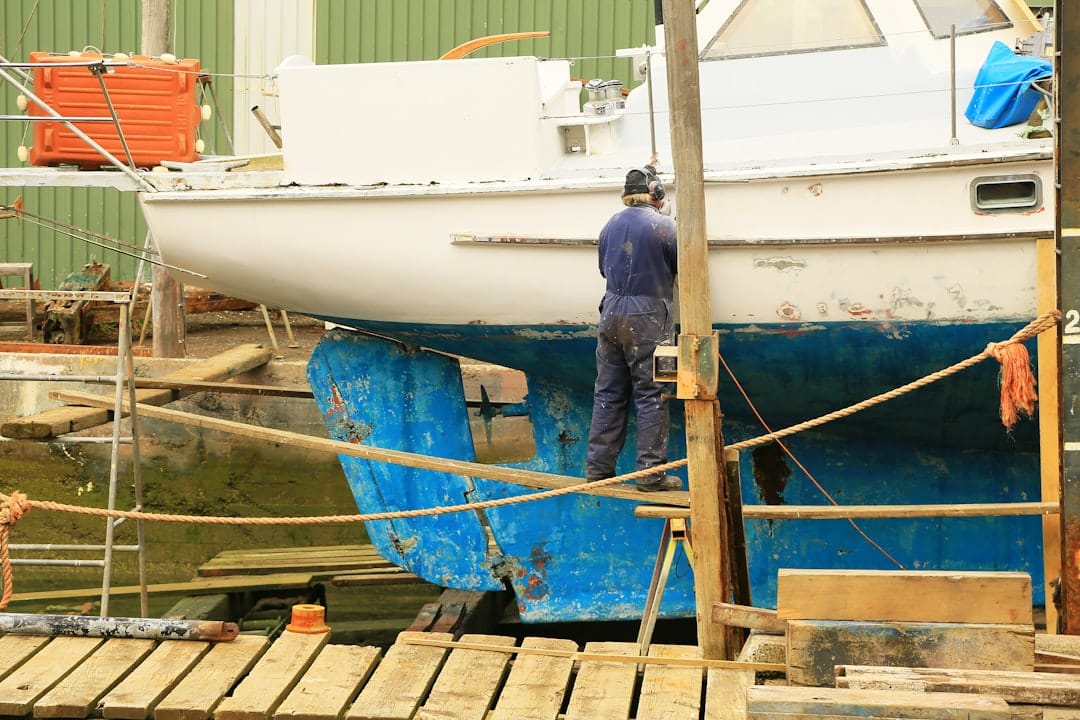
Start by washing the exterior with warm, soapy water to remove dirt, salt, grime, algae, and waterline buildup. Marine cleaning products formulated to remove oxidation and salt residue can help with stubborn deposits. Once the hull is clean and dry, apply a coat of marine wax to protect the gel coat from UV exposure and moisture during storage.
Clean the interior completely—wipe down all surfaces, remove damp towels and cushions, and pull out any food or trash. Moisture that remains sealed inside a covered boat creates a perfect environment for mold and mildew. Once everything is dry, the hull inspection becomes much easier too. A clean surface reveals cracks, blistering, corrosion, and other maintenance concerns that would otherwise go unnoticed until spring.
For additional guidance on hull care products and cleaning techniques, the National Marine Manufacturers Association (NMMA) offers consumer resources for recreational boat owners.
Inspect and Repair Components Before Storing the Boat
Don’t wait until spring to discover a problem that existed in fall. Before storing the boat, inspect hoses, belts, and hose clamps for wear or deterioration. Check electrical connections for corrosion. Review fluid levels. Examine the steering components and hull for obvious damage. Catching issues now means you can address them over the off-season and have the boat ready to launch when the weather turns.
The BoatUS Foundation provides free educational materials on boat inspection, safety, and maintenance planning that boat owners may find useful.
Winterize the Engine and Cooling System
Winterization is non-negotiable in climates where temperatures drop below freezing. Water that remains in the engine’s cooling system will freeze, expand, and can crack the engine block, manifolds, or exhaust components—repairs that can run into the thousands.
Drain water from all applicable systems. Flush the engine’s cooling system according to the manufacturer’s recommendations, which typically involves running antifreeze through the system on inboard and sterndrive engines. Change the engine oil and transmission fluid if it’s time, since used oil contains combustion byproducts and moisture that can corrode internal components over winter. Follow the specific winterization procedures outlined in your boat’s owner’s manual, as requirements vary by engine type and manufacturer.
The BoatUS Magazine winterization guide is a respected resource covering engine-specific winterization steps for different boat types.
Treat the Fuel Before Storage
Fuel left untreated in the tank for months breaks down, absorbs moisture, and leaves varnish deposits in the fuel system. Add a quality marine fuel stabilizer to the tank, then run the engine long enough for the treated fuel to circulate through the entire fuel system, including the carburetor or fuel injectors.
Consult your engine manufacturer’s guidance on whether to store with a full or partially empty tank. Some manufacturers recommend a full tank to reduce condensation; others suggest draining the system. Follow the guidance specific to your engine rather than applying a blanket rule.
Take Care of the Battery
A marine battery left uncharged through the off-season can sulfate—a condition where lead sulfate crystals form on the battery plates, permanently reducing capacity. Before storage, bring the battery to a full charge. Disconnect it from the boat’s electrical system if appropriate for your setup, and store it in a cool, dry location out of direct contact with concrete.
A quality battery maintainer (sometimes called a trickle charger or battery tender) can keep the battery at an optimal charge level throughout winter without overcharging it. West Marine’s battery care guide offers practical advice on selecting and maintaining marine batteries during the off-season.
Prevent Moisture and Mildew
Even after cleaning, moisture management remains critical throughout the storage period. Make sure the boat is thoroughly dry before covering it. Use ventilation under the cover where possible—a breathable cover allows air to circulate and prevents condensation from building up inside. Moisture absorbers placed inside cabins and enclosed compartments can help capture residual humidity, particularly in sealed spaces.
A non-breathable cover that traps moisture is often worse than no cover at all, so material selection matters.

Photo by Maxi am Brunnen on Unsplash
Choosing the Best Boat Storage Option for Your Needs
No single storage method suits every boat owner. The right choice depends on the boat’s size and type, the local climate, how frequently you plan to access the vessel, your budget, and the level of protection you want. Here’s a breakdown of the major boat storage option to assist you in finding boat storage solutions that work for you.
At-Home Boat Storage
Storing a boat at home is often the least expensive approach—provided you have adequate space, a suitable trailer, and no legal barriers. Check HOA rules, local zoning ordinances, and neighborhood regulations before assuming home storage is permitted. When it’s an option, at-home storage offers convenient access for maintenance and winterization work throughout the off-season.
The trade-off is that security and weather protection are entirely the owner’s responsibility. A quality boat cover and a solid locking hitch coupler are basic requirements.
Outdoor Boat Storage
Outdoor boat storage at a dedicated storage facility is a popular choice for boat owners who need more space than their property allows. Facilities typically provide designated parking spots for boats and trailers in a fenced area, often with gate access. Costs are generally lower than indoor storage, making this a practical middle-ground option.
Outdoor Storage Limitations
The limitation is exposure. Boats stored outdoors face sun, UV rays, rain, wind, snow, and temperature swings throughout the off-season. A well-fitted, breathable cover becomes essential. Proper winterization is equally critical, since temperature fluctuations in an uncovered or covered outdoor environment can still reach damaging extremes in colder climates.
Indoor Boat Storage
Indoor storage offers the highest level of protection available. Enclosed facilities shield boats from precipitation, UV radiation, wind-driven debris, and extreme temperature swings. For owners of high-value watercraft, boats with sensitive electronics, or boats in regions with harsh winters, the added protection of indoor storage often justifies the higher cost.
Indoor Storage Considerations
Some boat owners who trailer and launch their vessels find that year-round indoor storage also eliminates the need for a separate summer wet slip—a consideration worth factoring into the total annual cost comparison.
Dry-Stack Boat Storage
Dry-stack storage places boats on large racks inside a covered warehouse or structure. Marina staff retrieve the vessel using a forklift or specialized equipment when the owner wants to use it. Dry-stack storage combines indoor protection with convenient access and works particularly well for boaters who use their vessels frequently during the active season.
Not all facilities can accommodate every boat size, so confirm that the facility’s equipment and racking system can handle the vessel’s length and weight before committing.
Wet Slip and Marina Storage
A wet slip keeps the boat in the water, ready to go. This is the most convenient option for owners who boat frequently, but it comes with its own maintenance considerations. Boats in the water accumulate growth on the hull, which makes appropriate anti-fouling or bottom paint a recurring cost. Marina amenities—power pedestals, water, security, parking, and launch services—vary widely and significantly affect price.
Wet slips at premium marinas for larger vessels can become expensive. For most boat owners using winter boat storage, a wet slip is typically a spring-and-summer arrangement rather than an off-season solution.
What to Look for in a Safe Boat Storage Facility
Price matters, but it shouldn’t be the only factor when selecting a storage facility. A low monthly rate at an unsecured or poorly maintained location can cost far more in theft or damage than a slightly higher rate at a reputable facility.
When evaluating outdoor or indoor storage facilities, look for:
- Perimeter security: A properly fenced property with controlled gate access.
- Surveillance: Visible cameras throughout the storage area.
- Lighting: Adequate lighting to deter unauthorized access overnight.
- Staff presence: On-site management or regular security patrols.
- Access hours: Confirm when and how you can retrieve your boat.
- Facility condition: Well-maintained grounds with proper drainage to reduce flood risk.
- Space confirmation: Verify that the facility can accommodate your boat and trailer’s full dimensions before reserving.
- Insurance requirements: Understand what coverage the facility provides and what it expects of you.
The Boat Owners Association of The United States (BoatUS) provides guidance on boat insurance considerations that can help owners understand what coverage applies during storage.
Simple Security Steps Boat Owners Can Take
Before leaving a boat at any facility:
- Remove electronics, valuables, documents, and loose gear when possible.
- Photograph the exterior, interior, hull, and trailer to document condition at drop-off.
- Use a trailer coupler lock and wheel locks to deter unauthorized movement.
- Inventory any equipment left aboard.
- Make sure all hatches, doors, and covers are properly secured.
Don’t Forget About Your Boat Trailer
The trailer often gets overlooked in off-season preparation, but it’s a critical part of the picture—especially when the boat needs to travel to or from storage.
Before any seasonal move, inspect:
- Tires: Check pressure, tread depth, and sidewall condition. Flat spots can develop on tires that sit under load without moving for extended periods.
- Wheel bearings: Worn or dry bearings can fail on the road without warning.
- Brakes and lights: Trailer brake systems and wiring connections corrode over time and should be tested before each trip.
- Hitch and coupler: Confirm the coupler latches properly and the hitch ball rating matches the trailer.
- Safety chains and winch strap: Check for wear, rust, or fraying.
- Frame: Inspect the frame and cross-members for corrosion or structural concerns.
A trailer problem discovered after the boat is already loaded and en route creates unnecessary risk. Address issues before the scheduled move, not on transport day.
Understanding Boat Storage Cost and Boat Storage Prices
Boat storage cost varies widely depending on a combination of factors, and no universal price applies across all locations, facility types, or boat sizes. Key variables include:
- Boat length and total dimensions including the trailer
- Geographic location and local market rates
- Indoor vs. outdoor storage
- Covered vs. uncovered outdoor space
- Climate control
- Security features
- Marina amenities
- Whether launch and retrieval services are included
- Seasonal vs. year-round contracts
Some facilities charge per linear foot; others quote a fixed monthly or seasonal rate for a defined space. The total annual cost of boat storage frequently includes more than the storage fee itself—winterization, maintenance, covers or shrink wrapping, haul-out and launch fees, trailer maintenance, and transportation to and from the facility all belong in the budget.
What Is the Average Cost to Store a Boat?
Boat storage prices vary significantly by region, facility, and storage type. As a broad seasonal benchmark, indoor boat storage may run approximately $50–$200 per foot, while outdoor storage may run approximately $20–$50 per foot. These are general estimates—not guaranteed rates—and actual pricing at any given facility may fall outside these ranges depending on local conditions, amenities, and contract terms.
Many facilities quote monthly rather than seasonal rates. Request itemized quotes from local facilities that include your vessel’s actual length and trailer dimensions, since that’s the only way to get an accurate comparison. The Sea Tow Foundation and regional marina associations can sometimes help connect owners with local storage resources and pricing guides.
How Much Does It Cost to Store a 12-Foot Boat?
Smaller boats generally require less space, which can translate into lower storage costs—but several factors complicate a simple calculation. Many facilities apply minimum space charges, so the rate isn’t always just the per-foot price multiplied by the boat’s length. As a reference point, market guides place small 14–18-foot boats in the range of roughly $40–$80 per month for outdoor storage and $100–$200 per month for indoor storage, suggesting a 12-foot vessel may fall near the lower end of a facility’s pricing structure.
The only reliable way to price storage for a specific vessel is to contact local facilities directly with the boat’s dimensions and trailer size.
What Is the Most Cost-Effective Way to Store a Small Boat?
At-home storage is typically the least expensive option when the owner has adequate space, a suitable trailer, and no HOA or local restrictions. When home storage isn’t practical, a secure outdoor facility is usually the next most affordable commercial option.
That said, cost savings from outdoor storage should be weighed against the additional preparation required—proper winterization and a quality cover become even more important when a boat is exposed to the elements. Spending a little more on protection upfront can reduce weather-related deterioration and maintenance costs over time.
What Is the Best Way to Store a Boat?
The best storage method depends on the specific boat, climate, budget, and how often the owner needs access. Here’s a practical breakdown:
- Best for maximum weather protection: Indoor storage in an enclosed facility.
- Best for affordability: At-home storage when space and regulations allow; secure outdoor storage otherwise.
- Best for frequent seasonal access: Wet slip or dry-stack storage at a marina.
- Best balance of protection and convenience: Covered outdoor storage or dry stack, depending on availability.
Even the best storage facility cannot compensate for skipped preparation. Cleaning, winterization, fuel treatment, battery maintenance, and a proper cover are what actually protect the boat. Storage location determines the environment—preparation determines the outcome.
Your Boat Still Needs Protection on the Way to Storage
Getting a boat to storage safely matters just as much as the storage itself. A vessel that arrives damaged from an improper tow or an unsecured load hasn’t benefited from all the preparation that came before.
Professional boat transport makes sense in a number of situations:
- Moving a boat to a seasonal storage facility, particularly one at a distance
- Transporting a vessel to or from an indoor storage facility or marina
- Relocating after a home purchase or move
- Delivering a newly purchased boat from a dealer or private seller
- Transporting a boat to its buyer after a sale
- Moving a large or high-value vessel that requires specialized hauling equipment
Interstate Haulers transports boats both with and without trailers across the continental United States. Professional coordination is especially valuable for long-distance moves, oversized vessels, and high-value watercraft where the margin for error is small.
How Interstate Haulers Helps Make Seasonal Boat Moves Easier
Interstate Haulers has been a family-owned transportation company since 1997. For nearly three decades, Interstate Haulers has specialized in transporting boats, RVs, travel trailers, and industrial trailers across the continental U.S.—developing deep expertise in the unique challenges that come with moving oversized, high-value assets.
What boat owners can expect when working with Interstate Haulers:
- Experienced professional drivers with a demonstrated track record in specialty boat hauling
- FMCSA-compliant operations and a safety-focused approach to every transport
- Nationwide reach with the responsiveness of a family-run company
- Personalized communication throughout the logistics process—no surprise handoffs or lack of updates
- Straightforward quoting with clear information about what’s needed from origin to destination
Whether a boat needs to travel to winter storage, arrive at a marina for the active season, be delivered after a purchase, or move across the country alongside a household relocation, Interstate Haulers can coordinate the transport. The goal is the same as good boat storage: protect the investment and keep the vessel in excellent condition throughout the process.
Protect Your Boat Now So It’s Ready for Next Season
Off-season care has a direct, measurable impact on a boat’s longevity, appearance, mechanical reliability, and resale value. Boats that are cleaned, inspected, winterized, and stored correctly come out of the off-season ready to use. Boats that aren’t cost their owners time, money, and missed days on the water.
The essentials, summarized:
- Clean the hull and interior thoroughly, then apply a protective wax coat
- Inspect hoses, belts, electrical connections, steering, and the hull before storing
- Winterize the engine and cooling system according to manufacturer guidance
- Treat the fuel with a marine stabilizer and circulate it through the fuel system
- Maintain the battery with a full charge and an appropriate maintainer throughout the off-season
- Control moisture with ventilation and moisture absorbers inside enclosed spaces
- Cover the boat with a properly fitted, breathable cover
- Inspect the trailer before any seasonal move to confirm it’s road-ready
- Choose storage that suits the boat’s size, the local climate, and your budget and access needs
Storage protects the boat once it arrives. But getting there—and getting back—requires safe, reliable transportation.
Frequently Asked Questions About Boat Storage
What is the average cost to store a boat for the off-season?
Boat storage cost depends heavily on the boat’s size, storage type, geographic location, and included amenities. As a broad seasonal estimate, indoor storage typically runs approximately $50–$200 per linear foot, while outdoor storage generally falls in the $20–$50 per linear foot range. These are estimates, not guaranteed rates. Obtain current quotes from local facilities using your vessel’s actual dimensions and trailer size for accurate pricing.
How much does it cost to store a 12-foot boat?
There is no fixed price for a 12-foot boat because facilities vary by location, storage type, and pricing structure. Many facilities apply minimum space charges, so the cost isn’t always a simple per-foot calculation. As a general reference, small boats in the 14–18-foot range are typically quoted around $40–$80 per month outdoors and $100–$200 per month indoors. A 12-foot boat may fall near the lower end of that range. Contact local facilities directly with your full trailer dimensions to get accurate pricing.
What is the best way to store a boat during the off-season?
Indoor storage provides the most protection from weather, UV exposure, and temperature fluctuations. Secure outdoor storage is more affordable and adequate in milder climates when combined with proper winterization and a quality cover. Dry-stack storage works well for boaters who want both protection and regular access. Wet slips suit frequent users during the active season but are generally not the preferred off-season choice. The best method ultimately depends on the boat, climate, budget, and frequency of access.
What is the most cost-effective way to store a small boat?
At-home storage is typically the least expensive option when the owner has a trailer, adequate legal space, and no HOA or local ordinance restrictions. When home storage isn’t feasible, a secure outdoor storage facility is usually the next most affordable commercial option. Factor in weather exposure and the cost of proper covers and winterization when comparing options—outdoor savings can be offset by higher maintenance costs if the boat isn’t well-protected.
What should I look for in a boat storage facility?
Look for a fenced, well-lit property with controlled gate access and surveillance cameras. Assess whether staff are present regularly, what hours you can access your boat, and whether the facility can accommodate your boat and trailer’s full dimensions. Ask about insurance requirements, flood risk, and what liability protections the facility provides. A low monthly rate at an unsecured facility may cost more in the long run than a slightly higher rate at a reputable one.
Does Interstate Haulers transport boats to and from storage facilities?
Yes. Interstate Haulers transports boats—with or without trailers—across the continental United States. Services include seasonal moves to and from storage facilities, deliveries to marinas, transport for purchases and sales, and relocations to new homes. Interstate Haulers does not operate as a storage facility; the company specializes in the transportation leg of the journey. Contact Interstate Haulers at interstatehaulers.com or call (910) 295-2244 to request a quote.