
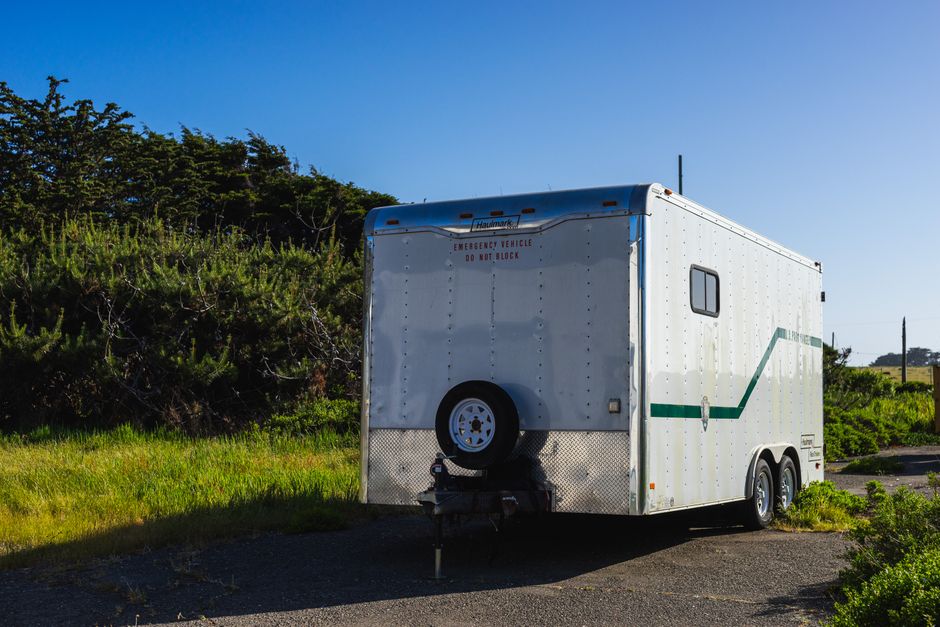
Enclosed trailers protect cargo from weather and theft in ways open trailers simply cannot. Common types include cargo trailers, enclosed car haulers, motorcycle trailers, contractor trailers, concession trailers, refrigerated trailers, and custom industrial trailers. Choosing the right one means evaluating size, axle configuration, payload capacity, door style, and intended use.
Every enclosed trailer starts with the same basic promise: whatever goes inside stays protected. Protected from rain, road debris, and prying eyes. That promise, however, plays out very differently depending on whether you need a compact 5×8 trailer to haul landscaping tools, a refrigerated unit to keep temperature-sensitive cargo fresh, or a fully custom industrial trailer built for a specialized business operation.
At Interstate Haulers, we’ve been transporting specialty trailers and high-value assets across the continental United States since 1997. Over nearly three decades, we’ve moved enclosed cargo trailers, refrigerated units, horse trailers, generator trailers, and custom industrial trailers for individual owners, dealers, manufacturers, government agencies, and logistics partners. That experience gives us a front-row view of how trailer type, dimensions, weight, and construction affect real-world transportation planning.
This guide covers the most common types of enclosed trailers, how to compare them by size and axle configuration, what payload capacity and interior dimensions actually mean in practice, and how to choose the right configuration for your needs. Whether you’re researching your first purchase or trying to narrow down options for a specialized business application, here’s what matters most.

Photo by Magda Ehlers on Pexels
What Is an Enclosed Trailer?
An enclosed trailer uses a roof, solid walls, and lockable doors to protect cargo from weather and theft. That’s what separates it from an open utility trailer, where cargo is exposed to the elements and visible to anyone nearby.
Enclosed trailers serve a wide range of purposes: moving furniture, transporting tools and equipment, hauling motorcycles and ATVs, carrying business inventory, storing materials securely at a jobsite, and supporting mobile business operations. More specialized configurations support vehicle transport, food service, refrigerated cargo, livestock, emergency response, and industrial applications.
Common sizes range from compact 4×6 trailers suited to light local hauling all the way to 8.5×24 configurations built for large-scale cargo and vehicle transport. Most buyers fall somewhere in the 6×12 to 8.5×24 range, depending on their needs.
Choosing the right trailer means evaluating more than just the price tag or the list of trailers for sale at your nearest dealer. Size, axle configuration, payload capacity, door style, interior height, flooring, security, and construction quality all factor into how useful—and how safe—a trailer will be for your specific application.
Common Types of Enclosed Trailers
What Makes a Cargo Trailer the Most Versatile Option?
The cargo trailer is the workhorse of the enclosed trailer world. Its straightforward design—rectangular box, rear doors, and solid walls—makes it adaptable to almost any hauling need. Contractors use cargo trailers to transport tools and equipment. Homeowners use them for moving furniture. Small businesses use them to carry inventory. Landscapers, event vendors, and recreational users all find their own applications for the same basic platform.
What makes cargo trailers particularly flexible is how easily they can be configured. Shelving, D-rings, E-track systems, interior lighting, ventilation, and electrical upgrades can turn a basic cargo trailer into a purpose-built workspace or a highly organized hauling solution. The enclosed design means cargo stays dry, secure, and out of sight—advantages that matter whether you’re parked overnight at a jobsite or crossing multiple state lines.
How Does an Enclosed Car Trailer Protect Vehicles in Transit?
An enclosed car trailer surrounds the towed vehicle on all sides, protecting it from rain, road debris, ultraviolet exposure, and theft during transport. Open car haulers are common and cost-effective, but enclosed trailers are the preferred choice for classic cars, collector vehicles, race cars, show cars, and high-value dealership inventory where condition matters.
Key considerations for enclosed car trailers include interior width and length sufficient to fit the vehicle, adequate payload capacity for the vehicle’s weight, proper tie-down points, and ramp access that allows the vehicle to roll in and out without scraping. Tandem-axle configurations are common in this category because the cargo tends to be heavier, and load distribution matters.
Why Are Motorcycle and ATV Trailers Built Differently?
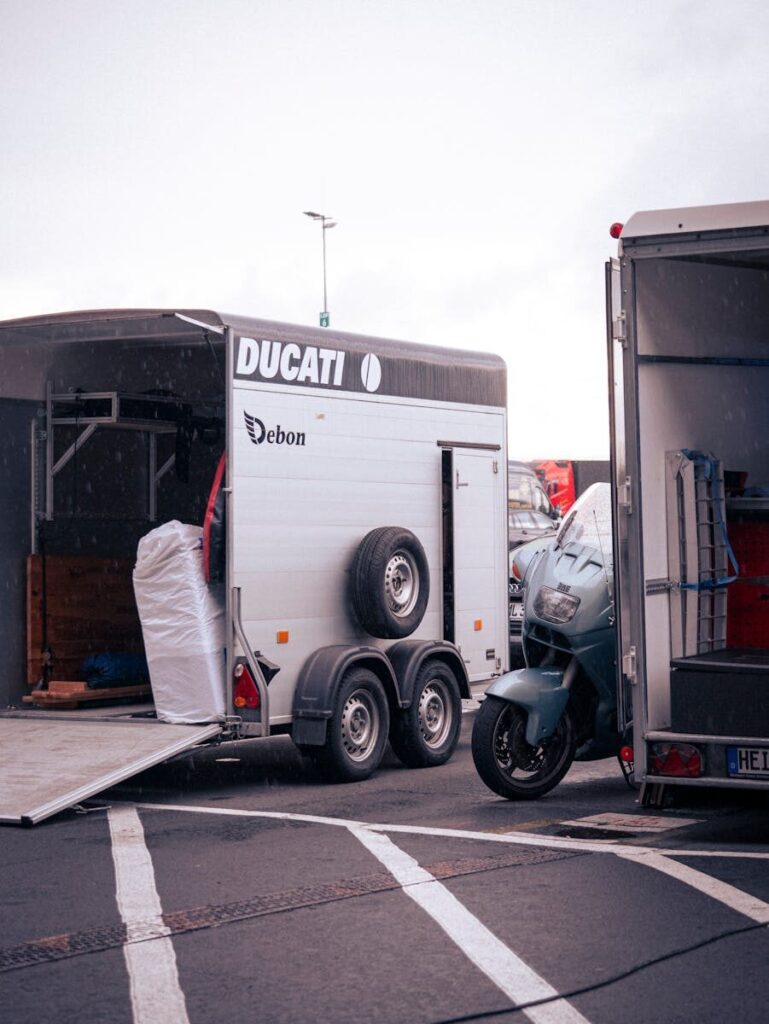
Smaller enclosed trailers designed for motorcycles, ATVs, and other powersports equipment prioritize low, easy access over maximum cargo volume. Ramp doors are particularly valuable here because they let motorcycles and ATVs roll in and out without the kind of awkward maneuvering that a standard step-up trailer would require.
Inside, D-rings and E-track systems provide secure attachment points for straps and tie-downs. Properly securing motorcycles and ATVs during transit prevents the kind of shifting and tipping that can cause serious damage to expensive equipment—even inside an enclosed trailer where the cargo isn’t exposed to wind or road debris.
What Interior Features Make a Contractor Trailer Functional?
Contractors have specific requirements that a basic cargo trailer doesn’t always meet out of the box. The 6×12 trailer is a popular size for contractors—large enough to carry a meaningful amount of tools and equipment, small enough to navigate most jobsites and parking areas without constant difficulty.
Contractor-focused configurations often include shelving, tool racks, workbenches, interior lighting, electrical systems, D-rings, E-track, and extra interior height. That last feature matters more than many buyers initially expect. Standard interior heights can feel restrictive when you’re working inside the trailer or loading taller equipment. Extra height improves usability significantly and turns the trailer into a functional mobile workshop rather than just a rolling storage box.
What Should You Know Before Buying a Concession Trailer?
Concession trailers are enclosed trailers customized for mobile food, retail, event, or service businesses. Common upgrades include serving windows, counters, electrical systems, lighting, ventilation, storage, and specialized interior layouts designed around a specific workflow.
The key planning consideration here is that intended business use should drive every dimension and configuration decision. A trailer built for a smoothie business has different requirements than one built for a BBQ operation or a mobile retail boutique. Getting the dimensions, electrical load capacity, and ventilation right before the trailer is built is far easier than retrofitting after the fact.
How Do Refrigerated Trailers Maintain Temperature-Sensitive Cargo?
Refrigerated trailers add insulation and dedicated cooling systems to the standard enclosed trailer design, making them suitable for food, pharmaceutical, event, and commercial cargo that requires controlled temperatures. Insulated ceilings and walls slow temperature exchange, while active refrigeration systems maintain a set range regardless of outside conditions.
We’ve transported refrigerated trailers across the continental United States as part of our specialty trailer services. These units require additional planning around their dimensions, installed equipment weight, and power requirements. If you’re researching refrigerated trailer transport rather than purchase, our industrial trailer transport page covers what that process involves.
What Applications Require Custom or Industrial Enclosed Trailers?
Some applications don’t fit neatly into any standard category. Generator trailers, mobile command centers, equipment trailers, utility units, and emergency-response trailers are all examples of enclosed configurations engineered for a specific purpose rather than adapted from a general-use design.
Custom and industrial enclosed trailers often have unusual dimensions, specialized internal systems, significant installed weight, or unique access configurations. All of those factors affect how they’re transported. The National Association of Trailer Manufacturers (NATM) provides compliance resources for manufacturers building trailers to federal and industry standards—useful context when evaluating quality and regulatory compliance for specialty units.
What Are the Key Safety Considerations for Horse Trailers?
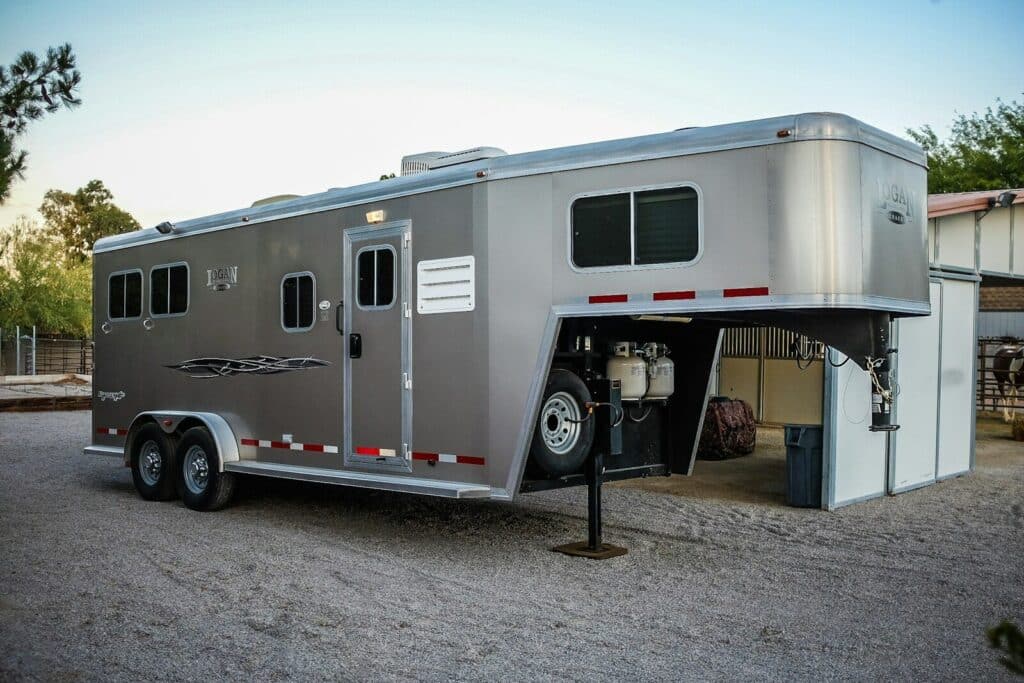
Horse trailers are a specialized category of partially or fully enclosed trailer where ventilation, interior space, flooring, and structural condition directly affect animal welfare. Horses are sensitive to heat buildup, poor air circulation, and unstable footing during transport. NC State University’s College of Agriculture and Life Sciences offers a free horse trailer safety resource that covers trailer design, construction, and transport practices in detail—valuable reading for anyone hauling horses or researching horse trailer transport options.
We’ve transported horse trailers as part of our specialty services, and the lesson we’ve learned is that condition assessment and proper preparation matter as much as the haul itself.
Comparing Popular Enclosed Trailer Sizes
4×6 and 5×8 Enclosed Trailers: Are They Right for Light-Duty Use?
The 4×6 trailer is about as compact as enclosed trailers get. Its small footprint makes it easy to tow, park, and maneuver in tight spaces. Suitable applications include light tool transport, small supply runs, and local hauling where cargo volume is modest. The 5×8 is slightly larger and extends the range of practical uses to include homeowners tackling moving jobs, recreational users hauling gear, and small businesses with limited inventory needs.
Neither size is built for heavy cargo. Their value lies in maneuverability, ease of storage, and the basic weather and theft protection that any enclosed trailer provides.
Why Is the 6×12 Cargo Trailer So Popular With Contractors?
The 6×12 hits a useful sweet spot. It carries enough to be genuinely productive—tools, materials, small equipment—while remaining manageable to tow with a standard pickup truck. Side doors, ramp doors, shelving configurations, and tie-down systems can all be added to a basic 6×12 frame, making it adaptable to a wide range of contractor and small business applications.
For many contractors, the 6×12 is the first enclosed trailer they buy and the one they hold onto the longest.
What Can You Haul in a 7×14 or 8.5×24 Enclosed Trailer?
The 7×14 expands cargo room meaningfully compared to a 6×12, making it a step up for contractors with more equipment, businesses with higher inventory volume, and movers with larger loads. The jump to an 8.5×24 is more significant. Trailers of that size are built for vehicle transport, high-volume cargo, or specialty applications where smaller options simply don’t have enough room.
Buyers considering an 8.5×24 should pay close attention to GVWR, tow vehicle capability, and axle configuration. A trailer that large carries significant weight when loaded, and the towing vehicle needs to be matched to that demand.
Single Axle vs. Tandem Axle: Which Configuration Is Right for Your Load?
When Does a Single-Axle Trailer Make Sense?
Single-axle trailers are lighter and generally easier to maneuver than tandem-axle trailers. Fewer wheels and components also mean fewer maintenance points. For light payloads, compact trailer sizes, and applications where maneuverability matters more than maximum capacity, single-axle configurations are often the practical choice.
The important caveat: actual capacity always depends on the specific trailer’s ratings, not axle count alone. Never assume a single-axle trailer can or can’t handle your cargo without checking the manufacturer’s specifications.
When Should You Choose a Tandem-Axle Trailer for Heavier Loads?
Tandem-axle trailers distribute weight across two axles, improving load stability and enabling higher rated capacities. They’re the standard choice for enclosed car trailers, heavy contractor configurations, and larger cargo applications where a single axle would be undersized.
As with single-axle trailers, compare actual rated capacities across specific models rather than making assumptions based on axle count. Two different tandem-axle trailers can have meaningfully different GVWRs depending on construction and design.
How Do You Calculate Payload Capacity for an Enclosed Trailer?
Payload capacity is the maximum weight of cargo the trailer can carry, calculated by subtracting the trailer’s empty weight from its GVWR (Gross Vehicle Weight Rating):
Payload Capacity = GVWR − Empty Trailer Weight
For example: a trailer with a 7,000 lb GVWR and an empty weight of 2,200 lbs has a payload capacity of 4,800 lbs. That sounds straightforward, but the number shrinks quickly when you account for shelving, tool racks, installed equipment, and permanent upgrades—all of which add to the empty weight and reduce available payload.
Never select a trailer based on dimensions alone. Verify the manufacturer’s GVWR and empty weight ratings before assuming a trailer can carry what you need it to carry. The NHTSA’s towing safety guide also covers tow-vehicle and trailer matching in practical terms.
Interior Dimensions, Height, and Door Access: Why the Details Matter
Interior height is one of the most underestimated specifications in enclosed trailer selection. Standard heights work for many cargo applications, but contractors who need to work inside the trailer, businesses that load tall equipment, or operators who need overhead storage will find that extra interior height pays off quickly in day-to-day usability.
Door dimensions are equally important. Cargo that fits comfortably inside the trailer still needs to pass through the door opening to get there. Measure cargo dimensions before finalizing trailer selection, and compare usable interior dimensions—not exterior measurements—when evaluating different models.
Ramp doors are particularly useful for rolling equipment: motorcycles, ATVs, carts, and wheeled tools. Barn-style rear doors provide full-width rear access. Side doors are convenient for frequently accessed tools or supplies without requiring the entire rear of the trailer to be opened. The right combination depends entirely on what you’re hauling and how often you need to access it.
D-Rings, E-Track, and Cargo Securement Inside an Enclosed Trailer
D-rings and E-track systems are the two most common cargo securement options inside enclosed trailers. D-rings provide fixed attachment points for straps and tie-downs, suitable for most general cargo applications. E-track systems offer adjustable, rail-mounted attachment points that can be repositioned along the track length—giving users more flexibility for irregularly shaped cargo, motorcycles, furniture, and equipment.
A critical point worth emphasizing: the fact that a trailer is enclosed does not mean cargo can be left unsecured. Walls and doors prevent weather exposure and deter theft, but they do not prevent cargo from shifting during hard braking, cornering, or rough road conditions. Shifting cargo affects trailer stability, can damage the cargo itself, and can create genuinely dangerous towing conditions.
Commercial operators should understand the FMCSA cargo securement regulations that apply to their vehicle, trailer, cargo type, and operation. The FMCSA’s rules cover minimum tiedown requirements, working load limits, and performance criteria that cargo securement systems must meet. For a practical introduction to E-track systems specifically, Trucking Depot offers a thorough E-track explainer that covers installation, attachment types, and cargo securement best practices.
Construction Features Worth Evaluating Before You Buy
Frame quality, flooring, weatherproofing, insulation, and lighting all affect how useful an enclosed trailer is over time. Tube steel frames generally offer greater structural rigidity than open-channel designs, though actual durability depends on material specifications, weld quality, and overall construction rather than frame shape alone.
Standard plywood or OSB flooring is common across most price points. Protective coatings, rubber flooring, and moisture-resistant treatments improve longevity and reduce the risk of water damage from condensation or leaks. Speaking of leaks—inspect roof seams, door seals, and corners carefully when evaluating any used trailer and periodically on trailers you already own. A small water intrusion point can cause significant damage over time.
Insulated ceilings reduce temperature fluctuation inside the trailer, which matters for temperature-sensitive cargo and for operators working inside the trailer in hot or cold conditions. Proper ventilation becomes important when hauling equipment that generates heat, working animals, or when the trailer will be used as a workspace in warm climates.
The NATM offers compliance and safety resources relevant to trailer construction standards. Their trailer safety page is a useful starting point for understanding what federal regulations govern trailer manufacturing and what buyers should expect from compliant trailers.
Do You Need a CDL to Pull a Heavy Enclosed Trailer?
This is one of the most common questions we encounter, and the honest answer is that it depends on several factors that can’t be resolved with a simple yes or no.
CDL requirements under federal regulations are tied to GVWR ratings and combined weight ratings—not the physical weight of the trailer alone at any given moment. Personal use versus commercial operation also plays a role, as does state law, which varies. The FMCSA’s commercial driver license page explains federal requirements in detail, and the American Association of Motor Vehicle Administrators (AAMVA) provides state-level context for licensing requirements.
Before towing a heavy trailer, verify applicable requirements with your state licensing authority and review federal regulations that may apply to your specific vehicle, trailer, and use case.
How to Choose the Best Enclosed Trailer for Your Needs
Matching a trailer to its intended use is simpler when you work through the key questions in order:
- Define what you plan to haul. Tools, vehicles, food service equipment, livestock, and general cargo all lead to different configurations.
- Measure the cargo. Compare dimensions against usable interior length, width, height, and door opening size.
- Calculate required payload. Account for cargo weight plus shelving, installed equipment, and permanent upgrades.
- Choose axle configuration. Single axle for lighter loads and easier maneuverability; tandem axle for heavier cargo and better load distribution.
- Select door configuration. Ramp doors for rolling equipment, barn doors for full rear access, side doors for frequent access to specific cargo.
- Review securement options. D-rings, E-track, or a combination based on cargo type and access frequency.
- Evaluate construction and security. Frame quality, flooring, weatherproofing, locks, and door seals.
- Confirm tow vehicle compatibility. Tow vehicle rating and trailer GVWR need to be appropriately matched.
For light local hauling, a compact 4×6 or 5×8 may be sufficient. Contractors typically find the 6×12 the most practical starting point. Larger loads and higher-volume operations call for 7×14 configurations. Vehicle transport and high-volume commercial hauling often require a tandem-axle 8.5×24. Specialty businesses—refrigerated, concession, industrial—need configurations built around their specific requirements.
Transporting Enclosed and Specialty Trailers Across the Country
Purchasing or selling a specialty trailer often means figuring out how to get it from one location to another—sometimes across multiple state lines. That’s where our services come in.
At Interstate Haulers, we transport enclosed trailers, refrigerated trailers, horse trailers, generator trailers, and custom industrial trailers as part of our specialty trailer services. We’ve been doing this since 1997, and our nationwide coverage spans the continental United States. Our customers include individual owners, dealers, manufacturers, freight forwarders, logistics partners, municipalities, utilities, and government agencies—each with different requirements, timelines, and priorities.
Specialty trailer transport requires attention to dimensions, weight, trailer condition, hitch configuration, and installed equipment. We coordinate the logistics and communicate clearly throughout the process, so customers aren’t left guessing about where their trailer is or when it will arrive.
If you need to move an enclosed trailer, our industrial trailer transport services cover the details of how we handle specialty and high-value trailer transport. For RVs and travel trailers, our RV and travel trailer transport page is a useful starting point.
Find the Enclosed Trailer That Fits the Job
The right enclosed trailer is the one that matches what you actually need to carry—sized correctly, configured with the right doors and securement points, built to a quality standard that holds up over time, and matched to a tow vehicle capable of handling the load.
Compact 4×6 and 5×8 trailers serve light-duty local applications. The 6×12 remains one of the most practical all-around options for contractors and small businesses. Larger configurations—7×14, 8.5×24, and beyond—step up to meet higher-volume and specialty demands. Construction features, payload capacity, interior dimensions, and security all matter more than exterior aesthetics or sticker price.
When you’re ready to move a specialty trailer—whether you’ve just purchased one, sold one, or need to relocate one—we’re here to help. Contact Interstate Haulers or request a quote for enclosed trailer, refrigerated trailer, horse trailer, generator trailer, or custom industrial trailer transport across the continental United States.
Frequently Asked Questions About Enclosed Trailers
What is the difference between a single-axle and tandem-axle enclosed trailer?
A single-axle trailer has one axle and is generally lighter, easier to maneuver, and lower-maintenance than a tandem-axle trailer. A tandem-axle trailer has two axles, which allows for better weight distribution and typically higher payload ratings. The right choice depends on your cargo weight, trailer size, and how the trailer will be used—not on axle count alone.
Do I need a CDL to pull a heavy enclosed trailer for personal use?
CDL requirements depend on the GVWR of your tow vehicle and trailer combined, whether the operation is commercial or personal, and state-specific licensing rules. There is no single federal answer that covers every scenario. Review the FMCSA’s CDL requirements and confirm applicable rules with your state licensing authority before towing a heavy trailer.
What is the best enclosed trailer size for a contractor?
For most contractors, the 6×12 cargo trailer offers the most practical balance of cargo room and maneuverability. It fits a meaningful amount of tools and equipment, tows well behind a standard pickup truck, and can be configured with shelving, E-track, interior lighting, and a workbench to function as a mobile workshop. Contractors with larger equipment inventories often move up to a 7×14 configuration.
How much weight can an enclosed trailer carry?
Payload capacity is calculated by subtracting the trailer’s empty weight from its GVWR. A trailer with a 7,000 lb GVWR and a 2,200 lb empty weight has a 4,800 lb payload capacity. Shelving, installed equipment, and permanent upgrades reduce available payload by adding to the empty weight. Always verify ratings with the manufacturer before loading.
Is it cheaper to buy or build an enclosed trailer?
In most cases, buying a factory-direct trailer is more practical and cost-effective than building from scratch. Building requires sourcing a frame, axles, wheels and tires, walls, roof, flooring, doors, wiring, lighting, brakes, and hardware—along with the tools and fabrication knowledge to assemble them correctly. Custom construction makes sense for highly specialized commercial or industrial applications where no standard trailer configuration meets the need.
How do I transport a large enclosed or specialty trailer across multiple states?
Specialty trailer transport across state lines requires coordination around dimensions, weight, trailer condition, hitch compatibility, and pickup and delivery requirements. Interstate Haulers has transported enclosed trailers, refrigerated units, horse trailers, generator trailers, and custom industrial trailers across the continental United States since 1997. Request a quote to discuss your specific transport needs.