
Professional boat transport protects your investment, saves time, and eliminates the stress of moving large watercraft across state lines. Interstate Haulers has specialized in nationwide boat hauling since 1997, offering route planning, oversize permits, and full coordination — with or without a trailer.
Recreational boating is big business in America. According to the National Marine Manufacturers Association (NMMA), registered and documented boats totaled 11.8 million in 2024, representing more than three-quarters of the entire recreational fleet. The industry generates an estimated $230 billion in annual economic impact — up 36% from $170 billion in 2018. Simply put, boats are valuable, and moving them deserves serious thought.
Whether you’ve just bought a new fishing boat from a dealer three states away, you’re relocating for the season, or you’re selling your cabin cruiser to a buyer on the other side of the country, getting your boat from Point A to Point B safely is the challenge. Do you tow it yourself? Hire someone to handle it? What happens when the boat doesn’t have a trailer? What about oversize load permits?
These are the questions Interstate Haulers has been answering since 1997. As a family-owned transportation company, we specialize in moving boats of all sizes across the continental United States — and we’ve built nearly 30 years of trust doing exactly that.
Here are 10 reasons why hiring professionals for boat transport services is the smarter move.
1. How Does Nearly 30 Years of Boat Transport Experience Make a Difference?
Experience Matters When Moving Valuable Boats
Boat transport isn’t the same as towing a utility trailer down the highway. Different hull shapes, varying lengths, offset weight distributions, and delicate finishes all create challenges that experienced haulers know how to handle — and that first-timers often don’t see coming.
Interstate Haulers has been doing this since 1997. Our drivers and logistics team understand the specific demands of transporting fishing boats, pontoon boats, ski boats, wake boats, sailboats, cabin cruisers, and more. Each vessel type has unique loading, securing, and routing requirements, and our team has seen just about every scenario imaginable.
Standard-sized boats are roughly 40 feet long, but the vessels we move span a wide range — from compact dinghies used for short trips to large yachts designed for luxury travel. Fishing boats typically feature deeper V-hulls built for stability on open water, while sailboat shipping relies primarily on wind for propulsion and require special handling due to their masts and rigging. Every vessel type demands a transport approach matched to its characteristics and destination.
That depth of experience means problems are anticipated before they happen, not after your boat is already on the highway.
2. What Happens If Your Boat Doesn’t Have a Trailer?
Flexible Solutions for Every Situation | Boat Movers and a Boat Transport Company
Plenty of boats don’t come with a trailer — especially those purchased at auctions, picked up from marinas, sourced through estate sales, or ordered directly from manufacturers. In those situations, most people don’t have a reliable option to move the vessel without owning or renting a compatible trailer themselves.
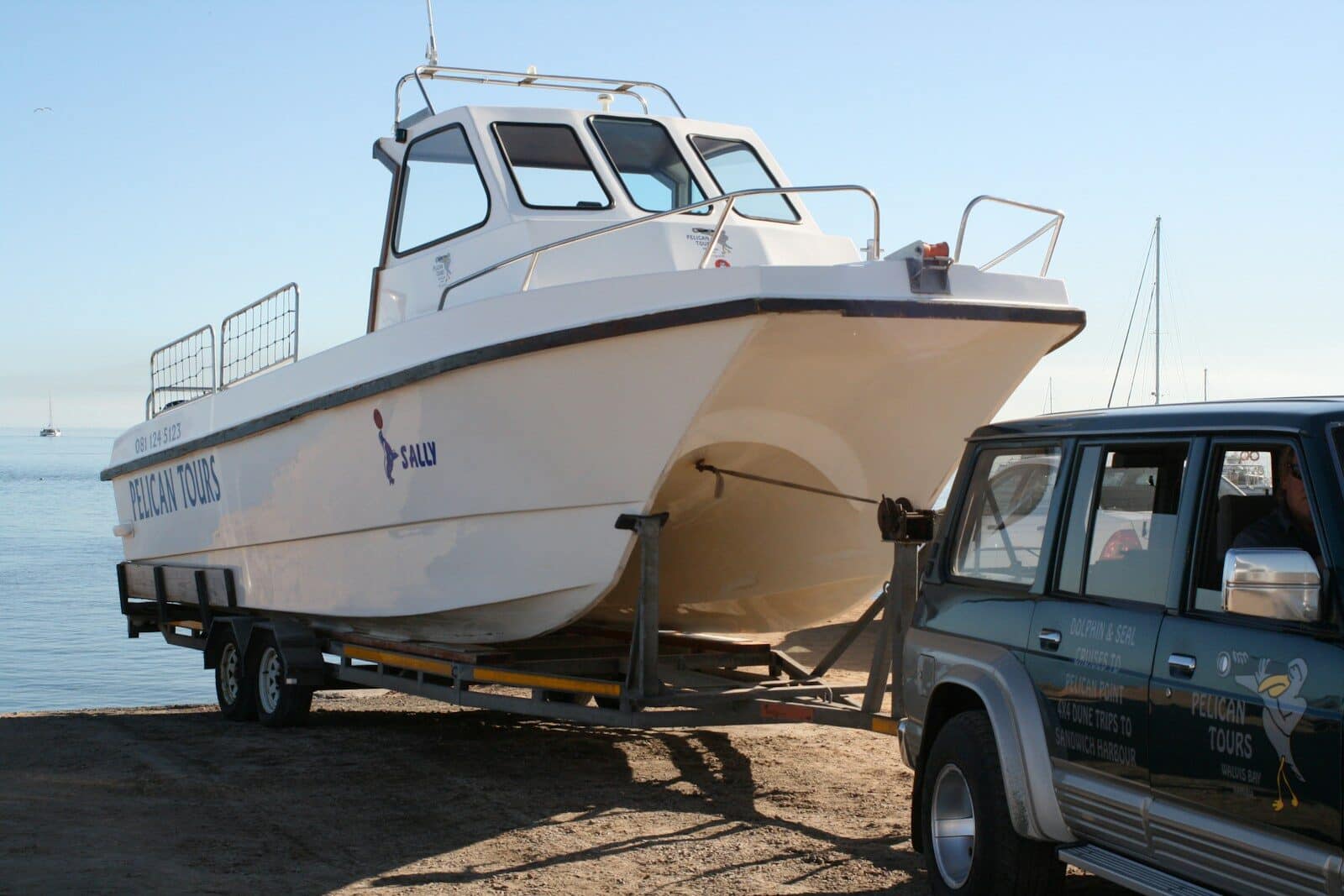
Interstate Haulers are boat transporters that 3 offers transport with or without a trailer. We carry specialized equipment — including custom hydraulic trailers and flatbeds — designed to safely load and secure boats that aren’t mounted on their own trailer. Larger boats may also require additional specialized equipment to load safely. This makes us a practical solution for dealer purchases, private sales, and marina-to-marina moves. No trailer? No problem.
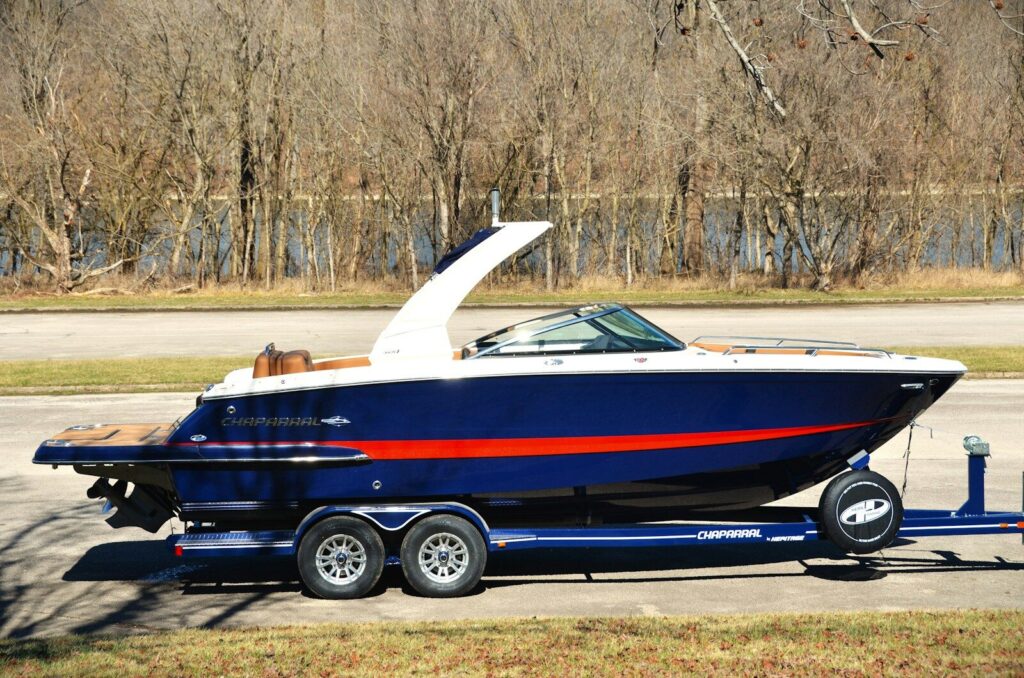
Photo by Roger Starnes Sr on Unsplash
3. Why Does Route Planning Matter for Oversize Boat Shipments?
Oversized Boat Transport Requires Careful Planning
Boats aren’t small. Many exceed legal width and height limits for standard road travel, which means they qualify as oversize loads. Any boat wider than 8 feet 6 inches or taller than 13 feet 6 inches requires a permit to travel on public roads — and those permits are state-specific. Oversized boats often require special permits for overland transport, adding both time and cost to the process.
According to the Federal Motor Carrier Safety Administration (FMCSA), oversize and overweight permit requirements vary by state, adding complexity to multi-state hauls. Beyond permits, professional route planning accounts for bridge clearances, road weight restrictions, low-hanging infrastructure, construction zones, and time-of-day travel rules.
Getting this wrong can delay your delivery, expose you to fines, or — worst case — damage your boat. Professional haulers plan routes thoroughly before a single mile is driven.
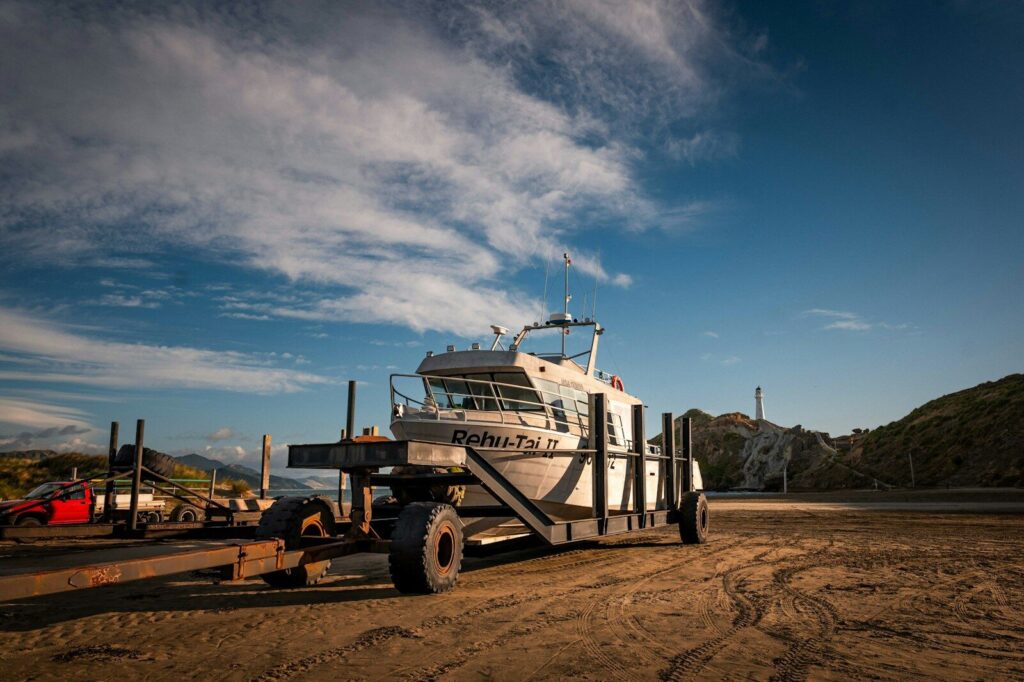
Photo by James Coleman on Unsplash
4. How Do Professionals Better Protect Your Boat During Transport?
Protecting One of Your Biggest Investments
Boats represent significant financial investments. A pontoon boat, wake boat, or cabin cruiser can cost anywhere from tens of thousands to several hundred thousand dollars. Every mile on the road is an opportunity for something to go wrong if the boat isn’t loaded and secured correctly.
Transportation methods must be matched to the boat’s characteristics and destination. Common boat transport methods include trailer transport and water delivery, while container shipping offers additional protection for smaller boats traveling long distances or overseas. For international moves, Roll-on/Roll-off (RoRo) is one of the most widely used methods.
Professional boat transport companies use proper tie-down methods, load-appropriate equipment, and safe driving practices designed specifically for high-value, irregularly shaped cargo. This includes protecting:
- Fiberglass and aluminum hulls from road vibration and road debris
- Outboard and inboard engines from unsecured movement
- Electronics, instrumentation, and displays from jarring
- Rod holders, towers, T-tops, and accessories from low clearances or wind shear
The U.S. Coast Guard’s 2024 Recreational Boating Statistics report documents over $88 million in property damage from boating-related incidents. While those are on-water accidents, the principle is the same: the cost of damage to a boat is steep. Proper protection during transport isn’t optional — it’s the point.
It’s also important to work only with boat moving companies that are fully licensed and insured. This protects you in the event of an incident and ensures your hauler operates in compliance with federal regulations. Interstate Haulers is FMCSA-compliant, licensed, and insured — every time, without exception.
Photo by Franck Michel on Unsplash
5. Can You Transport a Boat Across the Country?
Nationwide Boat Transportation You Can Count On
Long-distance boat transport is one of the most common challenges boat owners face. Snowbirds heading south for the winter, buyers purchasing from out-of-state dealers, sellers shipping to buyers across the country — all of these require reliable coast-to-coast coverage.
Interstate Haulers provides nationwide boat transport across the continental United States. Whether you need to move a boat from Michigan to Florida, from California to Texas, or from the Pacific Northwest to the Gulf Coast, our logistics network covers it. And because we’re a single, dedicated team — not a freight broker passing your load to an unknown third party — you get consistent service and communication throughout.
6. Is DIY Boat Hauling Worth the Hassle?
Skip the Headaches of DIY Hauling Boats
Moving a boat yourself sounds straightforward until you start adding up the requirements. DIY towing is really only practical for small boats under 25 feet that already have a compatible trailer. For those situations, out-of-pocket costs are mostly limited to fuel and vehicle maintenance — but even that adds up on a long haul.
First, you need a tow vehicle capable of handling the weight — not every truck or SUV qualifies. Then comes the compatible trailer, proper trailer wiring and lights, and the right hitch configuration. Add to that the hours spent behind the wheel, fuel costs for a heavy load, overnight stops, and the mental strain of towing a large vessel through traffic, weather, and unfamiliar roads.
The BoatUS Foundation’s Transportation & Trailering Guide provides a thorough overview of what safe trailering actually involves — and it’s more involved than most people expect. Equipment checks, weight distribution, trailer brake systems, and state-by-state rules all require attention.
Professional overland trucking is the most common method for domestic boat transport, and for good reason. Hiring professionals removes the variables that make DIY hauling stressful. Your boat gets moved. You don’t have to take days off work, rent equipment, or stress about whether your hitch setup is rated for the load.
7. Who Manages Pickup, Scheduling, and Delivery?
One Team Managing the Entire Process
Coordinating boat transport involves more moving parts than people realize. You need to confirm pickup availability with a marina, dealer, or private party. You need to schedule delivery at a location that can accommodate a large truck and trailer. You need communication at every stage so nobody is left waiting.
Interstate Haulers coordinates the full process from start to finish. Our team handles scheduling, communicates with pickup and delivery contacts, and keeps you updated throughout the haul. Whether your boat is being picked up from a residential driveway, a dealership lot, or a commercial marina, we manage the logistics so you don’t have to.
8. What Types of Boats Can Interstate Haulers Transport?
From Small Fishing Boats to Large Cabin Cruisers
Interstate Haulers transports a wide range of vessel types, including:
- Fishing boats — Jon boats, bay boats, and offshore center consoles; typically feature deeper V-hulls for open-water stability
- Pontoon boats — standard and tritoon configurations
- Bass boats — low-profile, performance-oriented freshwater vessels
- Ski and wake boats — inboard-driven tow boats
- Center console boats — versatile offshore and inshore vessels
- Deck boats — spacious family-use platforms
- Cabin cruisers — larger vessels with onboard accommodations
- Sailboats — wind-propelled vessels requiring mast and rigging removal before transport
- Yacht Transport — large luxury vessels designed for extended travel
- Dinghies — small boats commonly used for short trips or as tenders
Each boat type has different transport requirements. A pontoon boat, for example, presents width challenges that a bass boat doesn’t. A sailboat with a tall mast requires different planning than a center console — sails and rigging must be removed before transport to ensure safe clearance on the road. According to the National Safe Boating Council’s 2024 Recreational Boating Facts, open motorboats represent the most common vessel type in the country — and they’re among the most common boats we move.
Whatever you’re hauling, our team has the experience to move your boat safely.
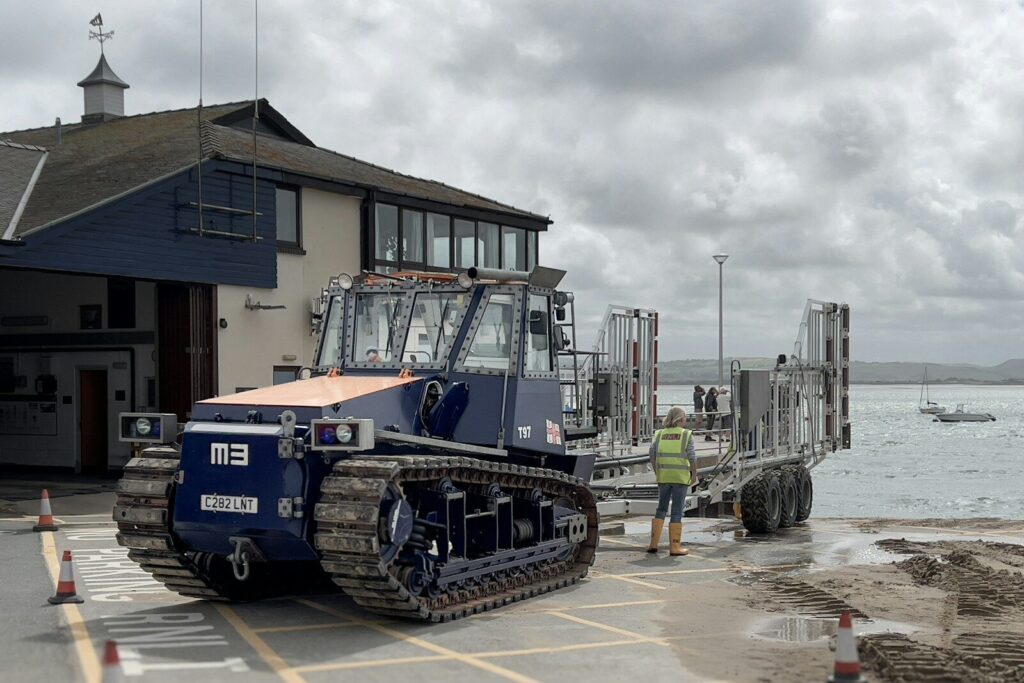
Photo by Gavin Allanwood on Unsplash
9. Why Does Being Family-Owned Matter for Boat Transport?
You’re More Than Just Another Shipment
Large freight brokers move thousands of loads. For them, your boat is a line item. Interstate Haulers has operated as a family-owned business since 1997, and that distinction matters in a tangible way: you get real communication, honest answers, and someone who genuinely cares whether your boat arrives in the same condition it left.
Our clients range from individual boat owners moving a single vessel to dealers and manufacturers coordinating ongoing deliveries. Regardless of who you are or what you’re moving, you get the same level of personal attention. We provide transparent quotes, straightforward scheduling, and consistent follow-through — the kind of service that’s built a loyal customer base over three decades.
10. Can Professional Boat Transport Actually Save You Money?
Avoid Expensive Mistakes That Add Up Fast
DIY boat transport feels cheaper at first glance. But the real costs add up quickly:
- Fuel for a heavy tow load, often 30–50% more than normal
- Hotel stays during multi-day hauls
- Trailer wear and tire replacement from loaded highway miles
- Vehicle maintenance from towing strain
- Time off work during transport days
- State permits that few private owners know how to navigate correctly
- Repair costs if something goes wrong en route
When you factor in these expenses against a professional transport quote, the gap narrows significantly — and that’s before accounting for the cost of even minor damage to a boat worth $40,000, $80,000, or more. Professional boat transport isn’t just convenient; for most people, it’s the more economical choice when you account for the full picture.
How Much Does Boat Transport Cost?
Understanding Pricing Factors and Ranges For Transporting Boats
Boat transport pricing varies based on several key factors — and understanding them helps you plan and budget more accurately.
Common factors that affect transport decisions and pricing include:
- Distance: Short-distance transport typically costs between $150 and $300. Long-distance transport — across multiple states or coast to coast — generally runs $600 to $1,000 or more. A boat shipping quote ca average $1.25 to $15.00 per mile depending on the vessel and route.
- Boat size: Boat size significantly influences transport pricing. Larger boats require more equipment, more permits, and more complex routing.
- Seasonal demand: Transport pricing and availability are influenced by seasonal demand. Spring and fall are peak seasons, and booking early can mean better rates and more scheduling flexibility.
- Budget and timeline: These are among the most common factors shaping transport decisions. Last-minute moves and tight deadlines can affect both price and method.
- Domestic vs. international: International boat transport is generally more expensive than domestic moves. International shipments often involve Roll-on/Roll-off (RoRo) loading or container shipping, both of which add cost compared to standard overland trucking.
For a standard domestic boat, transport typically costs $150 to $300, though larger vessels, longer routes, and oversize permits can push that figure higher. The best way to get an accurate price is to provide your exact boat dimensions and route details — which is exactly what our free quote process is designed to capture.
How to Prepare Your Boat for Transport
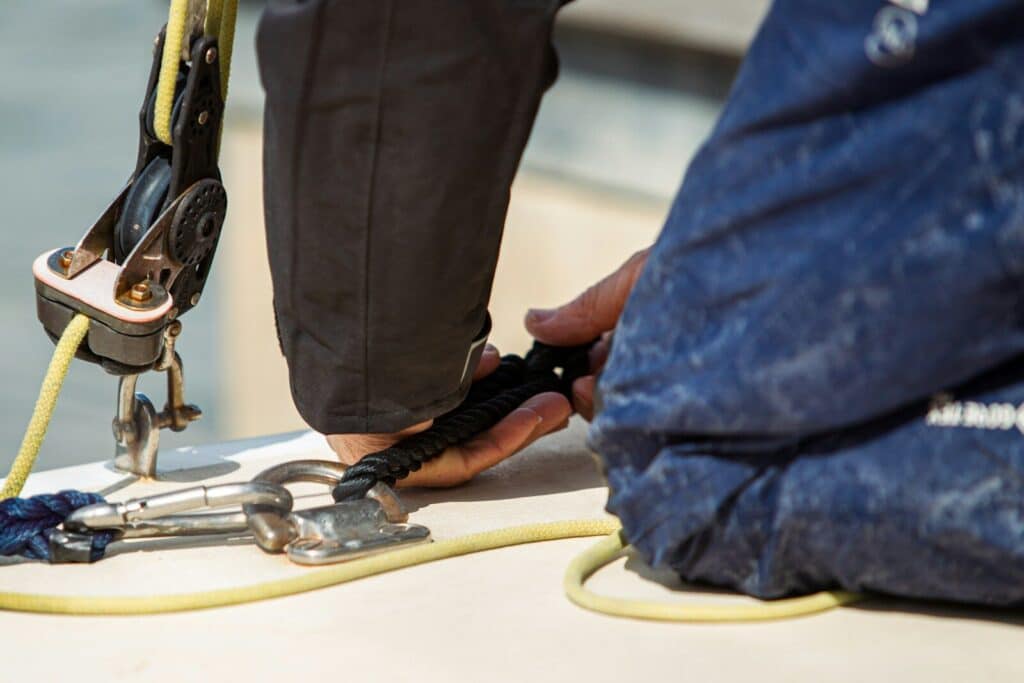
Photo by Owen Sellwood on Unsplash
A Thorough Checklist Before Pickup
Before your boat is picked up, proper preparation protects both the vessel and the transport team — and helps avoid delays at loading. Here’s a comprehensive checklist:
Safety and mechanical prep:
- Empty the bilge completely before transport
- Disconnect fuel tanks to reduce fire risk during transit
- Disconnect batteries if recommended for the haul
- Check fluid levels and note any existing leaks
Boat-type-specific steps:
- Remove sails and rigging from sailboats before transport to ensure road clearance and prevent damage
- Lower or remove any antennas, towers, or T-tops that exceed height limits
Documentation:
- Document your boat’s condition with time-stamped photographs before pickup — this gives you a clear record if anything needs to be addressed upon boat being delivered.
- Confirm the boat’s dimensions — length, beam, and height — and provide accurate measurements when requesting a quote; boat transport requires accurate dimensions for both safety and pricing
General prep:
- Secure loose items inside and on deck — fishing rods, fenders, dock lines, and covers should be removed or tied down securely
- Clean the boat before transport to make it easier to inspect the vessel’s condition
- Remove all personal belongings and valuables from storage compartments
- Prepare any paperwork relevant to ownership or dealer documentation
A little prep on your end helps our drivers load efficiently and gives you a documented baseline to reference upon delivery.
Why Interstate Haulers Is the Trusted Choice for Boat Transport
Nearly 30 years of specialized experience. Family-owned service. FMCSA-compliant, licensed and insured drivers. Nationwide coverage across the continental U.S. Personalized communication at every step of the process. These aren’t marketing phrases — they’re the foundation of how Interstate Haulers has operated since 1997.
Our clients include individual boat owners making one-time moves, marine dealers coordinating regular deliveries, and freight partners who trust us to handle oversized specialty loads professionally. That breadth of trust reflects what happens when a company delivers on its promises — consistently, over decades.
The NMMA reports that recreational boating now generates $230 billion in annual economic impact, reinforcing just how much value Americans place in their boats. Your vessel deserves transport that reflects that value.
Your Next Move Starts With a Free Quote
Hiring experienced professionals to handle your boat transport protects your investment, eliminates the stress of DIY hauling, and ensures your vessel arrives safely — whether the delivery point is one state away or on the other side of the country. Interstate Haulers brings specialized expertise, nationwide reach, and the kind of personal service that only a family-owned operation can provide.
Ready to move your boat? Request your free boat transport quote from Interstate Haulers today, or call us directly at (910) 295-2244. Tell us what you’re moving, where it’s going, and we’ll take it from there.
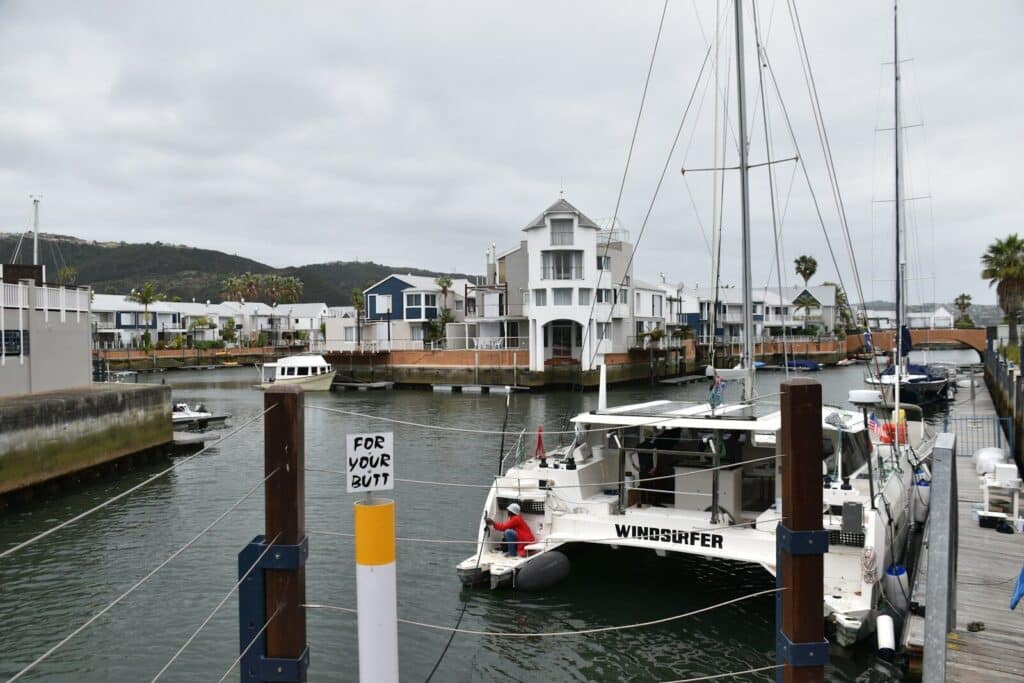
Photo by Satish Ajodha on Unsplash
Frequently Asked Questions About Boat Transport
What is the cheapest way to transport a boat?
The least expensive option depends on the size of the boat, the distance involved, and whether the vessel has a trailer. DIY towing is most practical for small boats under 25 feet that already have a compatible trailer — in those cases, costs are mainly limited to fuel and vehicle maintenance. For larger boats or longer distances, professional transport often delivers better overall value when you factor in permits, equipment, lodging, and the risk of damage.
How much does it cost to transport a boat per mile?
Shipping boats can average $1.25 to $15.00 per mile, depending on the vessel’s size, route complexity, permit requirements, and time of year. Rather than relying on average estimates — which rarely reflect your specific situation — request a personalized quote from Interstate Haulers for an accurate figure.
How much does it cost to get a boat moved?
Short-distance transport typically costs between $150 and $300. Long-distance transport generally ranges from $600 to $1,000 or more. Boat size significantly influences pricing, and oversized vessels that require special permits will carry additional costs. The best way to get an accurate number is to provide your boat’s dimensions and pickup/delivery locations.
How do I ship a boat to another state?
Shipping a boat to another state is straightforward when you work with an experienced hauler. The basic process with Interstate Haulers is:
- Request a free quote and provide your boat’s dimensions and pickup/delivery locations
- Review and confirm the transport plan and pricing
- Schedule pickup at your preferred date and location
- Prepare your boat using the pre-transport checklist — including emptying the bilge, disconnecting fuel tanks, removing sails and rigging if applicable, and documenting the boat’s condition with time-stamped photographs
- Our team handles permits, routing, and delivery — and keeps you updated throughout
Does Interstate Haulers transport boats without trailers?
Yes. Interstate Haulers carries specialized equipment — including custom hydraulic trailers and flatbeds — to transport boats that are not mounted on a trailer. This is especially useful for dealer purchases, marina pickups, auction acquisitions, and estate sales where a trailer is not included.
How far in advance should I book boat transport?
Booking two to four weeks in advance is generally recommended, particularly during peak seasons such as spring (for buyers launching for the summer) and fall (for seasonal relocations heading south). Seasonal demand influences both pricing and availability, so earlier booking typically provides more scheduling flexibility and better rates. Last-minute transport may be available depending on capacity, but advance planning is always the better approach.
What transport methods are used for boats?
Common boat transport methods include trailer transport and water delivery for domestic moves. For international transport, Roll-on/Roll-off (RoRo) is widely used, while container shipping offers additional protection for smaller boats. The right method depends on the boat’s size, characteristics, and destination — and professional boat haulers will recommend the most appropriate approach for your specific vessel.