Utility trailers come in a wide range of designs—open, enclosed, flatbed, lowboy, dump, car hauler, and specialty—each built for different cargo types and loading methods. Key selection factors include weight capacity, axle configuration, frame construction, hitch type, tie-down points, and size. Understanding these variables before you buy helps you choose a trailer that handles your specific hauling needs safely and efficiently.
Picking the wrong trailer doesn’t just cause inconvenience—it can damage your cargo, strain your tow vehicle, and create serious safety hazards on the road. Whether you’re hauling a zero-turn mower, a side-by-side ATV, a full load of construction materials, or a car, the trailer you choose determines how safely and efficiently the job gets done.
This guide breaks down every major trailer type, explains what makes each one suited to specific tasks, and walks you through the features and specs that matter most when comparing options.
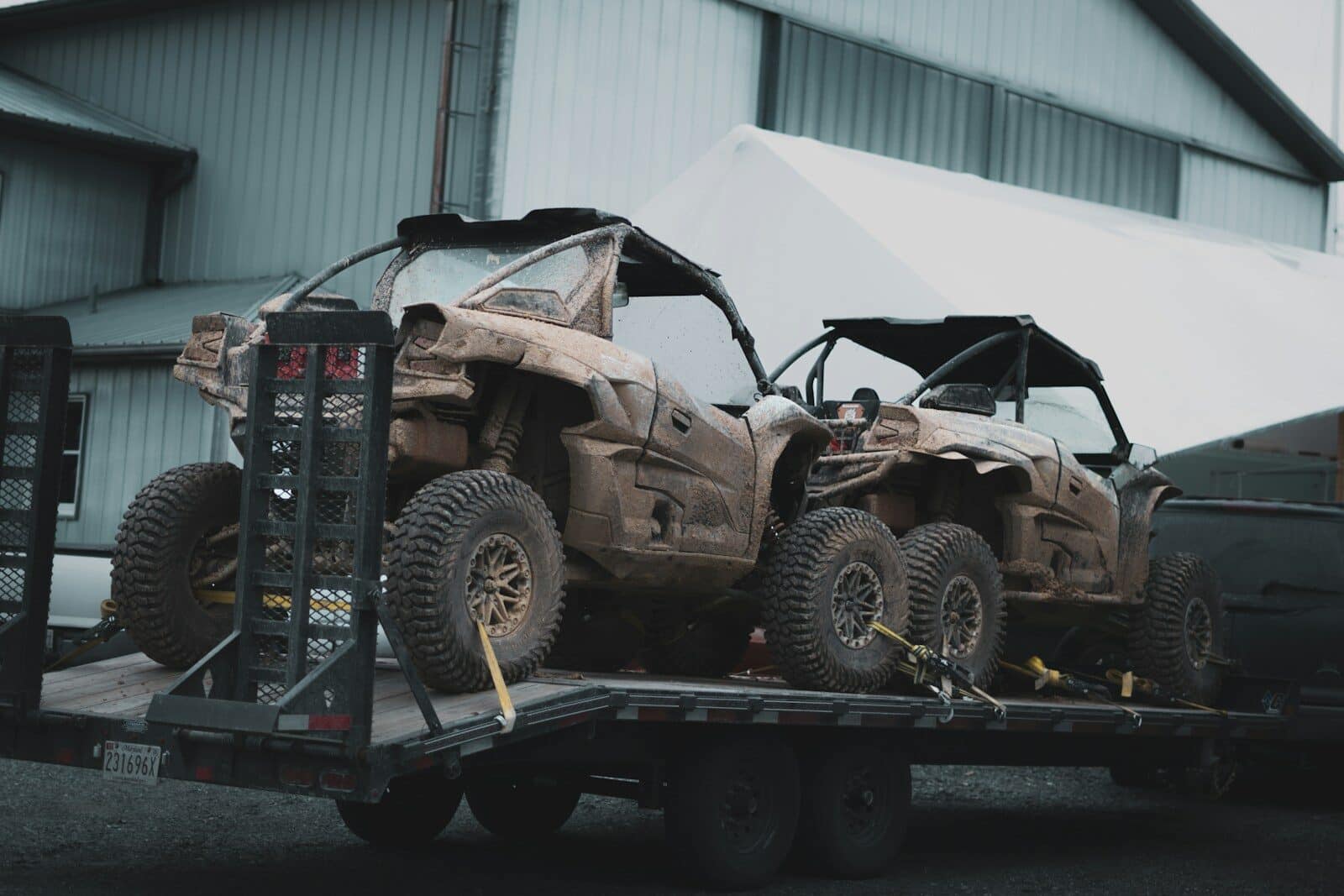
Photo by Vikram Singh on Unsplash
Why Trailer Type Matters
Every trailer type is designed for several actions, different uses and loading methods. What works perfectly for a landscaper moving mulch and equipment won’t work for a contractor hauling heavy machinery, and neither of those is the right choice for someone transporting a vehicle or a boat.
Utility trailers are among the most versatile hauling tools available. They can transport lawn equipment, ATVs, camping gear, furniture, appliances, and construction materials—all depending on the configuration. But “utility trailer” is itself a broad category. Understanding the differences between open, enclosed, flatbed, lowboy, dump, and car hauler designs is the first step to making the right purchase.
Types of Trailers: What Each One Is Built For
Open Utility Trailers
Open utility trailers are the most common and versatile option for general hauling. They feature an open bed with side rails and a low profile that makes loading and unloading fast and straightforward. Typical features include low sides for easy loading, fold-down rails that allow drive-on or walk-on access, and spring-assisted rear ramp gates that make loading equipment like mowers and ATVs safer and more manageable.
Common uses include:
- Landscaping tasks such as transporting mowers, mulch, and lawn equipment
- Hauling recreational vehicles like ATVs and camping gear
- Moving furniture and appliances
- Carrying construction materials and tools
Open utility trailers are available in a wide range of sizes to match different hauling needs. Common sizes include 6×10 feet for light personal use and up to 16 feet or more for heavier commercial applications. Many models are built around a 3,500-pound axle capacity, making them well-suited for moderate loads typical of landscaping, recreation, and light construction work.
Enclosed Utility Trailers
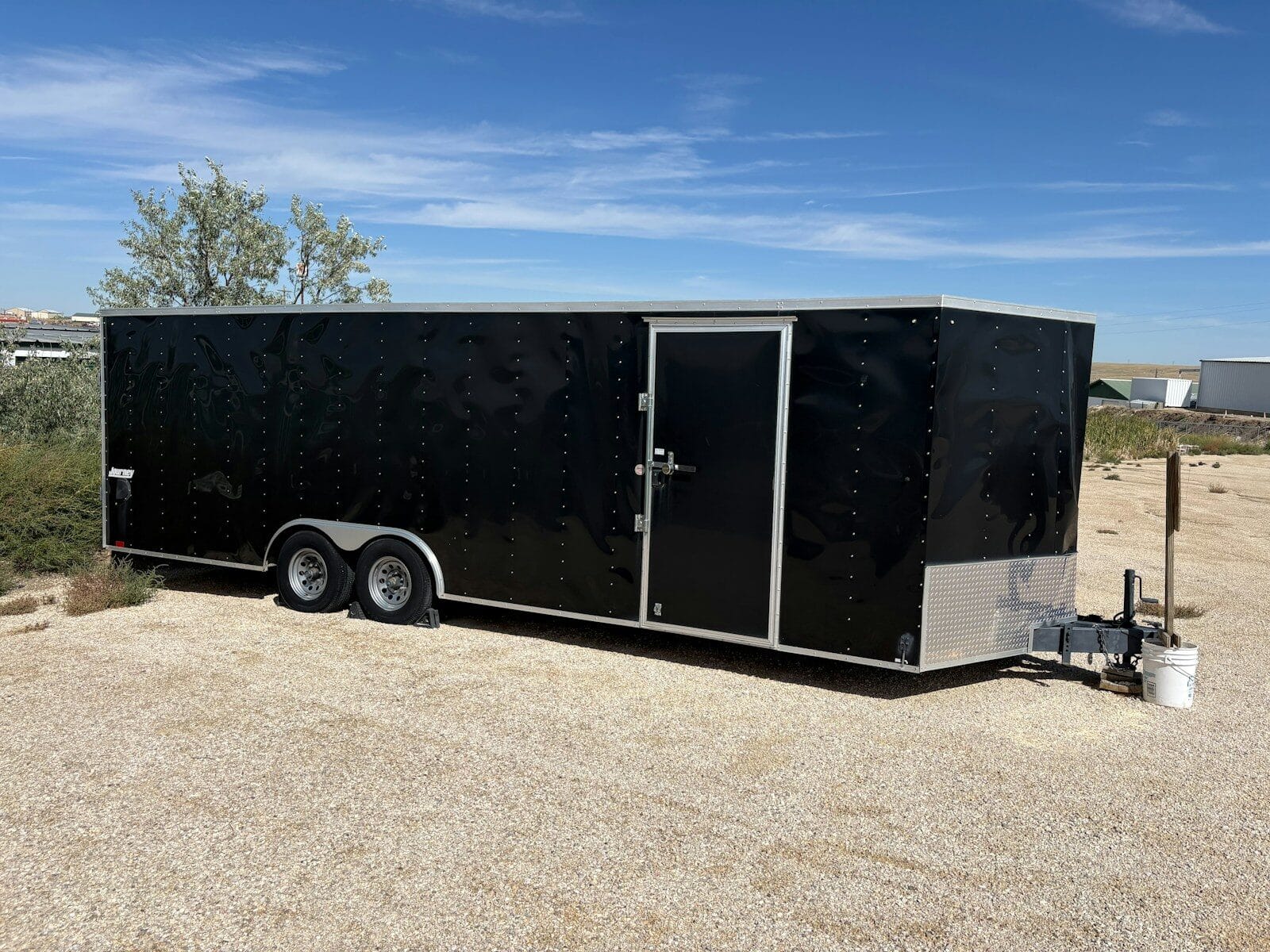
Enclosed utility trailers add a roof and walls to the open trailer format, providing a fully covered cargo space. The primary advantages are protection and security: enclosed trailers protect cargo from weather—rain, wind, road debris, and UV exposure—and provide a lockable environment that significantly reduces the risk of theft.
Best suited for:
- Transporting valuable tools and equipment
- Long-distance moves where weather exposure is a concern
- Contractors who need mobile storage between job sites
- Anyone hauling cargo that can’t be exposed to the elements
Enclosed designs are available in single or tandem axle configurations and across a wide range of sizes, making them adaptable for everything from personal use to commercial fleet applications.
Flatbed Trailers
Flatbed trailers feature an unobstructed deck with no sides or roof. That open design is precisely what makes them useful: it eliminates the barriers that complicate loading oversized, irregularly shaped, or heavy items. Flatbed trailers facilitate loading oversized items without obstructions, which is why they’re widely used in construction, agriculture, and heavy equipment transport.
Typical applications include:
- Carrying heavy equipment and large machinery
- Transporting lumber, steel, and building materials
- Hauling items that are too wide or tall for enclosed or sided trailers
- Commercial construction and industrial logistics
Because flatbeds allow loading from all sides and above, they work well with forklifts, cranes, and other equipment that can’t easily load through a rear gate.
Lowboy Utility Trailers
Lowboy trailers are a specialized flatbed variant defined by their low deck height. That reduced ground clearance lowers the center of gravity for the cargo, which improves stability when hauling heavy or tall equipment. This makes lowboys particularly effective for transporting large construction equipment, heavy machinery, and other loads where height and balance are critical concerns.
The low deck also reduces the ramp angle required for drive-on loading, making it easier and safer to load equipment with low clearance.
Dump Trailers
Dump trailers are equipped with a hydraulic lift system that tilts the cargo bed to unload loose materials quickly and without manual effort. That feature makes them invaluable for operations involving gravel, soil, sand, mulch, demolition debris, and similar bulk materials.
Dump trailers speed up unloading significantly compared to manually offloading loose materials by hand or with shovels. For landscaping contractors, construction crews, and waste haulers, the time savings alone typically justify the investment.
Key applications:
- Landscaping and site preparation
- Construction material delivery and debris removal
- Agricultural bulk material transport
- Residential and commercial hauling of loose goods
Car Hauler Trailers
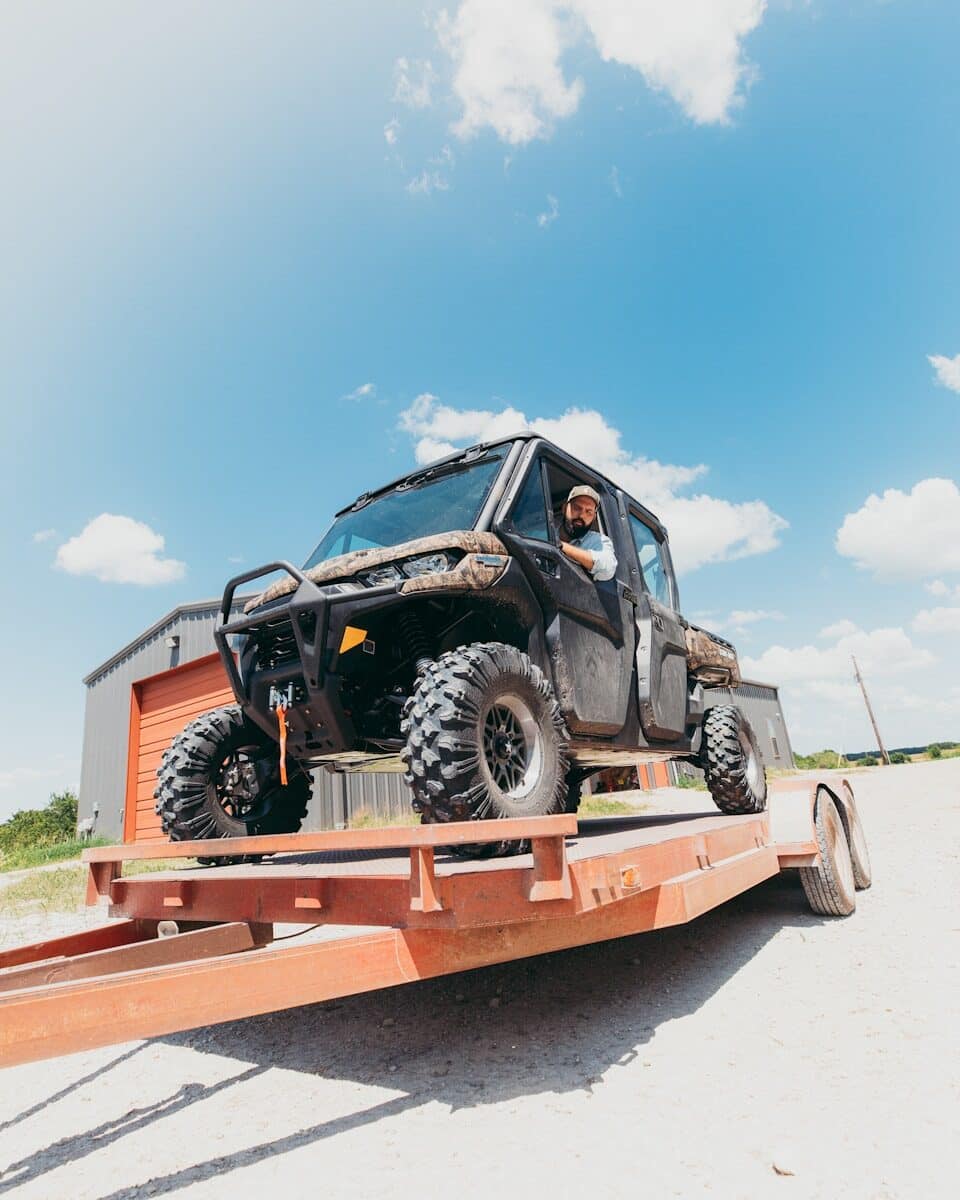
Car hauler trailers are built specifically for transporting vehicles securely. They incorporate loading ramps designed for low-clearance vehicles, multiple tie-down anchor points positioned to secure wheels and frames, and a low deck profile that reduces the loading angle.
Designed for:
- Transporting personal vehicles during a move or relocation
- Delivering cars for dealers or auto auction transport
- Moving project vehicles, race cars, or classic cars
- Fleet vehicle logistics and dealer inventory transfers
Car haulers are available in open and enclosed configurations. Enclosed car haulers offer additional protection from road debris and weather, which is preferred for high-value or show vehicles.
Specialty Trailers
Specialty trailers are designed to securely transport specific vehicles or equipment that standard trailer designs can’t safely accommodate. This includes motorcycle trailers, ATV-specific trailers, boat trailers, horse trailers, and equipment trailers built for unique industrial applications.
Each specialty trailer incorporates features tailored to the cargo it was designed to carry—wheel chocks and tie-down positions calibrated for motorcycles, v-shaped hulls on boat trailers, or padded stall dividers on horse trailers. Selecting the right specialty trailer isn’t just about convenience; it’s a safety requirement.
Key Features to Evaluate Before You Buy
Once you’ve identified the trailer type that fits your hauling needs, the specific features of each model determine long-term performance, durability, and value. Here’s what to look at carefully.
Weight Capacity and Size
Weight capacity and size are the two most critical factors when selecting a utility trailer. Every trailer has a Gross Vehicle Weight Rating (GVWR)—the maximum combined weight of the trailer and everything loaded onto it. Exceeding that rating strains the axles, tires, brakes, and frame, and creates dangerous towing conditions.
Match the trailer’s GVWR to your actual cargo weight, not just an estimate. Measure the dimensions of what you’ll be hauling and select a trailer size that provides adequate room without unnecessary excess. Common utility trailer sizes range from compact 6×10 foot models for personal use to large configurations for commercial applications.
Single Axle vs. Tandem Axle
The number of axles directly impacts stability, weight distribution, and maximum payload.
- Single axle trailers are suitable for lighter personal use. They’re easier to maneuver, lighter in overall weight, and typically less expensive. For hauling a riding mower, camping gear, or a small load of materials, a single axle is often sufficient.
- Tandem axle trailers provide greater stability and higher weight capacity. Tandem axles distribute weight across four wheels instead of two, reducing the impact of a single tire failure and improving handling at highway speeds. For regular commercial use or consistently heavy loads, tandem axles are the more reliable choice.
Hitch Type
Hitch type impacts the trailer’s stability and strength in ways that affect every trip. The coupler rating must match the ball size on the tow vehicle, and the hitch class must be rated for the trailer’s GVWR. A mismatched or under-rated hitch connection is one of the most common—and most preventable—causes of towing failures.
Higher hitch classes provide greater tongue weight capacity and more secure connections. For heavier trailers and commercial applications, a weight-distributing hitch system further improves stability by leveling the load across all axles of the tow vehicle.
Frame Construction
Frame construction influences trailer durability and towing ease over the life of the trailer. Steel frames offer high strength and are well-suited for heavy-duty use, though they require proper coating to resist rust. Aluminum utility trailers are lightweight and durable—they resist corrosion without additional treatment, which reduces long-term maintenance and keeps overall trailer weight down. A lighter trailer frame means less strain on the tow vehicle and lower fuel consumption over time.
Look for trailers with a welded tubular frame design, which provides superior rigidity compared to bolt-together construction. A fully welded frame reduces flex during towing and improves long-term structural integrity.
Tie-Down Points
Utility trailers should have reliable tie-down points for securing cargo, and those anchor points should be integrated into the frame—not attached as afterthoughts. The number, placement, and rating of tie-down rings determine how securely different cargo configurations can be fastened.
For equipment-heavy hauling, look for D-rings rated to match your cargo weight. For multi-item loads like landscaping equipment or construction supplies, multiple anchor points along both sides of the trailer give you flexibility in load configuration.
LED Lights
LED lights are more durable and last longer than incandescent bulbs, and they draw less power from the tow vehicle’s electrical system. For trailers used in commercial applications or subjected to heavy vibration, LED lights are worth prioritizing over incandescent alternatives. They’re more resistant to shock, moisture, and road vibration—all conditions that cause incandescent bulbs to burn out prematurely.
Radial Tires
Radial tires handle highway speeds and last longer than bias-ply tires. For any trailer regularly used on highways or over long distances, radial tires are the better investment. They run cooler, wear more evenly, and provide more consistent handling than bias-ply tires, which are better suited to low-speed, off-road applications.
Powder Coat Finish
Surface protection determines how well a trailer holds up over years of exposure to moisture, road salt, and UV rays. A quality multi-step powder coat finish provides significantly better corrosion resistance than standard painted finishes, and it’s especially important for trailers used in humid climates or stored outdoors. When comparing trailers, ask about the number of finish steps—more steps generally indicate a thicker, more protective coating.
Loading Features
- Fold-down rails increase load versatility by allowing you to haul items that can drive or roll onto the trailer from the side, not just the rear.
- Spring-assisted rear ramp gates reduce the physical effort of loading and are particularly valuable when regularly loading heavy equipment like mowers, ATVs, or motorcycles.
- Ramp angle and deck height affect how easily equipment can be loaded without risk of bottoming out—a key consideration when selecting between standard and lowboy configurations.
Common Utility Trailer Applications
Construction
Utility trailers are used for construction to carry heavy equipment and materials. Open utility trailers handle lumber, concrete blocks, tools, and supplies efficiently. Flatbeds are preferred when the cargo dimensions exceed the capacity of a sided trailer. Lowboys are used when heavy machinery needs to be loaded and transported with maximum stability.
Landscaping
Utility trailers are commonly used for landscaping tasks like transporting mowers and mulch. A standard open utility trailer with fold-down rails and a spring-assisted ramp gate is the workhorse for most landscaping crews, allowing mowers, blowers, trimmers, mulch bags, and soil to be loaded and unloaded quickly at each job site.
Moving
Utility trailers can transport furniture and appliances during moving. Enclosed utility trailers are especially practical for household moves, keeping contents protected from weather and reducing the risk of items being jostled loose in transit.
Recreational Hauling
Utility trailers are useful for hauling recreational vehicles like ATVs and camping gear. Single-axle open trailers with appropriate tie-down points and ramp gates handle most recreational hauling needs comfortably, while specialty trailers provide the right configuration for motorcycles, boats, or horse transport.
Open vs. Enclosed: Choosing Between the Two
The choice between an open and enclosed utility trailer comes down to three considerations: cargo protection, security, and convenience.
- Open trailers are faster to load, easier to clean, and sufficient for cargo that isn’t sensitive to weather or theft.
- Enclosed trailers are the right choice when cargo value, weather sensitivity, or security requirements make a covered, lockable space necessary.
Utility trailers can be open or enclosed depending on hauling needs—and many operators own one of each to cover different scenarios.
Utility Trailer Buying Checklist
Before finalizing any trailer purchase, work through these key considerations:
- ✓ Trailer type: Open, enclosed, flatbed, lowboy, dump, car hauler, or specialty?
- ✓ Primary use: Construction, landscaping, moving, recreation, vehicle transport, or commercial hauling?
- ✓ Size: Does the bed length and width accommodate your largest cargo?
- ✓ GVWR: Is the weight capacity rated for your heaviest expected load?
- ✓ Axle configuration: Single axle for lighter personal use or tandem axle for heavier, more stable hauling?
- ✓ Frame material: Steel for maximum strength or aluminum for lightweight durability?
- ✓ Hitch type: Matched to your tow vehicle’s receiver class and tongue weight rating?
- ✓ Tie-down points: Adequate number and placement for your cargo configuration?
- ✓ Lights: LED for durability and longevity?
- ✓ Tires: Radial for highway use and extended tread life?
- ✓ Finish: Multi-step powder coat for corrosion resistance?
- ✓ Loading features: Fold-down rails, spring-assisted ramp gate, lowboy deck, or side access?

Photo by Towfiqu barbhuiya on Unsplash
Frequently Asked Questions
What are utility trailers used for?
Utility trailers are designed to transport goods, vehicles, and equipment across a wide range of tasks. Common applications include construction material hauling, landscaping, recreational use (ATVs, camping gear, motorcycles), furniture and appliance moving, and general cargo transport. Utility trailers are versatile for various hauling tasks precisely because they come in so many designs—open, enclosed, flatbed, lowboy, and more—each suited to different cargo types and loading methods.
What size utility trailer do I need?
Common sizes for utility trailers include 6×10 feet for light personal use and larger configurations for heavier commercial applications. The right size depends on the dimensions of your largest cargo and the total weight you’ll be hauling. Start by measuring the items you’ll transport most often and match that to trailer bed dimensions that provide room to secure the load properly.
What is the difference between a single axle and tandem axle trailer?
Single axle trailers are suitable for lighter personal use—typically loads under 3,500 pounds. They’re more maneuverable and easier to back into tight spaces. Tandem axle trailers provide greater stability and higher weight capacity, making them the better choice for consistent commercial use or loads that approach or exceed single axle limits. Tandem axles also provide a safety margin if one tire fails, since the trailer continues to ride on the remaining tires.
Are aluminum utility trailers better than steel?
Aluminum utility trailers are lightweight and durable, with natural corrosion resistance that eliminates the rust risk that affects steel. Steel trailers offer higher strength for the heaviest loads but require proper coating or ongoing maintenance to prevent rust. For most personal and light commercial use, aluminum provides a practical balance of strength, weight savings, and long-term durability.
What features should I look for on a utility trailer?
Prioritize: reliable tie-down points integrated into the frame, LED lights for durability, radial tires for highway use, a quality powder coat finish for corrosion resistance, the correct axle rating for your load, and loading features (fold-down rails, spring-assisted ramp gate) that match how you’ll use the trailer. Hitch type and frame construction also significantly affect long-term performance and safety.
Find the Right Trailer for Your Hauling Needs
Utility trailers come in more configurations than most buyers initially realize—and that variety exists for good reason. Each trailer type is designed for different uses and loading methods, and selecting the right one from the start saves money, prevents cargo damage, and makes every haul safer.
Already Have a Trailer? Let Interstate Haulers Move It for You
Whether you need a lightweight open trailer for weekend landscaping, a heavy-duty tandem axle enclosed unit for commercial work, a flatbed for oversized materials on a good sale, or a specialty trailer for a specific vehicle type, the right trailer exists for the job. Take the time to match trailer type, size, axle configuration, and key features to your actual hauling requirements—and you’ll end up with equipment that performs reliably for years to come.
Once you’ve selected the right trailer, getting it where it needs to go is the next challenge — and that’s where Interstate Haulers comes in. Whether you’re a dealer moving inventory, a manufacturer coordinating deliveries, or an individual owner relocating a high-value asset, Interstate Haulers brings the expertise, nationwide reach, and personalized service to get the job done safely and on schedule. Every haul comes with tailored logistical planning and consistent communication from pickup to delivery — no surprises, no guesswork. Ready to move your trailer? Request a quote today on our website or call Interstate Haulers directly to talk through your transport needs.
Helpful Links & Resources
Whether you’re towing for the first time or you’ve logged thousands of miles, having the right information at your fingertips makes every trip safer. Below are seven trusted resources that cover everything from safety rules to maintenance tips. Bookmark the ones that fit your needs.
- National Highway Traffic Safety Administration (NHTSA) — Towing Safety: NHTSA offers clear guidance on safe towing practices, tire care, and load limits. It’s a great starting point for understanding how to keep your trailer stable on the road.
- Federal Motor Carrier Safety Administration (FMCSA): The FMCSA sets the rules for commercial trailer use, including weight regulations and safety compliance. Check here if you tow for work or need to understand federal requirements.
- U.S. Department of Transportation (DOT): The DOT is the central hub for national transportation policies and safety standards. Use it to stay current on regulations that affect trailer owners across the country.
- National Association of Trailer Manufacturers (NATM): NATM promotes safety and quality standards throughout the trailer industry. Their site helps you learn what to look for when buying a well-built, compliant trailer.
- Tire and Rim Association / Tire Safety Resources at NHTSA: Trailer tires wear differently than car tires, and this resource explains proper inflation, load ratings, and replacement timing. Keeping tires in good shape prevents dangerous blowouts.
- AAA — Trailer Towing Tips: AAA shares practical advice on hitching, backing up, and driving safely with a trailer in tow. Their beginner-friendly tips are perfect if you’re still getting comfortable behind the wheel.
- Your State Department of Motor Vehicles (DMV): Registration rules, license plate requirements, and weight limits vary by state. This official portal links you directly to your local DMV so you can register and title your trailer correctly.
Keeping these resources handy takes the guesswork out of owning and towing a utility trailer. A little research now can save you time, money, and headaches down the road.