Buying a utility trailer requires evaluating size, weight ratings, axle type, materials, and tow vehicle compatibility before you spend a dollar. This guide covers every key factor—from GVWR to the 60/40 loading rule—so you can choose the right trailer with confidence. If your ideal trailer is located out of state, Interstate Haulers can transport it directly to your door.
Utility trailers have become one of the most practical investments a homeowner, contractor, or small business owner can make. Whether you’re hauling landscaping equipment, ATVs, building materials, or furniture, the right trailer turns a multi-trip ordeal into a single-run task. They give you flexible, on-demand hauling for almost any material—so you can move large items on your own schedule instead of waiting on a delivery service.
But walk onto any dealer lot—or scroll through an online listing—and the options multiply fast. Open, enclosed, flatbed, or dump? Single or tandem axle? Steel or aluminum? Eight feet or sixteen? Without a clear framework, it’s easy to overbuy, underbuy, or simply buy the wrong thing entirely.
This guide breaks down every major decision point so you know exactly what you’re looking for before your first conversation with a dealer. By the end, you’ll understand how to match a utility trailer to your specific needs, calculate what it will actually cost to own, and navigate the process of getting it home—even if the best deal is a thousand miles away.

Photo by Amadeus Moga on Unsplash
What Is a Utility Trailer?
A utility trailer is an open or enclosed, non-motorized hauling platform towed behind a vehicle via a hitch. Unlike specialized trailers designed for a single purpose—boat trailers, horse trailers, car haulers—utility trailers are built for general-purpose use. That versatility is exactly what makes them so popular.
At their core, utility trailers give you convenient transportation for large or bulky items without waiting for a delivery truck or booking a rental every time a project comes up. Need mulch for the weekend? A new appliance moved across town? Lumber for a deck build? The right trailer puts that capability in your own driveway.
Common Uses for Utility Trailers
The list of what people haul on utility trailers is almost endless, but the most frequent uses include:
- Landscaping and lawn care: Riding mowers, zero-turns, blowers, trimmers, mulch, and sod
- Construction and DIY projects: Lumber, drywall, concrete blocks, tools, and debris removal
- Recreational equipment: ATVs, UTVs, dirt bikes, kayaks, and camping gear
- Moving and home projects: Furniture, appliances, and large items that won’t fit in a truck bed
- Small business hauling: Equipment, inventory, and trade supplies
For contractors and small businesses, a utility trailer often pays for itself within months. For homeowners, it eliminates repeated trips to the hardware store and costly rental fees. In fact, buying a trailer often costs less over time than paying rental fees again and again—especially if you haul regularly. The National Association of Trailer Manufacturers (NATM) is a useful resource for buyers who want to understand industry standards and verify that a manufacturer builds trailers that meet established safety and quality benchmarks.
The Four Main Utility Trailer Configurations
Before you get into sizes and materials, it helps to understand the four main configurations you’ll run into. Utility trailers generally come as open, enclosed, flatbed, and dump styles, and each one is built for a different kind of job. Choosing the right utility trailer really comes down to understanding two things: what you’ll haul, and what your vehicle can safely tow.
- Open trailers: The classic workhorse. Best for quick loading and general chores where the cargo doesn’t need protection; they do not protect cargo from weather or theft.
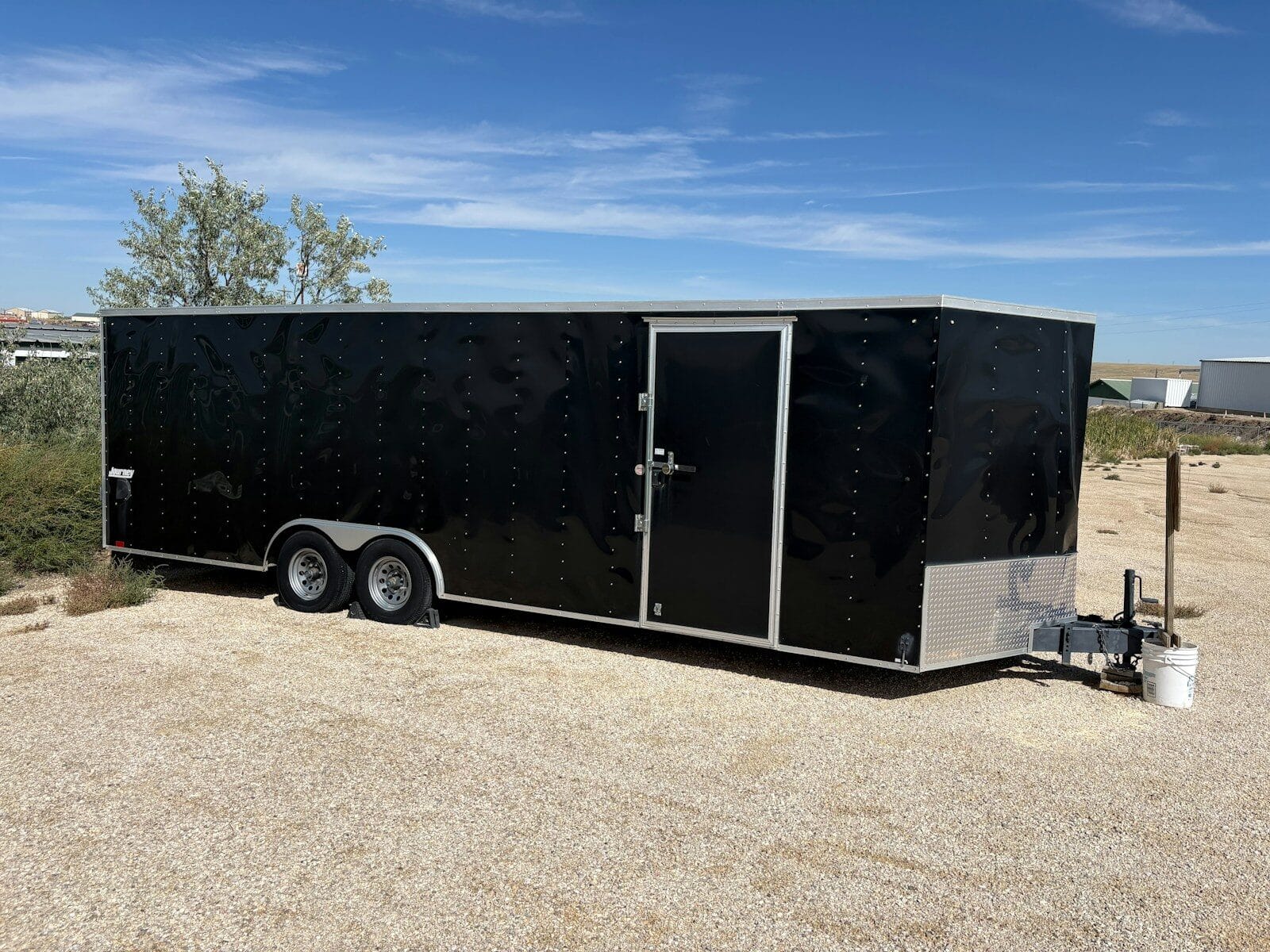
- Enclosed trailers: Walls and a roof turn the trailer into a mobile storage unit that protects valuable tools or gear from weather and theft, while the enclosed body adds security for tools and gear.
- Flatbed trailers: A wide, open deck with no sides, ideal for oversized or oddly shaped building materials that won’t fit neatly inside a walled trailer.
- Dump trailers: Built with a hydraulic bed for effortless unloading of gravel, soil, or mulch—no shoveling required.
We’ll dig deeper into open versus enclosed choices below, but keep these four types in mind as you read. The rest of your decisions—size, axles, materials—flow from the configuration you pick.
Determine How You’ll Use Your Utility Trailer
Before you compare models or prices, answer four questions honestly:
- What will I haul most often? Landscaping equipment is very different from motorcycles or construction debris.
- How much does my typical load weigh? Estimate as accurately as you can—this drives every size and rating decision.
- How often will I use it? Daily professional use justifies a different investment than occasional weekend hauling.
- Will I travel long distances? Highway towing demands more stability than short local runs.
- Does my cargo need weather or theft protection? If yes, an enclosed trailer may be worth the premium.
Your answers to these questions should guide every decision that follows. Choosing the right utility trailer always circles back to matching the intended cargo to your vehicle’s capabilities. Buying a trailer that fits your most common use case—rather than an extreme scenario you’ll encounter twice a year—usually results in the best long-term value.
Choosing the Right Trailer Size
Utility trailers are measured by their deck dimensions: length by width. Getting this right matters for both practical and legal reasons.
Trailer Length
Common utility trailer lengths run from 8 feet to 18 feet or longer. For everyday homeowner use, you’ll often see widths of roughly 4 to 6 feet paired with lengths from 8 to 14 feet or more. Here’s a rough guide:
- 8–10 ft: Ideal for lawn mowers, small loads, and tight storage situations
- 12–14 ft: The most popular range for homeowners and light contractors; fits most ATVs, small machinery, and standard loads
- 16–18 ft: Best for tandem ATVs, full landscaping setups, or larger construction hauls
- 18 ft and up: Reserved for commercial-scale hauling; requires more tow vehicle capacity and storage space
Trailer Width
Standard utility trailer widths run between 60 inches and 102 inches (5 to 8.5 feet), though many lighter-duty models start around 4 feet. Widths above 8.5 feet may require permits on public roads. Check your state’s DMV for specific regulations—the Texas DMV’s trailer page is a useful reference point for understanding how registration and compliance requirements are structured.
Why Bigger Isn’t Always Better
A longer, wider trailer costs more to buy and more to maintain. It’s harder to maneuver in tight spaces, requires more storage room, and puts greater demands on your tow vehicle. Choose the smallest trailer that comfortably handles your most common load—not your largest hypothetical one.
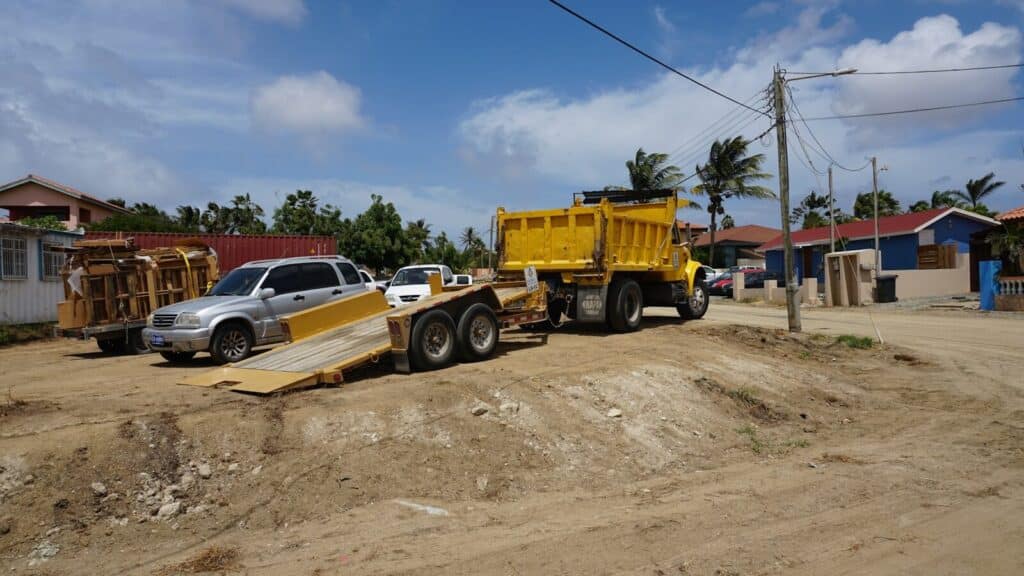
Photo by Brian J. Tromp on Unsplash
Understanding Weight Ratings and Payload Capacity
Weight ratings are where many first-time buyers go wrong. Misunderstanding them—or ignoring them—can result in dangerous overloading, premature wear, and legal liability.
The Four Key Weight Terms
- GVWR (Gross Vehicle Weight Rating): The maximum allowable weight the trailer is rated to carry. This includes the trailer’s own weight plus all cargo. Never exceed this number.
- Empty weight (Tare weight): How much the trailer itself weighs with nothing on it.
- Payload capacity: The maximum weight you can load onto the trailer. Calculated as GVWR minus empty weight.
- Tongue weight: The downward force the trailer’s coupler places on the hitch ball. Proper tongue weight should be approximately 10–15% of the total loaded trailer weight, according to Utah Trailer Pros. Too little tongue weight causes dangerous trailer sway; too much stresses the hitch and tow vehicle.
Why Overloading Is a Real Risk
Exceeding your trailer’s GVWR creates cascading problems: accelerated tire wear, reduced braking performance, suspension damage on both the trailer and tow vehicle, and potential legal consequences if you’re involved in an accident. Always calculate your actual load weight before you assume a trailer can handle it.
A Note on Trailer Brakes
Weight ratings also determine whether you’ll need brakes. Electric brakes may be required by law on larger trailers once they exceed certain weight thresholds—these limits vary by state, so check local rules before buying. If your trailer needs brakes, your tow vehicle will need a compatible brake controller installed.
Single Axle vs. Tandem Axle Utility Trailers
This is one of the most common trade-off decisions buyers face. Neither option is universally better—it depends on how you plan to use the trailer.
Single Axle Trailers
A single axle trailer has one set of wheels positioned roughly under the center of the deck. Because they carry a lower weight capacity, single-axle trailers are easier to maneuver but can’t haul as much.
Advantages:
- Lower purchase price—a trailer with lower weight capacity is generally less expensive and lighter
- Lighter overall weight (adds to payload capacity)
- Easier to maneuver in tight spaces
- Fewer tires and simpler maintenance
Best for: Lighter loads, occasional use, shorter hauls, or situations where maneuverability matters more than raw capacity.
Tandem Axle Trailers
A tandem axle trailer has two axle sets, typically spaced several feet apart. This design delivers greater stability and higher payload capacity, which is why heavy haulers and frequent highway users tend to prefer it.
Advantages:
- Significantly higher payload capacity
- Better stability at highway speeds
- Improved weight distribution across the deck
- If one tire blows, you retain some control
Drawbacks: Higher purchase price, more tires to maintain, and a larger turning radius. For heavy professional use or frequent highway towing, the stability benefits often outweigh the added cost.
Open vs. Enclosed Utility Trailers
The distinction between open and enclosed trailers comes down to how much protection you need for your cargo.
Open Utility Trailers
Open trailers are the classic choice—a flat deck with rails or sides, exposed to the elements. They shine when you need quick loading for general chores and everyday hauling.
Best for: Landscaping equipment, construction materials, anything that doesn’t need weather or theft protection. Open trailers are easier to load with a forklift or ramps, lighter in weight (which adds payload capacity), and significantly less expensive than enclosed alternatives.
Enclosed Utility Trailers
Enclosed trailers add walls and a roof, effectively turning the trailer into a mobile storage unit. That enclosure protects valuable tools or gear from both weather and theft while adding security.
Best for: Businesses hauling tools and branded equipment, tradespeople transporting sensitive materials, and anyone storing the trailer outdoors where theft or weather exposure is a real concern. The tradeoff is a higher purchase price, reduced payload (the enclosure adds weight), and the need for a taller storage space.
Flatbed and Dump Trailers
Two more configurations round out your options. Flatbed trailers feature a wide, open deck with no sides or rails, making them ideal for oversized or oddly shaped building materials—think long lumber, steel beams, or bulky equipment that simply won’t fit inside a walled trailer.
Dump trailers take convenience a step further. Built with a hydraulic lifting bed, they’re designed for effortless unloading of gravel, soil, or mulch. Instead of shoveling out a full load, you tilt the bed and let gravity do the work—a huge time-saver for landscapers and contractors.
Trailer Materials: Steel vs. Aluminum
The frame and deck material affects the trailer’s weight, durability, maintenance requirements, and resale value.
Steel Trailers
Steel is the dominant material in the utility trailer market, for good reason. Steel construction is strong and durable, relatively easy to weld and repair, and less expensive to manufacture.
Drawbacks: Steel is heavier than aluminum—which reduces net payload—and it can rust if it isn’t maintained. Powder-coating and galvanizing help, but steel trailers require consistent attention in wet or coastal climates.
Aluminum Trailers
Aluminum trailers are lightweight, corrosion-resistant, and tend to hold their resale value better over time. The weight savings translate directly into additional payload capacity.
Drawbacks: Aluminum typically commands a premium purchase price, and repairs generally cost more because aluminum welding requires specialized equipment. For buyers in high-humidity or coastal environments, the corrosion resistance often justifies the price difference over a 10-year ownership horizon.
Build Quality and Resale Value
Whichever material you choose, remember that maintaining strong resale value over time depends heavily on the trailer’s build quality. A well-constructed trailer from a reputable manufacturer holds its value far better than a bargain model that rusts, sags, or loosens after a few seasons. Think of build quality as an investment you can recover later, not just an upfront cost.
Featherlite Utility Trailers: A Closer Look at Premium Options
If you’re shopping at the higher end of the market, Featherlite is a name worth knowing. Featherlite utility trailers feature an all-aluminum body engineered for strength while keeping overall weight low—so you get durability and corrosion resistance without sacrificing payload.
A few features and customizable options set these trailers apart:
- Advantage wood flooring: This moisture-resistant flooring helps protect the deck from moisture-related damage or warping over time, so it stays flat and reliable even after repeated exposure to the elements.
- Dual colored side sheets: A customizable option that lets you match a business color scheme or simply personalize the look of your trailer.
- 5′ beaver tail with fold-down ramps: An optional angled rear section paired with fold-down ramps, making it easier to load equipment and wheeled cargo at a gentler incline.
- Power Lift Package: This optional upgrade tilts the trailer deck back electrically, taking the manual effort out of loading heavy or awkward items.
Premium features like these add to the upfront price, but they can pay off in convenience, longevity, and resale value—especially for owners who haul frequently or rely on their trailer for business.
Hitch and Tow Vehicle Compatibility
A utility trailer is only as useful as your tow vehicle’s ability to pull it safely. Your vehicle must be able to safely handle both the trailer’s own weight and the cargo you load onto it. Before purchasing, verify three things.
Confirm Your Vehicle’s Tow Rating
Every vehicle has a published maximum tow rating, and you should check it before you ever buy a trailer. Look in your owner’s manual or the manufacturer’s towing guide—not the dealer’s estimate. The tow rating is a hard limit, not a suggestion, and it must comfortably cover the combined weight of the trailer plus its cargo.
Understand Hitch Classes
Receiver hitches are divided into five classes based on their towing capacity and receiver tube size. According to CURT Manufacturing’s hitch class guide, the breakdown is:
|
Hitch Class |
Typical Vehicles |
Max GTW |
|---|---|---|
|
Class 1 |
Cars, small crossovers |
Up to 2,000 lbs |
|
Class 2 |
Minivans, crossovers |
Up to 3,500 lbs |
|
Class 3 |
SUVs, half-ton trucks |
Up to 8,000 lbs |
|
Class 4 |
Full-size trucks, heavy SUVs |
Up to 10,000 lbs |
|
Class 5 |
Heavy-duty and commercial trucks |
Up to 20,000 lbs |
Your towing capacity is always limited to the lowest-rated component in the entire system—vehicle, hitch, ball mount, coupler, or safety chains. A Class 4 hitch on a vehicle rated for 6,500 lbs doesn’t give you Class 4 capacity.
Don’t Forget the Electrical Connection
Trailer lights and brake controllers require a compatible electrical connection. Most utility trailers use a 4-pin or 7-pin connector. If your trailer has electric brakes, your tow vehicle will need a brake controller installed.
Loading Features Worth Paying Attention To
The trailer deck itself is only part of the picture. How you load and secure cargo matters just as much.
Ramp Options
- Fold-up ramps: Built into the trailer gate; convenient but can limit the gate opening
- Bi-fold ramps: Fold in half for compact storage; popular for ATV and equipment loading
- Slide-in ramps: Stored under the deck; versatile but require somewhere to put them when not in use
Tie-Down Points
Look for D-rings welded into the frame (not just the deck), stake pockets along the side rails, and a sufficient number of anchor points for your typical load. A trailer with four D-rings is adequate for most homeowners; contractors often want six to eight.
Flooring Choices
- Wood decking (treated pine or oak): Common, affordable, and easy to replace; can absorb moisture over time
- Steel grating or expanded metal: Heavy-duty, provides traction, and allows debris to fall through; adds weight
- Aluminum floor boards: Lightweight, durable, and corrosion-resistant; standard on premium trailers
Storage and Routine Maintenance
Owning a trailer means maintaining one. Factor both into your budget and your planning.
Where Will You Store It?
Check local zoning laws and HOA rules before buying. Many communities restrict trailer parking on driveways or require enclosed storage. A trailer that sits outside year-round in a wet climate needs more maintenance than one stored in a garage.
Routine Maintenance Checklist
The Family Handyman’s utility trailer resource center is a practical reference for hands-on maintenance guidance. Key tasks include:
- Wheel bearings: Repack annually or every 12,000 miles; a one-hour job that prevents catastrophic wheel-off failures
- Tire pressure and condition: Check before every haul; trailer tires typically require higher pressure than vehicle tires
- Lights: Test all running lights, turn signals, and brake lights before every trip
- Brakes (if equipped): Adjust electric brakes annually and inspect for wear
- Frame and deck: Inspect for rust, cracks, or wood rot; treat and repair before they worsen
- Coupler and hitch ball: Grease the ball regularly and inspect the coupler for wear or corrosion
Budget Beyond the Purchase Price
The sticker price is just the starting point. Here’s what utility trailer ownership actually costs:
- Registration: Required in most states for trailers used on public roads. Fees vary significantly—check your state’s DMV for specifics.
- Insurance: Not always mandatory, but strongly advisable for trailers with any real value. Coverage can typically be added to an existing auto policy for a modest premium.
- Maintenance: Budget for tires, bearings, lights, and deck maintenance annually.
- Accessories: Ramps, tie-down straps, locks, and covers add up quickly, and locks are a simple security step if the trailer is stored outside or carries valuable equipment.
- Hitch upgrades: If your current setup isn’t rated for the trailer you’re buying, factor in the cost of a new hitch or ball mount.
The cheapest trailer on the lot is rarely the best long-term value. A well-built trailer from a reputable manufacturer—one that complies with Federal Motor Vehicle Safety Standards—will outlast a bargain-priced alternative by years. The NHTSA has specifically cautioned buyers that noncompliant trailers, particularly those offered through informal online listings, may not meet required safety standards. Look for the FMVSS certification label before you buy.
Buying Locally vs. Buying Out of State
Limiting your search to local dealers can mean settling for limited inventory, inflated regional pricing, or waiting weeks for a specific configuration. Many buyers find that the best value—or the exact model they want—is several states away.
Dealers in manufacturing hubs often carry deeper inventory. Seasonal pricing creates real opportunities in certain regions. And specialty or custom trailers may simply not be available locally.
How Interstate Haulers Can Help
That’s where Interstate Haulers comes in. Founded in 1997, Interstate Haulers is a family-owned nationwide transport company that specializes in hauling trailers and boats across the continental United States. Their team of vetted, insured independent drivers can pick up a trailer from a dealer or private seller anywhere in the country and deliver it directly to your location—without you ever leaving home.
Interstate Haulers maintains certificates of insurance for every carrier in their network and provides direct communication throughout the entire transport process, also serving as a security service by helping protect buyers from avoidable handoff and pickup risks. For buyers purchasing a utility trailer from an out-of-state dealer or manufacturer, this eliminates the logistical headache of arranging pickup, renting a tow vehicle, or driving across multiple states. Their operations are FMCSA-compliant, and their quote process is straightforward—you provide origin, destination, and trailer details, and they handle the rest. Buyers can also review the FMCSA’s carrier safety resources to better understand what compliance standards a reputable transport provider should meet.
Make the Right Call Before You Buy
A utility trailer is a long-term tool. The right one will serve you for a decade or more with minimal hassle. The wrong one will cost you in frustration, repair bills, and compromises every time you hitch up.
To summarize the key decisions:
- Match the trailer to your most common use case, not an edge case
- Pick the right configuration—open, enclosed, flatbed, or dump—based on your cargo
- Understand GVWR, payload capacity, and tongue weight before committing to a size
- Verify hitch compatibility and your vehicle’s tow rating before purchase
- Choose axle configuration and materials based on how often and how far you’ll haul
- Budget for registration, insurance, and maintenance from day one
- Don’t restrict your search to local inventory if a better option exists elsewhere
If your search leads you to a trailer that’s out of reach geographically, Interstate Haulers has been bridging that gap for nearly 30 years. Request a quote today and let their team handle the transport.
Frequently Asked Questions
Is owning a utility trailer worth it?
For most homeowners, contractors, and small business owners who haul regularly, yes. A new utility trailer typically costs between $1,000 and $6,000 depending on size and configuration—often less than the annual cost of rental fees for equivalent use. The break-even point for frequent users is usually within the first year or two of ownership. Beyond cost savings, owning a trailer means it’s available when you need it, configured the way you want it, and ready to go without a reservation.
What is the 60/40 rule for trailers?
The 60/40 rule is a widely used loading guideline: approximately 60% of your cargo’s total weight should be placed in front of the trailer’s axle(s), and 40% behind. This distribution helps maintain proper tongue weight—typically 10–15% of the total loaded trailer weight—which keeps the trailer stable while towing. Failing to follow this principle increases the risk of trailer sway, fishtailing, and loss of steering control. For a detailed breakdown, True Value Trailers’ weight distribution guide is a great page helpful reference. Always defer to your trailer manufacturer’s specific loading recommendations.
What is the cheapest way to buy a utility trailer?
Prices vary significantly by size, materials, axle configuration, and features. Buying from a dealer in a state with lower demand or during the off-season (late fall and winter) can yield meaningful savings. Purchasing out of state and using a transport service like Interstate Haulers is often less expensive overall than paying inflated local prices. That said, the focus should be on total value—build quality, warranty, and long-term durability—not just the lowest upfront number. A $200 savings on purchase price disappears quickly if the trailer needs repairs within the first two years.
What is a utility trailer called?
Utility trailers go by several names depending on their configuration and intended use. You may encounter them referred to as:
- Open trailers or flatbed utility trailers
- Landscape trailers (when used for lawn care equipment)
- Equipment trailers (for machinery and tools)
- Dump trailers (for gravel, soil, and mulch)
- General-purpose trailers
- Cargo trailers (more commonly used for enclosed versions)
The terminology isn’t always consistent across dealers and regions, so it’s worth specifying your intended use when shopping rather than relying on a category label alone.
Do utility trailers need to be registered?
In most U.S. states, yes. Registration is required for trailers operating on public roads, with requirements varying by trailer weight and type. Some states offer permanent registration for trailers below a certain weight threshold; others charge annual fees. Check your state’s DMV website for specific requirements before you purchase.