

Professional boat transport—whether overland or international—involves specialized equipment, route planning, permits, and experienced drivers. Boat transport is a cornerstone of both domestic logistics and international trade, offering unparalleled capacity for heavy and bulky goods at a fraction of air freight costs. Interstate Haulers, a family-owned company founded in 1997, provides nationwide overland boat transportation for vessels of all sizes across the continental United States.
Moving a boat from one location to another sounds straightforward. Load it up, hit the road, done. But anyone who has coordinated a long-distance haul knows the reality is far more complex. Oversized load permits, low bridge clearances, hull protection, weight restrictions, route detours—the list of variables is long, and the cost of getting it wrong can be significant.
People need professional boat transportation for all kinds of reasons. Maybe you just bought a vessel from a dealer three states away. Perhaps you’re relocating seasonally and need your boat moved from a northern lake to a southern marina. Or you’re a dealer coordinating delivery for a customer, or a marina arranging a fleet transfer. Whatever the situation, one thing stays consistent: the boat you’re moving is a major investment, and it deserves to be handled accordingly.
That’s where choosing the right boat transport company makes all the difference. A qualified, experienced carrier doesn’t just put your boat on a trailer and drive. They plan the route, pull the permits, secure the load correctly, coordinate pickup and delivery, and communicate with you throughout the entire process.
Interstate Haulers has been doing exactly that since 1997. A family-owned specialty transportation company, Interstate Haulers provides nationwide boat hauling for private owners, dealers, manufacturers, and government clients across the continental United States. With nearly 30 years of experience, their team understands what safe, reliable boat transport actually looks like—and what it takes to protect your vessel from point A to point B.
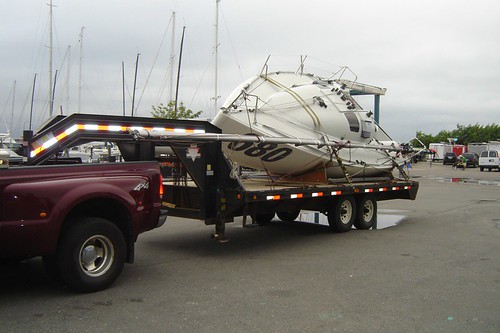
“Boat on Trailer” by nathan_baron is licensed under CC BY 2.0
What Is Boat Transport?
Boat transport refers to the movement of a vessel from one location to another—whether overland using specialized trailers and hauling trucks, or internationally via maritime shipping. This includes local moves, regional hauls, coast-to-coast nationwide transport, and ocean freight for international deliveries.
At the broadest level, boat transport is a cornerstone of international trade. Maritime transport provides extensive international coverage, moving everything from raw materials to finished manufactured goods across the globe. Water transport is generally one of the least expensive ways to move large quantities of goods, and maritime shipping produces the lowest carbon emissions per ton-mile of any major transport mode. Boat transport is also typically four to six times less expensive than air freight—making it the preferred option for bulk, oversized, and high-volume cargo.
That said, ocean freight is significantly slower than air transport. Schedule disruptions caused by severe weather or port congestion are common, and longer transit times make maritime shipping less suitable for urgent deliveries. International shipping also requires extensive paperwork, including bills of lading and certificates of origin, adding administrative complexity to every ocean freight movement.
Types of Vessels in Global Transport
Understanding the broader context of maritime transport helps clarify what’s involved when boats of any kind are moved—whether across an ocean or across the country.
Cargo transport vessels form the backbone of global commerce:
- Container ships are the workhorses of global trade for manufactured goods. Containerization protects goods during shipping and simplifies transfers between transport modes—a critical advantage in multimodal logistics.
- Tankers carry liquids and gases, including crude oil, petroleum products, and industrial chemicals.
- Bulk carriers transport unpackaged dry materials such as grain, coal, and iron ore.
- Roll-on/Roll-off (RoRo) vessels are a common international transport method for wheeled cargo, vehicles, and boats. The vessel or cargo is driven or rolled directly on and off the ship, making it an efficient option for boats that can be trailered to a port.
Passenger transport vessels serve different purposes:
- Ferries carry passengers and vehicles across short water routes, operating on fixed schedules between ports.
- Cruise ships are designed primarily for leisure travel, providing accommodation, entertainment, and hospitality services for extended voyages.
- Hydrofoils offer high-speed passenger transport over shorter distances.
Operating models for commercial vessels also differ. Liner services run on fixed routes and schedules, while tramp ships operate flexibly, moving wherever cargo demand takes them.
Boat transport itself—particularly overland—offers unparalleled capacity for heavy and bulky goods. Ships can transport vast amounts of cargo, including industrial machinery and vehicles, at costs that road and air simply cannot match at scale.
What Does Domestic Boat Transport Involve?
Domestic boat transport refers to overland hauling within the continental United States. A truck and trailer move the vessel from pickup to delivery via road. Interstate Haulers specializes in this category, handling direct deliveries for private owners, dealers, and commercial clients nationwide.
Professional boat transportation encompasses far more than just driving. It includes logistics coordination, route assessment, permit acquisition, load securement, and delivery scheduling. Done correctly, it’s a highly specialized service that protects the value and integrity of the vessel throughout transit.
Interstate Haulers transports a wide range of vessel types, including:
- Powerboats and wakeboard boats
- Fishing boats and bass boats
- Pontoon boats
- Jet skis and personal watercraft
- Sailboats and catamarans
- Work boats and tugboats
- Inflatable boats
- Yachts and larger vessels
For more general background on boat classifications, the National Marine Manufacturers Association (NMMA) provides a useful industry resource on vessel types and standards.

Photo by Enrapture Captivating Media on Unsplash
Why Boat Transport Requires Experienced Professionals
How Does Boat Size Directly Impact Transportation?
Boat size is one of the most critical factors in any transport job. Width, height, overall length, and weight all determine what kind of trailer is needed, what routes are viable, and whether oversized load permits are required.
Most states require special permits for loads exceeding a certain width (typically 8.5 feet) or height. Standard boats over 40 feet may also require special transport permits regardless of width. A wide-beam pontoon boat, for example, may require multiple permits across different states, each with its own requirements and filing processes. Getting this wrong doesn’t just result in fines—it can halt a delivery entirely.
Accurate measurements before transport aren’t optional. They’re the foundation of every logistical decision that follows. Transporting a standard boat requires complete dimensions for an accurate quote—length, beam width, and height on the trailer.
Why Is Route Planning More Important Than Most People Realize?
A direct route on a map doesn’t always translate into a viable hauling route on the road. Professional boat movers evaluate every aspect of the planned corridor before a truck ever leaves the yard.
Low bridges are a common concern, particularly with tall-masted sailboats or high-profile vessels on raised trailers. Active construction zones can close lanes or reduce clearance. Certain roads impose weight restrictions that a loaded boat trailer would exceed. Weather and wind conditions matter too—high crosswinds can make hauling a wide-beam vessel genuinely dangerous.
Then there’s the question of delivery logistics. Is the pickup at a private residence with a tight driveway? Is the destination a marina with limited maneuvering room? Does the job involve multiple stops? Each of these factors requires advance planning, not improvisation.
The Federal Highway Administration (FHWA) publishes detailed guidelines on oversize/overweight permits and route restrictions that professional carriers must navigate.
What Equipment Makes the Biggest Difference in Safe Boat Hauling?
The quality of the equipment used during boat transport has a direct impact on the vessel’s condition upon arrival. Specialized trailers are designed to cradle and support the hull at specific points, distributing weight correctly and preventing stress fractures or gelcoat damage during transit.
Heavy-duty hauling vehicles provide the pulling capacity needed for larger boats and long-distance hauls. Secure tie-down systems keep the vessel from shifting, even on uneven roads or during sudden stops. Protective padding and hull support blocks prevent abrasion and contact damage throughout the journey.
Different vessel types require different trailer configurations. A bass boat sits and loads differently than a catamaran. A tugboat requires different support than a wakeboard boat. Experienced boat transport companies know these distinctions—and have the equipment to match.
How to Prepare Your Boat Before Transport
Thoroughly Clean and Inspect Your Boat First
Before anything else, thoroughly clean your boat before transport. This isn’t just about appearance—a clean hull lets you accurately assess the vessel’s condition, identify any pre-existing damage, and document everything clearly before the carrier arrives. This step makes your pre-transport inspection far more reliable.
What Loose Items Should Be Removed Before Pickup?
Before a carrier arrives, remove all personal belongings and secure any loose items on board. Electronics, handheld devices, fishing equipment, safety gear, coolers, and personal items should all come off the boat prior to transport. Canvas covers may need to be removed or secured based on route conditions and trailer clearance.
Loose items left on board can shift during transit, causing damage to the interior or to the vessel itself. Removing them before pickup protects both your belongings and the carrier’s ability to secure the load correctly.
When Should Fluids Be Drained Before Boat Transport?
Fuel recommendations vary depending on the length and nature of the haul, but the preparation steps are clear: empty the bilge and disconnect fuel tanks before transport. Many transport companies recommend keeping fuel levels low—typically under a quarter tank—to reduce weight and minimize fire risk during overland transit. Water systems should be drained to prevent leaks, and batteries may need to be disconnected depending on the duration of the move.
Regulations around fluid drainage can also vary by state, particularly for vessels crossing environmental protection zones. Your transport coordinator should advise on local requirements as part of the pre-transport planning process. The U.S. Coast Guard Boating Safety Division is a reliable resource for regulations affecting vessel transport and safety compliance.
How Should You Document Your Boat’s Condition Before Pickup?
Document your boat’s condition with time-stamped photographs before the carrier arrives. Photograph every angle—hull, deck, interior, trailer connections, and any existing scratches, dings, or blemishes. Document these findings in writing and retain copies alongside your insurance documentation.
Confirm accurate measurements (length, beam, height on trailer) and have them ready for the transport team. This documentation isn’t just good practice—it’s your baseline record if any dispute arises after delivery.
What Does a Professional Boat Transport Company Handle?
Working with a professional boat transport company means handing off the logistics burden to people who do this every day. Boat transport companies must be licensed and insured—this is a legal requirement, not a preference. Interstate Haulers manages the full scope of a transport job, including:
- Pickup and delivery scheduling coordinated around the customer’s timeline
- Route planning that accounts for clearances, restrictions, and delivery access
- Permit coordination across all applicable states
- Driver assignments matched to the load type and destination
- FMCSA compliance ensuring federal motor carrier standards are met
- Insurance requirements so the vessel is covered throughout transit
- Secure loading and unloading performed by trained, experienced drivers
- Customer communication at every stage of the process
That level of coordination takes experience and systems that a one-time self-haul simply can’t replicate.
How Much Does It Cost to Transport a Boat Per Mile?
Quick answer: Boat transport costs per mile typically range between $1.25 and $15.00 depending on the vessel, route, and logistics complexity. For standard hauls, most customers see rates of $2 to $5 per mile. For shorter distance transport, costs typically run between $150 and $300. Longer haul journeys commonly range from $600 to $1,000. For large or oversized vessels with complex permit requirements, costs can be significantly higher. Accurate pricing requires specific boat measurements and route details—not just a mileage estimate.
The major factors that affect per-mile pricing include:
- Boat size and weight — larger, heavier vessels require more substantial equipment and generate higher fuel costs
- Distance — longer hauls involve more fuel, driver hours, and overnight accommodations
- Route complexity — coastal corridors, mountain passes, and urban routes each introduce different challenges
- Permit requirements — oversized loads often require multiple state permits, each carrying a filing fee
- Seasonal demand — peak boating seasons (spring and summer) tend to push prices higher as carrier availability tightens
- Fuel prices — fluctuating diesel costs directly impact transport pricing
- Pickup and delivery accessibility — remote or restricted locations may require additional time and equipment
- Trailer requirements — boats transported without their own trailer require specialized carrier-owned equipment
Per-mile estimates are a starting point, not a final figure. Requesting an accurate quote with complete vessel measurements gives you a reliable number.
How Much Does It Cost to Get a Boat Moved?
Total cost depends on the intersection of all the variables listed above. A short regional move for a small bass boat on its own trailer might cost $150 to $300. A cross-country haul for a large sailboat requiring multiple permits, an escort vehicle, and specialized loading equipment could reach several thousand dollars.
Key cost drivers include transport distance, boat dimensions (especially beam width), pickup location accessibility, delivery destination, and whether escort vehicles are required by state law for wide or tall loads.
Scheduling flexibility also plays a role. Customers with firm delivery windows may pay a premium for guaranteed availability, while those with flexible timelines can sometimes coordinate more economical scheduling.
It’s also worth noting that overland boat transport remains far more cost-effective than air freight. Boat transport is generally four to six times less expensive than air shipping—and for large or heavy vessels, air freight isn’t even a practical option. The economics of overland trailer transport make it the most cost-effective method for moving boats across the country.
The most reliable way to understand total cost is to request a personalized quote from a qualified boat transport company with complete boat specifications in hand. Interstate Haulers provides accurate, transparent quotes based on the specifics of your haul—not generic estimates.
What Is the Cheapest Way to Move a Boat?
The lowest price on a quote isn’t always the best deal. Boat transport is one area where cutting corners on cost can result in far greater expenses down the road—specifically, damage to a vessel worth tens or hundreds of thousands of dollars.
Overland trailer transport is the most cost-effective method for domestic moves, particularly for vessels that are trailerable. For short distances, costs of $150 to $300 are achievable. When evaluating boat transport companies, price should be weighed against:
- Driver experience with boats and oversized loads
- Insurance coverage protecting the vessel during transit
- Equipment quality matched to your specific vessel type
- Communication practices — do they provide updates, or do you lose contact after pickup?
- Safety record and FMCSA compliance history
- Licensing — boat transport companies must be licensed and insured to operate legally
- Reliability — do they deliver on time and as promised?
A carrier that saves you $200 on the quote but lacks proper insurance, uses inadequate tie-downs, or assigns an inexperienced driver is not saving you money. Professional boat hauling protects your investment. That protection is part of what you’re paying for.
The Boat Owners Association of The United States (BoatUS) offers helpful guidance on insurance considerations for boat owners, including during transport.
What Do You Use to Transport a Boat?
The equipment used in boat transportation depends entirely on the vessel being moved. Common configurations include:
- Boat trailers — purpose-built trailers owned by the boat’s operator or the carrier
- Hydraulic trailers — used for larger, heavier vessels requiring adjustable support
- Flatbed trailers — applicable in certain configurations for specific vessel types
- Specialized hauling trucks — heavy-duty towing vehicles matched to trailer weight ratings
- Tie-down and strapping systems — designed to prevent lateral and longitudinal movement during transit
- Support blocks and padding — protect the hull at contact points throughout the haul
- Protective coverings — guard against road debris and weather exposure during long-distance transport
Vessels transported without their own trailer require the carrier to provide appropriate equipment. Interstate Haulers hauls boats with or without trailers, sourcing the right configuration for each specific job.
Can Larger Boats Still Be Transported Safely?
Oversized boat transport is entirely achievable with the right planning and experience. Large vessels—wide-beam catamarans, full-sized yachts, commercial work boats, and tugboats—require a more intensive logistical process, but none of that makes safe transport impossible.
Transporting oversized boats requires special permits and escorts. This includes:
- Special permits from each state along the route (standard boats over 40 feet may trigger these requirements automatically)
- Escort vehicles required by law in many states for loads exceeding specific width or height thresholds
- Detailed route surveys to identify low bridges, restricted roads, and weight-limited crossings
- Height and width calculations that account for the vessel on the trailer, not just the hull measurements
- State-specific regulations that vary in their requirements for notification, timing, and driver credentials
Interstate Haulers has extensive experience with oversized and specialty loads. Their team coordinates the full permit and escort process, ensuring that large vessel transport complies with every applicable regulation along the route.
The Commercial Vehicle Safety Alliance (CVSA) provides detailed information on commercial carrier compliance standards relevant to oversized transport operations.
Domestic Boat Transport vs. International Boat Transport
These two categories involve fundamentally different processes and should not be confused when planning a move.
What Does Domestic Boat Transport Involve?
Domestic boat transport refers to overland hauling within the continental United States. A truck and trailer move the vessel from pickup to delivery via road. Interstate Haulers specializes in this category, handling direct deliveries for private owners, dealers, and commercial clients nationwide.
Boat transport requires access to navigable waterways and specialized ports only when the move involves a water-based leg—for domestic overland moves, the focus is entirely on road logistics.
What Does International Boat Transport Involve?
Moving a boat overseas requires a separate set of logistics. Boat transport is a cornerstone of international trade, and maritime transport provides extensive international coverage—but it also introduces requirements and challenges not present in domestic overland moves.
Vessels transported internationally typically travel to a port facility first—often via domestic overland haul—and then ship via one of several methods:
- Flat rack shipping — the vessel is secured to an open flat rack container, which is well-suited for large boats that don’t fit inside a standard enclosed container
- Enclosed container shipping — standard-sized boats can be shipped inside enclosed containers, which offer added protection from weather and handling
- Roll-on/Roll-off (RoRo) — a common international transport method in which the boat is driven or rolled onto a specialized vessel at the port and rolled off at the destination
- Ocean freight coordination — working with freight forwarders to manage timing, routing, and documentation
International boat transport also requires navigating significant administrative complexity:
- Customs documentation — export and import paperwork required at both origin and destination countries
- Bills of lading and certificates of origin — standard requirements for international shipping
- Port access requirements — boat transport requires access to navigable waterways and specialized port infrastructure at both origin and destination
It’s important to understand the trade-offs of international ocean freight. While maritime transport produces the lowest carbon emissions per ton-mile and is far less expensive than air freight, ocean freight is much slower than air transport. Longer transit times make it less suitable for urgent deliveries. Schedule disruptions caused by severe weather or port congestion can further extend timelines—a reality that requires planning and flexibility.
Operating models for international shipping vary. Liner services run on fixed routes and schedules, making them predictable for planning. Tramp ships operate more flexibly, moving wherever demand takes them. Both play roles in international boat and cargo transport.
Customers planning an international move often need both a domestic carrier to handle inland transport to the port and a separate international freight coordinator for the ocean leg. The National Customs Brokers & Forwarders Association of America (NCBFAA) is a useful directory for finding licensed customs brokers who can help coordinate international shipping documentation.

Why Customers Choose Interstate Haulers for Boat Transport
Family-Owned and Operated Since 1997
Interstate Haulers was founded in 1997 and has remained a family-owned business throughout nearly three decades of operation. That continuity matters. Long-tenured ownership means consistent standards, deep institutional knowledge, and a company culture built around reputation rather than volume.
When you hire Interstate Haulers, you’re not dealing with a rotating staff of anonymous contractors. You’re working with a team that has personal investment in every delivery.
Nationwide Coverage Across the Continental U.S.
Interstate Haulers serves residential, commercial, and government clients across all 48 contiguous states. Whether your boat is moving from a Florida marina to a Great Lakes harbor, or from a Pacific Northwest dealer to a Texas customer, Interstate Haulers has the network and coverage to handle it.
Specialized Expertise in Boats, RVs, and Industrial Trailers
Not every freight carrier has genuine experience with high-value, oversized, specialty loads. Interstate Haulers built their business around exactly this kind of work. Their expertise in boat hauling is matched by deep experience with RVs and industrial trailers—a combination that reflects serious capability in specialty transportation, not general freight.
Licensed, Insured, and FMCSA-Compliant
Boat transport companies must be licensed and insured—and Interstate Haulers meets that standard fully. Every job is handled by experienced drivers operating in compliance with FMCSA regulations. Interstate Haulers maintains fully insured operations, so your vessel is protected from pickup through delivery.
For additional context on what FMCSA compliance means for carriers, the Federal Motor Carrier Safety Administration (FMCSA) publishes licensing and safety standards for all commercial haulers.
Transparent Communication at Every Stage
Clients receive accurate quotes, scheduling updates, and clear communication throughout the transport process. Interstate Haulers’ approach prioritizes transparency—no surprise charges, no communication gaps, and no ambiguity about where your vessel is or when it will arrive.

Photo by Buddha Elemental 3D on Unsplash
Frequently Asked Questions About Boat Transport
How much does it cost to transport a boat per mile?
Boat transport costs typically range from $2 to $5 per mile for standard hauls, with an average range of $1.25 to $15.00 per mile across all vessel types and route complexities. Short distance transport generally costs $150 to $300, while longer haul journeys often run $600 to $1,000 or more. Oversized vessels with permit and escort requirements can push costs significantly higher. An accurate quote requires complete vessel dimensions.
How much does it cost to get a boat moved?
Total boat transport cost depends on distance, boat size, pickup and delivery accessibility, permit needs, and whether escort vehicles are required. Shorter regional moves for smaller vessels typically cost $150 to $300. Cross-country hauls for large or oversized boats can reach several thousand dollars. Request a personalized quote for accurate pricing.
What is the cheapest way to move a boat?
Overland trailer transport is the most cost-effective domestic option. The most financially sound approach also balances price with quality—choosing a carrier based solely on the lowest quote risks property damage, inadequate insurance, and unreliable delivery. Working with an experienced, properly licensed and insured boat transport company protects your investment and prevents costly damage claims.
What do you use to transport a boat?
Professional boat transport uses purpose-built boat trailers, hydraulic trailers, flatbed configurations, heavy-duty towing vehicles, secure tie-down systems, and hull support equipment. Internationally, boats are shipped via RoRo vessels, flat rack containers, or enclosed containers depending on vessel size. The specific setup depends on the vessel type, size, and whether the boat travels on its own trailer or a carrier-provided one.
How long does boat transportation usually take?
Transit time depends on distance, route complexity, permit processing time, and scheduling. Short regional hauls may complete in one to two days. Cross-country transport typically takes three to seven days. International moves via ocean freight are significantly longer and subject to disruption from weather and port congestion. Your Interstate Haulers coordinator will provide a realistic delivery window based on your specific route.
Do I need a trailer to ship my boat?
No. Interstate Haulers transports boats with or without their own trailer. If your vessel doesn’t have a trailer, the carrier will source appropriate equipment for the haul.
Is my boat insured during transport?
Yes. Interstate Haulers operates fully insured transport services. Confirming your own marine insurance policy’s coverage during overland transit is also recommended. Your insurance provider or a marine insurance broker can clarify what your policy covers during land transport.
Can you transport jet skis and pontoons?
Yes. Interstate Haulers transports jet skis, pontoon boats, and a wide range of other vessel types including powerboats, bass boats, wakeboard boats, sailboats, catamarans, and more.
Can you move oversized boats?
Yes. Interstate Haulers has extensive experience with oversized vessel transport, including large yachts, catamarans, work boats, and commercial vessels. Transporting oversized boats requires special permits and escorts—all of which Interstate Haulers manages on behalf of the customer, including coordination across multiple states.
How should I prepare my boat before pickup?
Start by thoroughly cleaning your boat to accurately assess its condition. Then remove all personal belongings and secure any loose items on board—electronics, fishing gear, coolers, and safety equipment. Empty the bilge and disconnect fuel tanks before transport. Drain water systems and disconnect batteries if recommended. Document your boat’s condition with time-stamped photographs from all angles and retain these records before pickup.
Do boats over 40 feet need special permits?
Standard boats over 40 feet may require special transport permits depending on the states being crossed and the specific dimensions of the vessel on its trailer. Interstate Haulers handles all permit coordination as part of the transport process.
Your Boat Deserves More Than a Generic Freight Service
Professional boat transport is a specialized discipline. Whether you’re moving a bass boat across state lines or coordinating the first leg of an international shipment, proper planning, the right equipment, experienced drivers, and clear communication aren’t optional extras—they’re the baseline requirements for getting a vessel from one location to another without damage or delay.
Boat transport remains one of the most cost-effective and environmentally efficient ways to move large, valuable assets. It offers capacity that road freight can’t match at scale and costs a fraction of what air freight would require. But none of those advantages matter without the right carrier executing the job correctly.
Interstate Haulers has delivered on that standard for nearly 30 years. From compact jet skis and bass boats to full-sized sailboats, pontoons, yachts, and commercial vessels, their team handles every haul with the care and expertise that high-value assets require. Nationwide coverage, FMCSA-compliant operations, licensed and insured service, and a family-owned commitment to customer service set them apart from generalist freight carriers that treat a boat like any other cargo.
Ready to get your boat delivered safely? Whether you’re relocating a fishing boat, purchasing a new pontoon, arranging a dealer delivery, or coordinating a long-distance haul across the country, Interstate Haulers has the experience and equipment to make it straightforward. Contact the team today to request an accurate quote and experience the difference that nearly 30 years of specialized boat transport expertise provides.