
Owning a utility trailer makes DIY projects significantly easier by allowing homeowners to haul large materials, avoid costly rental fees, and work on their own schedule. Utility trailers come in a wide range of sizes, materials, and configurations—from compact single-axle flatbeds to heavy-duty tandem-axle models with weight capacities up to 14,000 lbs. They’re one of the most cost-effective tools a homeowner can invest in—and when purchased out of state, professional trailer transport services like Interstate Haulers can deliver it safely to your door.
Picture this: You’re midway through a weekend landscaping project, your trunk is packed with mulch bags, and you still need three more loads to finish. Sound familiar? For millions of homeowners and DIY enthusiasts, moving bulky materials is one of the biggest friction points in getting projects done. A utility trailer eliminates that friction entirely.
Utility trailers aren’t just for contractors or construction crews. They’re practical, affordable, and remarkably versatile tools for anyone who regularly takes on home improvement tasks. From hauling lumber for a deck build to transporting a riding mower for seasonal maintenance, a utility trailer expands what you can accomplish—without depending on expensive delivery services or overloading your personal vehicle.
This guide breaks down the top five benefits of owning a utility trailer, what to look for before buying one—including trailer types, sizing, axle configurations, and key safety features—and how to get it delivered safely if you’re purchasing from an out-of-state dealer or private seller.
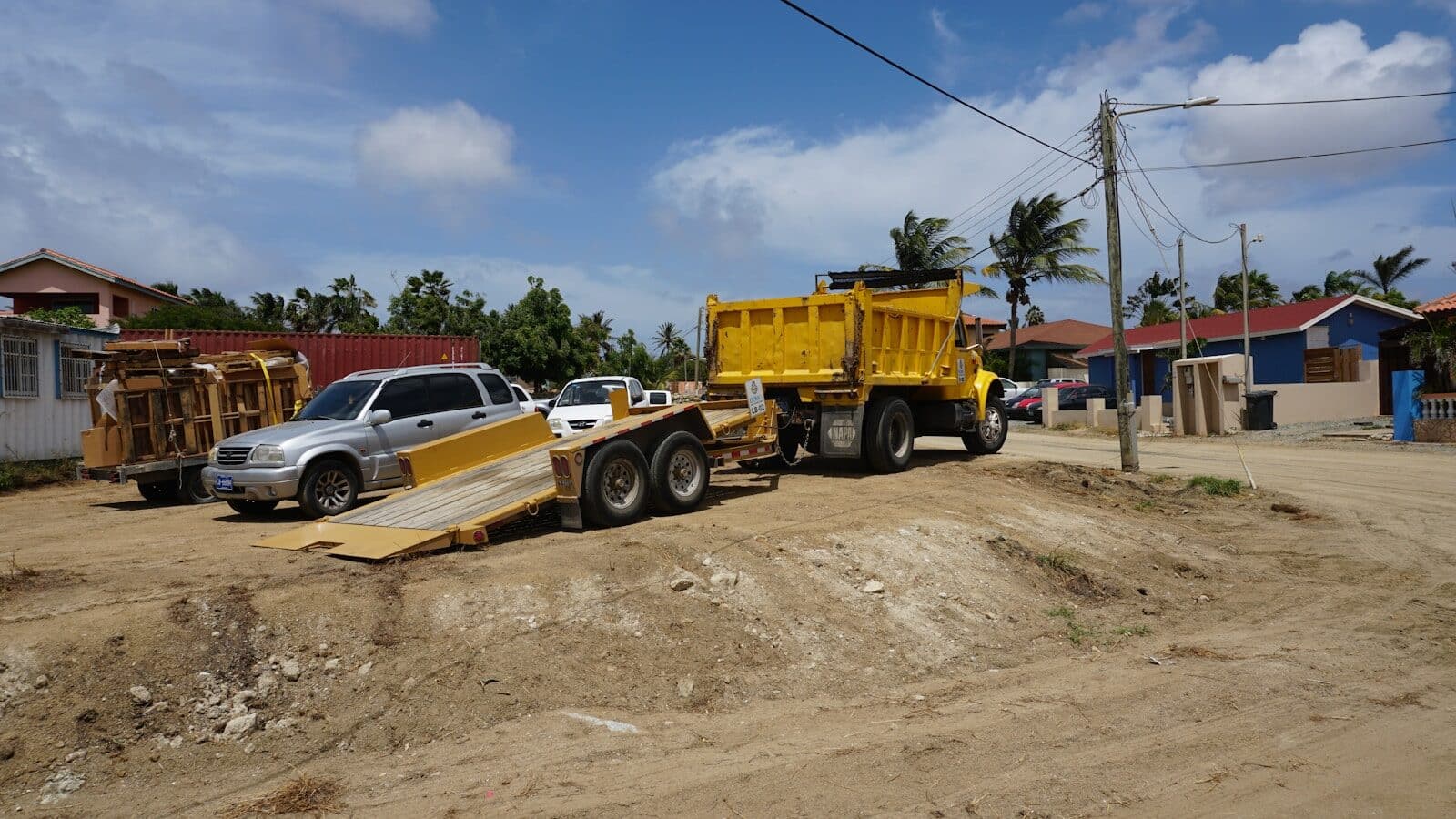
Photo by Brian J. Tromp on Unsplash
What Is a Utility Trailer and Why Is It So Useful?
A utility trailer is an unpowered, towable platform attached to a hitch on a truck, SUV, or even many standard sedans. They come in a wide range of styles, sizes, and configurations designed for different hauling needs. Unlike enclosed cargo trailers, most utility trailers feature an open flatbed design with railings, making it easy to load and secure a wide range of materials and equipment from any side.
Common DIY uses include:
- Home renovations – hauling lumber, drywall, concrete blocks, and flooring materials
- Landscaping projects – transporting mulch, gravel, soil, and plants
- Furniture and appliance moving – relocating large items without hiring movers
- Yard cleanup – hauling debris, branches, or old materials to a disposal site
- Equipment transportation – moving ATVs, lawn tractors, or power tools between sites
According to the Recreational Vehicle Industry Association (RVIA), trailer ownership has grown consistently over the past decade, with millions of utility trailers registered across the United States. Homeowners and small business owners alike recognize that the ability to move large loads on demand is a genuine competitive advantage. For more on trailer types and uses, the National Trailer Dealers Association provides an excellent breakdown of trailer categories and their applications.
Understanding Utility Trailer Types
Before diving into the benefits of ownership, it’s helpful to understand the different types of utility trailers available. Trailers are generally categorized based on their design, axle count, and specialized functions—and each type is built for a different kind of job.
Flatbed Trailers
Flatbed trailers feature an open, flat surface with no walls or roof. They allow easy loading from all sides, making them ideal for oversized or irregularly shaped cargo like lumber, landscaping stone, or machinery. Most utility trailers homeowners buy fall into this category.
Enclosed Cargo Trailers
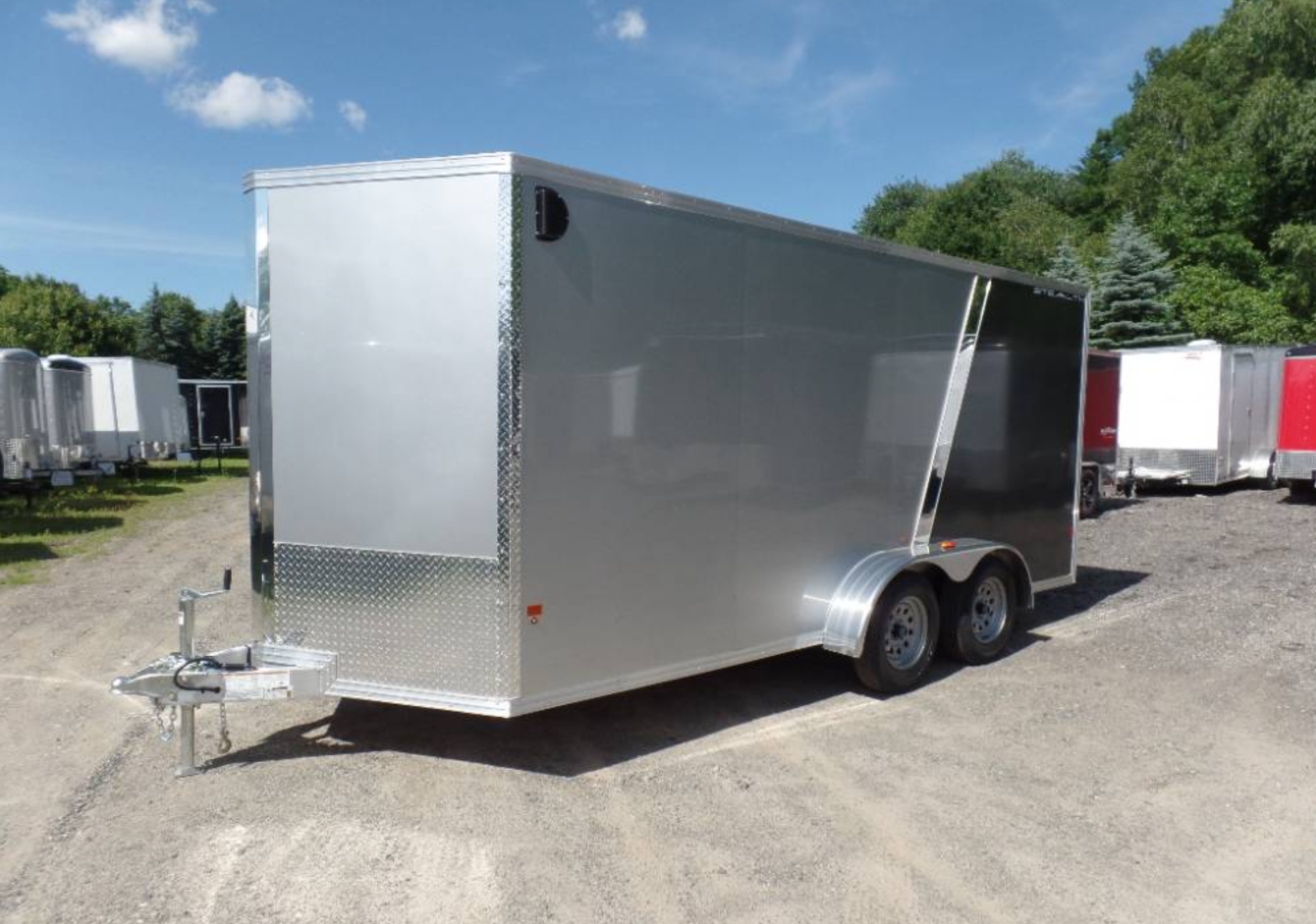
Enclosed cargo trailers are essential when you need to protect items from weather and theft. They’re fully enclosed with walls, a roof, and a lockable door, making them a smart choice for hauling tools, electronics, or anything sensitive to moisture. If you’re transporting high-value equipment regularly, an enclosed trailer offers peace of mind that an open flatbed can’t match.
Dump Trailers
Dump trailers are equipped with a hydraulic lift system that tilts the trailer bed, allowing you to unload bulk materials like gravel, mulch, or demolition debris quickly and without manual effort. They’re a favorite for landscaping and construction cleanup projects.
Specialty Trailers
Specialty utility trailers are designed to transport specific types of equipment or vehicles. Open car haulers, for example, are a specific type of utility trailer built to safely carry automobiles. Other specialty models are purpose-built for ATVs, motorcycles, or heavy machinery—each with features tailored to that cargo type.
Single-Axle vs. Tandem-Axle Trailers
Axle count matters more than most buyers realize. Single-axle trailers are ideal for small loads and are easier to maneuver, making them a practical choice for everyday DIY hauling. Tandem-axle trailers, which have two sets of wheels, are used for heavier loads and provide better stability on the road—especially important when you’re carrying several thousand pounds of materials at highway speeds.
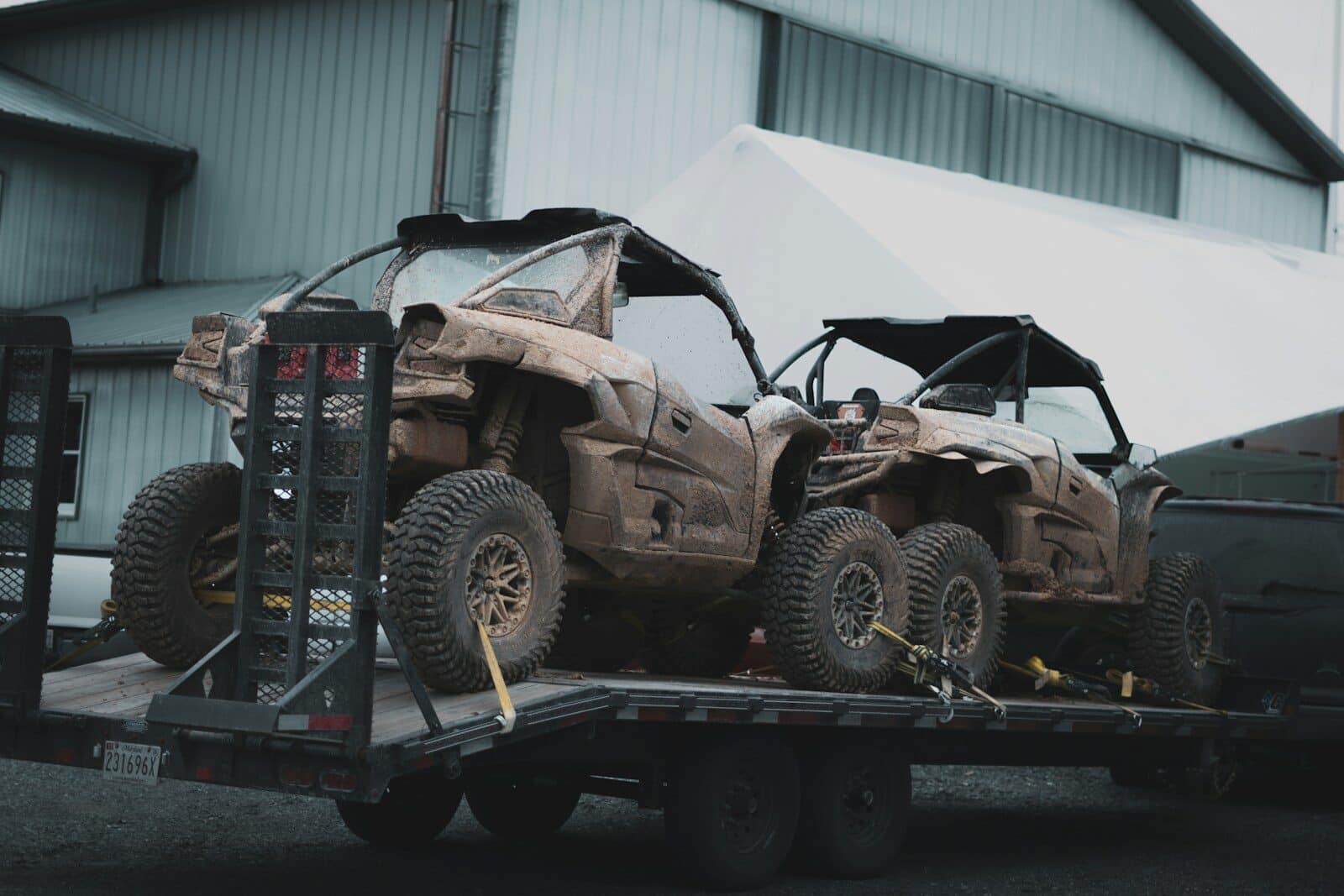
Photo by Vikram Singh on Unsplash
Benefit #1 – A Utility Trailer Makes Hauling Materials Easier
How Does a Utility Trailer Help with Transporting Large and Heavy Supplies?
The most immediate benefit of owning a utility trailer is simple: you can move things that otherwise wouldn’t fit.
Lumber, drywall sheets, bags of concrete, gravel, sod rolls, gardening supplies—these are all materials that are awkward, heavy, and potentially damaging to haul in a standard car or SUV. Roof racks help, but they have weight limits and create wind resistance. Truck beds are useful but may not offer enough space for larger loads.
A utility trailer solves all of these problems. Utility trailers come in various sizes and weight capacities, with payload capacity—the weight of cargo a trailer can safely carry—ranging from as little as 1,500 pounds on smaller single-axle models up to 14,000 pounds on heavy-duty tandem-axle trailers. That range means there’s a utility trailer suited for almost any job, from hauling a few bags of mulch to moving a compact tractor.
Common sizes include 5×8 feet for lighter everyday use and 6.8×14 feet for larger projects that require more deck space. Choosing the right size means thinking about the dimensions and weight of your typical loads—not just today’s project, but the ones you’ll tackle six months from now.
A utility trailer allows homeowners to:
- Eliminate the risk of overloading a personal vehicle
- Transport bulky items in a single trip instead of multiple runs
- Carry power equipment like tillers, log splitters, or pressure washers safely
- Reduce wear and tear on their car, truck, or SUV from repeated overloading
For guidance on safe loading practices, the U.S. Department of Transportation’s Federal Highway Administration publishes resources on safe towing and load distribution that every new trailer owner should review.
Benefit #2 – Save Money by Avoiding Trailer Rental Fees
Is Owning a Utility Trailer Cheaper Than Renting One Over Time?
Home improvement stores like Home Depot and Lowe’s offer trailer rentals, which seem convenient until you factor in the costs. Rental fees often run $20–$30 per hour or $60–$100 per day, and that’s before fuel costs and scheduling complications.
If you tackle even four to six trailer-requiring projects per year, the math shifts quickly in favor of ownership. A quality utility trailer can range from $1,000 to $5,000 depending on size and features. At average rental rates, a utility trailer can pay for itself within two to three years of regular use—and continue delivering value for well over a decade.
Beyond the financial savings, ownership also eliminates:
- The need to plan around store hours and rental availability
- Time spent picking up and returning trailers
- Last-minute scheduling conflicts that delay your project timeline
The Consumer Reports Home & Garden resource center regularly evaluates tools and equipment for long-term value, and the principle holds consistently: ownership beats rental for frequently used equipment.
Benefit #3 – Enjoy More Flexibility for DIY and Home Projects
How Does Owning a Utility Trailer Give Homeowners More Freedom?
Renting a trailer means planning ahead. Owning one means acting when you’re ready.
That flexibility is underrated. DIY projects rarely follow a neat schedule. You might spot a great deal on patio furniture on a Saturday morning. A neighbor might offer free landscaping stones that need to be picked up that afternoon. Your backyard project might need three more bags of soil before you can finish—right now.
When you own a utility trailer, you can respond to all of these moments without calling ahead, checking availability, or paying for a full-day rental you’ll only use for two hours.
Practical examples of on-demand flexibility include:
- Picking up bulk landscaping materials (mulch, topsoil, river rock) without waiting for delivery windows
- Transporting ATVs, dirt bikes, or lawn equipment for servicing or seasonal storage
- Helping a friend or family member move furniture or appliances
- Hauling yard waste, renovation debris, or old appliances to a disposal facility
The Family Handyman offers an extensive library of DIY project guides that often highlight how a utility trailer dramatically simplifies supply runs and logistics for weekend projects.
Benefit #4 – Stay Organized During Bigger Projects
Can a Utility Trailer Help with Project Organization and Efficiency?
Larger DIY projects involve more moving parts—literally. Multiple tool kits, different materials, waste removal, equipment storage—managing all of this on a job site can get chaotic fast.
A utility trailer serves as a mobile staging area. During a deck build or fence installation, for example, it can hold lumber and hardware until needed, contain waste materials for disposal, and store power tools overnight when the work isn’t quite done.
With the right accessories, a utility trailer becomes even more functional:
- Ramp gates for loading wheeled equipment like mowers or ATVs safely onto the deck
- Tie-down anchor points to secure loads during transport—an essential safety feature for anything that could shift in transit
- Side rails to contain loose materials like mulch, gravel, or debris
- Toolbox inserts or storage compartments for organizing smaller equipment
Many trailers also feature extruded plank flooring, a durable decking material that handles heavy, repeated use better than standard wood planks—worth looking for when comparing models. You can also customize many utility trailers with additional features and accessories to match your exact workflow.
Reduced clutter leads to better productivity. Knowing exactly where your materials and tools are—and being able to move them together—cuts down on wasted time and effort throughout a project. Bob Vila’s website covers utility trailer accessories and organization tips in depth, making it a helpful resource for new trailer owners looking to maximize their setup.
Benefit #5 – Take on Larger DIY Projects with Confidence
What Types of DIY Projects Become Possible When You Own a Utility Trailer?
Owning a utility trailer doesn’t just make existing projects easier. It opens the door to projects you may have previously avoided or outsourced entirely.
Consider these examples:
- Deck construction – hauling bulk lumber, composite decking, concrete footings, and hardware
- Backyard landscaping – transporting large quantities of soil, mulch, stone, or sod
- Shed installation – moving prefabricated panels and materials to a hard-to-access backyard area
- Fence projects – hauling fence posts, rails, and bags of concrete mix
- Appliance transportation – moving a new refrigerator, washing machine, or outdoor grill without hiring movers
- Small equipment hauling – transporting compact tractors, tillers, or generators
Without a trailer, many of these projects require either multiple trips in a personal vehicle, expensive professional delivery services, or simply choosing not to do the project at all. Utility trailer ownership removes that ceiling. For inspiration and project planning guidance, This Old House is one of the most trusted resources for homeowners tackling ambitious renovation and landscaping projects.
What to Consider Before Buying a Utility Trailer
How Do You Choose the Right Utility Trailer for DIY Projects?
Choosing the right utility trailer means matching the trailer to your cargo and your tow vehicle. A trailer that’s too small limits what you can haul; one that’s too large may exceed your vehicle’s towing capacity or be harder to maneuver in tight spaces. Here are the key factors to evaluate:
Size
Trailer size must fit the dimensions and weight of your typical loads. Common sizes start at 5×8 feet for light everyday use and go up to 6.8×14 feet or larger for bigger projects. Think beyond your first haul—consider what you might need two or three years from now.
Payload Capacity and GVWR
Payload capacity refers to the maximum weight of cargo a trailer can safely carry. The Gross Vehicle Weight Rating (GVWR)—which includes the trailer’s own weight plus the payload—is the key number to check for safety compliance. Never exceed a trailer’s GVWR, as doing so is a serious safety hazard. Heavy-duty models can handle up to 14,000 lbs, while lighter models are rated for 1,500 to 3,500 lbs.
Frame Material: Steel vs. Aluminum
Steel trailers are strong and cost-effective, but they’re heavier and susceptible to rust over time—especially in wet or coastal climates. Aluminum trailers are lightweight, corrosion-resistant, and highly durable, making them a popular choice for long-term ownership. Many aluminum utility trailers also come with a five-year warranty, which reflects the confidence manufacturers have in their durability.
Open vs. Enclosed
Open flatbed trailers are versatile and easy to load from all sides—great for bulk materials and oversized cargo. Enclosed cargo trailers are essential for protecting items from weather and theft. If you’ll be hauling tools, electronics, or anything valuable on a regular basis, the added security and weather protection of an enclosed trailer is worth the higher price.
Trailer Type and Loading Method
The loading method affects how easily cargo can be loaded and unloaded. Flatbeds allow loading from any side. Trailers with ramp gates make it much easier to roll on wheeled equipment like ATVs or lawn mowers. Dump trailers use a hydraulic lift system for fast unloading of bulk materials. Think about what you’ll haul most and pick the loading setup that matches.
Axle Configuration
For lighter, everyday loads, a single-axle trailer is easier to maneuver and more affordable. For heavier hauling—think landscaping stone, construction materials, or heavy equipment—a tandem-axle trailer provides better stability and higher weight ratings.
Key Safety Features
Look for trailers that include:
- Safety cables for secure towing, which act as a backup connection between the trailer and tow vehicle if the hitch fails
- Tie-down anchor points built into the deck or rails for securing loads during transport
- A swivel jack—ideally rated at 1,200 lbs or more—for easy hitching and maneuvering when the trailer is disconnected from your vehicle
Towing Requirements
Always check your vehicle’s towing capacity before selecting a trailer. Exceeding it is dangerous and can cause mechanical damage. The National Highway Traffic Safety Administration provides towing safety guidelines that are essential reading for anyone new to pulling a trailer.
Local Regulations
Many states require trailer registration, lighting compliance, and safety chains. Check your state’s DMV regulations before purchasing.

Need Your Utility Trailer Delivered? Professional Trailer Transport Can Help
How Can Interstate Haulers Help When You Buy a Utility Trailer Out of State?
Purchasing a utility trailer from an out-of-state dealer, private seller, or online marketplace is increasingly common—and often the best way to find the right model at the right price. The challenge? Getting it home.
Driving hundreds of miles to pick up a trailer isn’t always practical. That’s where Interstate Haulers comes in.
Founded in 1997 and family-owned for nearly three decades, Interstate Haulers specializes in the professional transport of trailers, RVs, boats, and industrial equipment across the continental United States. Their team handles the full logistics of pickup and delivery, so you can purchase the trailer you want—wherever it is—without worrying about how to get it home.
Interstate Haulers is the right choice when:
- You’ve purchased a utility trailer from an out-of-state dealer
- You’ve found a private seller listing that requires long-distance travel to retrieve
- You’ve ordered from a manufacturer or online listing and need professional delivery
- You need a trailer relocated between properties or storage locations
Their FMCSA-compliant transportation practices and nearly 30 years of specialized hauling expertise mean your trailer arrives safely, on time, and exactly as expected.
Why Choose Interstate Haulers for Utility Trailer Transportation?
Interstate Haulers has built its reputation on a straightforward promise: reliable, professional, personalized service—every time. Here’s what sets them apart:
- Family-owned since 1997 – Not a faceless freight broker. A real team with real accountability.
- Specialized trailer hauling expertise – They understand the specific requirements of transporting utility trailers, RVs, and industrial equipment—not just standard freight.
- Nationwide coverage – Interstate Haulers serves the entire continental U.S., so no pickup or delivery location is out of reach.
- Transparent communication – Customers are kept informed from quote to delivery, with no surprises along the way.
- FMCSA-compliant transportation – Every haul meets federal safety and compliance standards.
- Personalized customer support – You’re not a ticket number. Their team works with you directly to plan and coordinate your transport.
Getting started is easy. Use their online quote form, or reach out directly by phone at (910) 295-2244 or email at admin@interstatehaulers.com
The Bottom Line: A Utility Trailer Is One of the Smartest Tools You Can Own
A utility trailer delivers real, measurable value for any homeowner or DIY enthusiast. It makes hauling materials easier, eliminates expensive rental fees, gives you the freedom to work on your own timeline, keeps larger projects organized, and unlocks a whole new category of projects you can confidently take on yourself.
The key is choosing the right trailer for your needs—matching the size, payload capacity, axle configuration, frame material, and trailer type to what you actually haul. Whether that’s a compact 5×8 single-axle flatbed for weekend supply runs or a heavy-duty tandem-axle model rated for thousands of pounds, there’s a utility trailer built for your situation.
The upfront investment pays for itself—often within just a couple of years of regular use—and continues delivering returns for as long as you own it.
If you’re buying a utility trailer from another state, don’t let the logistics hold you back. Interstate Haulers can transport your trailer safely and professionally from anywhere in the continental U.S. directly to your door.

Photo by Towfiqu barbhuiya on Unsplash
Frequently Asked Questions
Is Owning a Utility Trailer Worth It?
For homeowners, contractors, landscapers, and DIY enthusiasts who regularly transport materials, equipment, furniture, vehicles, or debris, owning a utility trailer can be a worthwhile investment.
A trailer can reduce repeated rental expenses and give you the flexibility to haul items whenever needed. Whether it saves money over time depends on the purchase price, maintenance costs, storage space, and how frequently you use it. People who complete several hauling projects each year are more likely to benefit from ownership than those who only need a trailer occasionally.
What Is the 60/40 Rule for Trailers?
The 60/40 rule is a general guideline for distributing cargo weight on a trailer. Approximately 60% of the cargo weight should be positioned in front of the trailer’s axle, with the remaining 40% behind it.
This distribution helps maintain proper tongue weight, which is the downward force the trailer places on the hitch. Correct weight distribution can reduce sway and improve handling, braking, and overall towing stability.
The 60/40 rule should not replace the trailer manufacturer’s loading instructions. Several actions should be performed before towing, including weighing the cargo, checking the trailer’s capacity, securing the load, and confirming that the tongue weight falls within the recommended range.
What Size Utility Trailer Do I Need?
The right trailer size depends on the dimensions and weight of the items you plan to haul. Common utility trailer sizes include 5×8 feet for light household use and approximately 6.8×14 feet for larger landscaping, construction, recreational, or commercial projects.
Trailer size must accommodate both the physical dimensions and total weight of your typical loads. Measure your largest cargo, calculate its weight, and make sure the trailer provides enough deck space and payload capacity to transport it safely.
You should also confirm your vehicle’s towing capacity, hitch rating, tongue weight limit, and the trailer’s gross vehicle weight rating.
Do not rely on a certain word or marketing phrase, such as “heavy-duty,” when evaluating capacity. Review the actual measurements and weight ratings listed on the trailer’s product page. When practical, choosing slightly more deck space and capacity can provide flexibility for future projects.
How Much Weight Can a Utility Trailer Carry?
Utility trailer weight capacities vary significantly based on the trailer’s size, frame construction, axle count, tires, suspension, and intended use.
Small single-axle utility trailers may be designed for relatively light household or recreational loads. Larger tandem-axle utility trailers can have weight capacities of up to 14,000 pounds, depending on the model and axle ratings.
Always review the trailer’s gross vehicle weight rating and payload capacity before loading it. Remember that payload capacity is the total rated capacity minus the trailer’s empty weight. Do not assume that every trailer advertised as heavy-duty can carry 14,000 pounds.
What Is the Difference Between Single-Axle and Tandem-Axle Trailers?
Single-axle trailers have one axle and one set of wheels. They are typically lighter, less expensive, and easier to maneuver, making them ideal for small loads, household projects, lawn equipment, and occasional personal use.
Tandem-axle trailers have two axles and two sets of wheels. They are used for heavier loads and provide better stability, smoother highway handling, and greater weight capacity. Depending on the trailer’s construction and axle ratings, some tandem-axle trailers may support total capacities of up to 14,000 pounds.
Always check the specific trailer’s payload capacity rather than assuming every single-axle or tandem-axle product can handle the same amount of weight.
What Types of Utility Trailers Are Available?
Utility trailers are generally categorized based on their design, axle count, loading method, and specialized functions.
Common trailer types include:
- Flatbed trailers for oversized equipment, machinery, and building materials
- Enclosed cargo trailers for items that need protection from weather, theft, or road debris
- Dump trailers for transporting and unloading gravel, soil, mulch, demolition debris, and other loose materials
- Landscape trailers with open rails and loading gates
- Equipment trailers built for tractors, skid steers, and heavy machinery
- Specialty trailers designed to transport specific types of equipment or vehicles
Specialty utility trailers may be designed for motorcycles, ATVs, golf carts, lawn equipment, construction machinery, or other cargo that requires a particular frame, ramp, tie-down system, or loading configuration.
What Is a Utility Trailer Called?
A utility trailer may also be called an open trailer, flatbed trailer, landscape trailer, cargo trailer, equipment trailer, or specialty trailer. The correct word often depends on the trailer’s design, axle configuration, features, and intended use.
For example, “landscape trailer” commonly refers to an open trailer with rails and a ramp gate, while “equipment trailer” often describes a heavier model built for machinery. An enclosed cargo trailer has walls and a roof, while a dump trailer includes a hydraulic bed that allows loose material to be unloaded more easily.
These terms may be used differently by manufacturers, dealers, and private sellers, so it is important to review the specifications rather than relying on the product name alone.
Is Aluminum or Steel Better for a Utility Trailer?
Both aluminum and steel utility trailers have advantages.
Steel trailers are strong, widely available, and often less expensive upfront. However, steel trailers are heavier and susceptible to rust, especially when the protective finish is damaged or the trailer is regularly exposed to moisture, road salt, or harsh weather.
Aluminum utility trailers are lightweight, durable, and naturally resistant to corrosion. Their lower empty weight may leave more of the tow vehicle’s capacity available for cargo, while also making the trailer easier to maneuver.
Aluminum utility trailers often come with a five-year warranty, although coverage varies by manufacturer and model. Always review the warranty page carefully to understand what parts, materials, and repairs are covered.
For homeowners planning to keep a trailer for many years, aluminum may provide strong long-term value. Steel may be preferable when maximum strength and a lower initial price are the main priorities.
Who Has the Cheapest Utility Trailers?
Utility trailer prices vary based on size, material, axle configuration, manufacturer, weight capacity, frame design, and included features. Local dealerships, farm supply stores, private sellers, and online marketplaces may all offer trailers at different price points.
The cheapest listing is not always the best overall value. Compare the trailer’s condition, construction quality, axle rating, tires, warranty coverage, delivery expenses, and available service support.
Transportation costs can significantly affect the final price when the trailer is purchased from an out-of-state seller. A lower purchase price may not save money if the trailer requires repairs, lacks warranty coverage, or costs significantly more to transport.
Can Any Vehicle Tow a Utility Trailer?
No. Most trucks, many SUVs, and some crossovers can tow utility trailers, but every vehicle has a specific towing limit.
Check the owner’s manual or manufacturer’s website for the vehicle’s maximum towing capacity, gross combined weight rating, tongue weight limit, and hitch requirements. The combined weight of the trailer, cargo, passengers, and additional gear must remain within those limits.
Exceeding the vehicle’s towing rating can trigger handling, braking, transmission, suspension, and engine problems. It may also make the vehicle and trailer combination unsafe to operate.
Do I Need a License to Tow a Utility Trailer?
In many U.S. states, a standard driver’s license is sufficient for towing a personal utility trailer below a certain weight. However, licensing, registration, brake, lighting, inspection, and insurance requirements vary by state.
Some requirements may be triggered by the trailer’s gross vehicle weight rating, the combined weight of the tow vehicle and trailer, or whether the trailer is being used commercially.
Check your state Department of Motor Vehicles website before towing. If you are unable to determine which rule applies, contact the agency directly to resolve the question before traveling.
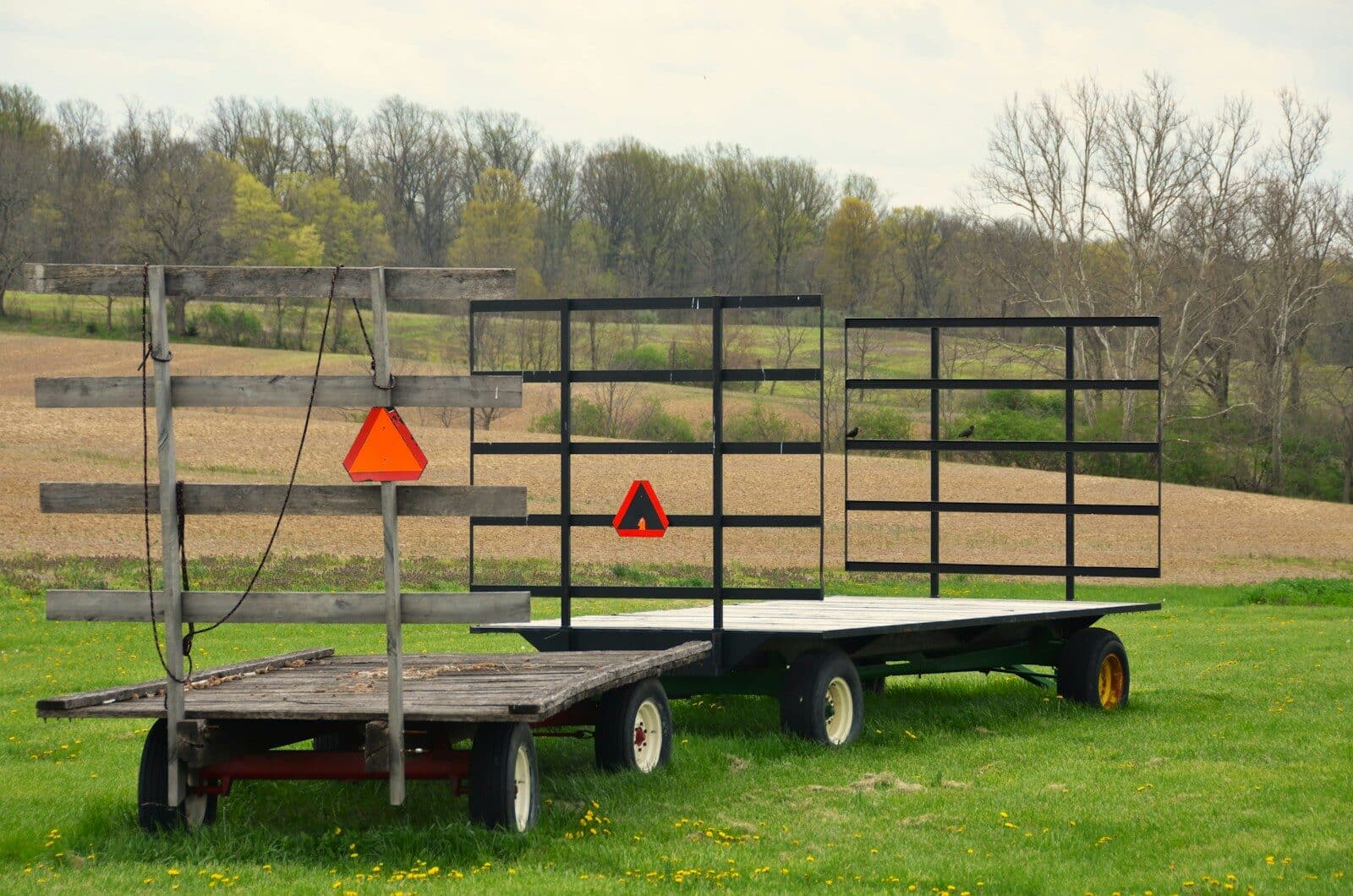
Photo by Roger Starnes Sr on Unsplash
How Do I Transport a Utility Trailer I Bought Out of State?
Professional trailer transportation is often the most practical option when purchasing a utility trailer from an out-of-state dealership, private seller, auction, or online marketplace.
Interstate Haulers can pick up the trailer at its current location and deliver it to your home, dealership, business, or another approved destination. Professional transportation can be especially helpful when you do not have a properly rated tow vehicle, cannot travel to the seller, or are unable to confirm that the trailer is registered, insured, and road-ready.
Before pickup, several actions may need to be performed, including:
- Confirming the trailer’s dimensions and weight
- Identifying whether it is a flatbed, enclosed cargo, dump, equipment, or specialty trailer
- Checking access at the pickup and delivery locations
- Gathering the bill of sale and ownership documents
- Confirming that the tires and frame are in transportable condition
- Coordinating pickup details with the seller
To begin, visit the Interstate Haulers website and open the appropriate quote page. Click the quote-request button and provide the trailer’s pickup location, delivery destination, dimensions, weight, axle count, and condition.
After submitting the form, an automated confirmation email may be triggered. If the website does not accept the request, check that every required field has been completed. In some cases, a certain word, phrase, special character, or browser setting can trigger a form error. Removing unnecessary formatting, refreshing the page, or contacting Interstate Haulers at (910) 295-2244 may help resolve the issue.