The best RV brands in 2025–2026 include Oliver Travel Trailers, Airstream, Grand Design, Winnebago, Jayco, Forest River, Keystone RV, Bigfoot, Brinkley RV, Tiffin Motorhomes, and Newmar. The right choice depends on your budget, travel style, family size, and long-term ownership goals. Once you’ve purchased, Interstate Haulers — a family-owned nationwide transport company established in 1997 — can deliver your RV safely to your door.
The RV industry is booming. According to the RV Industry Association (RVIA), the industry generated $159 billion in economic impact in 2026, supporting over 643,000 jobs and recording 163,644 shipments in the first half of the year alone. More people than ever are shopping for their first — or next — RV. That’s exciting. It can also be overwhelming.
Walk into any dealership and you’ll encounter dozens of brands, hundreds of floor plans, and price tags ranging from $15,000 to well over $500,000. So how do you narrow it down? The answer isn’t finding the single “best” RV brand. It’s finding the right brand for you — based on your budget, travel habits, family size, tow vehicle, and how long you plan to own it.
This guide covers the top RV manufacturers worth considering, what separates a quality build from a subpar one, and how to think about long-term value before signing anything. It also covers what happens after the purchase: if you’re buying out of state or simply want your new RV delivered safely, professional transport is worth serious consideration. Interstate Haulers — a family-owned nationwide transport company with nearly 30 years of specialty hauling experience — has been doing exactly that since 1997.
Photo by Viktoria B. on Pexels
What Makes the Best RV Brands Stand Out?
How does build quality actually differ between RV manufacturers?
Not all RVs are made the same way, and the differences matter far more than most buyers realize at the dealership. The majority of mass-market travel trailers use wood-framed, aluminum-clad construction — sometimes called “stick-and-tin.” It’s fast to produce, affordable, and perfectly serviceable for 5–10 years. The problem is longevity. Water finds the seams, the wood frame begins to rot, and resale values drop quickly. According to Bretz RV’s depreciation guide, motorhomes can lose an average of 20% of their value right after acquisition, and most wood-framed trailers retain only 30–40% of their original value after 10 years.
Premium manufacturers like Oliver Travel Trailers and Bigfoot use molded fiberglass construction — two shells with insulation poured between them, no wood in the walls, no seams that can leak. That method is slower and more expensive to produce, but the durability gap is significant. Airstream uses a riveted aluminum monocoque body that avoids the rot problem, though it requires more maintenance and offers lower thermal performance than fiberglass.
When comparing brands, pay close attention to:
- Frame construction — aluminum vs. wood framing
- Wall materials — fiberglass vs. stick-and-tin
- Four-season insulation — critical for year-round or cold-climate use
- Sealing and waterproofing — the most common failure point in cheaper builds
- Quality control consistency — which can vary even within the same manufacturer’s lineup
For a thorough comparison of what these differences look like in practice, RVezy’s best camper brands guide is a helpful reference.
Which RV type fits your travel style and living needs?
Beyond build quality, the type of RV you choose should match how you actually plan to use it. A couple doing weekend trips has entirely different needs than a family of five planning full-time living on the road.
Here’s a simple breakdown:
- Travel trailers — versatile, unhitch at the campsite, wide price range; ideal for families and first-time buyers
- Fifth wheels — higher towing capacity required, but offer more living space and a residential feel
- Toy haulers — built for buyers who want to bring ATVs, bikes, or gear on the road
- Motorhomes (Class A, B, C) — no tow vehicle needed; Class B vans suit couples and solo travelers, Class A coaches suit full-timers
- Pop-up campers and bumper pulls — compact and lightweight for those with smaller tow vehicles
Matching the RV type to your existing tow vehicle is non-negotiable. A half-ton truck handles a 3,700-pound travel trailer comfortably. A heavy-duty setup is required for fifth wheels or larger trailers pushing 9,000+ pounds. The Go RVing first-time buyer guide walks through towing and sizing considerations in practical detail.
Why do warranty and customer support matter when choosing an RV brand?
A warranty tells you a lot about how much a manufacturer trusts its own product. Most mass-market brands offer 1–2 years of structural coverage. Grand Design and Winnebago sit above average, with warranty programs typically running 2–3 years. Oliver Travel Trailers leads the field with a 5-year structural warranty — a direct reflection of the build confidence behind their molded fiberglass construction.
Customer support matters just as much. A generous warranty is worthless if the manufacturer stonewalls claims. Research owner forums, check Reddit communities like r/GoRVing and r/RVLiving, and look for patterns in how brands handle post-purchase issues before you commit.
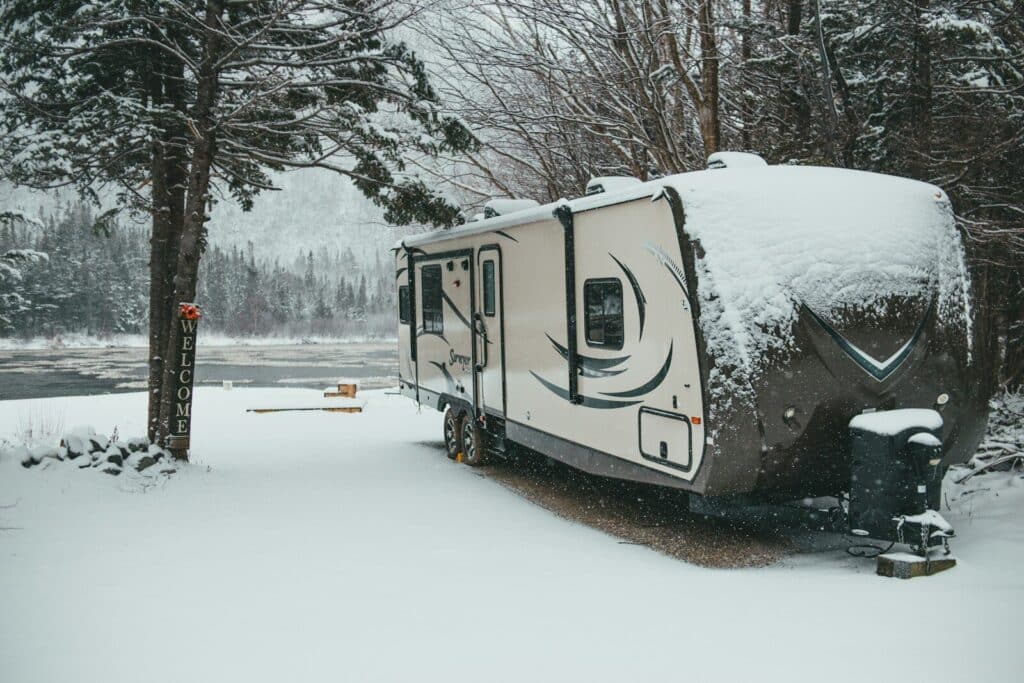
Photo by Erik Mclean on Unsplash
Comparing the Best RV Brands by Buyer Type
Which RV brands offer the best value for families and first-time buyers?
Jayco
Jayco has been building family-friendly RVs since 1968, making it one of the longest-running names in the industry. Now part of Thor Industries, Jayco offers a wide model range — travel trailers, fifth wheels, and motorhomes — starting around $20,000. Strong dealer networks and family-oriented floor plans make it a logical starting point for first-time buyers.
Forest River
Forest River is one of the largest RV manufacturers in North America, with dozens of sub-brands including Coachmen, Palomino, and Cherokee. Its sheer variety means there’s likely a model to fit most budgets and styles. Travel trailers start around $15,000, and many models pack in genuine value. The Forest River R-Pod 206, for example, includes 200W of solar power as a standard feature — uncommon at that price point. According to RVezy’s brand rankings, Forest River earns a 4.1/5 on RV Insider with over 3,000 reviews.
Keystone RV
Keystone RV, owned by Thor Industries, covers a similar price range — travel trailers from around $15,000 to $80,000 — with notable innovations in the towable category. The KeyTV™ entertainment system and iNCommand® smart RV controls add tech-forward appeal that resonates with buyers upgrading from a more basic setup.
What premium RV brands are worth the higher price tag?
Grand Design
Grand Design has built one of the strongest reputations in the mid-range to premium segment for customer service and warranty support. Priced from $25,000 to $100,000, Grand Design travel trailers and fifth wheels use traditional wood-framed stick-and-tin construction, which keeps prices accessible while delivering spacious floor plans. Their warranty support is consistently praised by owners.
Oliver Travel Trailers
Oliver Travel Trailers occupies its own category. Hand-built in Hohenwald, Tennessee since 2008, Oliver produces roughly 100 trailers per year — a deliberate choice that allows for the quality control large-volume manufacturers cannot replicate. The double-hull fiberglass shell, 2″x5″ aluminum frame, and four-season insulation are standard across all three models: the Legacy Elite (18’5″), the Legacy Elite II (24′), and the Apex X23. Pricing starts around $69,000 and climbs past $100,000. The payoff is durability and resale: a 10-year-old Oliver typically retains 70–80% of its original value, compared to 30–40% for most wood-framed alternatives. The Oliver Travel Trailers blog’s brand comparison provides an in-depth look at how these construction differences play out over time.
Airstream
Airstream has been in continuous production since 1931, making it one of the oldest and most recognized names in the industry. The riveted aluminum body is iconic, the resale is strong, and brand loyalty is as fierce as any in the market. Price ranges run from $40,000 to $180,000. The tradeoff: aluminum requires more maintenance than fiberglass and performs less effectively as insulation.
Bigfoot RV
Bigfoot RV, handcrafted in Spallumcheen, British Columbia, builds four-season travel trailers using a two-piece molded fiberglass shell with high-density insulation. For buyers in colder climates who prioritize all-weather performance, Bigfoot deserves a close look.
Brinkley RV
Brinkley RV is a newer entrant focused squarely on the premium towable market. Its fifth wheels and toy haulers bring high-end design and innovation — interior heights reaching 79.5 inches, premium finishes, and modern layouts — to buyers who want upscale features without stepping into a motorhome price bracket. New Brinkley fifth wheels average around $99,999 on RV Trader.
Which motorhome brands are considered the most reliable and luxurious?
Winnebago
Winnebago is one of the oldest and most recognized brands in North America, covering everything from compact Class B vans to full-size motorhomes and towable trailers. Pricing spans $30,000 to $200,000+, and the brand earns a 4.1/5 on RV Insider with over 1,100 reviews — a reflection of consistent quality and broad dealer support.
Tiffin Motorhomes
Tiffin Motorhomes, based in Alabama and acquired by Thor Industries in 2020, specializes in Class A motorhomes in the $150,000–$500,000 range. Owner loyalty is exceptionally high, with a dedicated community of full-timers who swear by Tiffin’s customer service and build quality.
Newmar
Newmar, based in Indiana and part of Winnebago Industries, targets the upper end of the motorhome market — $200,000 to $600,000 and beyond. Premium interiors, meticulous craftsmanship, and a full-time living focus make Newmar a benchmark for luxury Class A buyers.
Understanding Long-Term RV Value and Resale In The RV Industry
Most buyers focus on the purchase price. The smarter calculation is total cost of ownership — what you’ll spend on the RV across 5, 10, or 15 years, minus what you recoup when you sell.
Wood-framed travel trailers from brands like Keystone or Forest River offer accessible entry points, but typically retain only 30–40% of their value after a decade. Premium builds from Oliver or Airstream hold 70–80% of value over the same window, which substantially changes the math — especially when you factor in lower repair costs from superior construction.
Before purchasing any brand, check actual resale listings on RV Trader to see what comparable models are selling for at 5 and 10 years old. Real market data tells a clearer story than manufacturer claims.
Don’t Skip the Pre-Delivery Inspection
Even brand-new RVs roll off the line with issues. Water intrusion, loose connections, improperly sealed roof fixtures, and misaligned slideouts are common finds on PDI checklists. The NRVIA (National RV Inspectors Association) maintains a directory of certified RV inspectors who can perform a professional pre-delivery inspection before you take ownership — identifying problems while the seller is still responsible for fixing them.
At a minimum, your PDI should cover:
- Roof seals and all exterior penetrations
- Appliances (refrigerator, furnace, water heater, stovetop)
- Plumbing and water pressure
- Electrical systems and battery connections
- Slideout operation and sealing
- Suspension, axles, and tire condition
- All documentation, recalls, and warranty registration
Skipping this step is one of the most common — and costly — mistakes first-time buyers make.
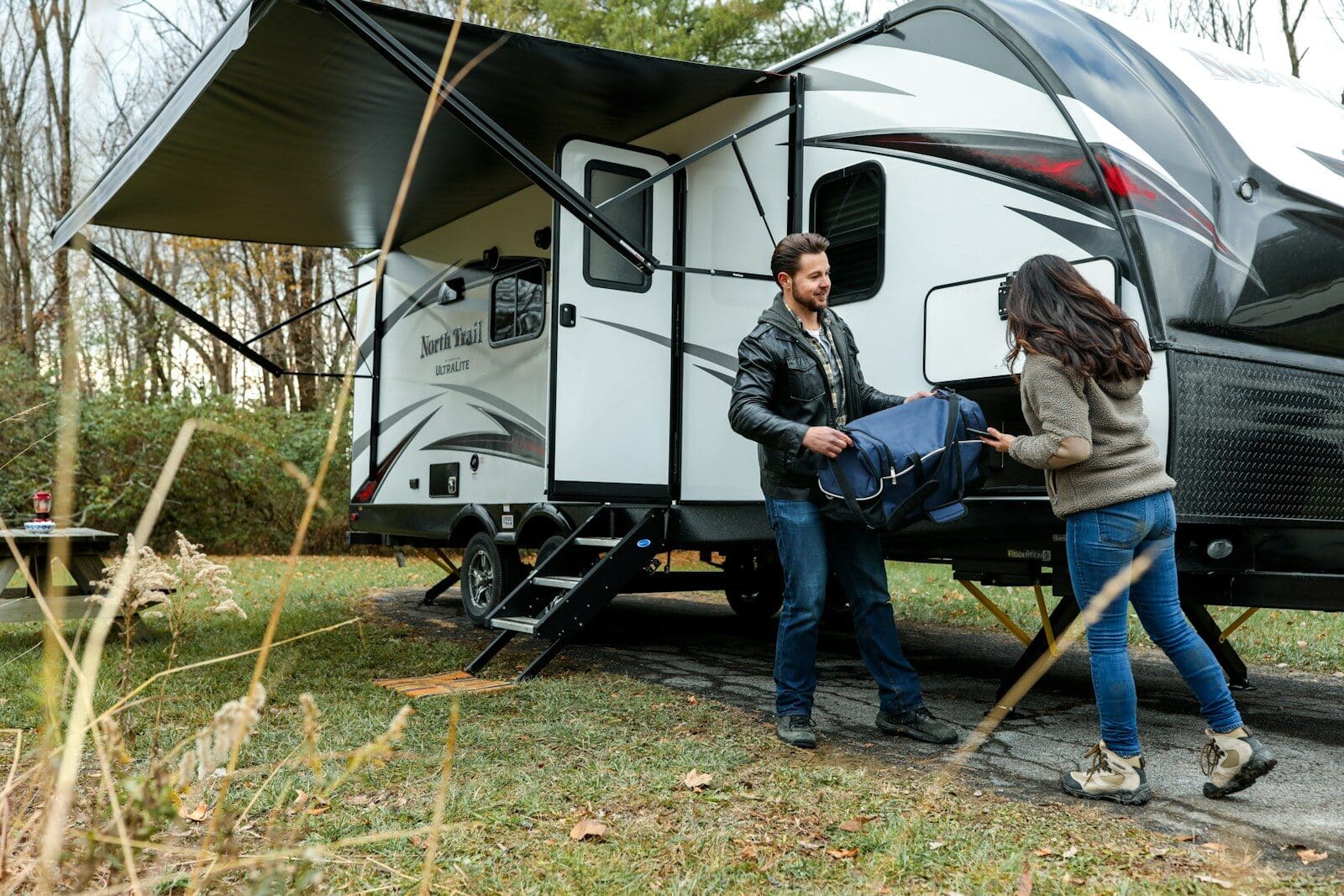
Buying an RV Out of State? Why Professional Transport Is the Smarter Move
Finding the right RV sometimes means buying from a dealership in another state. That’s increasingly common, especially when inventory for specific models is limited locally. The question then becomes: how do you get it home without putting miles, wear, or risk on a vehicle you just purchased?
Professional RV transport solves that problem cleanly. Rather than towing an unfamiliar trailer across hundreds of miles in your first experience behind the wheel, a qualified hauler handles the logistics while you handle the logistics of receiving it.
Interstate Haulers has been doing exactly this since 1997. Founded as a family-owned nationwide transport company, Interstate Haulers specializes in the movement of high-value assets — RVs, travel trailers, boats, and cargo trailers — across the continental United States, with shipping options into and out of Canada as well.
Their RV transport capabilities cover the full range of towable types:
- Travel trailers (bumper pull)
- Fifth wheels
- Toy haulers
- Pop-up campers
- Motorhomes
- Specialty towable RVs
What separates Interstate Haulers from general freight companies is specialization. Their drivers are thoroughly vetted, each carrying their own automobile liability and cargo insurance that meets Interstate Haulers’ certification requirements. Every haul comes with a formal contract, direct communication with your assigned team member, and real-time updates from pickup through delivery. Pickups can typically be scheduled within 1–2 days of booking.
Interstate Haulers serves individual RV owners, dealers, manufacturers, freight forwarders, and government agencies — including FEMA emergency response operations. That breadth of client trust reflects a straightforward business principle: reliable communication and safe delivery, every time. To learn more or get an instant quote, visit Interstate Haulers’ RV transport page or call (910) 295-2244.
Finding the Right RV Brand for Your Next Adventure
There’s no single best RV brand. The right choice is the one that fits your budget, matches your travel habits, holds up in the climates you’ll camp in, and makes financial sense over the ownership window you’re planning for.
Do the research before you sign. Compare warranty terms, not just sticker prices. Check owner forums and real resale data. Get a professional inspection before you take delivery. And if your new RV is coming from out of state, consider handing the transport to specialists who’ve spent nearly three decades doing exactly that.
Frequently Asked Questions
What RV brands should you stay away from?
No brand should be universally avoided. Quality control varies significantly by manufacturer, production year, and even individual model line. A brand that earns strong reviews on one product can have a weaker offering in another. The best protection isn’t a blacklist — it’s research. Read owner forums, check warranty claim patterns, review any recall history through NHTSA, and always hire a certified inspector through NRVIA before finalizing a purchase.
What RV has the least amount of problems?
Premium manufacturers with strict quality control and fiberglass construction tend to earn the highest long-term owner satisfaction. Oliver Travel Trailers, Tiffin Motorhomes, Newmar, and Airstream consistently appear at the top of customer satisfaction discussions, largely because of material quality and manufacturing precision. That said, how you maintain an RV plays just as large a role as what brand it is. Regular inspections, proper storage, and prompt repairs prevent minor issues from becoming major ones regardless of brand.
What is the 10-year rule for RV parks?
Many private campgrounds and RV parks follow an informal guideline that restricts entry to RVs older than 10 years. The policy exists primarily for aesthetic and safety reasons, and it isn’t universal — policies vary widely by park, and well-maintained older RVs are often accepted after a visual review or photo submission. If you’re purchasing an older unit or planning long-term travel, contact specific parks in advance to understand their policies. Brands with strong resale value, like Oliver and Airstream, tend to age better visually and structurally, which helps when requesting exceptions.
What RV is considered top of the line?
The answer depends on RV type. For luxury Class A motorhomes, Newmar and Tiffin Motorhomes represent the upper tier, with pricing from $150,000 to $600,000 and above. For premium travel trailers, Oliver Travel Trailers leads on build quality, durability, and resale, while Airstream leads on brand recognition and heritage. For upscale towable RVs and fifth wheels, Brinkley RV has quickly become a standout in the premium segment. The perfect RV is ultimately the one that best aligns with your specific travel style, towing setup, and ownership goals.