Used boat values are shaped by a combination of year, make, model, overall condition, engine hours, maintenance history, electronics, trailer condition, and local market demand. Buyers and sellers should research multiple valuation resources—including J.D. Power and Boat Trader’s Price Checker—before finalizing any deal. For out-of-state purchases, professional boat transport from a company like Interstate Haulers ensures your investment arrives safely.
Buying or selling a used boat is one of the more financially significant decisions a recreational boater will make. Unlike a used car, a boat’s value doesn’t follow a predictable formula. Two boats with the same year, make, and model can carry wildly different price tags—based on how they’ve been maintained, what electronics are installed, what the local market looks like, and a dozen other variables.
Whether you’re a first-time buyer comparing listings across three states, a dealer pricing inventory, or a private seller trying to set a fair asking price, understanding what drives used boat values can be the difference between a great deal and a costly mistake.
At Interstate Haulers, we’ve been transporting boats across the continental United States since 1997. We’ve worked with individual owners, marine dealers, and buyers who found their perfect boat in a state they’ve never visited. Along the way, we’ve seen how much preparation goes into a purchase—and how often transportation gets treated as an afterthought.
This guide covers both sides of that equation: what determines what a used boat is worth and why transport planning deserves a place in your buying or selling strategy from the beginning.

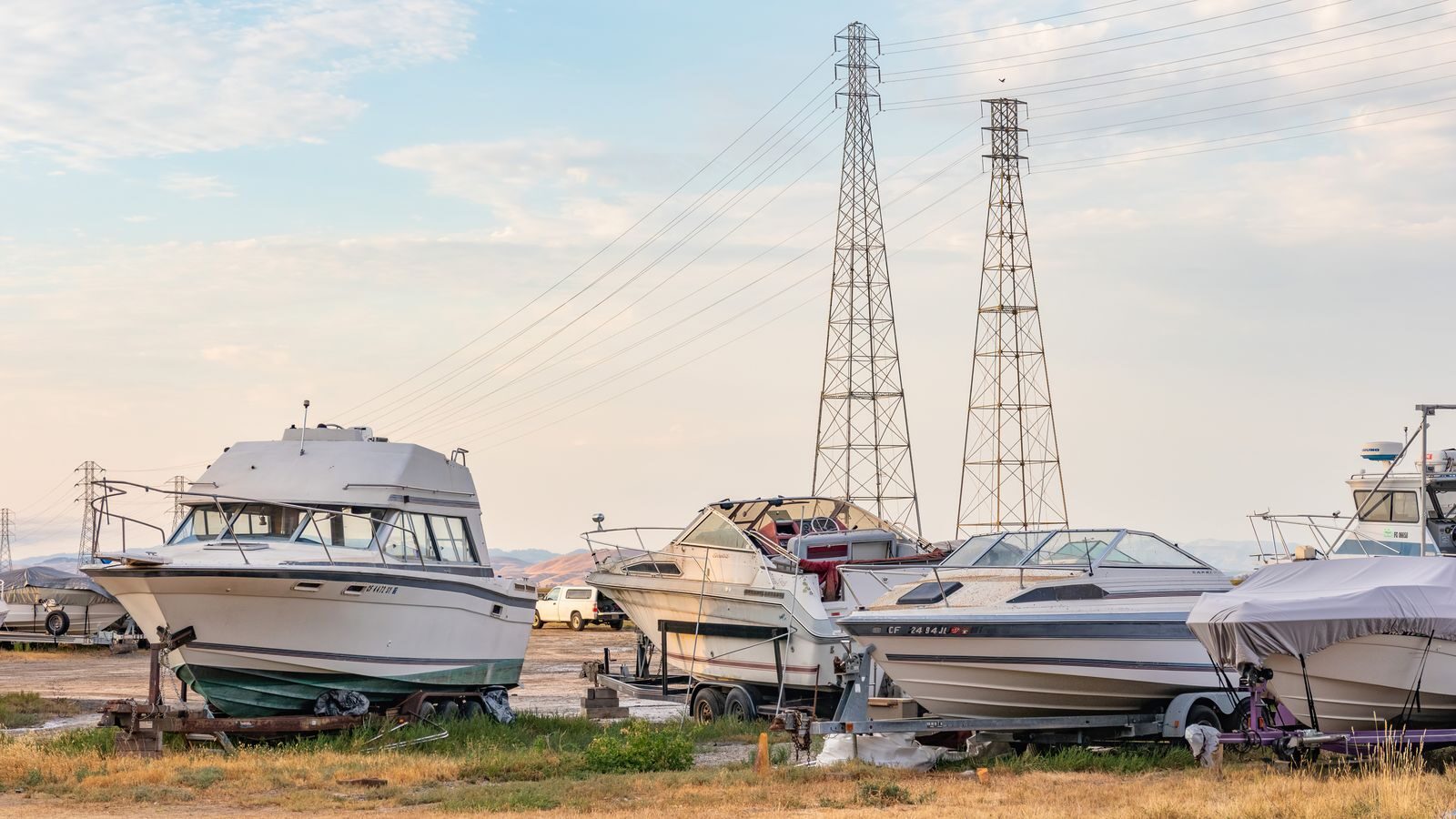
Photo by Maxi am Brunnen on Unsplash
What Determines Used Boat Values?
Do Year, Make, and Model Alone Tell You What My Boats Worth?
Not really—but they provide a useful starting point. Year, make, and model establish the baseline for any used boat valuation. From there, every other factor either adds or subtracts from that base.
Depreciation is real, but it’s rarely uniform. According to J.D. Power, many boats depreciate roughly 20–30% over the first five years, which implies a typical retention of around 70–80% of original value. That said, boat type plays a major role. A pontoon, a center console, a luxury cruiser, and an offshore fishing boat all depreciate at different rates. Applying a single depreciation curve to every vessel leads to skewed expectations for buyers and sellers alike.
Helpful Resource: J.D. Power Boat Values — a widely used marine valuation tool covering new and used pricing across multiple boat categories.
Do Premium Boat Brands Hold Their Value Better Than Budget Alternatives?
As a general market tendency, yes. Brand reputation, construction quality, reliability, and owner loyalty all influence how well a used boat holds its value over time. Brands with strong followings—like Grady-White, Malibu, or Boston Whaler—tend to attract more buyers and command stronger resale prices, though this is a tendency rather than a guarantee for every model or condition scenario.
When comparing listings, try to match boats on as many variables as possible: same make, model, year, engine configuration, condition, and installed equipment. Comparing a stripped-down version of one brand against a fully loaded version of another distorts the picture considerably.
Does Condition Matter More Than Age When Valuing a Used Boat?
Often, yes. Condition is one of the most influential factors in determining what a used boat is actually worth—sometimes more so than the year on the title.
What Mechanical Components Should Be Inspected Before Buying a Used Boat?
Engine performance is the most obvious starting point, but a thorough mechanical review goes further. Key areas include:
- Engine hours (and maintenance history relative to those hours)
- Cooling and fuel systems
- Electrical systems and wiring
- Steering systems
- Battery banks
- Propulsion components
Engine hours get a lot of attention, but raw hour counts can be misleading. A low-hour engine that sat for years without proper maintenance may be in worse shape than a higher-hour engine with clean service records. Always pair engine hours with documentation.
Why Does Hull and Structural Integrity Affect Boat Value So Significantly?
Cosmetic appearance is easy to improve with a good cleaning and fresh gelcoat. Structural issues are not. Before finalizing any purchase, a structural inspection should cover:
- Hull integrity and signs of impact or repairs
- Transom condition (soft or delaminating transoms are costly to fix)
- Deck and stringer integrity
- Water intrusion or moisture damage
- Gelcoat cracking or crazing beyond cosmetic wear
A structurally compromised hull can dramatically reduce a boat’s value—or make it unsellable at any reasonable price. Cosmetic condition should never be the primary basis for a valuation.
How Do Maintenance and Service Records Influence a Boat’s Asking Price?
Documented history gives buyers confidence and gives sellers leverage. A complete set of service records—covering oil and fluid changes, winterization, engine service, parts replacements, and manufacturer-recommended maintenance intervals—tells a story about how the boat was treated.
A boat with thorough records commands more credibility at the asking price. A boat without records forces the buyer to take the seller’s word for it, which typically results in skepticism—and lower offers.
Helpful Resource: National Marine Manufacturers Association (NMMA) — industry data and resources on boat safety, maintenance standards, and U.S. recreational boating trends.
How Do Electronics and a Trailer Affect What a Boat Is Worth?
Can Updated Electronics Add Value to a Used Boat?
Modern electronics can improve marketability, particularly for fishing boats and offshore vessels where navigation and fishfinding equipment matter to buyers. Updated chartplotters, fish finders, radar, VHF communication equipment, and modern audio systems can make a used boat more attractive compared to a similar model with dated gear.
The caveat: electronics rarely return their full purchase cost at resale. But professionally installed, functional, and up-to-date equipment signals that the owner invested in the boat—and it can shorten the time a listing sits on the market.
Does a Boat Trailer Increase the Resale Value of a Used Boat?
Yes, in many cases. A well-maintained trailer adds convenience and value to a package. Buyers who don’t already own a compatible trailer save the cost of purchasing one separately. When evaluating a trailer, check:
- Tires (age, tread, cracking)
- Wheel bearings and axles
- Brake system functionality
- Frame corrosion
- Lighting and wiring
- Winch, safety chains, and bunks or rollers
J.D. Power treats boat trailers as their own distinct valuation category, which underscores why the trailer should be assessed separately from the boat itself. Interstate Haulers can coordinate transport for many boats with or without trailers, depending on the boat’s size, configuration, and the availability of a roadworthy trailer.
Photo by Maxi am Brunnen on Unsplash
How Do Location and Timing Affect Used and New Boat Prices?
Does Location Significantly Impact What a Used Boat Is Worth?
Two nearly identical boats can carry different price tags based entirely on where they’re listed. Coastal markets, Great Lakes regions, and lake-heavy areas of the Southeast typically have stronger buyer demand and higher inventory turnover. Markets with limited recreational boating activity may see softer pricing.
This regional variation is one of the most compelling reasons buyers sometimes look out of state. A boat priced to reflect low local demand in one market may represent significant value for a buyer with access to professional nationwide transport.
How Does Seasonal Demand Affect Used Boat Pricing?
Demand strengthens as boating season approaches. In most regions, spring listings tend to attract more buyers—and sellers can price more confidently. Fall and winter often provide buyers with more negotiating room, particularly in northern markets where boats are being winterized and storage costs become a factor.
Seasonality isn’t universal, though. Coastal and southern markets with year-round boating activity see less dramatic seasonal swings than northern freshwater markets. Boat type also influences seasonal demand patterns.
Helpful Resource: Boat Trader Price Checker — evaluates make, model, year, condition, engine hours, add-ons, and location using current marketplace data to generate price estimates.
Is There a Kelley Blue Book for Used Boats?
This is one of the most common questions buyers ask, and the short answer is: there’s no single marine equivalent that dominates the boat market the way Kelley Blue Book does for automobiles.
For used boat values, buyers and sellers most commonly turn to:
- J.D. Power Boat Values — formerly associated with NADA Guides, now one of the most widely cited guide-style resources for used and new marine pricing
- Boat Trader’s Price Checker — pulls current marketplace data and factors in model, year, condition, location, engine hours, and add-ons
- ABOS Marine Blue Book — a long-established marine valuation resource used by dealers and lenders
No single resource should determine a final price. Valuation guides provide structured baselines, but actual market value is ultimately shaped by condition, location, seasonality, equipment, and what comparable boats have recently sold for.
Helpful Resource: ABOS Marine Blue Book — a reference used by marine dealers, lenders, and insurance professionals for used boat valuation.
How to Find the Value of a Used Boat: A Practical Checklist
Start here before making any offer or setting any asking price:
- Record the exact year, make, model, length, and engine configuration
- Check J.D. Power or Boat Trader’s Price Checker for a baseline value
- Search current listings for comparable boats on the same platform
- Prioritize recent comparable sales over asking prices where available
- Evaluate mechanical condition, including cooling, fuel, and electrical systems
- Inspect the hull, transom, deck, and stringers for structural integrity
- Record engine hours and assess them alongside service history
- Review all maintenance and service documentation
- Inventory electronics, upgrades, and accessories
- Inspect the trailer, if included, for roadworthiness
- Account for local market conditions and current season
- Consider a professional marine survey for higher-value or unfamiliar vessels
Helpful Resource: Society of Accredited Marine Surveyors (SAMS) — find accredited marine surveyors who can provide independent, professional inspections and valuations.
How Do You Find the Value of an Old Boat?
Older boats present a specific challenge: fewer direct comparables, and a wider spread between a neglected vessel and a well-maintained one.
Age becomes a progressively less reliable valuation indicator once restoration work, engine repowering, upgrades, and maintenance history enter the picture. A carefully maintained 20-year-old boat can be worth substantially more than a five-year-old boat that’s been neglected or improperly stored.
When researching older boats, shift the emphasis from year to:
- Structural integrity and the quality of any prior repairs
- Whether the engine is original or has been repowered
- Restoration quality and documentation
- Original versus replacement components
- Brand reputation and market demand for that specific model
- Current buyer interest (some older models retain cult followings that support strong resale)
Professional inspection becomes especially important when condition or structural integrity is difficult to assess from photos and a seller’s description.
Helpful Resource: National Association of Marine Surveyors (NAMS) — directory of certified marine surveyors available nationwide for pre-purchase inspections and appraisals.
When Should You Get a Professional Marine Survey or Appraisal?
A professional marine survey provides an independent, comprehensive evaluation of a boat’s condition—covering hull structure, mechanical systems, electrical systems, propulsion, and navigation equipment.
Professional surveys are particularly valuable when:
- The purchase price is substantial
- The boat is older or has limited documented history
- The vessel has been modified, repowered, or repaired
- You’re purchasing from a private party without the warranty backing of a dealer
- Financing or insurance requires an independent valuation
Marine survey costs vary based on vessel length, location, complexity, and the scope of the inspection. Published survey rates are often calculated per foot of vessel length, and costs for larger vessels can run well above what many buyers initially expect. When budgeting for a used boat purchase, include survey costs in your planning—not as an optional extra, but as a standard due-diligence expense.

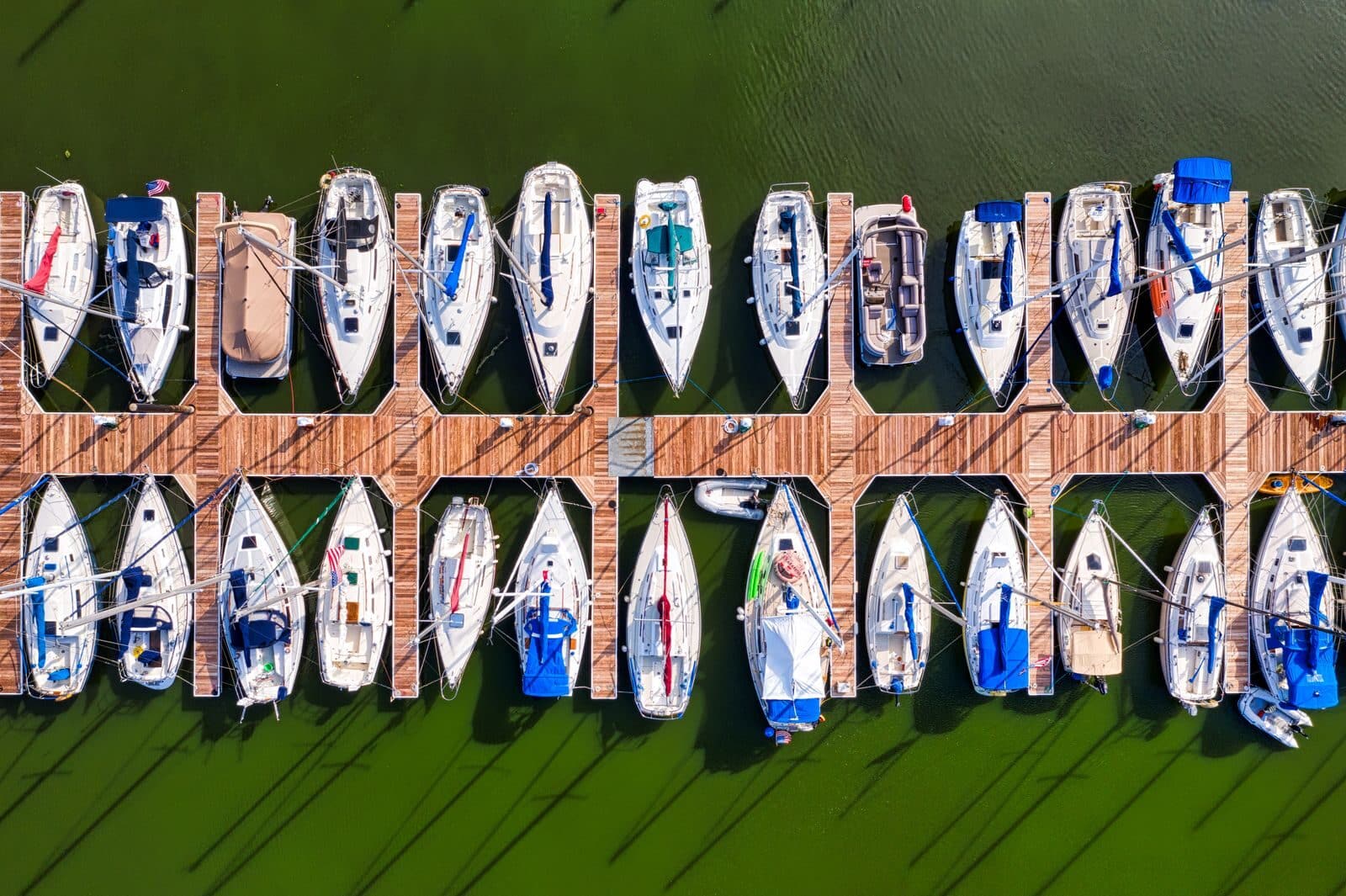
Photo by Enrapture Captivating Media on Unsplash
What Is the Difference Between Private Sale Value and Dealer Trade-In Value?
Dealer trade-in quotes are typically lower than what a private sale would yield. That’s not arbitrary—dealers have to account for inspection, reconditioning, storage, marketing, carrying costs, and their own resale margin.
A private sale may return more money, but it also requires the seller to handle inquiries, showings, negotiations, paperwork, and logistics independently.
When approaching a dealer for a trade-in estimate, be prepared to provide:
- Year, make, model, and length
- Engine configuration and hours
- Condition description and photos
- Equipment and electronics inventory
- Maintenance records
Turnaround times for preliminary estimates vary by dealer and platform. Some services market faster response windows, but there’s no universal standard across the marine industry.
Why Transport Should Be Part of Your Used Boat Buying Plan
Valuing a boat carefully is only half the equation. Once the deal is done, the boat has to get home.
Used boats can represent investments worth tens of thousands—or hundreds of thousands—of dollars. Treating transportation as a last-minute detail after the contract is signed adds unnecessary risk to a transaction that took significant research to get right.
Buyers increasingly look beyond their local market because the right boat at the right price may not be available locally. A specific make and model combination, a preferred engine configuration, a particular condition tier—these factors often point to a boat located several states away. Sellers, meanwhile, can attract buyers from across the country when they’re willing to coordinate professional transport.
Helpful Resource: Federal Motor Carrier Safety Administration (FMCSA) — verify the safety record and compliance status of any transportation company you’re considering hiring.
Photo by Элен Пройс on Pexels
Why Hire Interstate Haulers for Used Boat Transport?
Nearly 30 Years of Specialty Hauling Experience
Interstate Haulers has been a family-owned transportation company since 1997. Specialty hauling—boats, RVs, cargo trailers—is our core business, not a side service attached to a general freight operation. Boat transportation requires logistical planning, experienced drivers, and equipment matched to the load. That’s a different discipline than moving standard freight, and it’s what we’ve focused on for nearly three decades.
We Transport Boats With or Without Trailers
Transportation requirements vary by vessel. Some boats arrive with a well-maintained, roadworthy trailer. Others don’t. Interstate Haulers can coordinate transport for many boat types in either scenario, depending on the boat’s size, configuration, and destination. Buyers who purchase a boat without a usable trailer still have professional transport options.
Nationwide Coverage Expands Your Buying Options
When buyers work with Interstate Haulers, their search area is no longer limited to what’s within comfortable trailering distance. A boat located in Florida, Texas, or Michigan can be transported professionally to nearly any destination within the continental United States. That expanded reach often translates directly into better selection, better pricing, and access to specific models that simply aren’t available locally.
Professional Care for High-Value Assets
Interstate Haulers operates in compliance with FMCSA standards and brings a commitment to transparent communication and personalized service to every haul. Once a buyer has invested the time and diligence required to properly evaluate a used boat, the last step—getting it home safely—deserves the same level of care.
Used Boat Value and Transport Checklist Before You Buy
- Verify year, make, and model
- Research baseline used boat values using J.D. Power and Boat Trader’s Price Checker
- Compare similar boats currently listed for sale
- Review recent comparable sales where available
- Inspect mechanical systems and evaluate engine hours in context of service history
- Inspect hull, transom, deck, and stringers for structural integrity
- Review all maintenance and service documentation
- Evaluate electronics, upgrades, and accessories
- Inspect the trailer and confirm roadworthiness if included
- Account for local market conditions and current season
- Obtain a professional marine survey for higher-value or complex purchases
- Confirm purchase paperwork and insurance requirements before delivery
- Determine how the boat will reach its destination
- Request a professional transport quote before finalizing long-distance logistics
Frequently Asked Questions About Used Boat Values
How do I find the value of a used boat?
Start by recording the boat’s year, make, model, length, engine configuration, and hours. Use recognized valuation tools—J.D. Power and Boat Trader’s Price Checker are good starting points—to establish a baseline. Cross-reference that baseline against current listings for comparable boats and, when possible, recent comparable sales. For higher-value purchases, a professional marine survey provides the most reliable independent assessment.
Is there a Kelley Blue Book for used and new boats?
There’s no direct equivalent that dominates the marine market the way KBB does for automobiles. J.D. Power boat values (formerly associated with NADA Guides), Boat Trader’s Price Checker, and ABOS Marine Blue Book are the most commonly referenced alternatives. No single tool should be the sole basis for a valuation—condition, location, equipment, and current market demand can all move the actual number meaningfully.
How do you find the value of an old boat?
Focus less on year and more on condition, maintenance history, structural integrity, engine condition, and any restoration or repowering work. Older boats with few comparable sales can be difficult to value from listings alone. A marine surveyor’s independent evaluation is particularly useful when condition or structural integrity is hard to assess remotely.
What is the equivalent to Kelley Blue Book for boats?
J.D. Power boat values are among the best-known guide-style resources for used marine pricing. Boat Trader’s Price Checker and ABOS Marine Blue Book provide additional market context. Because no single resource captures the full picture—location, condition, equipment, and demand all matter—cross-referencing multiple sources produces a more reliable estimate than any single guide.
Do engine hours affect used boat values?
Yes, significantly—but hours should always be interpreted in context. A lower-hour engine with a history of neglect may be in worse condition than a higher-hour engine with thorough maintenance documentation. Hours matter most when paired with service records that explain how those hours were accumulated and how the engine was cared for throughout.
Does a boat trailer increase resale value?
A properly maintained, roadworthy trailer adds meaningful value to a complete package. Buyers who don’t already own a compatible trailer save the cost of acquiring one separately, which makes a well-equipped trailer an asset rather than just an accessory. Evaluate tires, wheel bearings, axles, frame condition, lights, and brakes before assigning value to any trailer.
Does location affect what a used boat is worth?
Yes. Regional buyer demand, local inventory levels, boating activity in the area, and seasonal timing all influence pricing. The same boat may command a different price in a coastal Florida market than it would in a landlocked Midwest market with limited boating infrastructure. This regional variation is one reason buyers increasingly consider out-of-state purchases when local inventory doesn’t meet their needs.
Know Your Boat’s Value—Then Plan How to Move It
Accurate used boat values come from a complete picture: year, make, and model establish a baseline, but condition, engine hours, maintenance records, hull integrity, electronics, trailer status, brand reputation, comparable sales, location, and seasonal demand determine what a boat is actually worth in the current market.
Buyers who do this research thoroughly protect themselves from overpaying. Sellers who understand these factors can price competitively and attract serious buyers—including buyers from outside their immediate region.
A used boat that represents a significant financial investment deserves thoughtful transportation planning, not a last-minute scramble for a trailer and a truck.
Once you’ve found the right boat—or the right buyer—don’t let transportation become an afterthought. Interstate Haulers has specialized in moving your next boat and other high-value assets since 1997. Whether your boat has its own trailer or requires another transport solution, our team is ready to help coordinate safe, professional transportation across the continental United States. Contact us today to request a boat transport quote.