Regular dump trailer maintenance—covering the hydraulic system, brakes, tires, wiring, frame, and moving parts—extends the trailer’s lifespan, reduces repair costs, and keeps every haul safer. Pre-trip inspections, routine cleaning, and rust prevention are the three pillars of a solid maintenance routine. When transporting a dump trailer long distances, professional haulers like Interstate Haulers offer a reliable, FMCSA-compliant alternative to towing it yourself.
A dump trailer is one of the hardest-working pieces of equipment you can own. Haul after haul, it carries heavy loads of dirt, gravel, and debris across job sites and properties—often in conditions that would wear down lighter equipment quickly. That kind of consistent, heavy use demands consistent, proactive care.
Neglecting maintenance doesn’t just risk mechanical failure. It risks your safety, your cargo, and the people around you on the road. According to the Federal Motor Carrier Safety Administration (FMCSA), drivers are required to inspect their vehicles before every trip and confirm the equipment is in safe operating condition. That rule exists for good reason.
This guide covers everything you need to know to keep your dump trailer performing at its best. From understanding capacity limits to building a maintenance checklist you’ll actually use, here’s how to protect your investment and haul with confidence.
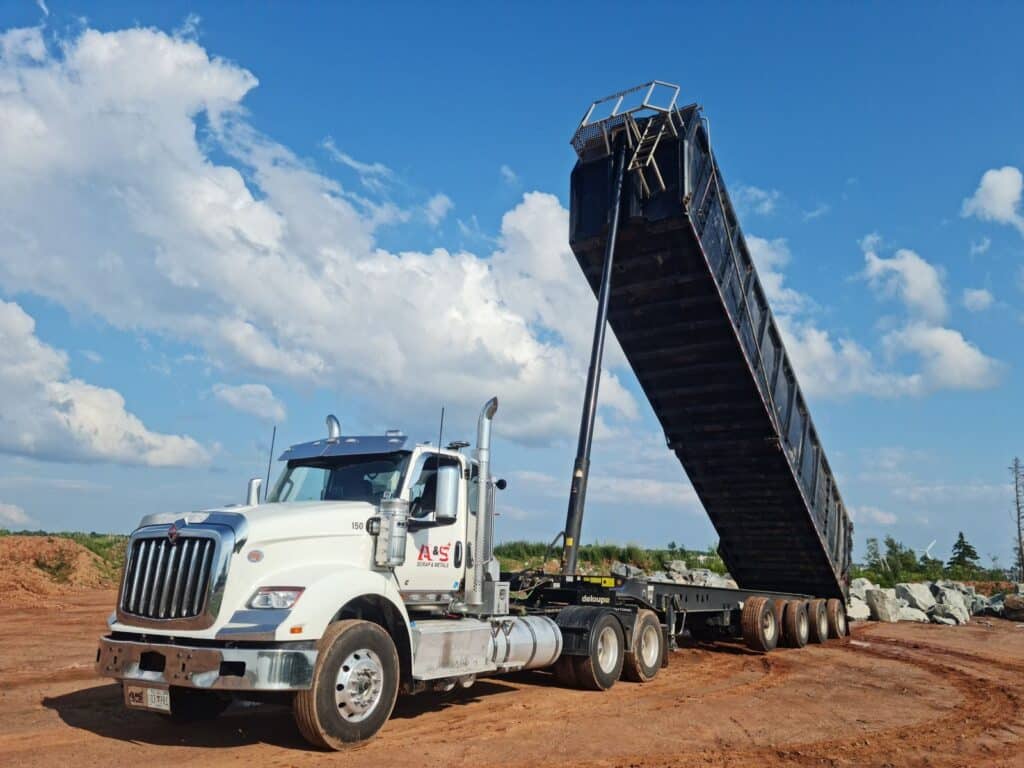
Photo by Mark Twineham on Pexels
Understanding Your Dump Trailer Before You Maintain It
What Is a Dump Trailer?
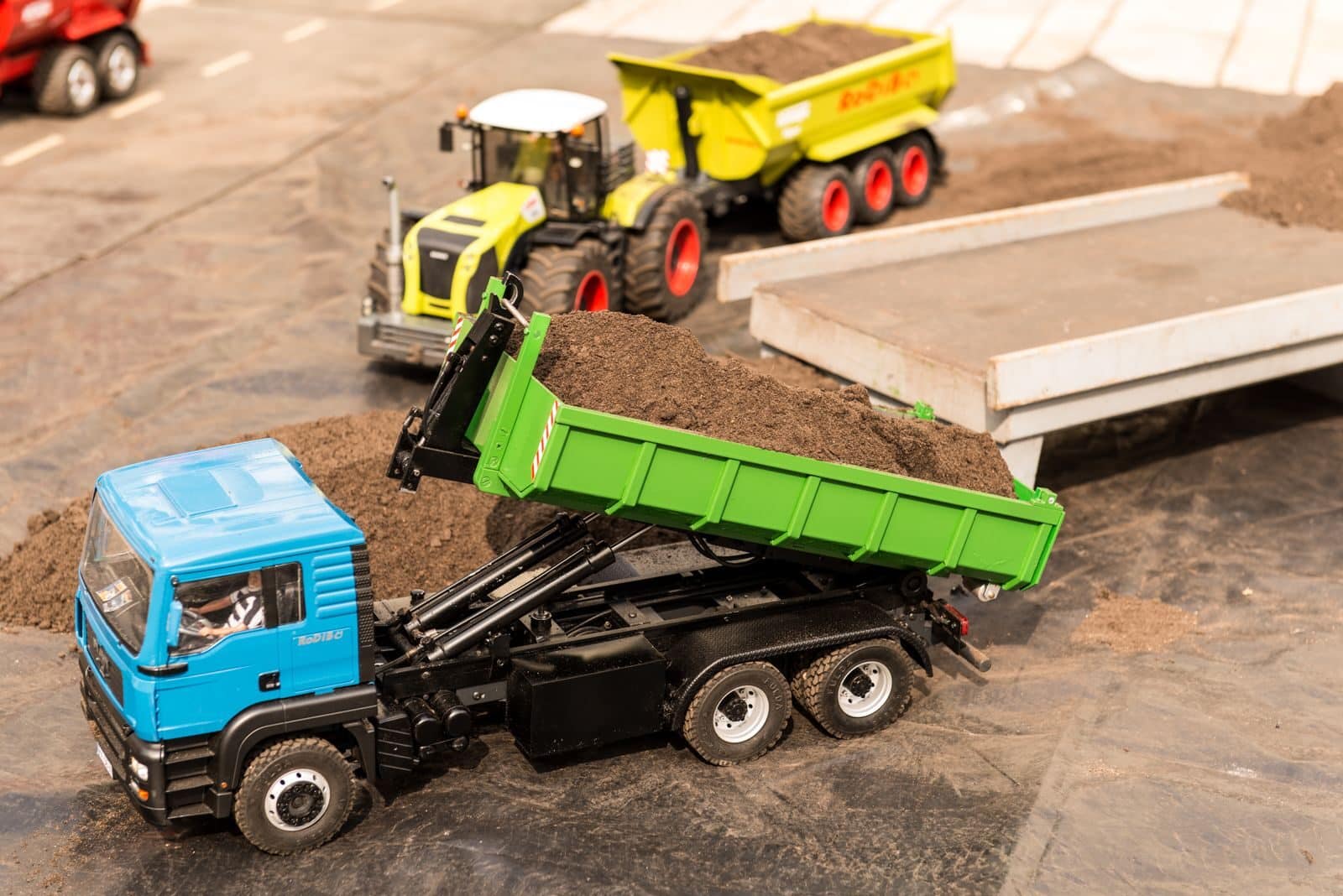
A dump trailer is a towed hauling unit equipped with a hydraulic lifting system that raises the bed to unload materials from the rear or sides. That mechanism is what sets it apart from standard utility trailers. Instead of manually unloading bulk materials like gravel, mulch, dirt, or demolition debris, the hydraulic system does the heavy lifting—literally.
Dump trailers are used across a wide range of industries:
- Construction – hauling aggregate, waste, and fill materials
- Landscaping – moving mulch, soil, and stone
- Agriculture – transporting grain, silage, and farm waste
- Municipal work – debris removal and road maintenance
The ability to load and unload quickly makes dump trailers a productivity multiplier on any job site. But that same hydraulic system requires dedicated attention to keep it running safely.
For additional safety guidance specific to dump trailers in agricultural settings, the Extension Foundation’s Ag Safety and Health resource is an excellent starting point.
Common Dump Trailer Types
Dump trailers come in a range of configurations, and the type you own can affect which components need the most attention. Here’s a quick breakdown:
- Bumper pull dump trailers – Connect to a standard ball mount; most common for residential and light commercial use
- Gooseneck dump trailers – Offer better weight distribution and improved towing stability for heavier loads
- End dump trailers – The bed raises from the front to unload from the rear
- Side dump trailers – Tilt sideways; useful on narrow job sites
- Belly dump trailers – Release materials through bottom gates; common in road construction
- Roll-off dump trailers – Allow interchangeable containers across multiple job sites
- Low-profile dump trailers – Beds positioned closer to the axle for easier loading of heavy equipment
- Deck-over dump trailers – Wider deck for bulky materials or machinery
- Compact dump trailers – Suited for lighter loads and tight workspaces
- Commercial-grade dump trailers – Built for high-demand, high-frequency job site use
- Light-commercial dump trailers – A balance of payload capacity and maneuverability
Each design has its own stress points. A gooseneck trailer distributes load differently than a bumper pull, and a side dump trailer puts lateral stress on components that end dumps never experience. Know your trailer type, and know where to look first.
Know Your Trailer’s Limits
Understand Capacity Before Every Haul
Overloading a dump trailer is one of the fastest ways to cause structural damage, brake failure, and unsafe towing conditions. Every dump trailer has a Gross Vehicle Weight Rating (GVWR)—the maximum total weight the trailer can safely handle, including both the trailer itself and its cargo.
Here’s how that breaks down:
- GVWR = the maximum combined weight of the trailer and its load
- Payload capacity = GVWR minus the trailer’s empty weight
Heavy-duty dump trailers can have GVWRs up to 25,000 lbs and cargo capacities reaching 16,500 lbs, depending on axle configuration and design. Lighter models intended for residential use carry far less. Never assume your trailer can handle a load just because it fits in the bed.
The National Association of Trailer Manufacturers (NATM), which has been dedicated to improving trailer safety for more than 30 years, emphasizes that operating within manufacturer weight ratings is fundamental to both safety and compliance.
Match Your Tow Vehicle
The tow vehicle matters as much as the trailer itself. Before every haul:
- Confirm your tow vehicle’s rated towing capacity exceeds the loaded trailer weight
- Verify the hitch type is appropriate (ball mount vs. gooseneck vs. fifth wheel)
- Make sure the brake controller is properly set up and functioning
- Check that tires on the tow vehicle are rated for the load
- Consider whether your suspension is adequate for the combined weight
Mismatched towing setups cause sway, reduced braking performance, and accelerated wear on both the trailer and the tow vehicle.
Essential Dump Trailer Maintenance Checklist
How to Inspect Tires and Wheels on a Dump Trailer
Tires take the brunt of every haul. A blowout at highway speed with a loaded dump trailer is a serious safety risk—and it’s almost always preventable.
What to check:
- Tire pressure – Maintain the manufacturer’s recommended PSI. Low pressure on one side can cause tipping when the bed is raised, according to Penn State Extension’s farm dump truck and trailer safety guide
- Sidewall condition – Look for cracks, bulges, or visible damage
- Tread wear – Uneven wear often signals an alignment issue
- Lug nut torque – Loose lug nuts can cause wheel separation; check and re-torque regularly
- Wheel bearings – Listen for grinding or vibration; repack bearings according to the manufacturer’s schedule
Rotating tires every 5,000 to 7,000 miles helps extend their lifespan and ensures even wear across all axles.
How to Check the Hydraulic System on a Dump Trailer
The hydraulic system is the defining feature of any dump trailer—and one of the most maintenance-intensive. Hydraulic failures can strand you mid-job or, worse, cause the bed to drop unexpectedly during maintenance.
What to check:
- Fluid levels – Low hydraulic fluid leads to sluggish operation and potential pump damage; top off as needed with the correct fluid type
- Hoses and seals – Inspect for cracks, bulging, chafing, or wet spots that indicate leaks
- Cylinder condition – Look for oil residue on the cylinder rod, which signals a seal failure
- Pump operation – Test the lift mechanism under load; sluggish or jerky operation warrants closer inspection
The Extension Foundation also notes that heavy dust accumulation on hydraulic lines is a fire hazard—clean dust and debris from lines regularly as part of your routine.
Never crawl under a raised dump bed for inspection or repairs without first securing it with an approved dump box lock bar. A bed that drops unexpectedly can be fatal.
How to Test Brakes, Lights, and Wiring on a Dump Trailer
Electrical and braking systems don’t get enough attention until something stops working. By then, you’re either stuck on the side of the road or facing a safety incident.
Brake system checks:
- Test the electric brake controller before every trip
- Inspect brake pads or shoes for wear
- Check wiring connections at the brake magnets for corrosion or damage
- Adjust brakes according to the trailer manufacturer’s schedule
Lighting and wiring checks:
- Test running lights, turn signals, and brake lights before every haul
- Inspect the wiring harness for fraying, cracking, or exposed conductors
- Clean the trailer connector and apply dielectric grease to protect against corrosion
- Confirm the trailer connector seats fully in the tow vehicle
The National Highway Traffic Safety Administration (NHTSA) maintains federal safety standards for trailer braking and lighting systems. Trailers that don’t meet these standards are not just unsafe—they’re non-compliant.
How to Inspect the Trailer Bed and Frame
The bed and frame absorb every impact, bump, and overloaded haul. Over time, stress accumulates in ways that aren’t always visible until a weld cracks or a crossmember fails.
What to inspect:
- Welds and seams – Look for cracks, especially at stress concentration points like corners and crossmember joints
- Frame rails – Check for bending, warping, or visible deformation
- Crossmembers – Verify they’re straight and fully attached
- Rust spots – Surface rust can be managed; rust that has eaten through structural steel requires immediate attention
- Bed liner condition – A bed liner improves material flow during dumping and protects the steel underneath
Low-profile models place stress on different areas than deck-over trailers. Know where your specific model is most vulnerable and inspect those areas first.
How to Lubricate Moving Components on a Dump Trailer
Dry hinges and latches don’t just make noise—they wear down faster and can seize up entirely. Lubrication is one of the simplest maintenance tasks and one of the most frequently skipped.
Components that need regular lubrication:
- Tailgate hinges and latches
- Hydraulic pivot points
- Suspension pivot points and bushings
- Jack components (thread and foot)
- Safety chain hooks and couplers
- Combination tailgate hardware (these need to move freely to support controlled material spreading)
Use a high-quality grease rated for heavy-duty applications. Consult your trailer’s owner manual for recommended lubricant types—not all greases are compatible with all components.
How to Inspect Tie-Down Equipment on a Dump Trailer
Tie-downs and load securement hardware are easy to overlook during routine checks, but they’re the last line of defense against shifting or spilled cargo on the road.
What to inspect:
- D-rings – Check for bending, cracking, or weld failure
- Tie-down points – Confirm they’re solidly anchored to the frame
- Integrated hooks – Test for proper engagement and release
- Tarp kit – Inspect bows, straps, and the tarp itself for tears or broken hardware; a good tarp keeps debris from blowing off during transit
OSHA’s loading and unloading guidelines for the trucking industry provide useful context on securing loads safely—the same principles apply to dump trailers hauling loose materials.
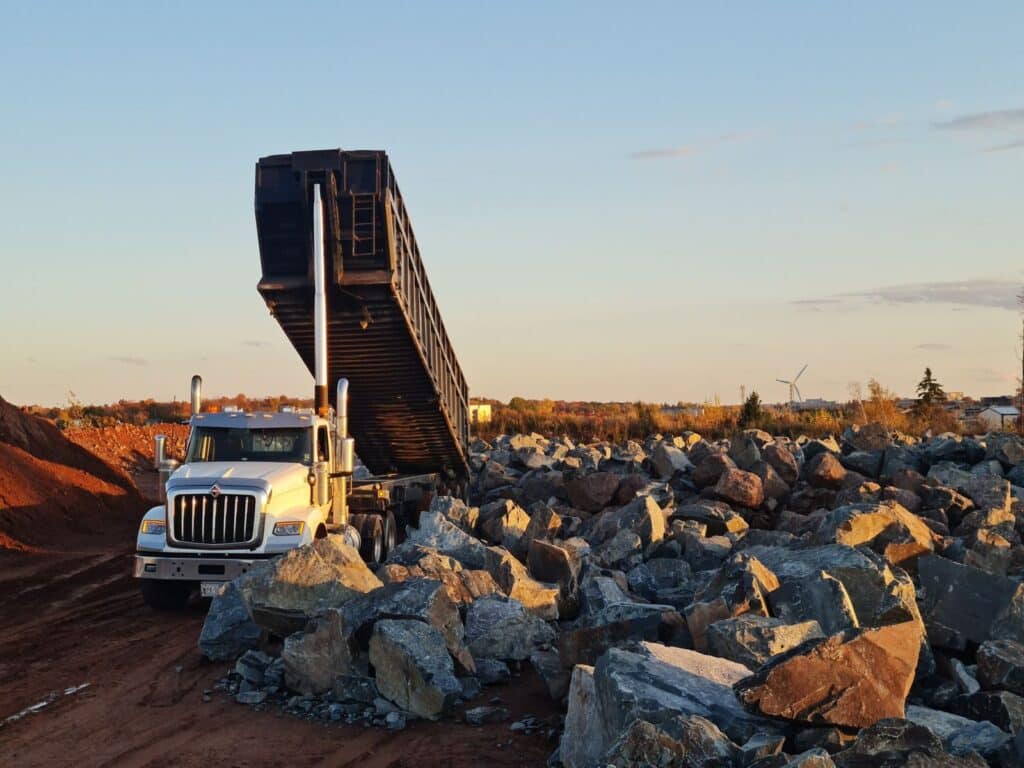
Photo by Mark Twineham on Pexels
How to Prevent Rust and Corrosion on a Dump Trailer
Rust is a slow-moving problem that turns into an expensive one. Dump trailers haul abrasive, corrosive materials—dirt, gravel, salt, fertilizer, and chemical-treated soils—that accelerate corrosion if left sitting on metal surfaces.
Rust prevention steps:
- Wash the trailer thoroughly after hauling corrosive materials, especially salt or fertilizers
- Clear debris from the undercarriage, drain holes, and corners where moisture collects
- Dry the trailer completely before storage—trapped moisture accelerates oxidation
- Touch up any paint chips or scratches promptly to prevent bare metal exposure
- Apply a rust-inhibiting coating to all metal surfaces, including the undercarriage
- Keep drain holes clear so water doesn’t pool in the bed
If rust has already taken hold, remove it with a wire brush or grinder, apply a rust converter to halt further spread, and repaint the affected area. Catching rust early costs far less than replacing structural components later.
How to Clean Your Dump Trailer the Right Way
Cleaning and maintenance go hand in hand. A wash-down isn’t just about appearance—it’s an opportunity to spot damage before it compounds.
Effective cleaning steps:
- Empty all debris from the bed after every haul
- Use a high-pressure hose to rinse loose material from the bed, frame, and undercarriage
- Scrub the bed with mild detergent to remove stuck-on material
- Remove mud buildup from wheel wells, suspension components, and brake assemblies
- Protect hydraulic components—avoid directing high-pressure water directly at seals, fittings, and electrical connectors
- Allow the trailer to dry completely before storage to prevent rust formation
Use the cleaning session as a secondary inspection. Fresh eyes on a clean surface often catch cracks, rust spots, and loose hardware that get missed in the field.
Avoid Common Mistakes That Shorten Dump Trailer Life
Even experienced operators fall into habits that quietly shorten a dump trailer’s lifespan. Here are the most common ones—and why they matter:
- Overloading the trailer – Exceeds structural ratings, stresses axles, and creates dangerous towing conditions
- Ignoring unusual noises – Grinding, squealing, or clunking during operation signal problems that won’t resolve themselves
- Skipping hydraulic inspections – Fluid leaks and failing seals worsen quickly under load
- Neglecting brakes – Worn brakes on a loaded trailer dramatically extend stopping distance
- Driving on worn tires – Blowouts with a loaded trailer can cause rollovers
- Forgetting electrical maintenance – Corroded connections cause intermittent failures in brakes and lights
- Leaving loads uncovered – Flying debris is a road hazard and, in many states, a legal liability
- Improper storage – Parking on uneven ground or leaving the trailer exposed to the elements accelerates wear on every component
Small habits compound over time. The ones above tend to turn into expensive repairs—or incidents.
Features Worth Inspecting During Routine Maintenance
Beyond the core systems, certain components deserve periodic attention that often falls outside a basic pre-trip checklist:
- Hydraulic lift system – Full extension and retraction test under load
- Combination tailgate – Verify it opens, closes, and latches securely in all positions
- Loading ramps (on applicable models) – Inspect pins, hinges, and surface grip
- D-rings and integrated hooks – Check weld integrity and engagement
- Tarp kit – Bow alignment, strap condition, and tarp surface
- Safety chains – No kinks, cracks, or missing links; proper hook closure
- Coupler – Positive locking and correct ball size engagement
- Jack – Smooth operation, no wobble, and proper load rating for the trailer
- Axles – Inspect for bending or damage, especially after hauling near maximum capacity
Running through this list every few months—or after any particularly demanding haul—helps catch problems before they become safety issues.
Choosing the Right Dump Trailer for Your Work
Selecting the right dump trailer from the start is one of the most effective long-term maintenance strategies. A trailer that matches your actual workload experiences less stress and requires less corrective maintenance over time.
Key factors to consider:
- Trailer size – Common configurations range from 5’×8′ to 8.5’×24′; choose based on payload needs and job site access
- Intended application – Construction, landscaping, and agriculture each have different load characteristics
- Payload requirements – Match GVWR and cargo capacity to your typical haul weight, with room to spare
- Maneuverability – Compact trailers work better in tight spaces; deck-over models need more clearance
- Tow vehicle compatibility – The trailer’s hitch type and weight must align with your tow vehicle’s ratings
- Construction materials – Powder-coated steel frames and reinforced beds hold up better under frequent heavy use
- Frequency of use – Commercial-grade trailers are worth the investment for daily use; light-commercial models suit occasional hauling
Consult the NATM’s compliance and manufacturing guidelines when evaluating trailers. NATM-compliant trailers are built to Federal Motor Vehicle Safety Standards, which sets a useful quality baseline during the purchasing process.
When Professional Trailer Transport Makes Sense
There are situations where towing a dump trailer yourself simply isn’t the right call. Long distances, mismatched tow vehicles, specialty trailer sizes, and fleet relocations all present challenges that professional transport handles more efficiently—and more safely.
Professional trailer transport is the smarter option when:
- You’ve purchased a dump trailer out of state and need it delivered home
- Your tow vehicle isn’t rated for the trailer’s loaded or unloaded weight
- You’re relocating a fleet of trailers across multiple states
- The trailer is a commercial-grade or specialty unit that requires experienced handling
- You want to avoid putting unnecessary highway miles and wear on your own tow vehicle
- Time is a factor and you need reliable, coordinated delivery
This is where Interstate Haulers comes in. Founded in 1997, Interstate Haulers is a family-owned transportation company with nearly three decades of experience hauling specialty trailers, boats, RVs, and industrial equipment across the continental United States. The company serves individual owners, dealers, manufacturers, freight forwarders, and government agencies—all with the same commitment to personalized service and reliable delivery.
Interstate Haulers operates with full FMCSA compliance, licensed drivers, and a hauling network that reaches coast to coast. Every transport includes consistent communication and tailored logistical planning—so you always know where your equipment is and when it will arrive.
For dealers taking delivery of new dump trailer inventory, contractors relocating equipment, or individual owners who just purchased a trailer on Facebook Marketplace for a really good sale price, but its across the country, Interstate Haulers removes the stress and logistics burden from what can otherwise be a complicated move.
Consistent Maintenance Pays for Itself
A dump trailer that gets regular attention lasts longer, hauls safer, and costs less to operate over its lifetime. The maintenance tasks covered in this guide—tire inspections, hydraulic care, brake testing, electrical checks, rust prevention, and frame monitoring—aren’t complicated. They just require consistency.
Build a maintenance schedule tied to mileage, usage hours, or calendar intervals, and stick to it. Do a pre-trip walkthrough before every haul. Clean the trailer after every job. Address small issues before they grow.
And when the time comes to move a dump trailer across the country—whether you’re buying, selling, or relocating— we are committed to being a transport partner you can trust with the experience and infrastructure to do it right. Contact Interstate Haulers at (910) 295-2244 or email admin@interstatehaulers.com for a fast, no-pressure quote on nationwide trailer transport.

Frequently Asked Questions
How often should I inspect my dump trailer?
Perform a visual pre-trip inspection before every haul, covering tires, lights, brakes, the coupler, hydraulic lines, and load securement. Monthly checks should go deeper—testing brake function, checking fluid levels, lubricating moving parts, and inspecting the frame for rust or cracks. A comprehensive annual inspection should cover every component from wheel bearings to wiring, ideally performed by a qualified trailer technician.
What parts of a dump trailer require the most maintenance?
The hydraulic system, brakes, tires, and electrical wiring are the highest-priority maintenance areas because failures in these components directly affect safety. The trailer bed, frame, hinges, latches, and tailgate also require regular attention, as these parts absorb the most physical stress during loading, hauling, and dumping operations.
How can I prevent rust on my dump trailer?
Wash the trailer after every haul involving corrosive materials (salt, fertilizer, or chemicals), dry it thoroughly before storage, touch up paint chips promptly, and apply a rust-inhibiting coating to exposed metal surfaces. Keep drain holes clear so water doesn’t pool in the bed. For existing rust, remove it mechanically, apply a rust converter, and repaint the affected area.
Can I overload a dump trailer if it still tows?
No. Exceeding a trailer’s GVWR or payload capacity is dangerous regardless of whether the tow vehicle can move the load. Overloading stresses the frame, axles, and brakes beyond their design limits, increases the risk of tire failure, and creates unsafe stopping distances. It also violates federal and state weight limits, exposing operators to fines and liability. Always verify the smaller loaded weight against the manufacturer’s ratings before moving.
What should I inspect before every haul?
Before each trip, check tire pressure and visible condition, all lights (running, brake, and turn signals), brake controller function, coupler engagement, safety chain attachment, hydraulic fluid level and hose condition, load securement hardware (D-rings, tie-downs, and hooks), and the tarp kit if hauling loose materials. This pre-trip routine takes less than 10 minutes and prevents the majority of avoidable on-road incidents.
When should I hire a professional trailer transport company?
Hire a professional trailer transport company when moving a dump trailer over long distances, transporting newly purchased equipment from a distant seller, relocating a commercial trailer fleet, or when your tow vehicle isn’t properly rated for the trailer’s size and weight. Professional transport also makes sense when you want to avoid adding highway miles to your own vehicle or when coordinated delivery timing is critical. Interstate Haulers specializes in exactly these scenarios, with nationwide coverage and nearly 30 years of specialty hauling experience.