Travel trailers are the most popular RV type in the U.S., ranging from roughly 12 to 35+ feet and 1,200 to nearly 10,000 pounds. Choosing the best travel trailer depends on your tow vehicle, sleeping needs, camping style, and budget. Once you’ve found the right one, Interstate Haulers—a family-owned RV transport company operating since 1997—can move it safely anywhere in the continental U.S.
Few purchases combine practicality and adventure the way a travel trailer does. You get a mobile home base that follows you through national parks, mountain passes, and coastal backroads—all without booking a hotel or sacrificing the comfort of your own bed. For families, solo travelers, full-timers, and weekend warriors alike, travel trailers offer a level of flexibility that other vacation formats simply can’t match.
But “best travel trailer” means something different for every buyer. The couple towing with a mid-sized SUV needs a completely different rig than the family hauling a bunkhouse with a heavy-duty pickup. The solo adventurer chasing off-grid solitude has different priorities than the retiree who wants a residential kitchen and a king-sized bed. There is no universal answer—and anyone who claims otherwise is selling you something.
This guide covers what actually matters when you’re evaluating travel trailers: tow weight, floor plans, sleeping layouts, storage, off-road capability, four-season readiness, and the premium models pushing the boundaries of what these trailers can do. We also cover the part most buyers don’t think about until after they’ve signed the paperwork—getting the trailer home. That’s where we come in.
At Interstate Haulers, we’ve been moving travel trailers, fifth wheels, toy haulers, and other recreational vehicles across the continental United States since 1997. We’re a family-owned specialty transportation company, and we understand that your RV is far more than cargo. It’s a significant investment and the vehicle for future adventures. We’ll return to that in detail later. First, let’s talk about finding the right trailer.
What Makes the Best Travel Trailers Stand Out?
Before you scroll through floor plans or fall in love with a model at an RV show, there are foundational questions that should shape every decision you make. The most beautiful trailer in the showroom is useless if your vehicle can’t safely tow it.
What should you know about towing capacity before buying a travel trailer?
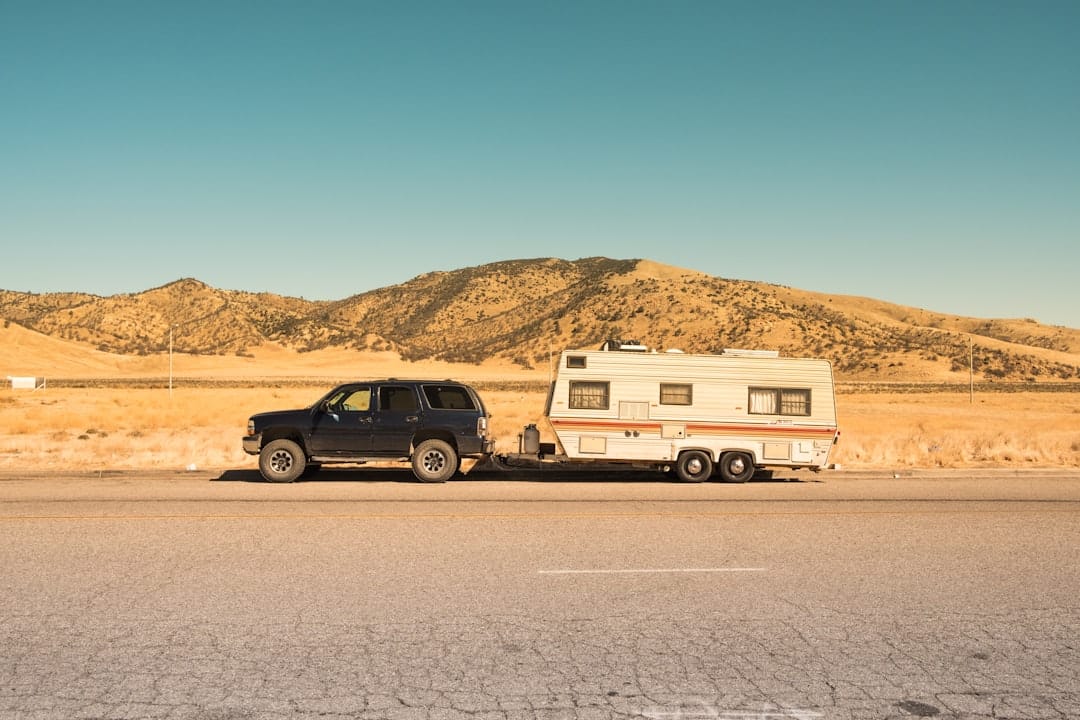
Start with your tow vehicle—not the trailer. Pull out your owner’s manual or check the manufacturer’s towing guide and identify your vehicle’s maximum towing capacity. That number is your hard ceiling.
From there, understand these key terms:
- Dry weight (UVW): The trailer’s factory weight with no cargo, water, or personal items added.
- Gross Vehicle Weight Rating (GVWR): The maximum allowable loaded weight of the trailer, including everything you put inside it. This number matters far more than dry weight when you’re calculating real-world towing requirements.
- Net Carrying Capacity (NCC): The difference between GVWR and UVW—the actual weight budget you have for gear, food, water, and accessories.
Keystone RV has a clear breakdown of these abbreviations that’s worth bookmarking before your first dealership visit: Understanding RV Weight Rating Abbreviations: GVWR, UVW, NCC, and GCWR Explained.
The critical mistake many first-time buyers make is shopping by dry weight alone. A trailer listed at 4,800 pounds dry can easily hit 7,000 pounds fully loaded. Add water, clothing, gear, food, and the miscellaneous items that multiply over time, and the gap between empty and loaded weight becomes significant. Always calculate against the GVWR, then leave a buffer. Towing at or near your vehicle’s absolute maximum leaves no room for error.
Smaller vehicles, SUVs, and mid-sized pickups can work well for many lightweight trailers, provided the manufacturer’s towing specifications are met—but you must verify this against your specific vehicle’s ratings, not a general estimate.
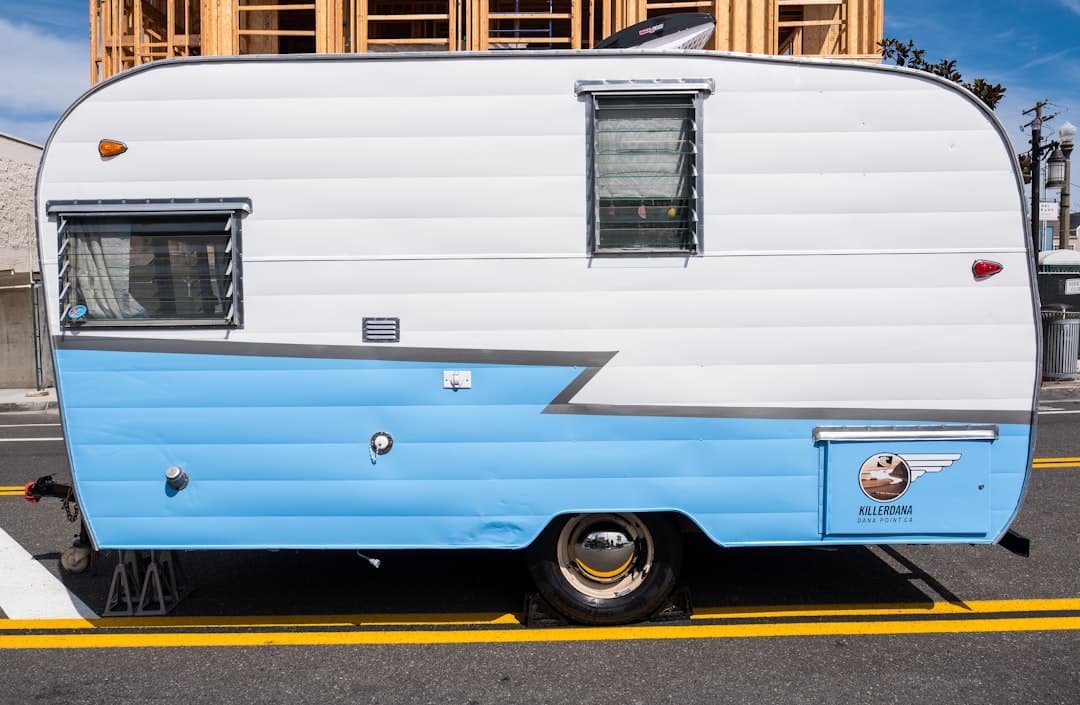
How does floor plan affect which travel trailer is right for you?
Floor plan can matter as much as overall size. A 26-foot trailer with a poor layout for your family will frustrate you far more than a well-designed 22-footer. Think about how many people travel with you regularly—not occasionally—and what everyone needs on a daily basis.
- Solo travelers and couples often do well with compact layouts that maximize kitchen and sleeping space without wasted square footage.
- Families with young children benefit from bunkhouse configurations, which provide dedicated sleeping areas and keep kids out of the main living space after bedtime.
- Long-term and full-time travelers typically prioritize a dedicated bedroom, a full bathroom, and a properly sized kitchen over communal sleeping arrangements.
Rear bunkrooms and dedicated sleeping rooms also give older children more privacy and personal space on extended trips, which anyone who has spent two weeks in a travel trailer with teenagers can confirm is worth the investment.
Murphy beds, convertible dinettes, and slide outs can expand usable space substantially when the trailer is parked, though slide outs do add weight and mechanical complexity to consider.
Why does storage matter more than total square footage in a travel trailer?
Two trailers with identical floor plans can have very different storage realities. Look at usable compartment space—not just total square footage—and think practically about what you’ll need to bring.
Outdoor kitchens are a popular feature for good reason. They keep cooking smells, grease, and mess outside the trailer during fair weather, and they give families a dedicated prep area without crowding the interior. Dedicated exterior storage compartments, pass-through storage underneath the main floor, and organized interior cabinetry all contribute to how livable a trailer feels on a long trip.
The best travel trailers for families combine smart floor plans, durable interior materials, practical sleeping configurations, and enough storage to carry everything a family actually needs—not just what fits if everyone packs light.
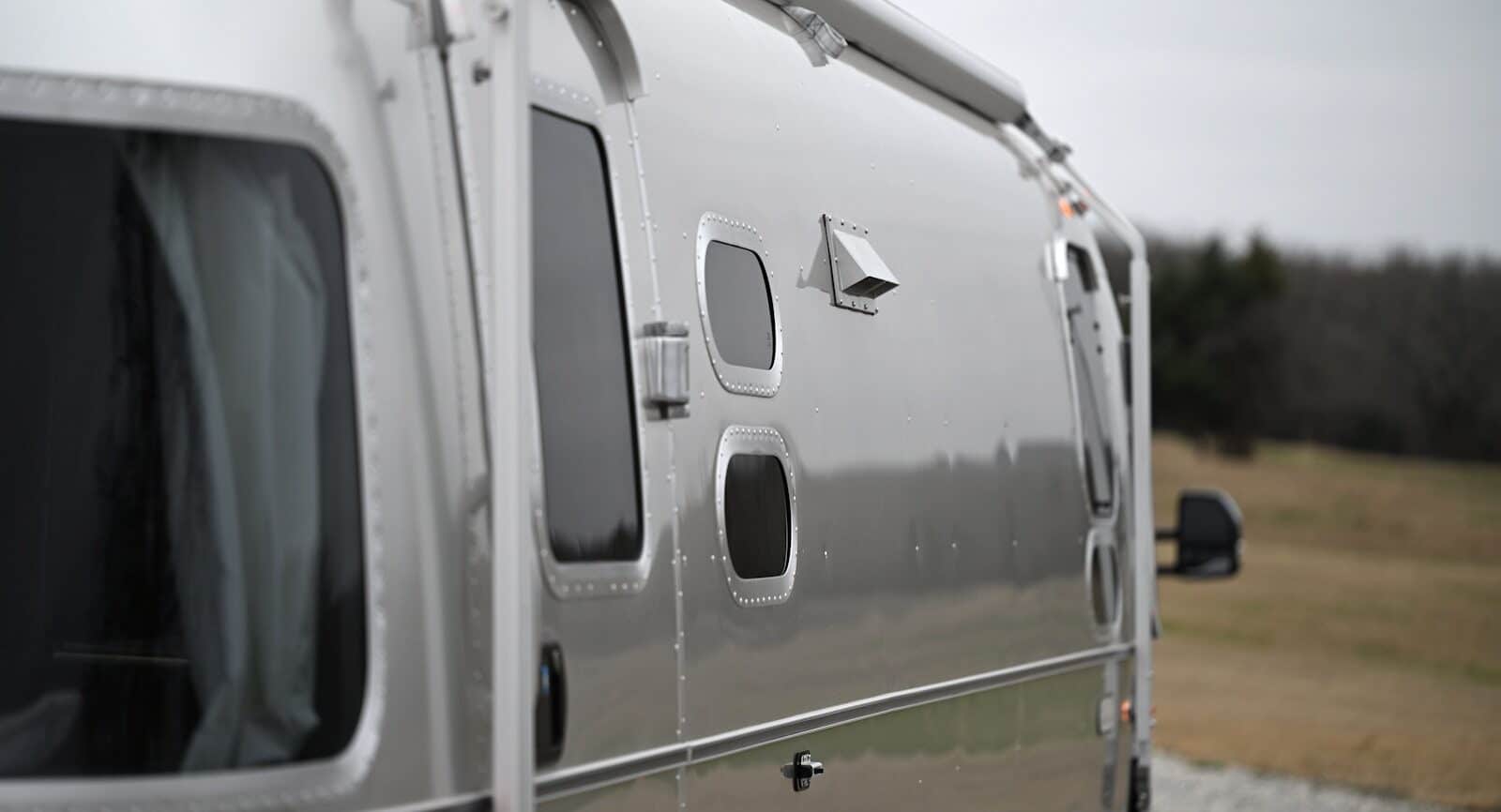
Photo by John Steinbeck on Unsplash
Best Travel Trailers by Size and Travel Style
Travel trailers commonly range from roughly 12 to 35 feet, with some larger models extending beyond 40 feet. Weights span from approximately 1,200 pounds for compact models to nearly 10,000 pounds for larger configurations. That’s an enormous range, which is why matching trailer size to your actual towing capability and travel habits is so important.
For a general overview of the major trailer types and how they compare, Consumer Reports offers a solid starting point: Beginner’s Guide to RV Trailers.
What are the best lightweight travel trailers for small tow vehicles?
Lightweight travel trailers are commonly defined as models with a dry weight below 3,500 pounds, though many buyers specifically target trailers under 2,500 or even 2,000 pounds for use with smaller tow vehicles. These trailers:
- Often measure under 20 feet in length
- Can be easier to maneuver in tight campgrounds
- May work with appropriately equipped SUVs and mid-sized pickups
- Tend to have lower price points than larger alternatives
Select Jayco lightweight travel trailer models fall below 2,000 pounds of dry weight, making them among the most accessible options for buyers without a heavy-duty truck. The Rockwood GeoPro 19FD is another notable compact option, with a dry weight under 2,900 pounds that suits buyers looking for off-road capability without a full-size pickup requirement.
One important reminder: “lightweight” does not mean universally towable. Your specific vehicle’s towing capacity still governs what’s safe. A 3,200-pound dry trailer loaded to its GVWR can easily exceed what a moderately equipped crossover SUV can handle. Verify against your exact vehicle’s ratings, not a category average.
What should families look for in larger travel trailers?
Larger travel trailers trade maneuverability for living space. More bedrooms, full-size beds, dual bathrooms, slide outs, and expanded kitchen layouts make extended trips genuinely comfortable—particularly for families with multiple children or couples planning long-term travel.
The trade-off is straightforward: more space means more weight, which means more tow vehicle. Families eyeing trailers in the 28–35 foot range typically need a full-size truck with a towing capacity of at least 10,000–12,000 pounds to haul a fully loaded rig safely.
Bunkhouse floor plans remain a consistent favorite for families. Having a dedicated bunk area that children can call their own—separate from the main sleeping area—improves everyone’s trip significantly after day three on the road.
What is a toy hauler, and who should consider one?
A toy hauler is a travel trailer (or fifth wheel) that incorporates a garage-style cargo area at the rear. Owners use this space to haul motorcycles, ATVs, mountain bikes, kayaks, and other gear that wouldn’t fit in a standard trailer’s storage compartments. Many toy hauler garages convert into additional sleeping or living space when the gear is unloaded at a destination.
The key consideration for toy hauler buyers: the weight of your gear counts toward your towing load. A motorcycle or an ATV adds hundreds of pounds—sometimes over a thousand—to your loaded trailer weight. Factor that into your GVWR calculations before you commit.
We transport toy haulers regularly as part of our travel trailer transportation services, and they require the right equipment and experience to move safely. Not every hauler has that capability.
How do fifth wheels differ from conventional travel trailers?
Fifth wheels connect inside the bed of a compatible pickup truck rather than to a bumper-pull hitch at the rear. This connection point gives fifth wheels different towing characteristics—generally considered more stable at highway speeds—and allows manufacturers to build taller front profiles that create loft-style living spaces above the hitch area.
Fifth wheels tend to be larger than conventional travel trailers and are popular with buyers seeking residential-style living spaces. They require a pickup truck with a fifth-wheel hitch installed in the bed, which limits compatibility compared with bumper-pull trailers. Interstate Haulers transports fifth wheels as part of our professional RV transport services nationwide.
Best Off-Road Travel Trailers for Going Beyond the Campground
Not every great campsite has a paved access road. For buyers who want to get away from crowded developed campgrounds, off-road-capable travel trailers have become a serious product category with serious engineering behind them.
What makes an off-road travel trailer different from a standard model?
Off-road trailers are built to handle rougher terrain and remote locations that would damage conventional trailers. Common distinguishing features include:
- Increased ground clearance to clear rocks, ruts, and obstacles
- Independent or robust suspension systems that absorb uneven terrain better than standard axles
- Reinforced or aluminum frames with greater structural rigidity
- Off-road tires rated for mixed or unpaved surfaces
- Solar panels and lithium battery systems for off-grid power
- Larger freshwater storage capacity
- Durable exterior construction resistant to brush, trail debris, and weather
Off-road trailers vary substantially in weight, with models ranging from roughly 1,200 to 10,000 pounds depending on size and configuration. Many smaller off-road-focused models have a GVWR below 4,500 pounds, designed to work with mid-sized trucks or capable SUVs.
What off-grid features matter most for remote camping?
Off-grid campers who regularly travel beyond hookup access prioritize a specific combination of systems. Solar capacity is a starting point—premium off-road trailers can feature solar arrays exceeding 1,000 watts, though actual off-grid duration depends heavily on power consumption, weather conditions, and battery capacity working together.
Lithium batteries have largely replaced lead-acid systems in serious off-grid builds because they provide more usable capacity, charge faster, and tolerate deeper discharge cycles without degradation. High-capacity electrical systems, reinforced water storage, and quality insulation round out the package for buyers who want genuine independence from campground infrastructure.
For buyers exploring the off-road trailer market, select Jayco adventure-oriented models offer advanced insulation and robust suspension systems worth comparing. Always verify exact specifications by model year, as configurations change between production cycles.
Premium Travel Trailers Pushing the Boundaries
The upper end of the travel trailer market has shifted considerably in recent years. Premium buyers now expect residential-grade kitchens, sophisticated electrical systems, and serious off-grid capability—not just upgraded upholstery. Several models are defining what’s possible.
Roamer X
The Roamer X represents the growing category of high-capacity off-grid trailers built for buyers who refuse to compromise on power. Its 2,000Ah lithium battery bank is one of the largest available in a production travel trailer, providing the energy reserves to run residential appliances, climate control, and charging equipment for extended periods without shore power.
Living Vehicle HD30
Living Vehicle built the HD30 around the premise that a travel trailer should function as a genuine full-time residence without grid dependency. The available 43 kWh of battery storage—paired with substantial solar generation capacity—supports a level of off-grid operation that few trailers in any category can match. For buyers who work remotely and travel extensively, the HD30 reflects exactly where the premium market is heading.
Bowlus Endless Highways
The 25-foot Bowlus Endless Highways is an all-electric luxury travel trailer that eliminates propane entirely in favor of a sophisticated electrical architecture. Bowlus builds these trailers to a standard that prioritizes aerodynamics, materials quality, and long-term durability over competitive pricing. Starting above $185,000, it’s not a trailer for every buyer—but it signals the direction the premium segment is moving.
MDC XT19HRT
The MDC XT19HRT takes a different approach, combining off-road capability with meaningful electrical capacity. Its 800Ah lithium battery system pairs with robust suspension and reinforced construction to serve buyers who want both trail capability and genuine off-grid independence. For adventures that take you far from paved roads and power hookups, the XT19HRT is a serious option.
Airstream Classic 33FB
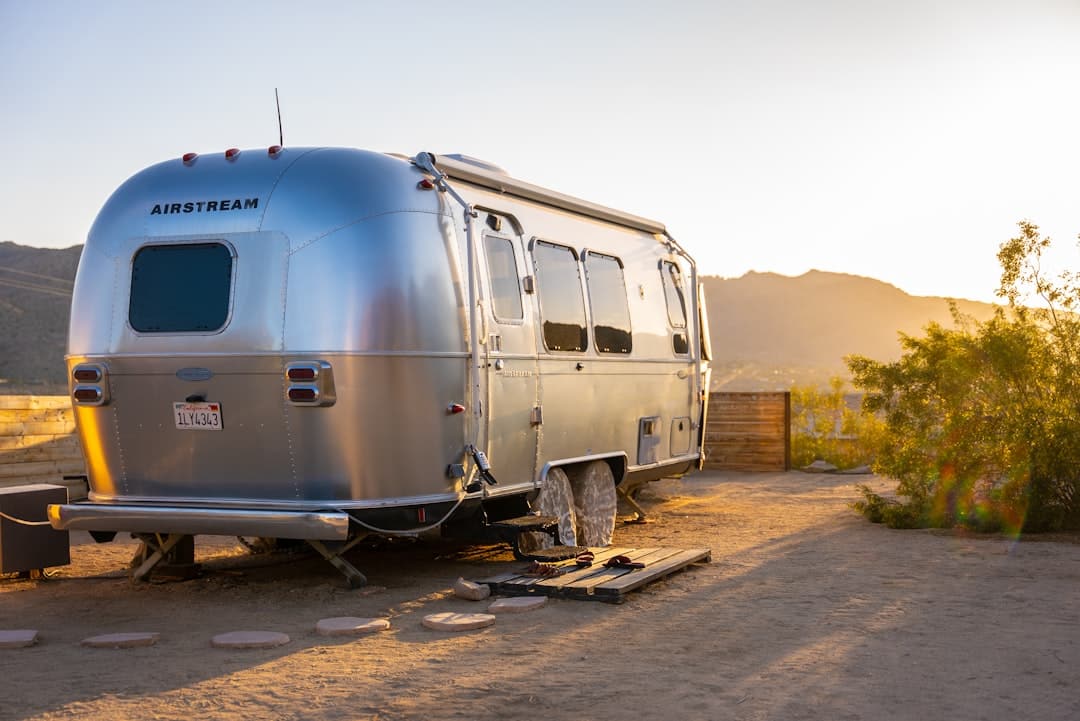
The Airstream Classic 33FB earned recognition as RV News’ Luxury Travel Trailer of the Year for 2025, continuing Airstream’s long track record in the premium segment. For luxury buyers, the Classic 33FB represents a blend of construction quality, interior craftsmanship, technology integration, and long-term usability that justifies its position at the top of the travel trailer market.
Note: Specifications, battery capacities, awards, and configurations should be verified against current manufacturer information, as model-year details can change.
Four-Season Travel Trailers and All-Weather Features
Camping in mild weather is one thing. Camping when temperatures drop significantly is another. Buyers who plan to use their trailer year-round—or even during shoulder seasons in cold climates—need to evaluate insulation, heating systems, and tank protection carefully.
Look for trailers with enclosed and heated underbellies that protect plumbing, tanks, and components from freezing. Insulated walls and roofs, quality heating systems, and protected tank compartments all contribute to genuine cold-weather usability. “Four-season” is a term manufacturers use loosely, so review the actual insulation ratings, heating system specifications, and plumbing configurations rather than relying on a label.
A trailer marketed as four-season capable should be able to specify the temperature range its systems are rated for and explain how the underbelly, tanks, and pipes are protected. Ask those questions before you buy.
Popular Travel Trailer Brands and Models Worth Comparing
No single brand builds the best travel trailer across every category. Airstream, Jayco, Forest River, Rockwood GeoPro, Cherokee Wolf Pup, Bowlus, Living Vehicle, and MDC all have genuine strengths depending on the buyer’s priorities.
- Airstream leads in construction quality, material longevity, and brand heritage.
- Jayco offers a broad range spanning lightweight to full-family configurations with consistent value.
- Forest River provides extensive floor plan variety across multiple price points.
- Rockwood GeoPro targets buyers who want off-road capability in a compact, manageable package.
- Cherokee Wolf Pup is a popular entry point for buyers prioritizing compact dimensions and accessible pricing.
- Bowlus and Living Vehicle serve the premium off-grid segment with no close competitors on specifications.
Compare construction quality, frame materials, exterior finish (fiberglass versus aluminum versus composite), insulation specifications, floor plan suitability for your family, warranty coverage, and dealer support network. The best brand for you is the one that fits how and where you actually camp—not the one with the most impressive brochure.
For a broader view of the RV industry, RV trailers and current ownership trends, the RV Industry Association publishes research and market data that can help frame your expectations as a buyer or owner.
How to Choose the Best Travel Trailer for Your Needs
How do you create a realistic towing and weight budget for a travel trailer?
Compare the trailer’s GVWR—not its dry weight—against your tow vehicle’s capacity. Account for the weight of passengers in the tow vehicle, all cargo in the truck bed or cab, and the fully loaded trailer simultaneously. Your tow vehicle’s payload rating limits how much weight can be in and on it, which affects tongue weight management with any trailer.
Give yourself a meaningful buffer between your vehicle’s maximum towing capacity and the trailer’s loaded GVWR. Towing closer to your absolute limit increases strain on the drivetrain, reduces braking effectiveness, and leaves no margin for unexpected weight additions over time.
How do you determine the right sleeping capacity for a travel trailer?
Plan for how many people travel with you regularly—not the theoretical maximum you might occasionally need. A trailer sized for six when you typically travel with two adds unnecessary weight, cost, and complexity. Compare queen beds, bunks, Murphy beds, convertible dinettes, and private rear bedrooms against your actual household.
How does your camping destination affect which travel trailer is the right choice?
- Developed campgrounds with full hookups → conventional travel trailer works well; prioritize layout and amenities over off-grid systems
- Remote locations without hookups → off-grid electrical capacity, solar, and lithium batteries become primary considerations
- Rough or unpaved terrain → off-road suspension, ground clearance, and reinforced construction are essential
- Cold-weather destinations → insulation ratings, enclosed underbelly, and tank protection take priority
If you’re planning to camp in multiple environments across different seasons, look for trailers that balance off-road capability with off-grid systems rather than optimizing for one condition only.
First-time buyers who want practical camping tips before committing will find KOA’s guide useful: 10 Tips for First-Timers from Experienced RV Veterans. And if you’ve already pulled the trigger on a purchase, KOA’s Beginner’s Guide to RVing with Glossary and Checklists is a solid orientation resource.
What Is the 3-3-3 Rule for RV Travel?
The 3-3-3 rule is a widely shared guideline among experienced RVers, not an official regulation. The framework goes like this:
- Drive no more than 300 miles in a single day
- Arrive at your campsite by 3:00 p.m.
- Stay at each location for at least 3 nights before moving on
The logic is straightforward. Long driving days in a tow vehicle are more fatiguing than highway driving in a regular car. Arriving early gives you time to set up in daylight, troubleshoot any issues, and actually enjoy your destination rather than collapsing after a marathon driving session. Staying multiple nights means you spend more time exploring and less time packing and unpacking.
Many experienced RVers adapt the rule to fit their travel preferences—some prefer even shorter daily drives, others extend to four nights at each site during longer trips. It’s a starting point, not a rigid system. Harvest Hosts has a practical breakdown of this and other common RV mistakes worth avoiding: 5 RV Mistakes Newbies Make (And How To Avoid Them).
What RVs Should You Stay Away From?
Avoid any manufacturer blacklist you find online. Quality varies not just between brands, but between individual units, production years, floor plans, and maintenance histories within the same manufacturer. A trailer that has been meticulously maintained by its previous owner is a far better purchase than a neglected trailer from a brand with a strong reputation.
The real concerns to watch for when evaluating any used travel trailer:
- Water intrusion and moisture damage — soft floors, walls, or ceiling panels; staining or discoloration around windows, seams, and roof vents
- Frame damage or previous accident repairs — look underneath carefully
- Roof condition — cracks, separating seams, or evidence of previous leaks
- Electrical problems — test everything before buying
- Neglected wheel bearings, brakes, and tires — these affect safety directly
- Unauthorized or poorly executed modifications — structural integrity matters on the road
- Missing maintenance records — no service history is a warning sign, not a mystery
Always have a used trailer professionally inspected before purchase. A qualified RV inspector can identify water damage, frame issues, and mechanical problems that aren’t obvious during a casual walkthrough. Research specific models and model years rather than generalizing about entire manufacturers based on isolated negative reviews.
For more on what to look for before you buy or head out on your first trip, Go RVing provides helpful resources for new and prospective owners: GoRVing.com.
Buying the Best Travel Trailer Is Only Half the Journey
Here’s something most buyers don’t think about until after they’ve signed the paperwork: the trailer they fall in love with is often hundreds—sometimes thousands—of miles from home. Or it’s sitting at a dealership across the country. Or they’ve relocated and need to get their existing trailer to a new state.
This is where professional transport becomes part of the ownership experience, not just an afterthought.
There are more situations that call for professional travel trailer transport than most buyers expect:
- Out-of-state and long-distance purchases
- Dealer-to-dealer inventory transfers
- Manufacturer-to-dealer deliveries
- Relocation or seasonal moves
- Moving a trailer to or from storage
- RV shows and special events
- Buyers who don’t have a tow vehicle rated for their new trailer
A travel trailer is a substantial financial investment. Moving it with the wrong equipment, an inexperienced driver, or a company that treats it like ordinary freight is a risk that simply isn’t worth taking.
10 Reasons Interstate Haulers Is Your Trusted RV Transport Partner
1. We’ve Been Hauling Specialty Vehicles Since 1997
Nearly three decades of experience in specialty transportation isn’t something you can manufacture with a slick website. Since 1997, Interstate Haulers has built our reputation by moving high-value assets safely—developing the expertise, equipment, and operational knowledge that comes only from doing this work, consistently, for a very long time.
2. We’re a Family-Owned Transportation Company
Being family-owned means accountability is personal, not institutional. When you work with Interstate Haulers, you’re not dealing with an anonymous freight operation. You’re working with a team that takes pride in every transport we complete, because our name and reputation are attached to every single one.
3. We Specialize in RV and Travel Trailer Transport
We don’t haul everything and anything. We specialize—and that distinction matters. Our team understands the specific challenges involved in moving conventional travel trailers, bumper-pull trailers, toy haulers, fifth wheels, pop-up trailers, and other recreational vehicles. That focused expertise is why dealers, manufacturers, and individual owners trust us with equipment that matters to them.
4. We Provide Nationwide Transportation
Whether your new trailer is sitting at a dealership in Arizona and you’re in Maine, or you’re relocating from Texas to Oregon and your fifth wheel needs to follow, we coordinate nationwide RV hauling across the continental United States. Long distances are our standard—not an exception.
5. Our Professional Driver Network Handles Specialized Loads
Moving a large travel trailer requires the right truck, the right hitch setup, the right experience, and the judgment to handle variable road and weather conditions across hundreds or thousands of miles. Our professional driver network brings that combination to every haul. This is not a skill set that transfers from standard freight work.
6. We Serve Individual RV Owners
If you’ve purchased a trailer from a private seller two states away, or you simply don’t have a tow vehicle rated for your new rig, we’re the partner you need. Our services are available to individual owners who want peace of mind, convenience, and the confidence that their investment is in capable hands.
7. We Work With Dealers and Manufacturers
We serve the B2B side of the RV industry with the same level of professionalism we bring to individual owners. Dealers moving inventory between locations, manufacturers delivering units to dealerships, and logistics partners who need a reliable last-mile transport solution all work with Interstate Haulers because consistency and communication are non-negotiable in those relationships.
8. Safety and Compliance Are Priorities
Interstate Haulers maintains full FMCSA compliance and a proven safety record. Every transport follows strict guidelines from pickup to delivery. When you request an RV transport quote from us, you’re engaging a company that can back its safety record with documentation—not just promises.
9. We Keep Communication Straightforward
Vague timelines and inconsistent communication are a red flag in any transport relationship. We provide transparent pricing, clear pickup and delivery processes, and consistent updates so you always know where your trailer stands. No surprises—just professional service at every stage.
10. We Understand That Your RV Is More Than Freight
A travel trailer represents future camping trips, family vacations, weekend adventures, and memories that haven’t happened yet. We approach every transport with that understanding. Your trailer isn’t a box on a truck to us—it’s an asset that deserves the care and professionalism that nearly 30 years of specialized experience provides.
How to Prepare Your Travel Trailer for Professional Transport
Taking a few steps before pickup helps the process go smoothly and protects your trailer during transit. Here’s what we recommend:
- Remove or secure all loose interior items — anything that can shift will shift
- Close and lock all windows and roof vents
- Retract slide outs fully
- Retract all awnings
- Secure cabinet doors and drawers
- Remove unsecured exterior accessories — chairs, mats, outdoor items
- Lock all storage compartments and entry doors
- Disconnect utilities — water lines, electrical connections, propane
- Document the trailer’s current condition with dated photographs — interior and exterior
- Provide accurate dimensions, weight, and clear pickup/delivery information
If your trailer has specific requirements—unusual dimensions, delicate features, or equipment that needs special attention—let us know when you contact us. We plan each haul around the specific unit we’re moving.
FAQs About the Best Travel Trailers
What is the most reliable brand of travel trailer?
No single brand holds that title universally. Airstream has a long track record for construction quality and longevity. Jayco and Forest River offer broad ranges with consistent value at multiple price points. Reliability depends on the specific model, model year, how the trailer was maintained, and the conditions it’s been used in. Research the specific model and production year you’re considering, compare owner feedback, check warranty terms, and have used trailers professionally inspected before purchasing.
What are the top 10 travel trailers to buy?
A useful top-10 list reflects different buyer needs rather than ranking unrelated trailers against each other. A meaningful starting framework by category:
- Airstream Classic 33FB — luxury and construction quality
- Rockwood GeoPro 19FD — compact and lightweight
- Jayco lightweight model — easy towing and accessible pricing
- Cherokee Wolf Pup — entry-level compact camping
- Forest River bunkhouse model — family travel
- Bowlus Endless Highways — all-electric premium
- Living Vehicle HD30 — premium off-grid capability
- Roamer X — high-capacity off-grid power
- MDC XT19HRT — off-road adventure
- Toy hauler configuration — adventure gear and flexible living space
Treat this as a starting point. Compare current specifications, pricing, availability, towing requirements, and dealer support before making any final decision.
What is the 3-3-3 rule for RVs?
The 3-3-3 rule is a travel-planning guideline: drive no more than 300 miles per day, arrive at your campsite by 3:00 p.m., and stay at least three nights before moving on. It’s designed to encourage a slower, less exhausting pace of RV travel. Most experienced RVers adapt the guideline to their own schedule and preferences—it’s a framework, not a hard rule.
What RVs should you stay away from?
Avoid units with significant water intrusion, structural or frame damage, poorly repaired accident history, or neglected maintenance—regardless of brand. Condition and model-specific history matter far more than broad manufacturer generalizations. Have any used trailer professionally inspected before purchase, and research the specific model year you’re considering rather than forming opinions based on isolated online reviews.
How much does professional travel trailer transport cost?
Transport costs vary based on distance, trailer type and dimensions, origin and destination, and current fuel and logistics conditions. Interstate Haulers provides straightforward, competitive quotes with no hidden fees. Request a quote directly for an accurate estimate specific to your trailer and route.
Can Interstate Haulers transport a trailer I bought out of state?
Yes. Out-of-state purchases are one of the most common reasons individual owners contact us. We coordinate pickup at the seller’s or dealer’s location and delivery to your address, storage facility, or any destination you specify within the continental United States.

Let Interstate Haulers Move Your Next Travel Trailer
Finding the best travel trailer starts with an honest look at your tow vehicle’s capacity, your sleeping and storage needs, where you plan to camp, and how often you’ll travel. From compact lightweight models under 20 feet to large bunkhouse trailers, fifth wheels, toy haulers, and premium off-grid rigs, there’s a trailer built for every kind of adventure—as long as you match it to your actual situation rather than your aspirational one.
Once you’ve made that decision, getting the trailer from where it is to where you need it is the next challenge. That’s what we do.
At Interstate Haulers, we’ve specialized in moving RVs, travel trailers, boats, and other high-value assets since 1997. We serve individual owners, dealers, manufacturers, and logistics partners with the same professional-grade service across every haul. Whether you’re bringing a new trailer home from a distant dealership, relocating your existing rig, or moving inventory between locations, we have the experience, equipment, and nationwide reach to handle it.
Meta data
Meta title
Best Travel Trailers and Reliable RV Transport
Meta description
Best travel trailers need safe, professional hauling. Learn what to look for and why Interstate Haulers is a trusted RV transport partner now.