
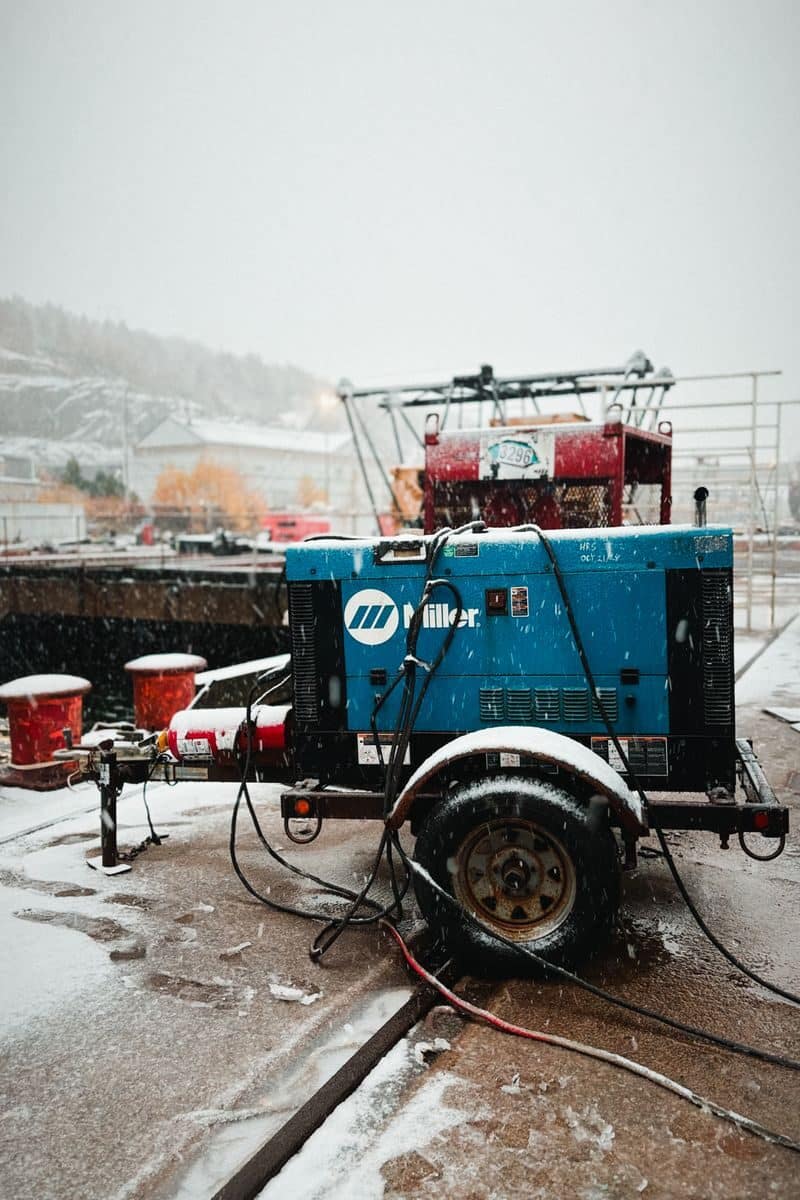
Generator trailer transport involves hauling trailer-mounted generators and mobile power units to hospitals, utilities, construction sites, disaster zones, and emergency operations. Because these loads are heavy, often oversized, and time-sensitive, they require specialized flatbed or towing equipment, proper weight distribution, and experienced drivers who understand cargo securement regulations under 49 CFR Part 393.
When the power goes out, the clock starts ticking. Hospitals need backup systems running within minutes. Utility crews need staging equipment positioned before a storm makes landfall. Construction sites need temporary power to keep crews on schedule. In every one of these scenarios, the generator itself is only half the equation—getting it to the right location, intact and on time, is what actually keeps the lights on.
That’s where generator trailer transport comes in. These aren’t ordinary loads. Trailer-mounted generators are heavy, often oversized, and frequently needed on a tight deadline. Moving them safely requires more than a truck and a hitch; it requires planning, the right equipment, and a transportation partner who understands what’s riding on a successful delivery.
This guide walks through what generator trailer transport actually involves, why it matters for emergency response and everyday operations alike, and what you should know before scheduling a haul—whether you’re a utility company, a government agency, a contractor, or a dealer shipping equipment to a customer.
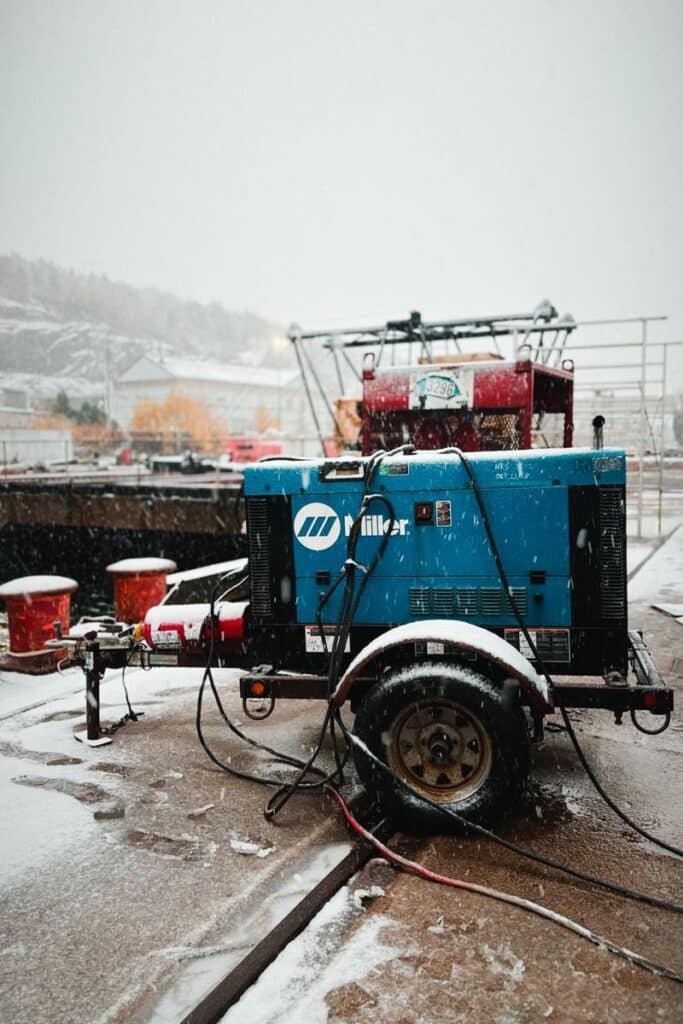
Photo by Jonathan Cooper on Pexels
What Is Generator Trailer Transport?
What are trailer-mounted generators used for?
Trailer-mounted generators are towable power units designed to deliver electricity wherever fixed infrastructure isn’t available or has failed. They range from compact units suitable for a single job site to massive industrial generators capable of powering an entire hospital wing or data center. Because they’re built on trailers, they can be towed into position, connected, and running within hours rather than days.
Mobility is the entire point. A generator sitting in a warehouse does nothing for a community without power. Generator trailer transport is what bridges that gap, moving equipment from manufacturers, rental yards, and staging facilities to the exact location where it’s needed.
Where are generator trailers commonly deployed?
Generator trailers show up in more places than most people realize, including:
- Hurricane and severe weather response
- Utility outage restoration
- Construction and infrastructure projects
- Festivals and large temporary events
- Remote job sites without grid access
- Temporary healthcare facilities
- Government and military operations
- Telecommunications and cell tower support
- Temporary housing communities
Each of these applications comes with its own timeline and urgency, but all of them depend on the same thing: a transportation provider who can get the equipment there reliably.

Why Reliable Generator Trailer Transport Matters
How does pre-positioning generators before a storm reduce downtime?
Utility companies and emergency agencies don’t wait for disaster to strike before moving equipment. They pre-position generators ahead of forecasted storms so crews can respond the moment power goes down, rather than waiting for equipment to arrive afterward. The National Weather Service tracks storm systems well in advance, giving utilities and response teams a critical window to stage generator trailers at strategic points along a projected storm path.
This kind of advance planning only works if the transportation side is dependable. A generator that arrives a day late isn’t much better than one that never arrives at all, especially when the storm has already passed and recovery crews are standing by.
What happens if a generator shipment is delayed during emergency response?
After a storm or grid failure, generator trailer transport becomes even more time-critical. Hospitals, emergency shelters, water treatment plants, communication centers, and temporary housing sites often depend on these deliveries to stay operational. According to Ready.gov, extended power outages can disrupt communications, water service, and transportation while also causing food spoilage and preventing the use of power-dependent medical devices. That’s not an inconvenience—it’s a public health risk.
FEMA coordinates disaster response efforts nationwide and reported 135 disaster declarations across states and counties in 2026 alone, underscoring just how often this kind of emergency logistics work is needed. A delayed generator delivery during one of these events can mean the difference between a hospital running on backup power and one that can’t.
Types of Generator Trailers We Transport
Generator trailer transport covers a wide range of equipment, each with different weight, dimension, and handling requirements:
- Diesel generator trailers, commonly used for extended-duration power needs
- Natural gas generator trailers, often selected for lower emissions and continuous operation
- Mobile power units, built for rapid deployment and quick hookup
- Construction generator trailers, sized for job site power demands
- Utility company generator trailers, used for grid support and outage response
- Government and emergency response equipment, including units contracted for FEMA and municipal use
Each category requires a transportation provider familiar with its specific loading, securement, and weight distribution needs.
What Makes Generator Trailer Transport Different From Standard Hauling?
Moving a generator trailer isn’t the same as towing an empty utility trailer down the highway. These are heavy, often oversized loads that demand careful route planning, the right towing vehicle, and attention to weight distribution. Factors that come into play include:
- Total equipment weight and axle ratings
- Oversized dimensions that may require permits
- Proper towing vehicle capacity
- Long-distance logistics across multiple states
- Weather conditions along the route
- Site accessibility at the delivery location
- Coordination for loading and unloading equipment
A provider experienced in heavy and specialized hauling understands how to account for each of these variables before the trailer ever leaves the yard.
Preparing a Generator Trailer for Safe Transport
How do you inspect a generator before loading it for transport?
Before a generator trailer moves anywhere, it should be inspected for visible damage, cleaned so that any new damage during transit is easy to identify, and checked to confirm loose components are secured. The generator should be allowed to cool completely before loading, fuel valves should be turned off, and the unit should remain upright throughout the process.
Is it safe to transport a generator with a full fuel tank?
Generally, no. Transporting a generator with a full fuel tank increases the risk of spills and vapor accumulation, both of which create fire hazards. Ready.gov notes that fuel spilled on hot engine parts can ignite, which is exactly why generators should be allowed to cool before any fuel-related handling occurs. Gasoline generators should never be transported inside a closed vehicle, and depending on the equipment and regulations involved, draining diesel fuel and oil may be necessary for standalone generator shipments. Manufacturer guidelines and applicable transportation regulations should always take precedence.
Why does weight distribution matter when transporting a generator trailer?
Improper weight distribution is one of the most common causes of trailer sway and towing accidents. The generator should be positioned to maintain proper tongue weight, and the combined load should never exceed the trailer’s gross vehicle weight rating (GVWR). Knowing the generator’s exact weight before transport isn’t optional—it’s the foundation for choosing the right trailer and towing vehicle in the first place.
How is a generator properly secured for transport?
Securement standards exist for a reason. The Federal Motor Carrier Safety Administration requires all commercial motor vehicles transporting cargo to comply with 49 CFR Part 393, Subpart I (§§ 393.100–393.136), which governs how cargo must be secured to prevent shifting or falling during transit. For heavy machinery and equipment, this typically means:
- Heavy-duty chains and straps, with edge protection where straps contact sharp surfaces
- Securement against movement in every direction, not just forward and backward
- Wheels chocked or blocked
- Direct securement to the trailer frame
- A breathable cover to protect against moisture and road debris, while also serving as a theft deterrent
As a general rule, the working load limit of the securement system should be at least half the weight of the cargo it’s restraining. This is a baseline, not a ceiling, and heavier or oddly shaped generator units may require additional securement points.
Should the load be checked during the trip?
Yes. Periodic inspections during transport—checking strap tension, chain integrity, tire condition, and overall load security—catch problems before they become roadside emergencies. This is standard practice for any experienced heavy-haul operation and should never be skipped on longer routes.
Information We Need Before Scheduling Generator Trailer Transport
A smooth transport experience starts with accurate information upfront. Before scheduling, it helps to have:
Generator specifications: dimensions, total weight, manufacturer, model, and generator type.
Pickup and delivery details: exact addresses, required delivery window, and point-of-contact information.
Site accessibility notes: gate access, gravel or unpaved roads, tight turns, and whether a forklift or crane will be needed for loading and unloading.
The more detail provided ahead of time, the fewer surprises on delivery day.
Transportation Options for Generator Equipment
Flatbed truck transport is typically the preferred method for large or heavy generator units, offering easier loading and a stable platform for securement.
Road transport remains the most flexible option for regional deliveries, allowing direct service without the added handling of intermodal transfers.
Rail transport can be a cost-effective choice for long-distance freight, particularly when generator equipment is part of a larger logistics network.
Sea transport supports international generator shipments, with containerized shipping offering additional protection for sensitive equipment during ocean transit.
Choose flatbed or road transport if speed and direct delivery matter more than cost. Choose rail or sea transport if the shipment is part of a larger, less time-sensitive logistics chain.
Cargo Insurance and Risk Protection
Generator equipment represents a significant investment, and cargo insurance protects that investment throughout transit. Accurate documentation—including photos, equipment value, and detailed specifications—should be provided to the insurance provider before the haul begins. This isn’t just a formality. In the event of a road incident or equipment damage, proper documentation is what separates a smooth claims process from a drawn-out dispute.
Why Customers Trust Interstate Haulers for Generator Trailer Transport
Interstate Haulers has specialized in hauling industrial trailers, including generator equipment, since 1997. Nearly 30 years of experience means our great eam understands the urgency behind disaster response equipment and the precision required for safe, compliant transport.
We work with public utilities, FEMA contractors, municipalities, dealers, manufacturers, and private customers across the continental United States. As a family-owned company, we prioritize clear communication and reliable scheduling at every step, from pickup coordination to delivery confirmation. Our drivers follow safe transportation practices, including proper securement and weight distribution standards, on every generator trailer haul we handle.

Photo by Laurin Steffens on Unsplash
Frequently Asked Questions
How do you move a heavy generator?
Moving a heavy generator starts with knowing its exact weight and dimensions, then selecting a trailer and towing vehicle rated to handle that load safely. Heavy-duty straps or chains secure the unit against movement in every direction, and weight should be distributed to maintain proper tongue weight. For especially large or heavy units, flatbed truck transport is often the safer, more practical choice, ideally handled by a provider experienced in heavy equipment hauling.
Is it safe to transport a generator full of gasoline?
No, transporting a generator with a full gasoline tank is not recommended. A full tank increases the risk of spills and vapor buildup, both significant fire hazards, especially if fuel contacts hot engine components. The fuel valve should be shut off before transport, and gasoline generators should never be moved inside a closed vehicle. When possible, draining fuel according to manufacturer guidelines reduces risk further.
Do any travel trailers come with a generator?
Yes, many RVs and travel trailers include a built-in generator, while others offer it as an optional package. These differ from towable, trailer-mounted generators used for emergency and commercial power: onboard RV generators are built into the vehicle itself, while mobile generator trailers are separate units designed specifically for high-capacity, temporary power delivery to homes, job sites, or facilities.
Keeping Backup Power Moving When It Matters Most
Generator trailer transport sits at the intersection of logistics and necessity. Whether it’s a utility company staging flat equipment ahead of a hurricane, a hospital relying on backup power during an outage, or a contractor keeping a job site running, the generator only helps once it actually arrives.
Proper preparation, accurate weight distribution, compliant securement, and experienced drivers all play a role in making sure that happens safely and on schedule. This enables businesses and agencies that can’t afford delays, partnering with a transportation provider who understands the stakes isn’t optional.
Contact Interstate Haulers today to find a nationwide generator trailer transport quote and get your equipment moving before you need it most.