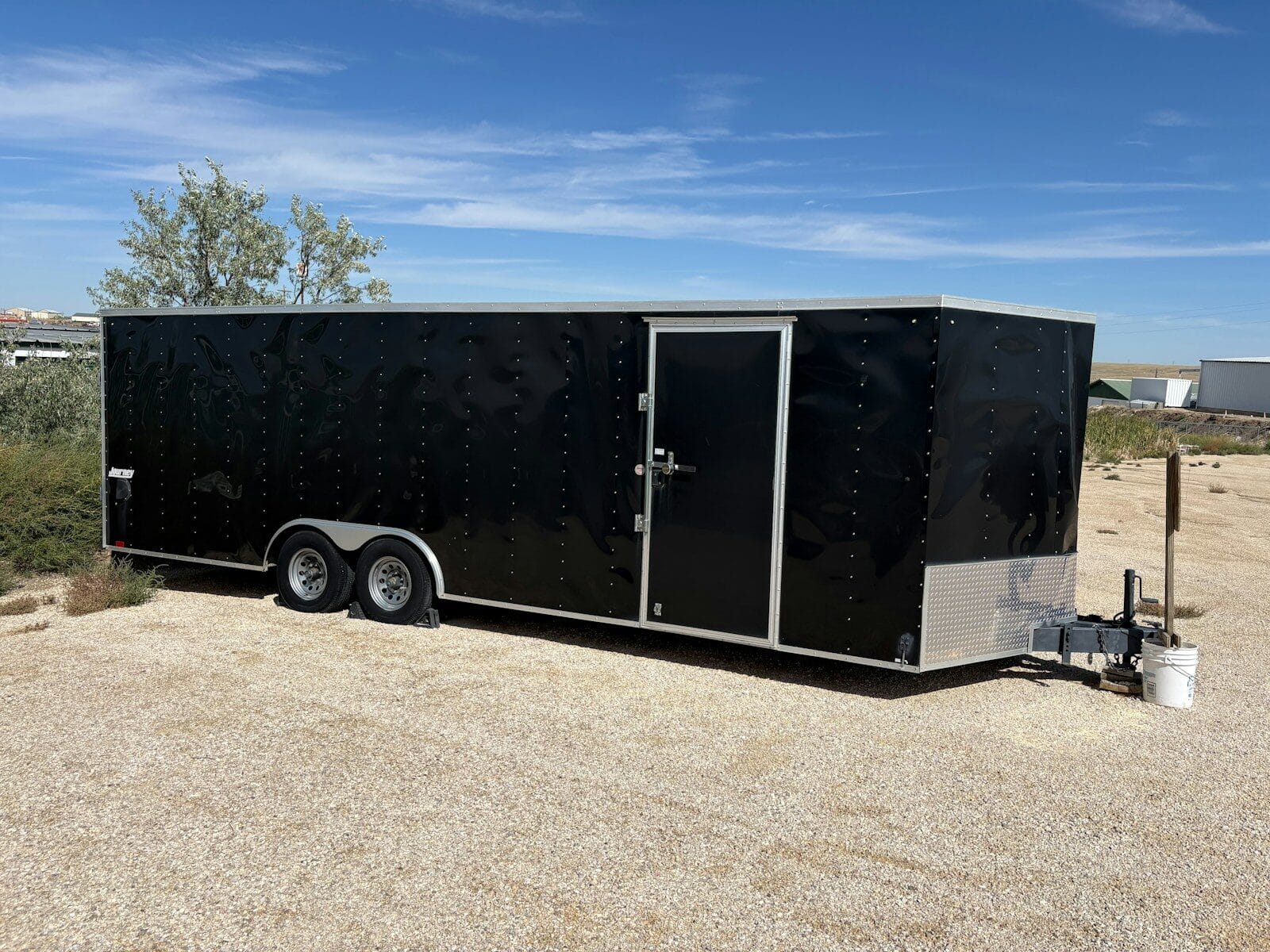

Bunkhouse trailer transport is the specialized hauling of commercial workforce housing trailers to disaster zones, construction sites, and remote worksites. These trailers sleep 4–15 workers and require matched tow vehicles, careful inspections, and experienced drivers. Interstate Haulers, a family-owned company operating since 1997, moves bunkhouse trailers nationwide for contractors, FEMA crews, and utilities.
When a hurricane knocks out power across three states, or a pipeline project pulls workers into a town with no spare hotel rooms, someone has to figure out where everyone sleeps. That’s where bunkhouse trailers come in, and it’s why bunkhouse trailer transport has become such a critical service for disaster response teams, construction contractors, and energy companies operating far from established infrastructure.
Moving a bunkhouse trailer isn’t the same as hitching up a small camper for a weekend trip. These units are heavier, larger, and often headed to places with limited road access, tight scheduling windows, and zero tolerance for delays. Interstate Haulers has spent nearly 30 years hauling specialized trailers across the continental United States, and that experience shapes every pickup and delivery plan the company builds.
This guide walks through what a bunkhouse trailer actually is, who relies on them, how they’re transported safely, what affects pricing, and how to prepare a trailer before it hits the road. Whether you’re coordinating housing for a disaster recovery crew or relocating sleeping quarters between construction phases, you’ll find the practical details you need here.
What Is a Bunkhouse Trailer?
A bunkhouse trailer is a type of recreational vehicle originally built for families, featuring a floor plan with dedicated bunk beds for kids. Over the past decade, that same layout has made bunkhouse trailers a popular choice for commercial workforce housing. The bunk-style sleeping areas, combined with a kitchen, bathroom, and common living space, let a single trailer house a small crew instead of just a family on vacation.
Bunkhouse trailers typically sleep 4 to 15 people, depending on the floor plan and manufacturer. Lengths generally run between 16 and 39 feet, and weights range from about 2,800 to 9,500 pounds. That range matters because it directly affects what kind of tow vehicle, hitch, and permitting a shipment might need.
For organizations managing seasonal or project-based labor, bunkhouse trailers solve a real problem: housing isn’t always available near remote job sites. According to the RV Industry Association, which tracks RV types and manufacturing standards, bunkhouse floor plans are among the most adaptable designs on the market precisely because they maximize sleeping capacity without sacrificing basic amenities.

Photo by Andy Feliciotti on Unsplash
Who Uses Bunkhouse Trailer Transport Services?
How Do Disaster Relief Crews Use Bunkhouse Trailers?
Utility restoration crews, FEMA contractors, emergency response teams, debris removal companies, and disaster recovery contractors all depend on bunkhouse trailers to house workers near impacted areas. When a storm damages the power grid or displaces thousands of residents, crews often arrive from out of state and need sleeping quarters close to the work zone, not an hour away at the nearest hotel. Ready.gov, the federal government’s disaster preparedness resource, outlines how quickly staging areas and temporary housing need to be established after a major event, and bunkhouse trailers are a practical piece of that puzzle.
Which Construction Projects Rely on Bunkhouse Trailer Transport?
Highway construction, bridge replacement, commercial developments, and large infrastructure projects frequently use bunkhouse trailers to house crews on-site. This cuts down on commute time and keeps labor close to the work, which matters on projects with tight deadlines.
Do Energy and Utility Companies Use Bunkhouse Trailers?
Yes. Oil and gas operations, wind farms, solar projects, pipeline work, and utility maintenance crews all rely on temporary housing solutions like bunkhouse trailers, especially in rural areas where lodging is scarce. The U.S. Energy Information Administration tracks the scope of ongoing energy infrastructure projects nationwide, many of which require exactly this kind of mobile workforce support.
What About Mining, Forestry, and Remote Industrial Sites?
Mining operations, forestry crews, telecommunications teams, and large industrial shutdowns all share a common challenge: workers need to be near the site, but permanent housing doesn’t exist there. Bunkhouse trailers fill that gap, and bunkhouse trailer transport is how those units get there and back.
Why Professional Bunkhouse Trailer Transport Matters
Bunkhouse trailers aren’t ordinary cargo trailers. Their dimensions, weight, hitch type, and axle configuration all vary by model, and delivery accessibility can range from a paved construction entrance to a muddy field with no formal road at all.
Experienced transport professionals reduce risk by handling:
- Route planning that accounts for bridge heights, weight limits, and road restrictions
- Oversize considerations when a trailer’s width or length requires special handling
- Delivery scheduling that aligns with crew arrival and project timelines
- Rural access planning for sites with limited or unpaved roads
- Temporary staging areas when a site isn’t ready for immediate delivery
Choose a specialized transport company if your bunkhouse trailer is heading to a jobsite with limited access or a tight delivery window. A general hauler without this experience can misjudge turning radius or road conditions, leading to costly delays.
Bunkhouse Trailer Transport vs. Standard RV Transport
How Is Bunkhouse Trailer Transport Different From RV Trailer Transport?
In the RV transport industry, standard RV transport usually moves travel trailers, toy haulers, horse trailers, cargo trailers, and other recreational vehicles between dealers, owners, or storage facilities. Bunkhouse trailer transport shares some of the same equipment and techniques, but the destinations and demands are different.
Bunkhouse trailers typically head to commercial job sites rather than campgrounds or private residences. They’re relocated more frequently as projects shift, carry heavier loads on average than a typical travel trailer, and require tighter operational scheduling tied to crew needs rather than vacation plans. Pickup and delivery locations are also often less conventional, think remote drill pads or disaster staging areas rather than RV dealerships.
Common Transportation Methods for Bunkhouse Trailers
What Is Tow-Away Transport?
Tow-away transport is the most common method for moving bunkhouse trailers. A properly rated pickup truck tows the trailer directly, with an experienced driver pulling the unit from origin to destination. This method works well for most bunkhouse trailer sizes, provided the tow vehicle is matched correctly to the trailer’s weight.
What Is Drive-Away Transport?
Drive-away transport means someone drives the RV itself rather than towing it. This method typically applies to motorhomes, not bunkhouse trailers, since bunkhouse units don’t have their own engines or drivetrains.
When Is Flatbed Trailer Shipping Used?
Flatbed trailer shipping is often used for long-distance hauling or when multiple RV transports are needed in a single shipment. A specialized carrier loads the trailer onto a flatbed, which can simplify logistics when moving several units to the same region at once.
Choosing the Right Tow Vehicle
How Do You Match a Tow Vehicle to a Bunkhouse Trailer?
Safe towing starts with weight matching. A tow vehicle’s Gross Vehicle Weight Rating (GVWR) and Gross Combined Weight Rating (GCWR) need to safely exceed the trailer’s fully loaded weight, not just meet it.
A common safety guideline recommends a tow vehicle capacity of approximately 120% of the trailer’s fully loaded weight, giving extra margin for hills, wind, and emergency braking. Tongue weight should fall between 10% and 15% of the trailer’s total weight. Too little, and the trailer can sway; too much, and it can overload the rear axle of the tow vehicle.
Weight distribution systems help reduce sway by spreading the tongue weight more evenly across both vehicles’ axles. Proper cargo distribution inside the trailer also plays a role. Loading heavy items unevenly can throw off the balance even with the right tow vehicle.
Choose a weight distribution hitch if you’re towing a bunkhouse trailer near the upper end of its weight range or traveling long distances on highways with variable wind conditions.
Preparing a Bunkhouse Trailer Before Transport
What Should You Do Before a Bunkhouse Trailer Is Picked Up?
A thorough pre-trip inspection prevents delays and reduces the risk of damage during transit.
Secure personal items. Remove loose belongings, secure furniture, and close cabinet doors so nothing shifts during transport.
Disconnect utilities. Gas lines, electrical hookups, and water connections all need to be disconnected before the trailer moves.
Remove hazardous materials. Propane tanks and other flammable items should be removed or properly secured, since they pose a safety risk during transit.
Inspect critical components, including:
- Tires and wheels for wear or damage
- Axles and bearings (bearings should be greased roughly every 12,000 miles)
- The breakaway cable and hitch connection
- Safety chains
- Lights and brakes
The National Highway Traffic Safety Administration publishes detailed trailer safety guidance covering these exact components, and a quick review before pickup day can prevent a mechanical issue from turning into a missed delivery window.

Planning Pickup and Delivery Locations
What Makes Jobsite Delivery Different From a Standard Driveway Drop-Off?
Remote construction sites, disaster staging areas, temporary work camps, and utility yards rarely offer the easy access of a residential driveway. Road width, turning radius, terrain, and ground conditions all need to be assessed before a delivery date is locked in.
Scheduling with onsite crews matters just as much as the physical route. A trailer that arrives before the site is graded, or after the crew has already moved on, creates unnecessary delays. Interstate Haulers coordinates pickup and delivery locations nationwide, working directly with site contacts to confirm access and timing before a driver is ever dispatched.
What Affects Bunkhouse Trailer Transport Pricing?
How Much Does Bunkhouse Trailer Transport Cost?
Pricing depends on several factors, and no two shipments cost exactly the same. Key variables include:
- Distance and route
- Trailer size, weight, and dimensions
- Fuel costs and seasonal pricing shifts
- Weather conditions along the route
- Delivery timing and scheduling flexibility
- Site accessibility
- Tow type (tow-away vs. flatbed shipping)
- Specialized permits, when applicable
As an industry estimate, travel trailer transport commonly ranges from approximately $1.75 to $3.50 per mile, though this varies by equipment and market conditions. Local hauls often fall between $500 and $1,000, while long-distance shipments may range from $3,000 to $5,000. These figures are general estimates, not guarantees, since every shipment has unique needs. Requesting a customized quote is the most reliable way to understand actual costs for a specific trailer and route.
Safety Best Practices During Bunkhouse Trailer Transport
What Safety Standards Apply to Bunkhouse Trailer Transport?
Safe transport depends on a combination of driver discipline and equipment checks:
- Towing speeds below 65 MPH
- Increased following distance to account for the added length and weight
- Proper hitch connections, confirmed before departure
- Correct tire pressure on both the tow vehicle and trailer
- Awareness of changing weather conditions
- Pre-trip brake inspections
- Secure cargo and proper weight distribution
- Professional, experienced drivers
- Full FMCSA compliance and adequate insurance coverage
The Federal Motor Carrier Safety Administration sets the federal standards that govern commercial trailer transport, and working with a company that follows these regulations closely reduces risk for everyone involved. On jobsites themselves, OSHA guidelines also apply to how temporary housing units like bunkhouse trailers are positioned and maintained once they arrive.
Relocating Bunkhouse Trailers Between Projects
Can Bunkhouse Trailers Be Relocated Multiple Times?
Yes, and it happens regularly. Organizations often relocate bunkhouse trailers because of storm recovery timelines, utility restoration schedules, road construction phases, pipeline work, wind farm projects, seasonal operations, or multi-state project assignments.
Each relocation requires the same level of planning as the original delivery: pickup scheduling, confirming the destination is ready, route planning around current road and weather conditions, and coordinating with the receiving crew. A trailer that’s been relocated five times still needs the same careful inspection and tow vehicle matching as a brand-new delivery.
Why Organizations Trust Interstate Haulers for Bunkhouse Trailer Transport
Interstate Haulers has operated as a family-owned transportation company since 1997, giving the team nearly 30 years of specialized experience hauling trailers across the continental United States. That experience shows up in the details: transparent pricing, personalized service, professional communication, and a safety-first approach backed by full FMCSA compliance.
Interstate Haulers serves contractors, dealers, government agencies, utilities, and individual owners, coordinating reliable scheduling and experienced drivers for shipments of all sizes. Whether a bunkhouse trailer is heading to a FEMA staging area or relocating between phases of a multi-state pipeline project, the planning process looks the same: confirm the route, match the equipment, and keep communication open from pickup to delivery.

Photo by WebTechExperts on Pixabay
Frequently Asked Questions About Bunkhouse Trailer Transport
How much does bunkhouse trailer transport cost?
Costs vary based on distance, trailer size, weight, route, and accessibility. As a general estimate, local hauls often run $500 to $1,000, while long-distance shipments may range from $3,000 to $5,000. A customized quote is the most accurate way to determine actual pricing for a specific shipment.
How long does transportation usually take?
Transit times commonly range from 2 to 10 days, depending on distance, route, weather, and scheduling with the pickup and delivery sites.
What type of truck transports a bunkhouse trailer?
A properly rated pickup truck with a matching tow rating and hitch rating handles most bunkhouse trailer tow-away transport. For long-distance hauls or multiple units, flatbed trailer shipping is sometimes used instead.
Can bunkhouse trailers be relocated multiple times?
Yes. Bunkhouse trailers are frequently relocated between projects, including storm recovery efforts, construction phases, pipeline work, and seasonal operations. Each move requires its own route planning and scheduling.
How should I prepare my trailer before pickup?
Secure personal items, disconnect gas, electrical, and water utilities, remove hazardous materials like propane tanks, and inspect tires, wheels, axles, bearings, the hitch, safety chains, lights, and brakes.
Does Interstate Haulers transport nationwide?
Yes. Interstate Haulers transports bunkhouse trailers and other specialized trailers across the continental United States, coordinating pickup and delivery for contractors, government agencies, utilities, and individual owners.
Keeping Crews Housed, Wherever the Work Takes Them
Bunkhouse trailer transport plays a quiet but essential role in disaster response, construction, energy development, and remote industrial work. Getting it right means matching the tow vehicle to the trailer, inspecting every critical component before departure, and planning routes around real-world site conditions rather than guesswork.
For organizations that depend on temporary workforce housing, partnering with an experienced transport company reduces risk and keeps projects on schedule. Interstate Haulers brings nearly three decades of specialized trailer transport experience to every job, from disaster staging areas to remote jobsites across the country. Contact Interstate Haulers to request a customized quote for your next bunkhouse trailer shipment.