Buying, owning, maintaining, or transporting a boat gets a lot easier when you understand the basic parts of a boat.
You do not need to know every technical detail to be a responsible boat owner, but knowing the key boat parts can help you communicate better with mechanics, dealers, transport companies, marina staff, and other boaters. It can also help you spot issues early, prepare your vessel for hauling, and feel more confident on and off the water.
At Interstate Haulers, we have been transporting boats across the continental United States since 1997. As a family-owned transportation company, we have hauled boats with trailers, boats without trailers, RVs, travel trailers, and specialty industrial trailers for nearly 30 years. We understand how much trust it takes to move a boat, especially when it is oversized, high-value, or new to you.
That is why we believe education matters.
[ds_gravity_forms_for_divi form_id="f1" title="Get A Quote!" ajax="on" radio_style_enable="off" submit_button_100_width="on" _builder_version="4.23.4" _module_preset="default" form_title_font="Poppins||||||||" form_title_text_align="center" form_title_font_size="2rem" background_color="#FFFFFF" custom_submit_button="on" submit_button_text_size="18px" submit_button_bg_color="#ad192e" submit_button_border_radius="0px" submit_button_font="||||||||" submit_button_custom_padding="2%|35%|1%|35%|false|true" custom_page_navi_buttons="on" page_navi_buttons_text_size="18px" page_navi_buttons_text_color="#FFFFFF" page_navi_buttons_bg_color="#ad192e" page_navi_buttons_border_radius="0px" page_navi_buttons_font="|||on|||||" page_navi_buttons_custom_padding="2%|20%|2%|20%|true|true" custom_padding="2%|3%|2%|3%|true|true" hover_enabled="0" border_radii="on|5px|5px|5px|5px" box_shadow_style="preset1" box_shadow_style_submit_button="preset1" box_shadow_style_page_navi_buttons="preset1" template_type="module" global_colors_info="{}" border_width_all="1px" sticky_enabled="0"][/ds_gravity_forms_for_divi]
The more familiar you are with basic boat anatomy, the easier it is to care for your boat, protect it during transport, and make smart ownership decisions.
Photo by Jamie Davies on Unsplash
Parts of a Boat: Why Basic Boat Anatomy Matters
Every boat is different, but most boats share a few common parts. A fishing boat, pontoon, center console, cabin cruiser, sailboat, and small runabout may all look different, but they still have a bow, stern, hull, deck, port side, starboard side, and other essential parts.
Understanding boat anatomy can help you:
- Describe problems more clearly
- Prepare for maintenance
- Understand inspection reports
- Talk with a dealer or mechanic
- Identify safety equipment locations
- Prepare your boat for transport
- Understand docking instructions
- Avoid confusion with boating terminology
- Communicate with other vessels and other boaters
When someone says, “Check the port side rub rail near the stern,” or “The bilge pump is located below deck,” you want to know what they mean.
That kind of confidence makes boat ownership feel much less intimidating.
What Is the Front of a Boat Called?
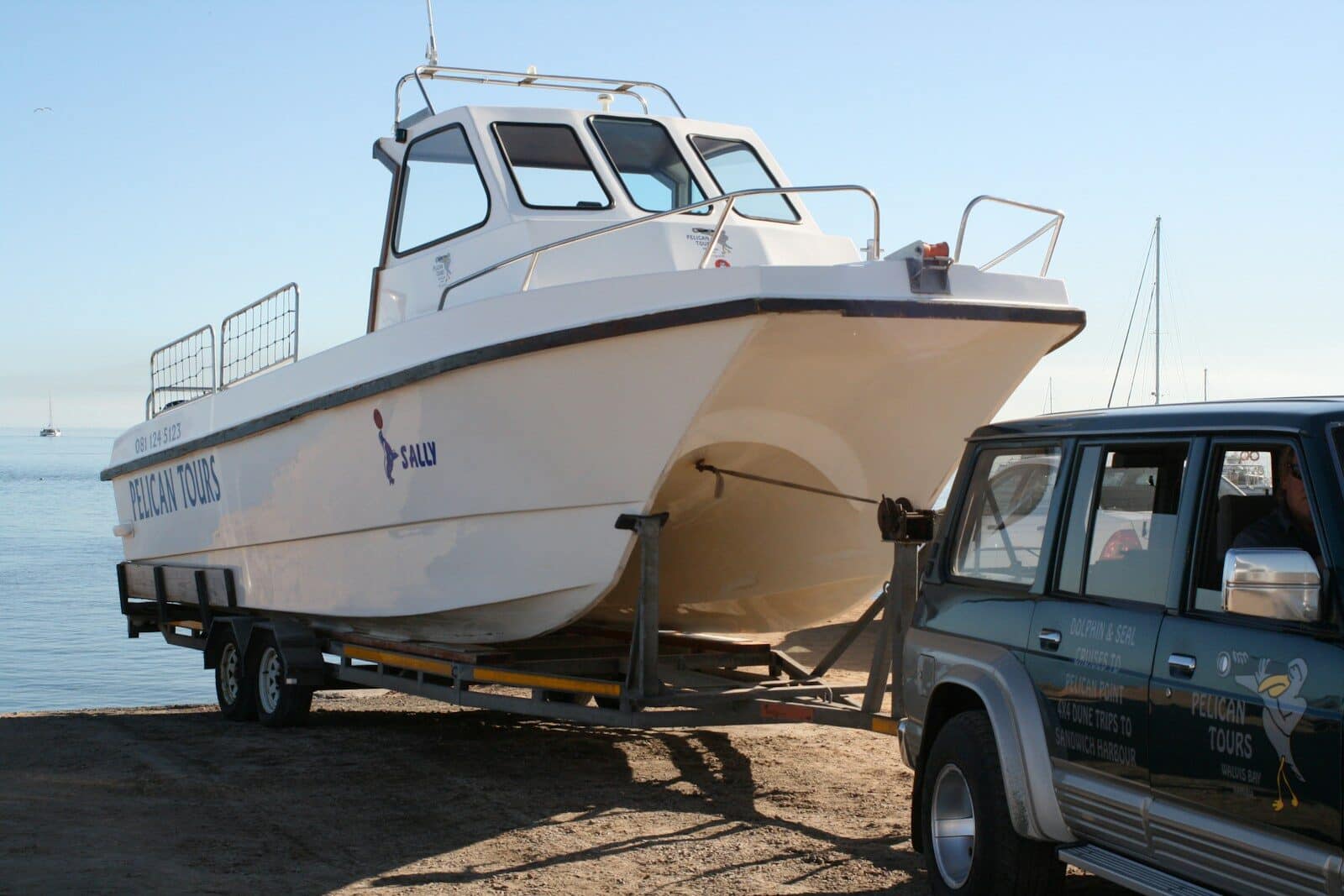
The front of a boat is called the bow.
When the boat is moving forward, the bow cuts through the water. Depending on the boat’s design, the bow may be pointed, rounded, flat, open, or raised. On many boats, the bow is also where passengers sit, gear is stored, or a casting deck is located.
When you are facing forward, toward the bow, the left side of the boat is the port side, and the right side is the starboard side.
This matters because boating terms are based on the boat itself, not your personal left or right. If you turn around and face the rear, port and starboard do not change.
The bow is also important during transport. The shape of the bow, the height of the boat, and any mounted equipment may affect how the boat sits on a trailer or transport setup.
What Is the Rear of a Boat Called?
The rear of the boat is called the stern.
The stern is the back end of the vessel. On many boats, this area may include the transom, swim platform, outboard motor, engine controls, boarding ladder, cleats, and other features.
The stern is often a busy area because it connects to propulsion, steering, boarding, docking, and sometimes fishing or seating.
If you hear someone refer to the “rear” of the boat, they are usually talking about the stern. In boating terminology, though, stern is the proper nautical term.
For transport, the stern matters because motors, swim platforms, propellers, ladders, and other attached features may need to be secured, measured, or protected before the boat is hauled.
Key Boat Parts: Hull, Bow, Stern, and Deck
Some of the key boat parts every owner should know are the hull, bow, stern, and deck.
The hull is the main body of the boat. It is the watertight body that allows the boat to float and move across the water’s surface. The boat’s hull provides shape, buoyancy, and structural support. Different boats have different hull designs depending on their purpose.
The bow is the front of the boat.
The stern is the rear of the boat.
The deck is the flat surface or upper area where people stand, sit, walk, fish, or operate the boat. Some boats have open decks, while others have cabins, raised platforms, or multiple levels.
Together, these parts form the basic structure of the vessel.
If you are new to boats, start here. Once you understand these terms, the rest of the boat anatomy becomes much easier to follow.
Boat Parts on the Left Side and Right Side
Two of the most important boating terms are port and starboard.
When you are facing forward toward the bow:
- Port side means the left side of the boat.
- Starboard side means the right side of the boat.
These terms help avoid confusion. On land, left and right depend on which way a person is facing. On a boat, port and starboard always stay the same.
This is especially important during docking, communication with other boaters, and transport preparation.
For example, if a transport driver asks whether damage is on the port side or starboard side, you will know how to answer accurately. That helps everyone communicate clearly and document the boat’s condition before pickup.
The Boat’s Hull and Why It Matters
The boat’s hull is one of the most important parts of any vessel.
The hull is the main body that sits in the water and keeps the boat afloat. It also affects speed, stability, handling, fuel efficiency, comfort, and the type of water the boat can handle.
Some common hull types include:
- Flat-bottom hulls
- V-shaped hulls
- Modified-V hulls
- Pontoon hulls
- Catamaran hulls
- Displacement hulls
- Planing hulls
A hull’s shape affects how the boat moves through the water. A deep-V hull may handle rough water better than a flat-bottom boat, while a pontoon boat is often designed for stability and comfort.
The hull also matters during transport. The shape, width, length, and lowest point of the hull help determine how the boat should be supported and secured. A boat’s structure needs proper support so it is not stressed during hauling.
At Interstate Haulers, understanding hull design is part of moving boats safely and professionally.
The Keel: The Lowest Point and Structural Support
The keel is the centerline structure along the bottom of many boats. It is often the lowest point of the hull and helps provide stability, tracking, and structural support.
On some boats, the keel is very visible. On others, it is less obvious. Sailboats may have large keels that extend deeper into the water, while powerboats may have smaller keel structures integrated into the hull design.
The keel helps the boat move straight and adds extra rigidity to the boat’s structure.
From a transport standpoint, the keel can be important because it may influence how the boat is loaded, supported, and balanced. Boats need to sit correctly to avoid unnecessary pressure on the hull.
The Transom and Outboard Motor
The transom is the flat or reinforced section at the stern of the boat. On many smaller boats, the transom is where the outboard motor is mounted.
An outboard motor is an engine mounted outside the boat’s hull, typically at the stern. It provides propulsion and often includes the propeller, steering function, and trim controls.
Not all boats use outboard motors. Some have inboard engines, sterndrives, jet drives, or other propulsion systems. But outboard motors are common on many fishing boats, center consoles, pontoons, and smaller recreational boats.
The transom is a major structural area. It must support the weight and force of the engine. If the transom is cracked, soft, or damaged, it can become a serious issue.
Before transporting a boat, the outboard motor, transom, propeller, and related hardware should be checked. Some motors may need to be tilted, supported, or secured depending on the setup.
Propeller, Engine Controls, and Steering Wheel
The propeller is the rotating part that moves the boat through the water. It is connected to the motor or drive system and pushes water backward to move the boat forward.
The steering wheel allows the boat operator to control direction. It works with the boat’s steering system, which may connect to an outboard motor, sterndrive, rudder, or other steering mechanism.
Engine controls usually include the throttle and shift controls. These allow the boat operator to control speed and move between forward, neutral, and reverse.
Together, the steering wheel, engine controls, motor, and propeller help control movement.
These parts should be secured and checked before transport. Loose equipment, exposed propellers, or unsecured controls can create avoidable issues during hauling.
Navigation Lights: Red, Green, and White Lights
Navigation lights help other vessels understand your boat’s position, direction, and movement, especially at night or during low visibility.
Most boats use red and green lights at the bow area:
- A red light is shown on the port side.
- A green light is shown on the starboard side.
These red and green lights help other boaters know which direction your boat is facing.
Many boats also have a white light. An all-around light is a white light visible from all directions. Other white lights may be placed at the stern or mast, depending on the boat type and lighting requirements.
Navigation lights are essential for safety because they help prevent boating accidents. If other vessels can see your lights clearly, they can better judge your direction and avoid collision risks.
Before hauling a boat, it is a good idea to check navigation lights, metal fittings, wires, and mounted hardware to make sure everything is secure.
Rub Rail: The Protective Upper Edge
The rub rail is the protective strip that runs along the upper edge or top edge of the boat’s hull, often where the hull and deck meet.
The gunwale serves as the upper edge of the side of the boat, and the rub rail helps protect that area from bumps, docking contact, and minor impacts.
When docking, the rub rail may make contact with bumpers, docks, pilings, or other boats. It helps reduce scratches and damage to the hull.
For transport, the rub rail can also be helpful when inspecting the boat. Damage along the rub rail may show where the boat has rubbed against docks or other surfaces.
It is a small detail, but it plays an important role in protecting the boat’s appearance and structure.
Casting Deck, Swim Platform, and Other Features
Many boats have features designed for comfort, fishing, boarding, or recreation.
A casting deck is a raised platform often found on fishing boats. It gives anglers a flat surface for casting, standing, and accessing gear.
A swim platform is usually located at the stern and gives passengers a place to enter or exit the water. Some swim platforms are built into the boat, while others are added as extensions.
Other features may include:
- Cabin
- Console
- Seats
- T-top
- Rails
- Cleats
- Ladders
- Storage compartments
- Rod holders
- Metal fittings
- Cup holders
- Windshield
- Anchor locker
Different boats have different features depending on how they are used. A fishing boat may have a casting deck and a livewell. A cabin cruiser may have sleeping space, a galley, and a head. A pontoon may have open seating and a large deck.
Before transporting a boat, these features should be checked and secured. Loose cushions, covers, electronics, and accessories should be removed or fastened properly.
Bilge Pump and the Bilge
The bilge is the lowest interior area inside the hull where excess water may collect. This water may come from rain, spray, condensation, or minor leaks.
A bilge pump removes that excess water and pumps it out of the boat.
The bilge pump is an important safety feature because water collecting inside the boat can affect stability, weight, and safety. If the bilge pump fails, water may build up without the operator noticing right away.
Boats may have automatic or manual bilge pumps. Some larger boats may have multiple pumps.
Before transport, the bilge should be checked for standing water. Excess water adds weight and can create problems during hauling. Drain plugs should also be checked and handled properly, depending on the transport situation.
Photo by Claudia Kirchberger on Unsplash
Boating Terminology: Common Terms Every Owner Should Know
Basic boating terminology helps you communicate clearly and safely.
Here are a few important nautical terms:
- Bow: Front of the boat
- Stern: Rear of the boat
- Port: Left side when facing forward
- Starboard: Right side when facing forward
- Hull: Main body of the boat
- Deck: Upper walking or working surface
- Keel: Centerline structure at the bottom of the hull
- Transom: Stern section where an outboard motor may mount
- Bilge: The lowest interior area where water collects
- Gunwale: Upper edge of the side of the boat
- Rub rail: Protective strip along the upper edge
- Propeller: Rotating part that moves the boat
- Cabin: Enclosed area for shelter, storage, or sleeping
- Draft: Minimum depth of water needed for the boat to float safely
These terms may sound simple, but they are useful in real life. Whether you are buying, docking, maintaining, inspecting, or transporting a boat, the right words make communication easier.
Essential Parts for Safety and Proper Use
Some essential parts are not just about convenience. They affect safety, control, and proper use.
Important safety-related boat parts include:
- Navigation lights
- Bilge pump
- Steering wheel
- Engine controls
- Propeller
- Hull
- Keel
- Transom
- Cleats
- Rails
- Deck surfaces
- Fuel system components
- Electrical systems
- Drain plugs
When these parts are maintained properly, the boat is safer to operate. When they are damaged, neglected, or missing, risks increase.
Understanding these essential parts also supports boater education. A confident boat owner knows how to identify basic systems, notice changes, and ask the right questions before small issues become larger ones.
Boater Education Helps Prevent Boating Accidents
Boater education is one of the best investments a new owner can make.
Knowing the parts of a boat is a good start, but responsible ownership also means learning safe operation, navigation rules, docking practices, emergency procedures, lighting requirements, and maintenance basics.
Many boating accidents happen because of inexperience, poor communication, improper use, or failure to understand conditions on the water.
Learning boating terms and key boat parts can help you:
- Communicate with passengers
- Understand the marina instructions
- Talk with other boaters
- Identify safety equipment
- Avoid confusion during docking
- Recognize mechanical concerns
- Prepare for inspections
- Reduce risk on the water
The more you know, the better prepared you are.
How Boat Anatomy Helps With Maintenance
Understanding boat anatomy makes maintenance easier.
If you know where the bilge is, you can check for water. If you understand the transom, you can watch for cracks or softness. If you know the rub rail, you can inspect impact areas. If you understand port and starboard, you can describe damage clearly. If you know where the navigation lights are, you can check them before heading out.
Regular maintenance may include:
- Inspecting the hull
- Checking the bilge pump
- Looking for cracks or leaks
- Testing navigation lights
- Checking the propeller
- Inspecting the transom
- Cleaning the deck
- Watching for corrosion on metal fittings
- Checking the outboard motor
- Inspecting the steering wheel and engine controls
- Securing loose equipment
Good maintenance protects your investment and supports safer boating.
How Knowing Boat Parts Helps With Transport
Boat transport is one area where knowing the parts of a boat can be especially useful.
When you request a transport quote, you may need to provide detailed information about the vessel. That can include length, beam, height, weight, hull type, trailer availability, motor type, and special features.
Understanding the basic parts makes that easier.
For example:
- The widest point of the boat affects transport width.
- The hull shape affects support needs.
- The outboard motor may need to be secured.
- The swim platform may affect total length.
- The T-top, radar, or antennas may affect height.
- The keel may affect how the boat sits.
- The rub rail may help identify damage areas.
- The deck may hold removable gear that should be secured.
- The bilge should be checked for excess water.
- The propeller should be inspected and protected.
At Interstate Haulers, we specialize in moving boats with care, safety, and professionalism. We understand that your boat is not just freight. It is a valuable asset, and it deserves a transport team that knows what they are handling.
Boat Called by Different Names? Why Terms Can Get Confusing
If you are new to boating, you may hear the same part described in different ways.
Someone might say front, bow, nose, or forward section. Someone may say back, rear, stern, or aft. Someone may say side rail, top edge, gunwale, or rub rail. In casual conversation, people often mix everyday language with nautical terms.
That is normal.
The important thing is to build a basic understanding so you can follow the conversation.
If someone asks about the “port side of the transom,” you know they mean the left side of the rear section when facing forward. If someone asks about the “lowest point of the hull,” they may be referring to the keel area. If someone mentions the “flat surface near the bow,” they may be talking about a casting deck.
Once you learn the language, boat ownership feels less intimidating.
Helpful Resources for Learning the Parts of a Boat
If you are learning the basic parts of a boat, these resources can help you understand boating terminology, safety equipment, navigation lights, maintenance, and the key features every boat owner should know before operating, maintaining, or transporting a vessel.
- Discover Boating: Parts of a Boat | A helpful guide to boat anatomy, including the deck, hull, helm, bow, stern, cabin, and other common boat parts.
- BoaterExam: Boating Terminology | A clear beginner-friendly resource explaining basic terms like hull, gunwale, transom, cleats, bow, stern, port, starboard, beam, bilge, and draft.
- Boat-Ed: Boat Terminology Every Boater Needs to Know | A useful overview of common boating terms, including bow, stern, port, starboard, hull, helm, and draft.
- Sea Tow: Essential Boating Terminology & Boat Anatomy Explained | A practical guide to boat anatomy and directional terms, including why bow, stern, port, and starboard stay fixed no matter where someone is standing.
- BoatUS Foundation: Navigation Lights | A helpful safety resource explaining how navigation lights help prevent collisions at night or during low visibility.
- U.S. Coast Guard: A Boater’s Guide to Federal Requirements | A federal boating safety guide covering required equipment, navigation rules, life jackets, lights, sound signals, and other safety essentials.
- BoatUS Foundation: Aids to Navigation | A useful guide to navigation markers, regulatory marks, buoys, and signs boaters may see on the water.
- Discover Boating: Boat Maintenance Tips | A practical resource for boat owners who want to learn more about routine maintenance, inspections, engine care, and seasonal upkeep.
- Discover Boating: Basic Boat Trailer Maintenance Checklist | A helpful checklist for inspecting trailer tires, wheel bearings, brakes, couplers, lights, and other trailer parts before towing or transport.
- BoatUS Foundation: Preventive Boat Maintenance | A boating safety and maintenance resource that helps owners think through proper upkeep, water drainage, weight distribution, and avoidable maintenance issues.
- NMMA: Boating Safety Awareness Series | A collection of boating safety brochures and consumer education resources for boat owners who want to keep learning.
- BoatUS: Navigation Mnemonics | A fun, practical resource for remembering common navigation rules and boating safety basics.
These resources can help you build a stronger understanding of boat parts, boating terminology, safety equipment, navigation lights, and basic maintenance. Still, learning the language of boating is not just about memorizing terms.
It is about becoming a more confident owner, communicating more clearly, and making better decisions when it is time to inspect, maintain, store, or transport your boat. The more familiar you are with your vessel, the easier it becomes to protect your investment on the water and on the road.
Preparing Your Boat for Transport
Before your boat is transported, preparation matters.
Depending on the boat and transport method, you may need to:
- Remove loose gear
- Secure cushions
- Lower or remove antennas
- Secure the outboard motor
- Remove electronics when appropriate
- Check the bilge for water
- Remove drain plugs if instructed
- Secure hatches and doors
- Protect metal fittings
- Check the swim platform
- Confirm trailer condition if using your own trailer
- Provide accurate dimensions
- Share details about special features
- Photograph the boat before pickup
Every transport is different, so it is important to follow the guidance of your hauler. A professional transport company can help you understand what needs to be done before pickup.
Why Boat Owners Trust Interstate Haulers
Since 1997, Interstate Haulers has helped boat owners, dealers, manufacturers, freight forwarders, and logistics partners move boats and specialty trailers across the continental United States.
We are family-owned, and that shows in the way we communicate. We believe in clear quotes, reliable scheduling, safe transport, and treating every boat like it matters.
Our boat transport services include:
- Boats with trailers
- Boats without trailers
- Seasonal moves
- Relocations
- New purchases
- Dealer transfers
- Manufacturer transport
- Last-mile delivery support
We also transport RVs, travel trailers, motorhomes, fifth wheels, toy haulers, pop-ups, and industrial trailers for public utilities, FEMA, restroom facilities, and more.
When you work with us, you get a team with deep specialty hauling experience, nationwide coverage, and a proven commitment to safety and FMCSA compliance.
Final Thoughts on the Parts of a Boat
Learning the parts of a boat is one of the easiest ways to become a more confident owner.
When you understand the hull, bow, stern, deck, transom, keel, port side, starboard side, rub rail, bilge pump, navigation lights, outboard motor, swim platform, casting deck, and other key boat parts, you can maintain your boat more confidently, communicate clearly, and prepare better for safe transport.
You do not need to become a marine mechanic overnight. You just need to understand the basics.
At Interstate Haulers, we believe informed boat owners make better decisions. Whether you are buying your first boat, preparing for maintenance, moving to a new state, or arranging transport after a purchase, knowing your boat’s anatomy helps protect your investment.
When it is time to move your boat, we are here to help you get it there safely.
Request a quote from Interstate Haulers today.