Moving an RV sounds simple until you start looking at the details.
You have to think about the tow vehicle, hitch system, weight ratings, braking systems, trailer sway, route planning, insurance, safety cables, brake lights, and whether you are truly comfortable towing a large camper over long distances.
That is where many RV owners start asking the same question: Should I handle RV towing myself, or should I hire a professional RV delivery service?
At Interstate Haulers, we have been helping people move RVs, travel trailers, fifth wheels, toy haulers, boats, and specialty trailers across the continental United States since 1997. As a family-owned transportation company, we understand how much trust it takes to hand over a high-value asset. Whether you just bought a camper, need a seasonal move, or are relocating a travel trailer across state lines, we are here to help you get it to the destination safely.
Before you decide between towing an RV yourself and hiring a professional, here is what every owner should know.
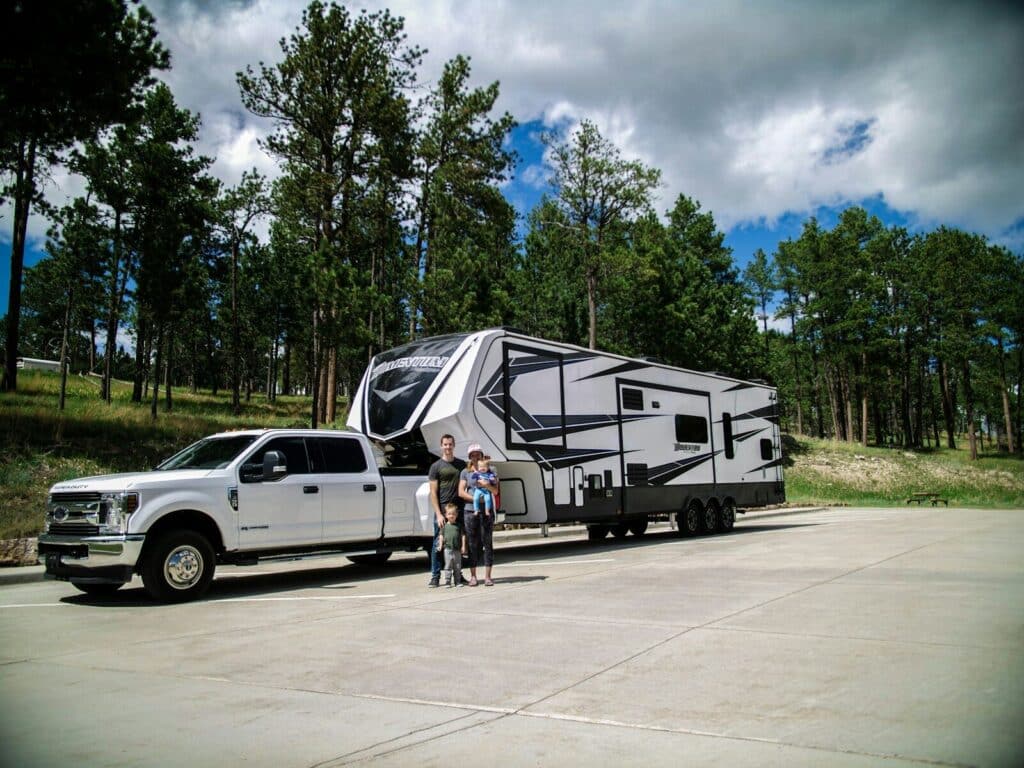
Photo by Matthew Osborn on Unsplash
What Is RV Towing?
RV towing means pulling a towable RV with another vehicle. This usually applies to travel trailers, fifth wheels, pop-ups, toy hauler RVs, and other towable RV models.
When someone handles RV towing themselves, they are responsible for matching the RV to the right tow vehicle, choosing the correct hitch system, checking the vehicle’s towing capacity, managing weight, connecting braking systems, securing safety cables, and driving safely with the extra weight behind them.
That can be manageable for experienced RV owners with the right equipment. But it can also be stressful for someone new to towing, buying their first camper, or moving a larger RV model farther than they are comfortable driving.
Professional RV delivery is different. Instead of towing the RV yourself, you hire an experienced transport company to move it for you.
That can be a smart option if you:
- Do not own the right tow vehicle
- Are unsure about weight ratings
- Need a long-distance move
- Bought an RV from another state
- Want to avoid towing through traffic or mountains
- Need a dealer-to-customer delivery
- Are relocating seasonally
- Want less stress and more peace of mind
RV towing can work well when everything lines up. RV delivery helps when you want the RV moved without taking on the driving, planning, and safety responsibilities yourself.
RV Delivery vs RV Towing: What Is the Difference?
The biggest difference is who handles the move.
With RV towing, you are the one connecting the trailer, checking the hitch, managing speed, planning the route, and driving the tow vehicle.
With RV delivery, a professional transporter handles the move for you.
That difference matters because towing an RV is not like driving a regular vehicle. A travel trailer, fifth wheel, or toy hauler adds length, weight, braking distance, wind resistance, and turning challenges. It also affects how the vehicle handles in tight spaces, on highways, and in changing weather.
Professional RV delivery can be especially useful for:
- First-time RV owners
- Buyers purchasing from out-of-state dealers
- Snowbirds moving seasonally
- Families relocating
- Dealers and manufacturers
- Freight forwarders and logistics partners
- Owners who do not want to add mileage or wear to their vehicle
- Anyone uncomfortable towing a large RV
At Interstate Haulers, we specialize in making that process easier. We handle RVs and travel trailers every day, so our team understands the planning, safety, and communication needed for a smooth delivery.
Understanding Gross Vehicle Weight Rating Before Towing
One of the most important RV towing terms is gross vehicle weight rating, often shortened to GVWR.
The gross vehicle weight rating is the maximum weight a vehicle or trailer is rated to safely carry when fully loaded. For an RV, this includes the RV itself plus cargo, water, propane, gear, supplies, and anything else added before travel.
This matters because many RV owners look only at dry weight or unloaded vehicle weight and assume they are safe. But an RV rarely travels empty. Once you add food, bedding, camping gear, tools, water, bikes, and personal items, the total weight can increase quickly.
Important weight terms include:
- Unloaded vehicle weight: What the RV weighs before cargo, water, and supplies
- Gross vehicle weight rating: The maximum weight the RV or vehicle is rated for
- Cargo carrying capacity: How much extra weight the RV can safely carry
- Gross axle weight rating: The maximum weight each axle can support
- Gross combined weight rating: The maximum combined weight of the tow vehicle and trailer
- Tongue weight: The downward force the trailer places on the hitch
- Payload capacity: The weight your tow vehicle can safely carry, including passengers, cargo, and hitch weight
If these numbers are not understood correctly, RV towing can become unsafe. That is one reason many owners choose professional delivery, especially for larger or unfamiliar RV models.
Choosing the Right Tow Vehicle
The tow vehicle is one of the most important pieces of the towing setup.
The right tow vehicle needs to have enough towing capacity, payload capacity, braking ability, hitch compatibility, and overall stability to handle the RV. Just because a vehicle can physically pull a trailer does not mean it can safely tow it under real road conditions.
Before towing an RV, you need to check:
- Vehicle manufacturer towing limits
- Vehicle’s towing capacity
- Maximum towing capacity
- Gross combined weight rating
- Payload capacity
- Tongue weight capacity
- Rear axle rating
- Hitch rating
- Brake controller compatibility
- Whether special hitch packages are needed
- Whether vehicle modifications are required
The vehicle’s weight, curb weight, rear axle capacity, and total load all matter. Passengers, luggage, tools, fuel, and cargo in the tow vehicle count too.
Some RV owners assume maximum towing capacity means they can tow anything under that number. But real-world towing is more complicated. A fully loaded RV, tongue weight, cargo in the truck bed, and passengers can all affect safety.
If you do not have the right tow vehicle, hiring Interstate Haulers can save you from forcing a setup that is not ideal.
Maximum Towing Capacity Is Not the Whole Story
Maximum towing capacity is the maximum weight a vehicle is rated to tow under specific conditions. It is an important number, but it should not be the only number you look at.
A vehicle may have a high maximum towing capacity but still be limited by payload capacity, hitch rating, rear axle rating, or gross combined weight rating.
For example, a truck may be rated to tow a certain amount, but the tongue weight from a travel trailer may exceed what the vehicle can safely carry. Or a fifth wheel may place too much weight in the truck bed. Or the total weight of the vehicle, passengers, cargo, and RV may exceed the gross combined weight rating.
This is why RV towing requires careful planning.
You need to understand how much weight the RV weighs fully loaded, how much weight the vehicle can safely carry, and how the entire combination works together.
Professional RV delivery removes that responsibility from the owner. Our team is experienced in moving RVs and trailers with the proper equipment and planning needed for safe transport.
Fifth Wheel Hitch, Wheel Hitch, and Gooseneck Hitch Options
The hitch system depends on the RV type.
A standard travel trailer usually connects to a receiver hitch with a ball mount, fixed drawbar, or removable drawbar. Larger travel trailers may also need a weight distribution hitch to help balance the load across the tow vehicle and trailer.
A fifth wheel connects to a fifth wheel hitch mounted in the truck bed. This setup is common for larger towable RVs because it places weight over the rear axle and can provide better stability than some bumper-pull setups.
Some people prefer gooseneck hitches, especially for heavy loads or certain towing setups. A gooseneck hitch also mounts in the truck bed, but it uses a different connection style than a traditional fifth wheel hitch.
Basic hitch types may include:
- Receiver hitch
- Ball mount
- Fixed drawbar
- Removable drawbar
- Weight distribution hitch
- Fifth wheel hitch
- Gooseneck hitch
The hitch system must match both the RV and the tow vehicle. The tow vehicle’s hitch must also have the correct weight rating, tongue weight capacity, and installation.
A poor hitch setup can lead to trailer sway, poor handling, uneven weight distribution, and unsafe driving conditions.
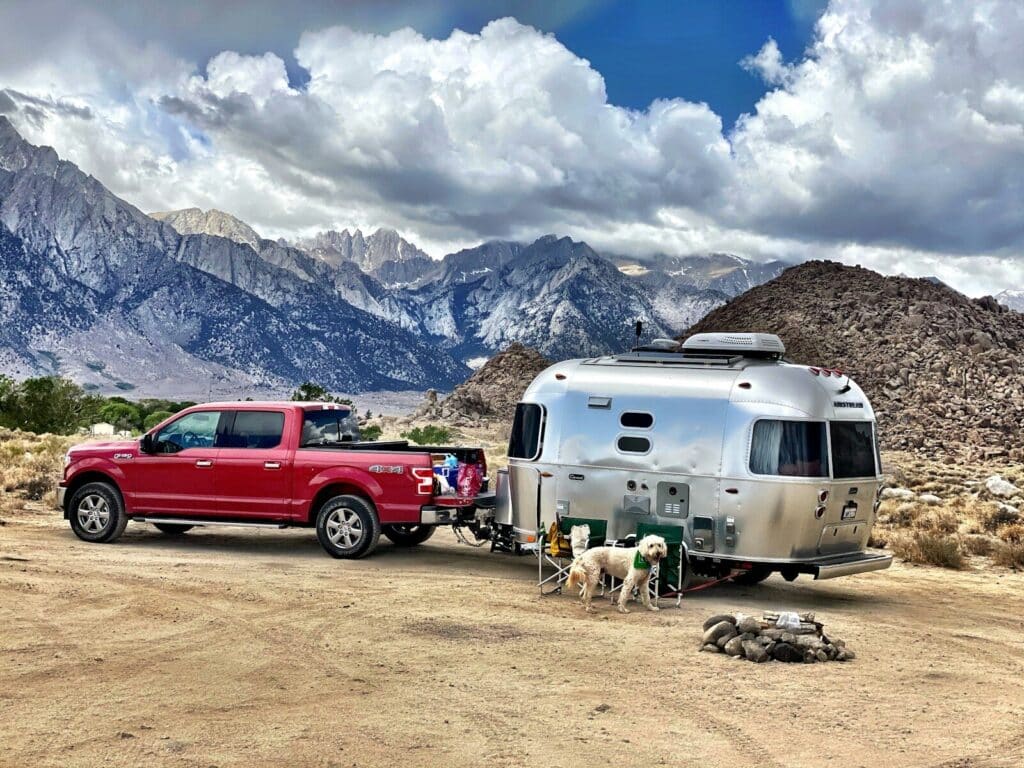
Photo by JOHN SCHNICK on Unsplash
Gross Combined Weight Rating and Why It Matters
The gross combined weight rating, or GCWR, is the maximum allowed weight of the tow vehicle and trailer together when both are fully loaded.
This includes:
- Tow vehicle
- RV or trailer
- Passengers
- Cargo
- Fuel
- Water
- Propane
- Tools
- Gear
- Hitch weight
- Any extra weight added for the trip
This number matters because towing safety depends on the full combination, not just the RV by itself.
If the combined weight exceeds the gross combined weight rating, the vehicle may struggle to accelerate, brake, climb grades, handle turns, or remain stable in emergency situations.
Before towing an RV, owners should compare the RV’s fully loaded weight with the tow vehicle’s ratings. This includes looking at the trailer weight information sticker, vehicle manufacturer guidance, and all applicable weight ratings.
If the numbers feel confusing, you are not alone. RV weight ratings can be complicated, especially for first-time buyers.
That is one of the biggest reasons owners choose professional RV delivery.
Cargo Carrying Capacity and Fully Loaded RV Weight
Cargo carrying capacity tells you how much additional weight your RV can safely carry beyond its unloaded vehicle weight.
This includes:
- Clothing
- Food
- Camping gear
- Water
- Propane
- Tools
- Outdoor furniture
- Bikes
- Generator
- Kitchen supplies
- Personal items
- Dealer-installed options
- Aftermarket upgrades
A travel trailer that seems light when empty can become much heavier when fully loaded.
This matters for two reasons.
First, the RV itself cannot exceed its gross vehicle weight rating.
Second, the tow vehicle still needs enough capacity to safely tow and carry the load.
Managing weight is one of the most overlooked parts of RV towing. Owners should be careful not to overload the RV, load too much weight behind the rear axle, or ignore tongue weight.
When Interstate Haulers handles delivery, we bring the right experience for moving towable RVs safely and efficiently without asking the owner to manage those towing calculations alone.
Tow Dolly and Flat Towing: What They Mean
Two terms that come up often in RV conversations are tow dolly and flat towing.
A tow dolly is a small trailer-like device that lifts the front wheels of a vehicle off the ground while the rear wheels roll on the road. Many people use tow dollies to pull a car behind a motorhome.
Flat towing means towing a vehicle with all four wheels on the ground. This usually requires tow bars, a base plate, safety cables, proper braking systems, and a vehicle that is approved for flat towing.
These terms mostly apply when an RV owner is towing a vehicle behind a motorhome, not when towing a travel trailer with a truck.
Still, they are important because RV owners often deal with multiple towing situations:
- Towing a travel trailer
- Pulling a fifth wheel
- Moving a toy hauler RV
- Towing a car behind a motorhome
- Using a tow dolly
- Flat towing with tow bars
- Transporting an RV professionally
Every setup has different safety requirements. The same steering wheel tip applies across many towing situations: small, smooth steering inputs are better than sudden corrections. Sharp movements can increase sway or cause instability.
Braking Systems and Brake Lights
Braking systems are one of the most important parts of safe RV towing.
A loaded travel trailer or fifth wheel adds serious weight. That extra weight increases stopping distance and puts more demand on the tow vehicle. Many trailers have their own brakes, which are controlled through a brake controller in the tow vehicle.
Before towing, owners should check:
- Trailer brakes
- Brake controller settings
- Brake lights
- Turn signals
- Safety cables
- Breakaway cable
- Electrical connection
- Tire condition
- Hitch connection
- Coupler or fifth wheel lock
Brake lights and turn signals are not just convenience features. They communicate with other drivers and help prevent accidents.
If the trailer’s lights or brakes are not working correctly, the RV should not be towed until the problem is fixed.
Professional transport companies understand these checks and build safety into the process before the RV moves.
Trailer Sway and Why It Happens
Trailer sway is one of the most common fears for RV owners.
Sway happens when the trailer begins moving side to side behind the tow vehicle. It can be caused by wind, passing trucks, poor weight distribution, high speed, underinflated tires, improper hitch setup, or loading too much weight behind the trailer axle.
Trailer sway can become dangerous quickly if the driver overcorrects or brakes suddenly.
Ways to reduce trailer sway include:
- Using the right tow vehicle
- Matching the hitch system correctly
- Using a weight distribution hitch when appropriate
- Keeping tongue weight within the recommended range
- Loading the RV properly
- Checking tire pressure
- Driving at a safe speed
- Avoiding sudden steering movements
- Using a brake controller correctly
- Planning routes around severe weather when possible
Experienced haulers understand how weight, speed, weather, and road conditions affect towing. That experience is valuable when moving an RV over long distances.
Why RV Owners Choose Professional Delivery
Many RV owners can tow their own rigs safely, especially with experience and the right equipment. But others prefer professional delivery because it removes stress and risk from the process.
Professional RV delivery may be the better choice when:
- You do not own a capable tow vehicle
- You are buying an RV out of state
- You are new to towing
- You are moving a large fifth wheel
- You need a long-distance transport
- You want to avoid traffic, mountains, or unfamiliar roads
- You want to protect your vehicle from wear
- You are coordinating the dealer or manufacturer delivery
- You need reliable scheduling
- You want peace of mind
For B2B customers, professional RV delivery is often about efficiency and consistency. Dealers, manufacturers, logistics partners, and government agencies need transport partners who communicate clearly and deliver safely.
For individual owners, it is often about confidence. You want your RV moved without the stress of doing it yourself.
Standard Driver’s License and Other Practical Considerations
Many RV owners wonder whether they need a special license to tow an RV.
The answer can depend on the RV size, weight, state requirements, and type of vehicle being used. Some RV setups can be operated with a standard driver’s license, while larger or heavier combinations may require additional attention to legal requirements.
Before towing an RV yourself, check:
- Your state’s licensing rules
- RV weight ratings
- Combined vehicle weight
- Insurance coverage
- Vehicle registration
- Trailer brake requirements
- State-by-state towing laws
- Any special restrictions for your route
This is another reason professional RV delivery can be appealing. Experienced transport companies are used to planning around safety, compliance, routing, and equipment needs.
At Interstate Haulers, we are FMCSA compliant and experienced in moving specialty assets nationwide.
RV Towing Guide: What to Check Before You Tow
If you are planning to tow your RV yourself, use a basic RV towing guide before you leave.
Check:
- Gross vehicle weight rating
- Gross combined weight rating
- Gross axle weight rating
- Vehicle’s towing capacity
- Maximum towing capacity
- Payload capacity
- Tongue weight
- Tongue weight capacity
- Hitch system
- Brake controller
- Brake lights
- Safety cables
- Tire pressure
- Wheel lug nuts
- Mirrors
- Propane shutoff
- Loose items inside the RV
- Doors, windows, and compartments
- Route restrictions
- Weather conditions
- Fuel stops and rest areas
The goal is to make sure both your RV and tow vehicle are ready before you start moving.
If that list feels overwhelming, professional RV delivery may be the better fit.
RV Delivery for Travel Trailers, Fifth Wheels, and Toy Haulers
At Interstate Haulers, we move a range of RV models and towable trailers, including:
- Travel trailers
- Fifth wheels
- Toy hauler RVs
- Pop-ups
- Motorhomes
- Campers
- Specialty trailers
- Cargo trailers
Different RV models require different transport planning. A fifth wheel may need a truck with the right fifth wheel hitch. A bumper-pull travel trailer may need the right ball mount and brake controller. A toy hauler may be heavier because of cargo space and extra weight.
Our experience allows us to plan each move based on the RV, route, distance, pickup location, and delivery destination.
We do not treat RV transport like a one-size-fits-all service. We move high-value assets, and we handle them with care.
RV Delivery Is About Convenience and Peace of Mind
One of the biggest benefits of hiring Interstate Haulers is convenience.
You do not have to buy or rent the right tow vehicle. You do not have to install a fifth wheel hitch. You do not have to worry about payload capacity, trailer sway, braking systems, or route restrictions. You do not have to spend hours driving a setup you are not comfortable handling.
Instead, you can let experienced professionals manage the move.
That means:
- Less stress
- Less risk
- No need for special towing equipment
- No added wear on your vehicle
- Professional route planning
- Clear communication
- Nationwide coverage
- Safer handling of large or high-value assets
For nearly 30 years, we have built our business around trust. Our customers come to us because they want their RV, boat, or specialty trailer moved safely and professionally.
Helpful Resources for RV Towing, RV Delivery, and Safe Transport Planning
If you are deciding between towing an RV yourself and hiring a professional RV delivery service, these resources can help you better understand towing capacity, RV weight ratings, hitch systems, trailer sway, braking systems, and general road safety before you make a decision.
- Camping World: RV Towing Guide & Capacity Calculator | A useful tool for checking towing capacity by VIN or vehicle make and model, plus helpful guidance on matching tow vehicles with compatible RVs.
- Keystone RV: Understanding RV Weight Rating Abbreviations | A helpful guide to terms like GVWR, UVW, cargo carrying capacity, and other weight ratings RV owners should understand before towing.
- RV Safety & Education Foundation: RV Weight Glossary | A useful glossary for understanding towing terms like GVWR, gross trailer weight rating, hitch ratings, and other weight-related language.
- Heartland RVs: Towing Guide and How to Choose the Best RV Tow Vehicle | A practical resource on towing capacity, payload capacity, GVWR, GCWR, and the questions RV buyers should ask before choosing a tow vehicle.
- etrailer: What Exactly Is Trailer Tongue Weight? | A clear explanation of tongue weight, why it matters, and how proper tongue weight helps create a safer towing setup.
- etrailer: Practice Safe Trailer Towing With These 4 Tips | A helpful towing safety guide covering weight capacity, cargo loading, tongue weight, trailer sway, and safe towing habits.
- etrailer: Towing a Trailer? Let’s Talk About Brake Controllers | A useful resource on brake controllers, trailer brakes, manual override, and why braking systems matter when towing heavier trailers.
- U-Haul: Safe Trailering and Towing Tips | A practical guide with reminders on load distribution, route planning, trailer stability, and safe driving habits when towing.
- U-Haul: Safety Tips for Driving With a Trailer | A helpful checklist-style article covering hitch security, safety chains, lights, brakes, towing capacity, speed, and following distance.
- AAA: Basic Towing and Hauling Safety | A straightforward towing safety resource that explains towing capacity, tongue weight, proper hitch installation, and securing cargo.
- RVIA: Trailer Brake Requirements | A detailed state-by-state reference for trailer brake requirements, useful for owners who want to understand legal and safety considerations before towing.
- NHTSA: National Highway Traffic Safety Administration | A federal traffic safety resource for vehicle safety information, recalls, regulations, and consumer safety guidance.
- FMCSA: Understanding Passenger Carrier Regulations | A federal resource that can help businesses understand interstate transportation regulations and when federal rules may apply.
- FMCSA: Passenger Carrier Guidance Fact Sheet | A helpful overview of how interstate commerce and for-hire transportation can affect commercial transportation requirements.
These resources can help you better understand RV towing terms, tow vehicle limits, hitch setup, braking systems, trailer sway, and safety requirements before moving your RV. Still, knowing the information is only part of the decision.
If the numbers feel confusing, the route feels stressful, the RV is too large for your comfort level, or you do not have the right towing equipment, professional RV delivery can make the process much easier. A safe move starts with the right plan, the right equipment, and the confidence that your RV is being handled with care from pickup to delivery.
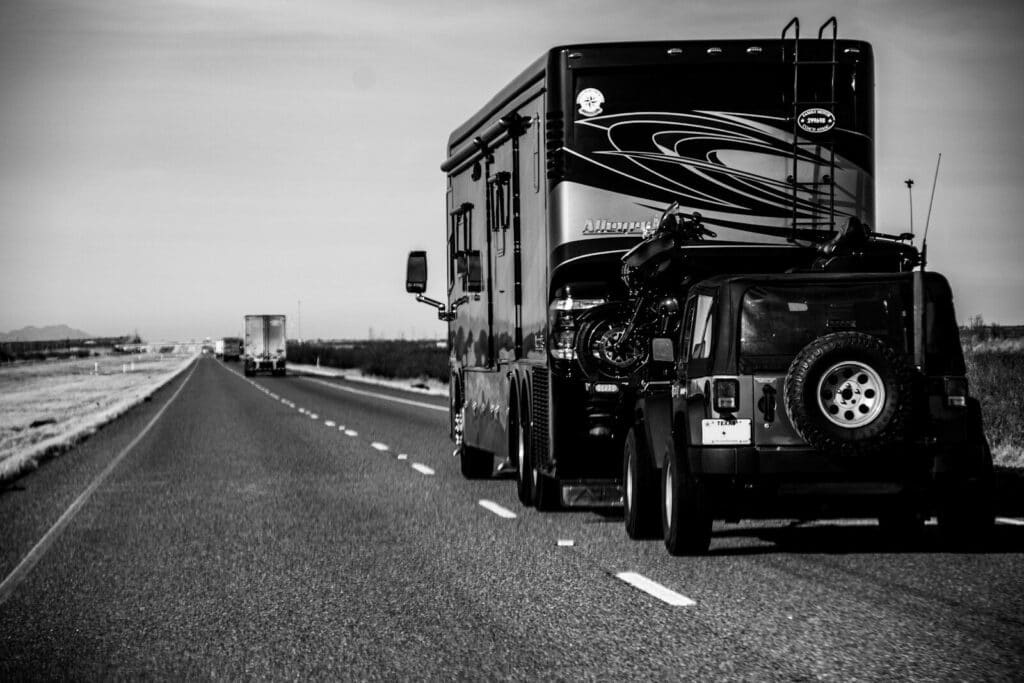
Photo by Chenyu Guan on Unsplash
Why Trust Interstate Haulers for RV Delivery?
Interstate Haulers is a family-owned transportation company founded in 1997. We specialize in hauling boats, RVs, travel trailers, and cargo trailers across the continental United States.
Our customers choose us because we offer:
- Family-owned reliability
- Nearly 30 years of specialty hauling experience
- Nationwide transport coverage
- Personalized service
- FMCSA compliance
- Transparent quoting
- Clear communication
- Experience with boats, RVs, and cargo trailers
- Safe handling of oversized and high-value assets
We serve individual owners, RV buyers, dealers, manufacturers, freight forwarders, logistics partners, municipalities, public utilities, FEMA-related needs, and other emergency response agencies.
Whether you need seasonal RV delivery, dealer transport, relocation support, or last-mile trailer hauling, we are ready to help.
Final Thoughts on RV Towing vs RV Delivery
RV towing can be a good option for experienced owners with the right tow vehicle, proper hitch system, correct weight ratings, working braking systems, and confidence behind the wheel.
But towing an RV yourself is not always the easiest, safest, or most convenient choice.
If you are unsure about gross vehicle weight rating, maximum towing capacity, gross combined weight rating, cargo carrying capacity, trailer sway, brake controllers, fifth wheel hitch setup, or whether you have the right tow vehicle, professional RV delivery may be the better solution.
At Interstate Haulers, we help RV owners, buyers, dealers, manufacturers, and logistics partners move travel trailers, fifth wheels, toy haulers, motorhomes, and specialty trailers with care and professionalism.
When you want your RV moved without added stress, we are here to get it to the destination safely.
Request a quote from Interstate Haulers today.