If you have spent any time looking at boats, especially cruising boats or vacation yachts, you have probably come across the word catamaran.
So, what is a catamaran?
A catamaran is a boat with two parallel hulls instead of one hull. That twin hull design gives catamarans more stability, more deck space, and often more living space than traditional monohulls. Whether someone is interested in sailing catamarans, cruising catamarans, fishing catamarans, or power catamaran boats, the design is known for comfort, balance, and room to move.
At Interstate Haulers, we transport boats of many sizes and styles across the continental United States. Since 1997, our family-owned company has specialized in hauling boats, RVs, travel trailers, and cargo trailers with care, safety, and professionalism. When it comes to larger or specialty boats like catamarans, planning matters. These vessels often have a wide beam, a unique hull shape, and transport requirements that need experienced haulers.
If you are shopping for a catamaran or just trying to understand why boaters love them, this guide will walk you through the basics.

What Is a Catamaran?
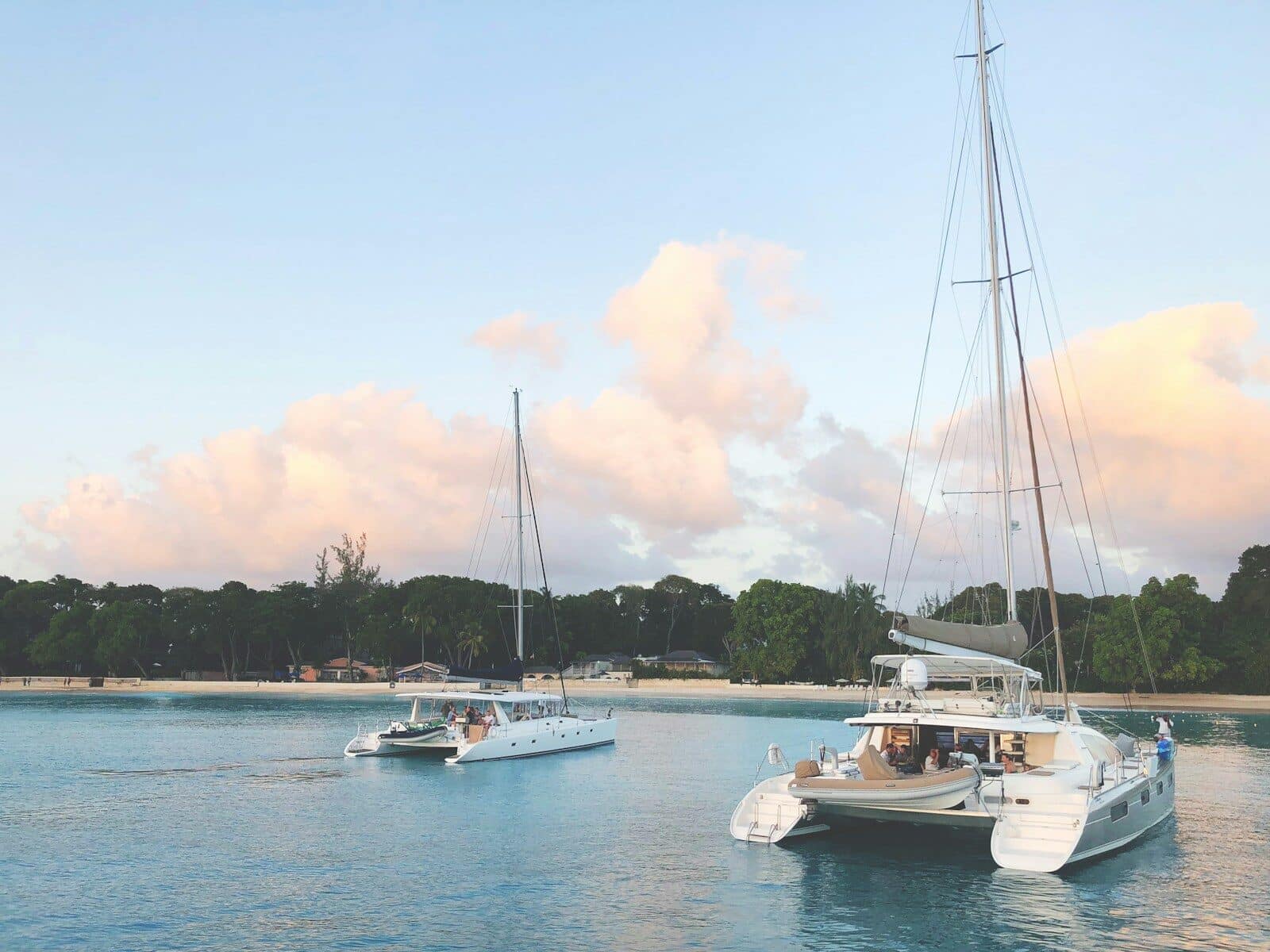
A catamaran is a vessel with two hulls connected by a structure called a bridge deck. Unlike traditional boats that have a single hull, catamarans use twin hulls that sit parallel to each other in the water.
That design gives catamarans their signature look. When you see one from the front, you can usually spot the two parallel hulls with open space between them. The deck, cabin, and living areas sit above or between those hulls.
Catamarans can be powered by sails, engines, or both. Some are built for recreation, some for chartering, some for long-term cruising, and some for fishing or commercial use.
Common types include:
- Sailing catamarans
- Power catamarans
- Cruising catamarans
- Fishing catamarans
- Charter catamarans
- Luxury catamaran yachts
- Smaller recreational catamarans
The main idea is simple: instead of relying on one hull for support and stability, a catamaran spreads the boat’s weight across two hulls.
That is what makes the design so appealing to many boat owners.
How Catamaran Boats Differ From Traditional Boats
Most people are familiar with traditional boats that have one hull. These are called monohull boats or traditional monohulls. A monohull has a single hull that sits in the water and supports the vessel.
Catamaran boats are different because they use two parallel hulls. This changes how the boat feels, handles, and functions.
Compared to traditional monohulls, catamarans often provide:
- Greater stability
- More space
- Wider deck space
- Larger living spaces
- Shallower draft
- Better access to shallow waters
- Less rolling at anchor
- More room for guests and crew
- Strong performance in many conditions
- Efficient propulsion with two engines on many models
A monohull may lean, or heel, more while sailing. A catamaran usually stays flatter because its wide beam and twin hulls create increased stability. For many families, charter guests, and long-distance cruisers, that flatter ride is a major advantage.
Sailing Catamarans and Catamaran Sailing
Sailing catamarans use wind power, sails, a mast, and often a mainsail to move across the water. They are popular with sailors who want comfort, speed, and space without giving up the experience of sailing.
Catamaran sailing feels different from sailing a traditional monohull. Because catamarans have two hulls and a wide beam, they typically heel less. That means the boat stays more level, which can move onboard easier.
Many sailors like catamarans because they offer:
- A stable platform
- Open deck space
- Comfortable cruising
- Good speed potential
- Spacious interiors
- Easy access to outdoor areas
- Room for family, friends, or charter guests
Some sailing catamarans are designed for coastal cruising. Others are built for long voyages and extended periods at sea. Modern catamarans can be equipped with advanced navigation systems, comfortable cabins, solar power, watermakers, and other features that support long-term cruising.
For people who want to sail but also want room and comfort, a catamaran can be an excellent choice.
Why Twin Hulls Create Greater Stability
The twin hulls are the biggest reason catamarans feel so stable.
On a monohull, the boat balances on one hull. On a catamaran, the boat spreads its weight across two parallel hulls. That wider stance gives the vessel greater stability and helps reduce rolling.
This is especially noticeable at anchor or while moving through choppy conditions. Many people who feel uncomfortable on traditional boats prefer catamarans because they tend to feel steadier underfoot.
Catamarans offer stability benefits for:
- Families with children
- New boaters
- Charter guests
- Long-term cruisers
- People prone to seasickness
- Fishing crews
- Owners who want easier movement on board
That does not mean catamarans are immune to rough seas or strong winds. Every boat has limits, and safety always depends on weather, captain’s experience, vessel’s condition, and proper use. But the catamaran design does provide a stable platform that many boaters appreciate.
Catamarans in Rough Seas and Choppy Conditions
People often ask how catamarans handle rough seas.
The answer depends on the boat’s design, size, construction, hull shape, weight, load, crew experience, and conditions. A well-designed catamaran can perform well in choppy conditions, and many cruising catamarans are built for long voyages.
Because catamarans have two hulls, they may ride differently from monohull boats. They can feel more stable side to side, but they may also respond differently to waves depending on the sea state.
In rough conditions, key factors include:
- Hull design
- Bridge deck clearance
- Weight distribution
- Wind direction
- Wave height
- Speed
- Crew experience
- Sail handling
- Engine power
- Overall vessel condition
Bridge deck clearance matters because the bridge deck sits between the two hulls. If clearance is too low, waves may slap the underside of the bridge deck in rough seas. Many modern catamarans are designed with this in mind.
Like any boat, a catamaran should be matched to the owner’s intended use. Coastal cruising, offshore sailing, chartering, and fishing all place different demands on the vessel.
Photo by Franzi Meyer on Unsplash
Living Space and Interior Space on a Catamaran
One of the biggest reasons people love catamarans is the living space.
Because a catamaran has two hulls and a wide beam, it often provides more interior space than a monohull of similar length. The layout can feel more like a floating home than a narrow boat.
Many cruising catamarans offer:
- Multiple cabins
- Larger salons
- Wider galleys
- More storage
- Separate sleeping areas
- Spacious decks
- Comfortable seating
- Easy access between indoor and outdoor areas
- Larger living spaces for guests and crew
The interior space is a major selling point for families, charter companies, and long-term cruisers. People spending extended periods on board often want more room to move, cook, sleep, relax, and store supplies.
Catamarans practically provide that space. Instead of squeezing everything into one narrow hull, the design spreads living areas across the full width of the boat.
That extra room can make a big difference during long voyages or multi-day trips.
Shallow Draft and Easy Access to Shallower Waters
Another advantage of many catamarans is their shallow draft.
Draft refers to the minimum depth of water a boat needs to float without hitting the bottom. Because catamarans often have shallower hulls than some traditional monohulls, they can access shallower waters more easily.
That can be helpful for:
- Exploring coves
- Anchoring closer to shore
- Visiting shallow bays
- Cruising in coastal areas
- Beaching certain smaller catamarans
- Enjoying easier access to quiet anchorages
For boaters who love exploring, a shallow draft can open up more options. It gives owners more flexibility when choosing anchorages, marinas, and cruising destinations.
Of course, every boat is different. Some catamarans have deeper keels, daggerboards, or other design features that affect draft. Owners should always know their vessel’s actual draft before entering shallow waters.
Two Engines, Twin Engines, and More Control
Many power and cruising catamarans are equipped with two engines, often one in each hull. These twin engines can make docking and maneuvering easier because the operator can use each engine independently.
This can be helpful in tight spaces, marinas, and docking situations. With practice, twin engines allow a boat operator to pivot, turn, and control the vessel with more precision.
Compared to a boat with one engine, two engines may also offer redundancy. If one engine has a problem, the other may still provide propulsion, depending on the situation.
That said, two engines also mean more maintenance. Owners need to care for both engines, fuel systems, controls, and related equipment.
The advantage is control and power. The tradeoff is added complexity and maintenance.
Catamaran Design and Speed
Catamaran design can support impressive speed, especially because many catamarans have long, narrow hulls with an efficient length ratio. Their hull shape can reduce drag compared to some traditional boats.
Some catamarans are built for speed. Others are built more for comfort, living space, and cruising. The right catamaran depends on what the owner wants to do.
Catamarans may offer greater speed in certain conditions because:
- Twin hulls can reduce drag
- Wide beam creates stability
- Lighter designs can move efficiently
- Sail area can be used effectively
- Power catamarans may use twin engines for more power
However, speed depends on many factors, including weight, sea conditions, wind, sail trim, engine size, hull shape, and load.
For most buyers, the appeal is not only higher speeds. It is the balance of speed, comfort, stability, and space.
Modern Catamarans for Cruising, Fishing, and Chartering
Modern catamarans come in many styles.
Some are built for relaxed cruising. Some are designed for chartering with spacious cabins and social areas. Some are fishing catamarans with open deck space, rod holders, and stable platforms. Others are luxury yachts with high-end interiors and advanced systems.
Catamarans are popular for:
- Family cruising
- Long-term cruising
- Liveaboard lifestyles
- Vacation chartering
- Fishing trips
- Coastal exploration
- Island hopping
- Day charters
- Offshore sailing
- Comfortable entertaining
For chartering, catamarans are especially appealing because they provide room for guests, crew, gear, and outdoor living. The deck space and spacious interiors make the experience more comfortable.
For fishing, the stability and open deck areas can be major advantages.
For long voyages, the combination of stability, storage, living space, and efficient propulsion can make catamarans attractive to serious cruisers.
Catamarans vs Cruising Monohulls
Cruising catamarans and cruising monohulls both have loyal fans. Neither is automatically better for every person. The best choice depends on how you plan to use the boat.
Catamarans may be preferred for:
- Greater stability
- More living space
- More deck space
- Shallow draft
- Less heel while sailing
- Family comfort
- Chartering
- Anchoring comfort
Traditional monohulls may be preferred for:
- Classic sailing feel
- Lower purchase price in some categories
- Easier marina availability in some locations
- Better fit in tight slips
- Simpler systems on some models
- Traditional offshore sailing preferences
Monohulls often have one hull and may handle certain sea conditions differently. Some sailors prefer the feel of a monohull under sail. Others prefer the comfort and stability of a catamaran.
There is no one-size-fits-all answer. The right boat is the one that matches your budget, experience, plans, and comfort level.
Why Catamarans Offer More Deck Space
Deck space is another reason catamarans are popular.
Because of the wide beam and bridge deck design, catamarans often have large open areas for relaxing, fishing, dining, sunbathing, or entertaining. The deck can feel much more spacious than on a traditional boat of similar length.
More deck space is helpful for:
- Families
- Guests
- Fishing
- Charter groups
- Long trips
- Gear storage
- Outdoor dining
- Easy movement on board
This makes catamarans feel less cramped, especially when several people are onboard.
For many buyers, that practical space is what turns interest into a purchase.
Are Catamarans Fuel Efficient?
Some catamarans can be fuel-efficient, especially when compared to heavier boats with less efficient hull designs. Their twin hulls may reduce drag, and power catamarans can sometimes run efficiently at cruising speeds.
That said, fuel efficiency depends on:
- Hull design
- Weight
- Engine size
- Speed
- Sea conditions
- Load
- Maintenance
- Propulsion system
- How the boat is operated
Sailing catamarans can rely heavily on wind power, which can reduce fuel use during cruising. Power catamarans depend more on engines, but efficient hull design can still help.
If fuel efficiency is a major priority, buyers should compare specific models rather than assuming all catamarans perform the same way.
Safety Advantages and Practical Considerations
Catamarans provide several safety-related advantages, including stability, redundancy with twin engines on many models, and wide deck space for movement. Their shallow draft may also help in certain cruising areas.
However, safe boating still depends on proper training, maintenance, planning, and weather awareness.
Owners should understand:
- Vessel limits
- Engine systems
- Navigation equipment
- Weather conditions
- Safety gear
- Load capacity
- Maintenance needs
- Docking techniques
- Emergency procedures
No boat design replaces good seamanship.
For new owners, boater education is always worth the time. Understanding how your vessel handles in strong winds, rough conditions, tight spaces, and docking situations can help keep everyone safer onboard.
Helpful Resources for Learning About Catamarans
If you are learning more about catamarans, twin hull design, catamaran sailing, cruising, power catamarans, or what to consider before buying one, these resources can help. They offer helpful information on boat types, stability, deck space, shallow draft, navigation, safety, and ownership planning.
- Discover Boating: Catamaran Boats | A helpful beginner-friendly guide to catamaran boats, including their twin hull design, stability, space, comfort, and common uses for cruising, fishing, sailing, and recreation.
- Discover Boating: Multi-Hull Power Boats | A useful resource for understanding power catamarans, including their stability, family-friendly layout, sleeping cabins, and cruising features.
- America’s Boating Club: Catamaran Sailing Guide | A practical guide to catamaran sailing, including stability, shallow draft, maneuvering, and what makes catamarans different from monohulls.
- Boat Trader: Catamaran Boats for Sale | A helpful marketplace for comparing new and used catamarans by price, length, location, condition, and seller type.
- Boat Trader: Catamaran Sailboats | A useful overview of different types of sailing catamarans, including beach catamarans, cruising cats, high-performance catamarans, and sailing catamaran yachts.
- YachtWorld: Sail Catamarans for Sale | A broad marketplace for buyers researching sailing catamarans, pricing, layouts, brands, and available inventory.
- BoatUS Foundation: Navigation Lights | A helpful safety resource explaining why navigation lights matter at night or in reduced visibility and how they help other vessels see your boat.
- BoatUS: Anchor Light Requirements | A useful resource for understanding anchor light rules, which can be especially helpful for cruising catamaran owners who spend nights at anchor.
- NOAA Nautical Charts | A valuable navigation resource where boaters can find, view, and download NOAA electronic navigational charts for planning safe routes.
- NOAA Resources for Recreational Boaters | A helpful resource for recreational boaters who want access to custom charts, navigation tools, and NOAA chart products.
- U.S. Coast Guard: Navigation Lights Safety Alert | A useful Coast Guard resource on navigation light requirements and how improper decorative or aftermarket lighting can create safety risks.
- U.S. Sailing: Multihull Safety Equipment Requirements | A helpful safety resource for multihull sailors, especially those interested in racing, nearshore sailing, safety equipment, and navigation light requirements.
These resources can help you better understand what makes catamarans unique, from twin hull stability and shallow draft to deck space, cruising comfort, navigation, and safety planning. Still, learning about catamarans is only part of the process.
If you decide to buy, sell, relocate, or transport one, the next step is making sure the logistics are handled with the same care as the vessel itself. Catamarans are wide, valuable, and often more complex to move than traditional monohulls, so accurate measurements, route planning, marina coordination, and experienced hauling support can make all the difference.
Transporting Catamaran Boats Requires Planning
Catamarans can be more challenging to transport than many traditional boats because of their wide beam and unique hull design.
When transporting a catamaran, important factors include:
- Overall length
- Beam width
- Height
- Weight
- Hull shape
- Trailer requirements
- Bridge deck clearance
- Whether the boat has a mast
- Whether the boat has twin engines
- Pickup and delivery access
- State permit requirements
- Route planning
- Marina or yard coordination
Some catamarans may require special equipment, permits, escorts, or careful route planning. Oversized and high-value assets should never be treated like ordinary freight.
At Interstate Haulers, this is where our specialty hauling experience matters. We understand how to move boats with care, safety, and professionalism. Whether we are transporting a boat with a trailer, a boat without a trailer, an RV, a travel trailer, or an cargo trailer, our focus is on clear communication and reliable service from quote to delivery.
What Catamaran Owners Should Know Before Transport
Before arranging transport, catamaran owners should gather detailed information about the vessel.
Helpful details include:
- Make and model
- Overall length
- Beam
- Height
- Weight
- Hull type
- Mast status
- Engine type
- Pickup location
- Delivery location
- Trailer availability
- Current condition
- Special handling needs
- Marina or boatyard contact details
Owners should also remove or secure loose items, document the boat’s condition, and coordinate with the marina or yard for loading and unloading requirements.
Because catamarans can be wide, accurate measurements are especially important. Even a small measurement error can affect permits, routing, and transport planning.
The more information you provide upfront, the smoother the process can be.
Why People Love Catamarans
People love catamarans because they combine comfort, stability, and space in a way that works for many boating lifestyles.
For families, catamarans feel roomy and stable.
For sailors, they offer speed, wind power, and a flatter ride.
For charter companies, they provide spacious interiors and deck areas that guests enjoy.
For long-term cruisers, they offer storage, comfort, and a practical onboard layout.
For fishing, they provide stability and usable deck space.
For buyers who want something different from traditional monohulls, catamarans offer a fresh way to experience the water.
They are not the right choice for everyone, but for the right owner, a catamaran can be an excellent choice.
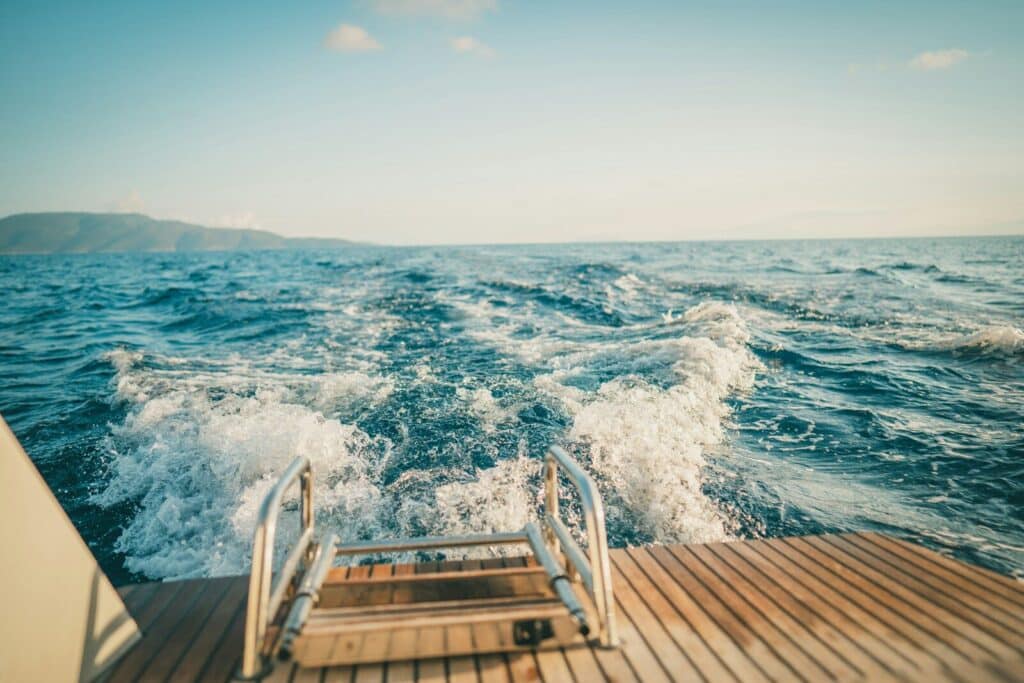
Photo by Raimond Klavins on Unsplash
Final Thoughts: What Is a Catamaran?
So, what is a catamaran?
A catamaran is a boat with two parallel hulls connected by a bridge deck. That design gives catamarans more stability, more deck space, more interior space, and often a shallower draft than many traditional monohulls.
Catamarans are popular for sailing, cruising, fishing, chartering, long voyages, and a comfortable time onboard. From sailing catamarans powered by wind to modern power catamarans with twin engines, these vessels offer a unique blend of performance, space, and comfort.
If you are buying, selling, relocating, or transporting a catamaran, planning matters. Larger and specialty boats require experienced haulers who understand oversized transport, route planning, and careful handling.
At Interstate Haulers, we have been moving boats and specialty trailers since 1997. As a family-owned transportation company with nationwide coverage, FMCSA compliance, and nearly 30 years of specialty hauling experience, we are here to help protect your investment every mile of the way.
Request a quote from Interstate Haulers today.