RV transport is the professional movement of recreational vehicles—travel trailers, fifth wheels, toy haulers, motorhomes, and more—from one location to another. The process involves route planning, equipment matching, permits, inspections, and experienced drivers. Interstate Haulers has been coordinating RV and trailer transport across the continental U.S. since 1997, offering tow-away, drive-away, and flatbed options tailored to each vehicle and route.
Moving an RV across the state—or across the country—can feel overwhelming, especially if you’re arranging professional RV transport for the first time. It’s easy to assume it’s as simple as hitching up and hitting the road. But there’s a great deal more involved: route planning, RV measurements, proper equipment, hitch compatibility, permits, pre-transport inspections, insurance, driver qualifications, and state-specific regulations all factor into a safe and successful move.
The variety of vehicles that may need professional transportation adds another layer of complexity. Travel trailers, fifth wheels, toy haulers, pop-up campers, bumper-pull trailers, motorhomes, and cargo trailers each come with their own requirements—and what works for a lightweight camper won’t necessarily work for a Class A motorhome.
At Interstate Haulers, we’ve been helping customers transport RVs, boats, and specialized trailers since 1997. As a family-owned company, we understand what’s at stake when someone hands over the keys to a valuable recreational vehicle. Our goal is to make the process straightforward, transparent, and stress-free—from the moment you request a quote to the moment your RV reaches its destination.
This guide walks through everything you need to know: how RV transport works, what to expect at each stage, how much it costs, and what to look for when choosing a carrier.
What Is RV Transport and How Does It Work?
RV transport refers to the professional movement of recreational vehicles from one location to another, typically handled by a licensed carrier with the equipment, drivers, and logistics experience to complete the job safely.
The RV transport industry serves a wide range of customers, including:
- Private RV owners relocating or selling their vehicles
- Buyers purchasing an RV from a distant dealer or private seller
- RV dealers and manufacturers moving inventory
- Seasonal travelers who prefer not to drive long distances
- Businesses and commercial customers with fleet or specialty trailer needs
Many customers hire a professional carrier because they don’t own a truck capable of towing their RV, don’t have access to the right hitch or towing equipment, or simply want to avoid a multi-day drive across the country. Others are coordinating a purchase from an out-of-state dealer and need the vehicle delivered directly to their home or storage facility.
The correct transportation method depends on whether the RV is towable or motorized, its overall dimensions and weight, and whether it’s roadworthy or better suited for flatbed hauling.
What RV Trailer and Recreational Vehicle Types Can Be Transported?
Professional carriers can typically handle a broad range of recreational vehicles, though requirements vary by type:
- Travel trailers are among the most commonly transported RVs. They’re towable, come in a wide range of sizes, and are well suited to tow-away transport.
- Fifth-wheel trailers require a specialized fifth-wheel hitch mounted in the bed of a pickup truck—standard ball hitches won’t work.
- Toy haulers are built to carry ATVs, motorcycles, and similar equipment, which adds weight and may affect transport planning.
- Pop-up trailers are compact and lightweight but still require proper hitch setup and safety equipment.
- Bumper-pull trailers attach to a standard ball hitch and are common among first-time RV owners.
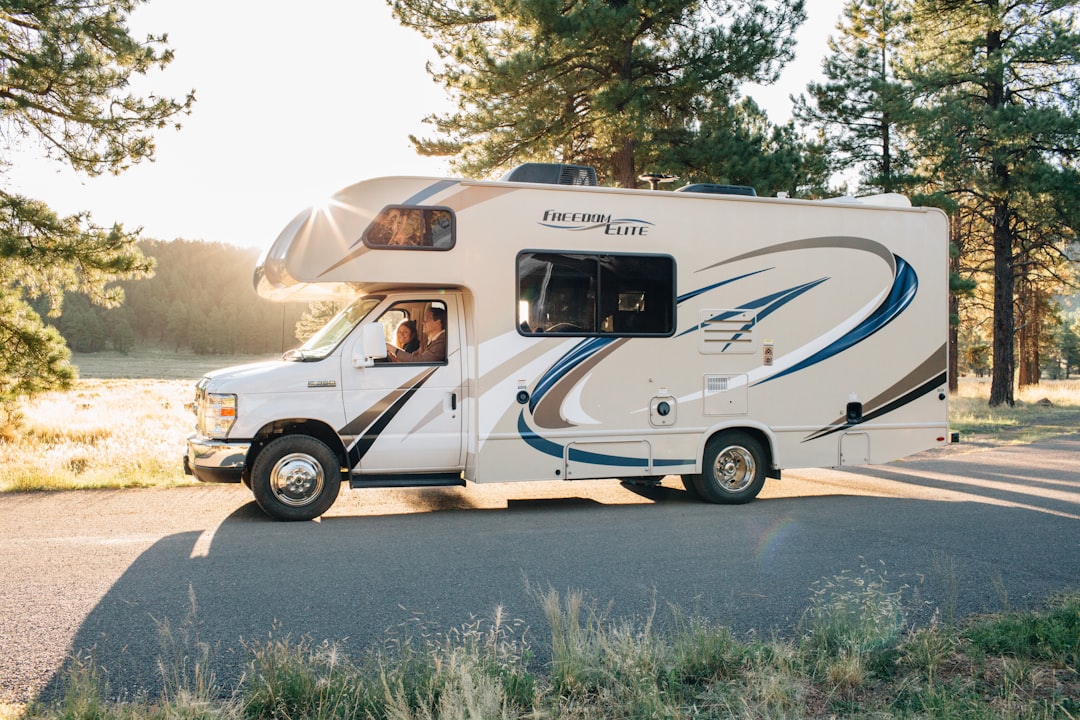
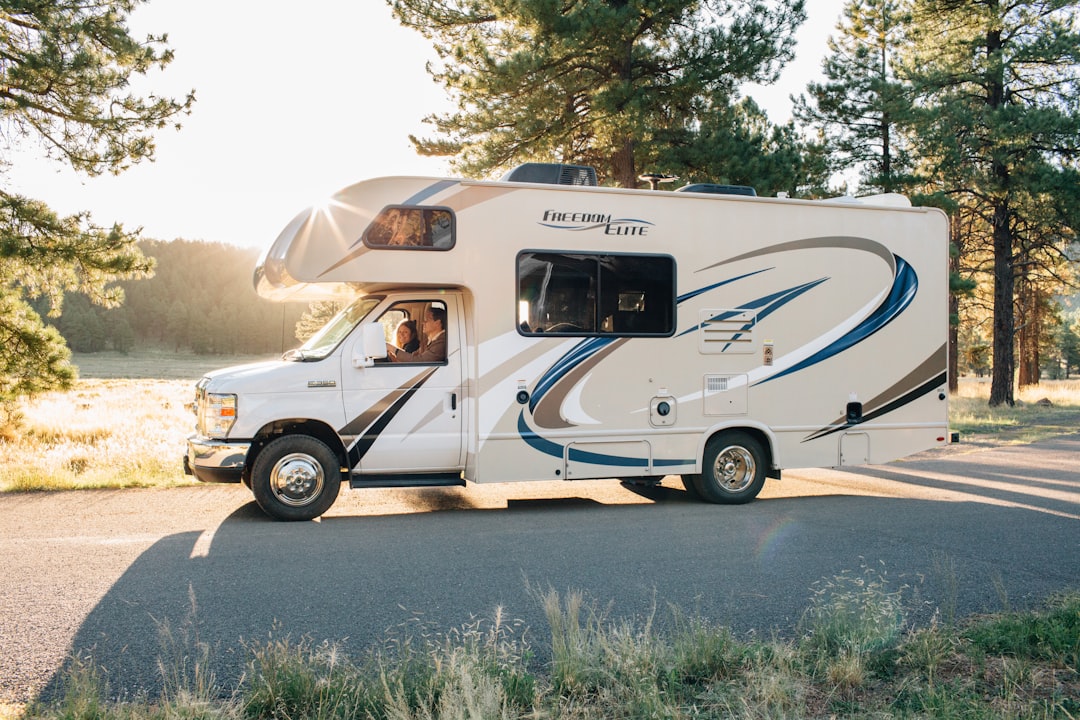
- Motorhomes are self-propelled and typically require a drive-away service rather than towing.
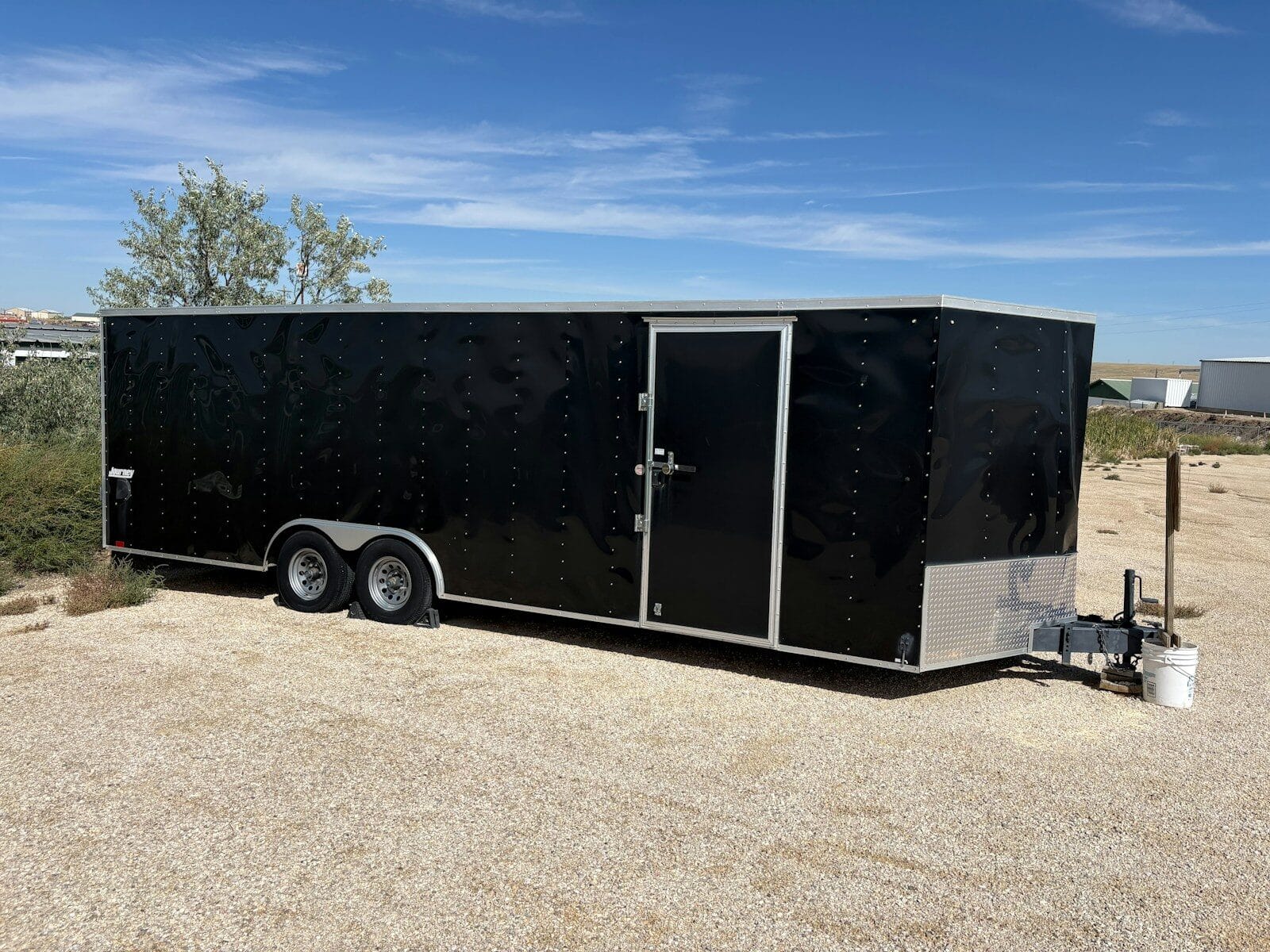
- Cargo trailers vary widely in size and application, with transport requirements depending on their dimensions and weight.
Class A motorhomes—the largest and heaviest motorized RVs—often require more detailed planning due to their size, height, and the logistics involved in moving them safely over long distances.
Helpful Resource: The Recreation Vehicle Industry Association (RVIA) publishes detailed data on RV types, ownership trends, and industry standards.
Choosing the Right RV Transport Method
When researching professional RV transportation, customers typically encounter three primary service options. The right choice depends on the vehicle type, its condition, and the specifics of the route.
What Is Tow-Away RV Transport?
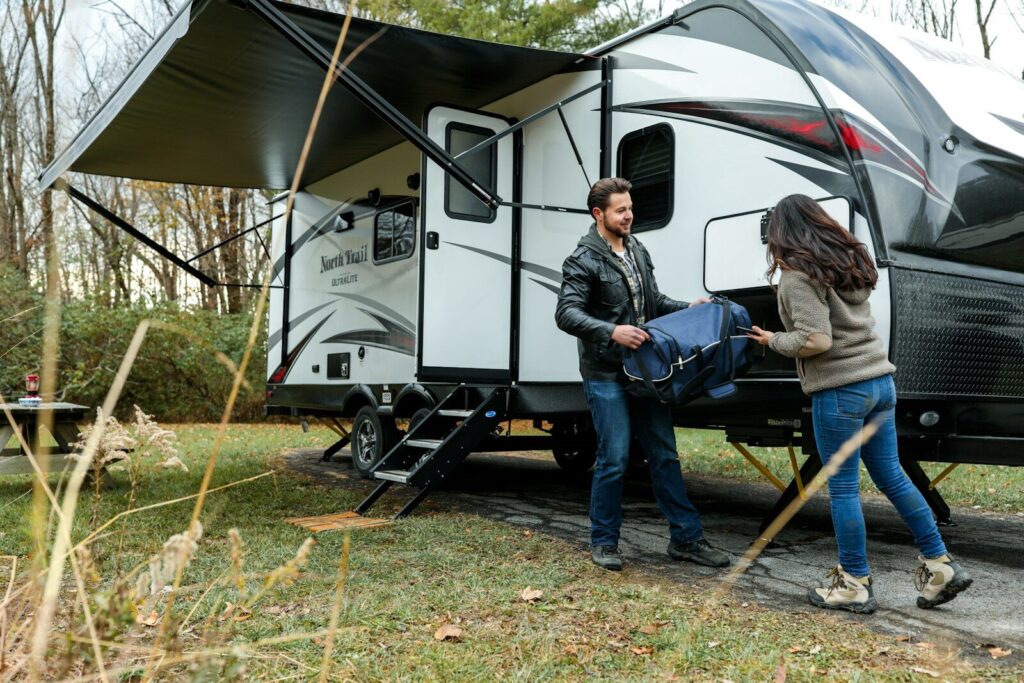
Tow-away transport uses an appropriately equipped truck to pull the customer’s RV trailer directly to its destination on its own wheels. This is the most common method for roadworthy towable units, including travel trailers, fifth wheels, toy haulers, pop-up campers, and bumper-pull trailers.
Selecting the correct truck and hitch for each trailer is critical. Factors like towing capacity, brake controller compatibility, weight distribution, and trailer condition all affect safety. Fifth-wheel trailers require a specialized fifth-wheel hitch, while bumper-pull trailers use a standard receiver hitch with an appropriately rated ball mount.
What Is Drive-Away RV Transport?
Drive-away service involves a professional driver operating a motorized RV—under its own power—to the delivery destination. This method applies primarily to motorhomes and eliminates the need for a separate tow vehicle. The trade-off is that it adds road mileage to the RV, which is worth factoring into the decision for newer or high-value units.
What Is Flatbed RV Transport?
Flatbed transport involves loading the RV onto a flatbed trailer or lowboy rather than towing or driving it on its own wheels. The major advantage is that the RV doesn’t accumulate road mileage or road wear during transit. Flatbed service is typically used for non-roadworthy units, unusually sized vehicles, or situations where tow-away or drive-away transport isn’t practical.
The best option always depends on the RV’s type, dimensions, weight, condition, and destination.
Our RV Transport Process: What to Expect From Quote to Delivery
For first-time customers, understanding what happens at each stage of the process makes a significant difference. Here’s exactly what to expect when you work with Interstate Haulers.
Step 1: Request Your RV Transport Quote
The process begins by contacting us with basic shipment information. To build an accurate quote, we typically ask for:
- RV type, make, and model
- Length, width, and height
- Weight (when applicable)
- Pickup and delivery locations
- Preferred transportation dates
- Whether the RV is towable or motorized
- Hitch type and configuration
- Any special access considerations at pickup or delivery
Accurate RV measurements are crucial. Errors in dimensions can affect equipment selection, route planning, permit requirements, and overall cost. Taking the time to confirm these details upfront prevents surprises later.
Helpful Resource: The NHTSA provides guidance on trailer weight ratings, hitch classes, and towing safety standards.
Step 2: We Review the Route and Transportation Requirements
Distance is only one part of planning an RV move. Our team reviews the full picture, which may include:
- RV dimensions and how they affect road clearance
- Weight limits on specific roads and bridges
- State transportation regulations along the route
- Toll roads and permit requirements for oversized loads
- Pickup and delivery access at both ends of the haul
Transporting RVs across state lines means navigating different regulatory environments. A route from Houston to Chicago, for example, passes through Texas, Oklahoma, and multiple Midwestern states—each with its own requirements for oversized vehicles. Similarly, delivering into dense metro areas like New York or New Jersey often requires additional route coordination. Larger or non-standard units may require special oversize permits before transport can begin.
Step 3: Prepare Your RV for Pickup
Proper preparation protects your RV during transit and helps the process move efficiently. Before pickup, we recommend:
- Removing or properly securing all loose objects inside and outside the RV
- Emptying holding tanks when appropriate
- Disconnecting utilities (water, electricity, propane)
- Closing and locking all windows, doors, cabinets, and storage compartments
- Retracting awnings and slide-outs fully
- Securing interior furniture, appliances, and any items that could shift in transit
- Checking tire condition and visible trailer components
- Confirming hitch and towing equipment requirements with the carrier
- Removing personal belongings when required by the carrier’s policy
- Ensuring clear access at the pickup location
- Having necessary documentation ready
Personal property inside the RV may be prohibited or restricted during transport. Always confirm the carrier’s policy directly rather than assuming household items can be shipped inside the vehicle.
Helpful Resource: The FMCSA’s safety regulations for commercial carriers, including cargo securement standards, are available on their website.
Step 4: Document Your RV’s Condition
Pre-transport documentation is one of the most important steps customers can take. Before the driver arrives, we strongly recommend:
- Taking clear photographs from multiple angles—front, rear, both sides, and all four corners
- Photographing any existing scratches, dents, cracks, or worn areas in detail
- Recording the condition of exterior components such as mirrors, vents, awnings, and lights
- Keeping copies of all inspection paperwork
This documentation protects both you and the carrier. If an insurance claim ever becomes necessary, detailed pre-transport photos provide clear evidence of the RV’s condition before transit began.
Step 5: Pickup and Final Safety Checks
When the driver arrives for pickup, you can generally expect the following:
- Confirming RV and shipment details match the quote
- Inspecting the unit together and reviewing any existing damage
- Checking the hitch connection or loading setup
- Securing the RV appropriately for transport
- Verifying that no loose items remain unsecured
- Confirming paperwork before departure
Professional drivers understand how different RV configurations affect towing dynamics and transit safety. That experience—knowing how a loaded fifth wheel behaves on a long downhill grade, or how crosswinds affect a tall Class A motorhome—makes a real difference over the course of a long haul.
Step 6: Transporting Your RV to Its Destination
Once the RV is underway, our team coordinates its journey toward the delivery point. Safe, efficient transport depends on:
- Experienced, qualified drivers familiar with RV and trailer hauling
- Proper equipment matched to the specific vehicle
- Adherence to planned routes and regulatory requirements
- Ongoing communication throughout the haul
- Compliance with FMCSA safety standards
Weather, traffic, road conditions, and permitting timelines can all influence transit duration. We keep customers informed throughout the process so there are no surprises.
Step 7: Delivery and Final Inspection
At the delivery destination, the process includes:
- Coordinating access and positioning at the delivery location
- Disconnecting or unloading the RV as applicable
- Conducting a final inspection alongside the customer
- Comparing the RV’s current condition against the pre-transport documentation
- Noting and documenting any concerns before the paperwork is finalized
Final inspection should happen before transport is considered complete. Don’t skip this step—it’s your last opportunity to address any concerns while the driver is still present.
How Much Does RV Transport Cost Per Mile?
There’s no single per-mile price that applies to every RV shipment. Cost varies based on the vehicle, route, method, timing, and a range of other factors. That said, general industry examples can provide helpful context:
| RV Type | Approximate Industry Rate Range |
|---|---|
| Travel trailers | $1.75–$3.75 per mile |
| Fifth-wheel trailers | $2.25–$4.00 per mile |
| Class A motorhomes | $4.50–$6.50 per mile |
These figures reflect general industry pricing examples and are not guaranteed Interstate Haulers rates. Every shipment is different, and the only way to get accurate pricing is to request a personalized quote based on your specific RV, route, and requirements.
Why Do Longer RV Transport Routes Sometimes Cost Less Per Mile?
Per-mile rate and total transportation cost are two different figures. On longer hauls, the per-mile rate may actually be lower than on a short regional move—but the total cost is still higher because of the overall distance traveled. Customers sometimes focus exclusively on the per-mile number and end up surprised by the total. Understanding both figures gives you a more complete picture.
What Factors Affect RV Transport Cost?
A wide range of variables can influence what you pay:
- Total distance between pickup and delivery
- RV type, dimensions, and weight
- Transport method (tow-away, drive-away, or flatbed)
- Pickup and delivery locations—including access considerations
- Route, tolls, and fuel
- Special equipment requirements
- Oversize permits when applicable
- Seasonal demand fluctuations
- Driver availability
Seasonal demand is worth noting: peak RV transport periods—typically spring and early summer—can push prices higher as carrier capacity tightens. Booking early can help manage costs.
The lowest advertised per-mile rate doesn’t always translate to the best overall value. Focus on the full quote, the carrier’s experience, their equipment, and their safety record.
Helpful Resource: The U.S. Department of Transportation provides information on oversize and overweight permit requirements by state.
Why Professional RV Transport Matters
Understanding the process is one thing. Choosing the right company to execute it is another.
Does Specialized Equipment Really Matter for Travel Trailers and Fifth Wheels?
Towing a 40-foot fifth wheel is not the same as moving a small bumper-pull camper down the street. Different trailers require different trucks, different hitch configurations, and different levels of towing experience. A mismatch between the tow vehicle and the trailer—wrong hitch class, insufficient towing capacity, incompatible brake controller—creates real safety risk on the road.
Professional carriers maintain equipment specifically matched to the types of vehicles they transport. That equipment matching is a fundamental part of safe transport, not an optional upgrade.
Why Does Driver Experience in RV Transport Matter?
Experienced RV transport drivers understand the full picture: hitch systems, trailer handling dynamics, weight distribution, braking distances, turning radius, clearance requirements, and how road conditions affect trailer behavior over long distances. They also understand state-specific regulations and how to navigate routes that pass through multiple jurisdictions.
A Class A CDL is often preferred in professional RV transport operations, though specific licensing requirements vary depending on the vehicle type, weight, and applicable federal and state regulations.
Helpful Resource: The FMCSA’s Commercial Driver’s License information center explains licensing requirements and commercial vehicle regulations.
What Insurance and Documentation Should RV Transport Customers Expect?
Before releasing your RV to any carrier, clarify the following:
- What insurance coverage does the carrier maintain?
- What are the coverage terms and limits?
- How does the carrier handle damage claims?
- What documentation does the carrier provide at pickup and delivery?
Request written confirmation of coverage and review it before signing anything. Your pre-transport photographs, combined with the carrier’s pickup inspection report, form the documentation foundation if a claim ever becomes necessary.
How Do Permits and State Transportation Regulations Affect RV Transport?
Oversized RVs—particularly wide or tall units—may require special permits before transport can begin. Permit requirements differ by state, and some routes may need to account for height restrictions, bridge weight limits, or road classifications that prohibit certain vehicles.
When a professional carrier handles these logistics, the burden doesn’t fall on the RV owner. That coordination is part of what you’re paying for.
How to Vet an RV Transport Carrier Before You Hire
Choosing the right carrier is one of the most consequential decisions in the RV transport process. Before committing, check the following:
- RV-specific experience: Has the company transported the type of RV you own?
- FMCSA credentials: Is the carrier properly registered and compliant with federal motor carrier safety regulations?
- Insurance: What coverage does the carrier maintain, and what are the terms?
- Driver qualifications: Who will actually be transporting your RV, and what are their credentials?
- Equipment: Does the carrier have the right truck, hitch, and safety equipment for your specific vehicle?
- Written quote: Are all costs documented in writing before transport begins?
- Pickup and delivery procedures: How does the carrier handle inspections at both ends?
- Reviews and reputation: What do past customers say about their experience?
Ask directly who will transport your RV. Some carriers broker loads to third-party drivers, which can affect communication, accountability, and service quality. Understanding who’s behind the wheel—and how the carrier oversees that process—matters.
Helpful Resource: Verify a carrier’s FMCSA registration, safety rating, and insurance status through the official Safer Web database.
What Other RV Transport Companies Tell Us About the Industry
A look at other established providers helps illustrate broader industry standards and pricing context.
Wave Express
Wave Express publishes contractor rates ranging from approximately $1.50–$2.00 per mile depending on trailer GVWR and destination, and notes those rates are subject to change. Wave Express also states that a Class A CDL is preferred for its contractors but isn’t universally mandatory. These figures reinforce why advertised per-mile rates shouldn’t automatically be treated as a customer’s final shipping cost—the actual quote depends on the specifics of each move.
Bennett DriveAway
Bennett DriveAway is an established transportation provider offering drive-away and tow-away services for RVs and other vehicles across North America. Bennett’s service model confirms that tow-away and drive-away are well-established professional transport methods with defined industry standards.
Heavy Haulers
Heavy Haulers operates as a nationwide RV transportation provider handling multiple types of recreational vehicles. Their published rate ranges are frequently cited as general industry pricing benchmarks, useful context when evaluating quotes from any carrier.
We Haul RV Transport
We Haul RV Transport states it has more than 15 years of experience transporting RVs and campers nationwide, offering both drive-away and tow-away services. We Haul also handles cargo trailers and other towable equipment—reflecting the range of vehicle types that commonly require professional transport.
These companies illustrate that the professional RV transport industry has established methods, pricing norms, and service standards. Customers benefit from understanding those norms before requesting their first quote.
Why Choose Interstate Haulers for RV Transport?
We’ve Been Transporting Specialized Assets Since 1997
Interstate Haulers is a family-owned transportation company founded in 1997. That’s nearly three decades of specialized experience moving RVs, travel trailers, boats, and cargo trailers across the continental United States. When you hand us the keys to a valuable recreational vehicle, that history isn’t just a marketing point—it’s the foundation of the trust our customers place in us.
We Handle More Than Standard Travel Trailers
Our network is equipped to transport a wide variety of recreational vehicles:
- Travel trailers and bumper-pull trailers
- Fifth wheels and 5th wheel configurations
- Toy haulers
- Pop-up campers
- Motorhomes
- Cargo trailers and other specialized towable equipment
Whatever you’re moving, we have the experience and network to handle it.
Nationwide RV Transport With Personalized Service
Interstate Haulers provides RV transport coverage across the continental United States. Long-distance transportation—whether from Tampa to Chicago, Houston to San Antonio, or Minneapolis to New Jersey—doesn’t mean impersonal service. As a family-owned company, we take the time to communicate clearly with every customer from the initial quote through final delivery.
We serve individual RV owners, dealers, manufacturers, and commercial partners who need dependable, recurring transportation support.
Safety and FMCSA Compliance Matter to Us
Safety isn’t a checkbox for Interstate Haulers—it’s the foundation of how we operate. Our drivers are professional and experienced. Our equipment is matched to each vehicle we transport. Our operations comply with FMCSA requirements. Choosing a carrier based solely on the lowest advertised price is a risk not worth taking when a high-value asset is involved.
We Keep the Process Clear From Quote to Delivery
Our process follows a straightforward sequence that keeps customers informed at every stage:
Request a quote → Provide RV details → Confirm pickup and delivery → Prepare the RV → Pickup and inspection → Transport → Delivery and final inspection
Clear communication is one of the most consistent things our customers highlight about working with us. You shouldn’t have to wonder where your RV is or who to call with a question.
Helpful Resource: The RV Industry Association’s consumer resources page offers guidance for RV buyers and owners on everything from purchasing to maintenance: https://www.rvia.org/consumers
Frequently Asked Questions About RV Transport
How much does it cost to transport an RV?
RV transport cost depends on the vehicle type, size, total distance, route, transport method, season, required permits, tolls, and equipment needs. As a general industry reference:
- Travel trailers: roughly $1.75–$3.75 per mile
- Fifth wheels: roughly $2.25–$4.00 per mile
- Class A motorhomes: roughly $4.50–$6.50 per mile
These are industry examples, not guaranteed Interstate Haulers pricing. Request a personalized quote to get accurate pricing for your specific RV and route.
What is the 3-3-3 rule for RV travel?
The 3-3-3 rule is a popular RV travel guideline—not a regulatory requirement—that many RV owners follow to make long trips more manageable. The common version suggests traveling no more than about 300 miles per day, arriving at your destination by approximately 3 p.m., and staying for at least three nights before moving on. Variations of the rule exist among different RV communities. For owners who don’t want to spend multiple days behind the wheel, professional RV transport offers a practical alternative that removes the driving entirely.
What is the best RV transport company?
The best RV transport company for your needs should offer RV-specific experience, proper insurance, qualified drivers, appropriate equipment, FMCSA compliance, transparent pricing, clear pickup and delivery procedures, pre-transport condition inspections, and reliable communication throughout the process. Interstate Haulers has provided specialized transportation since 1997 with a safety-first approach, nationwide coverage, and personalized family-owned service—making us a strong choice for both individual owners and commercial partners.
How can I move my RV without a truck?
Hiring a professional RV transport company is the most straightforward solution. Depending on your RV type, the carrier can arrange tow-away service (they provide the truck, hitch, and driver), drive-away service (a professional driver operates your motorhome to the destination), or flatbed transport (the RV is loaded onto a flatbed and hauled without adding road mileage). You don’t need to own a tow vehicle—the carrier handles the equipment.
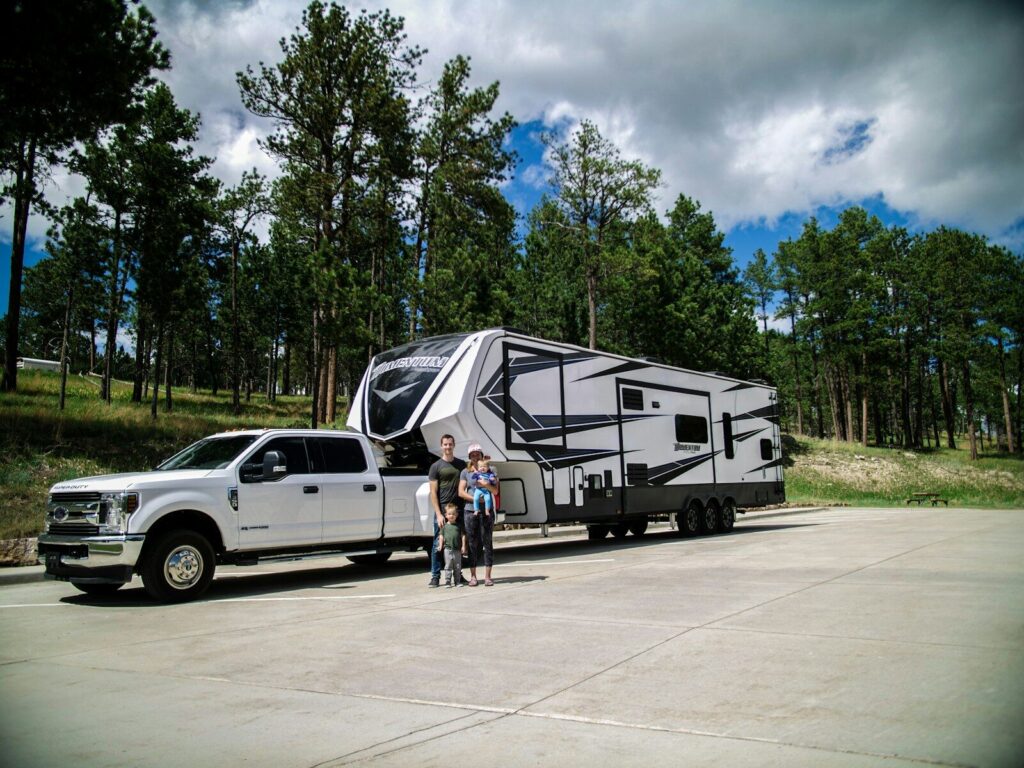
Photo by Matthew Osborn on Unsplash
Make Your Next RV Move Easier With Interstate Haulers
Successful RV transport comes down to planning, the right equipment, experienced drivers, safe routing, condition documentation, clear communication, and careful delivery. None of those elements should be left to chance—and as a first-time customer, you shouldn’t have to figure out every detail on your own.
Interstate Haulers has been doing this since 1997. We’re family-owned, specialized in RV and trailer transportation, and committed to moving your vehicle safely to its destination—whether that’s a cross-town dealer lot in Austin or a private residence outside Philadelphia. Individual owners, RV dealers, manufacturers, and commercial partners across the country trust us with their most valuable assets.
Need to move an RV, travel trailer, fifth wheel, toy hauler, or other recreational vehicle? Request a quote from Interstate Haulers and let our experienced team coordinate your transport from pickup through delivery.