Moving a boat long-distance isn’t as simple as just hooking it up and hitting the road. We’ve seen firsthand how a cross-country trip can turn into a nightmare without proper planning. One client came to us after a different company tried to haul their prized sailboat without checking state permit laws, leaving it stranded for days.
As a family-owned boat transport company with decades of experience, we know that successful boat transportation requires precision, knowledge, and a deep respect for the valuable asset you’re entrusting to us. We created this checklist to help you safely move your vessel across the continental United States, ensuring it arrives at its destination ready for the water.
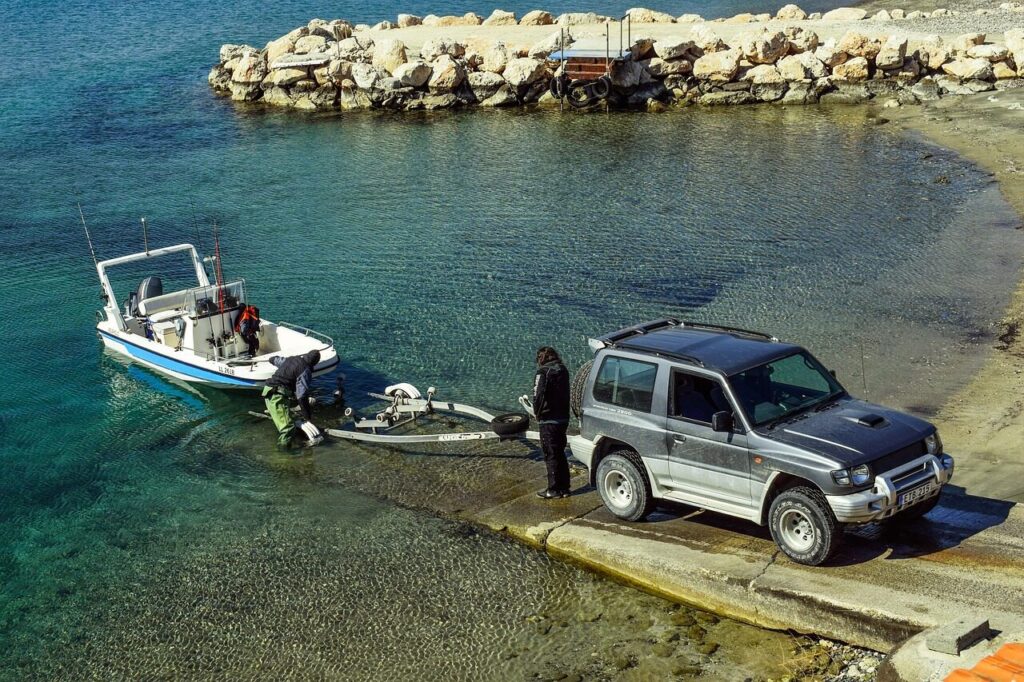
Photo by dimitrisvetsikas1969 on Pixabay
Introduction to Boat Trailers
Boat trailers are the unsung heroes of boating, making it possible to move your craft from the road to the water with ease and confidence. Whether you’re transporting a small fishing boat or a larger vessel, the right trailer is essential for protecting your investment and ensuring a smooth journey. There are many types of trailers to choose from, including single axle models for lighter boats and custom options for unique hull shapes or specialized needs.
Brands like Load Rite are known for their quality craftsmanship, offering both aluminum and galvanized trailers that stand up to the demands of frequent use and harsh environments. When searching for a new trailer, pay close attention to its capacity, the number of axles, and the materials used in its construction. A well-built trailer not only makes loading and unloading your boat easier, but also provides long-term durability and peace of mind every time you hit the road.
Understanding Boat Transport Basics Before Your Trip
Before you can plan the journey, it’s essential to understand the fundamentals of boat transportation. The process involves more than just a driver and a truck; it’s a coordinated effort that depends on your boat’s specific needs.
How Boat Trailers Affect Your Boat Transportation Plan
The first question any boat transport company will ask is whether your boat is on its own trailer. If it is, the process can be straightforward, provided the trailer is in roadworthy condition. If not, we have other solutions.
You’ll need to know your vessel’s standard dimensions, including its overall length, height (from keel to the highest point), and beam (the widest point). For larger boats or yachts that don’t have a trailer, a custom cradle may be necessary to provide support and stability during transit.
Trailers are specifically designed to carry loads ranging from small fishing boats to large yachts, with weight capacities that can accommodate boats from 600 pounds up to 15,000 pounds or more.
The Role of a Professional Boat Transport Company
This is where experience makes all the difference. A professional boat transport company does more than move your boat; we manage the logistics. This includes ensuring full safety compliance, carrying the right insurance, and adhering to all Federal Motor Carrier Safety Administration (FMCSA) regulations.
We assess every job to select the right truck, trailer, and driver to accommodate your boat, ensuring a secure and efficient trip from pickup to delivery.
Choosing the Right Trailer
Selecting the right trailer for your boat is a crucial step in ensuring safe and reliable transport. Start by evaluating your boat’s size, weight, and hull design, as these factors determine the type of trailer and its load capacity. For example, a deep-V hull may require a custom trailer with specific support features, while a lighter craft might be well-suited to a single axle model.
Consider whether an aluminum or galvanized trailer best fits your needs—aluminum offers lightweight strength and corrosion resistance, while galvanized trailers provide rugged durability for frequent water exposure. Don’t overlook the value of accessories like guide bunks, rear guide posts, or custom fittings, which can make loading and unloading much easier. By taking the time to find the right trailer, you’ll ensure your boat is carried safely on the road and ready for adventure on the water.
Safety Equipment and Features
When it comes to boat trailers, safety should always be a top priority. High-quality trailers are equipped with robust axles, dependable brakes, and secure hitch systems to keep your boat stable and protected during transport. Look for trailers that include essential safety accessories such as heavy-duty tie-down straps, bow stops, and transom savers—these features help prevent movement and damage while on the road.
Choosing a trailer with a galvanized or aluminum finish adds another layer of protection, helping your equipment withstand the rigors of both road travel and exposure to water. Investing in a trailer with superior safety features and accessories not only safeguards your boat but also ensures a worry-free experience every time you tow.
Your Long-Distance Boat Hauling Checklist
Follow these steps to prepare your vessel for a smooth and damage-free journey.
1. Measure Your Vessel’s Overall Length and Dimensions
To provide an accurate quote, we need precise measurements. The overall length should include any bow pulpits, swim platforms, or stern extensions. The shape of the bow and any attached equipment can also impact how the boat fits on our transport equipment. Providing detailed dimensions ensures we can plan the right route and avoid any surprises.
2. Secure All Loose Items Before Pickup
Anything that is not bolted down can become a projectile during transit. Before pickup, walk through your boat and secure or remove all loose items. This includes electronics, cushions, galley supplies, sails, and antennas. Tying down items that cannot be removed prevents them from shifting and causing damage to your vessel’s interior or exterior.
3. Prepare the Boat’s Exterior and Interior
Proper preparation protects your boat and our equipment. Drain all water and fuel tanks to reduce weight and prevent spills. It’s also wise to disconnect the batteries to avoid any electrical issues during the trip. If you are providing your own boat trailer, a thorough inspection is critical. Check the tires, brakes, lights, and bearings to make sure it can handle the long-distance haul.
4. Understand Required Special Permits for Boat Hauling
Most states have unique regulations for oversized loads, and nearly every long-distance boat hauling job requires special permits. Depending on the boat’s size, escort vehicles may also be required for certain parts of the journey. We handle all the permitting and logistical coordination with state authorities, so you don’t have to worry about the complex paperwork.
5. Confirm Pickup Details, Road Conditions, and Marina Access
Coordination is key. Many marinas and boatyards require advance notice for pickups and have specific hours of operation. We plan the route by considering weather, road conditions, and total distance to create a realistic timeline. Our team communicates directly with marinas, dealerships, and shipping yards to ensure a seamless handoff at both origin and destination.
6. Get a Boat Shipping Quote Based on Several Factors
Your final cost will depend on several factors, including the transport distance, boat size, and the type of trailer needed. The season and accessibility of the pickup and delivery locations can also influence the price. There are boat trailer options available for every budget, from affordable models to premium custom builds. Because quotes can vary widely between boat transporters, it’s important to ensure you’re comparing services that offer the same level of insurance, experience, and reliability. You can request a free quote from us to get a clear and comprehensive estimate. Buying boat transport services is an investment in quality and ongoing support, helping to build long-term trust with your provider.
Towing and Hauling Techniques
Mastering the right towing and hauling techniques is key to a successful boat transport. Begin by choosing the right trailer for your boat’s size, hull, and weight, ensuring it has the proper axles and capacity for a stable ride. Secure your boat with quality tie-down straps, bow stops, and transom savers to minimize movement and protect both the hull and trailer.
On the road, drive at a safe, controlled speed and remain vigilant about changing road and weather conditions. Regularly stop to inspect your trailer, checking the tires, brakes, and connections for any signs of wear or issues.
Routine maintenance and professional services—such as brake checks and wheel servicing—will help maintain your trailer’s quality and extend its lifespan. By following these best practices, you’ll enjoy a safe, smooth journey whether you’re heading to the water or bringing your boat home.
Common Methods of Boat Transport
Different boats require different transportation methods. Here are the most common solutions for moving a vessel.
Overland Boat Hauling Across the Continental United States
Overland hauling is the most common method for moving a vessel within the country. It is the ideal inland transportation solution for all common types of boats, from sailboats and powerboats to fishing vessels and yachts. Using specialized trucks and trailers, we can transport your boat directly from its current location to its new home, whether that’s a marina, a lake house, or a storage facility.
Using a Flat Rack for Larger Boats
What happens when a boat is too wide or tall for a standard trailer? We often use a flat rack. This is a specialized, open-sided platform used for shipping oversized cargo. The boat is secured onto the flat rack, which is then loaded onto a step-deck or lowboy trailer. This method is often combined with roll on/roll off (roll off) loading at ports and yards, where the entire rig is driven onto the transport vehicle.
Enclosed Container Options for Smaller Boats
For high-value vessels, classic boats, or shipments that include expensive heavy equipment and gear, an enclosed container offers maximum protection. While this option is limited by the container’s standard dimensions, it shields your boat from road debris and weather. It provides an extra layer of security, though it often comes at a higher cost compared to open-air transport.
What To Expect During Your Boat’s Transit
We believe clear communication is the foundation of a stress-free experience.
Communication, Updates, and Prompt Delivery
From the moment your boat is in our care, we keep you informed. Our drivers provide updates on their progress, and our office team is always available to answer your questions. We coordinate the final unloading procedures with you or the receiving marina to ensure a prompt delivery. When the boat arrives, our job isn’t done until it’s safely and securely in place.
Ensuring the Boat Reaches Its Destination Safely
Upon arrival, we conduct a final safety check and a post-delivery inspection with you. This is your opportunity to look over the vessel and confirm everything is just as you left it. We will only consider the job complete once you are satisfied and have signed off that your boat has arrived at its destination safely.
How to Prep for Boat Shipping Overseas
Are you planning to sail in international waters? Your boat’s journey begins on land. The preparation for shipping a boat overseas is extensive and requires careful coordination.
Boat Overseas Shipping Basics
The first step is reliable inland transportation to get your vessel to the port. Depending on its size, your boat will be loaded onto the ship via a flat rack, a roll off service, or inside an enclosed container.
Preparing for this involves significant paperwork for customs, export documentation, and compliance with international shipping laws. Partnering with an experienced domestic hauler like us is a critical first step before your vessel ever touches the sea, as we can ensure it gets to the port safely and on time.

Why Choose Interstate Haulers for Long-Distance Boat Hauling
Choosing a boat hauler is a decision built on trust. As a family-owned company since 1997, we’ve spent nearly 30 years earning that trust one shipment at a time. Our deep knowledge of boat hauling means we understand the nuances of transporting everything from family powerboats to high-value yachts and sailboats.
We are fully insured, FMCSA compliant, and dedicated to providing personalized service. Our reputation is backed by positive reviews from individual owners, marine dealers, manufacturers, and even government agencies who rely on us for their transportation needs.
Get Your Free Quote for Long-Distance Boat Transport
Ready to plan your boat’s move? Contact us today for a free quote. Our team provides a quick turnaround with a clear, accurate price.
Let us show you how our commitment to reliability, communication, and safety makes Interstate Haulers the right partner for your long-distance boat transport needs.
Helpful Resources for All Types Of Trailers and Hauling
To help you further understand and manage your trailer needs, here is a list of valuable resources related to trailers and hauling in general:
- National Association of Trailer Manufacturers (NATM): Offers guidelines and standards for trailer manufacturing safety.
- Trailer Maintenance Tips: A comprehensive guide on routine checks and repairs to keep your trailer in top condition.
- Trailer Weight Calculator: An online tool to help determine your trailer’s weight to ensure compliance with towing capacity and legal limits.
- Trailer Safety Guide: Detailed information on federal rules and recommendations for safe trailer operations.
- Tire and Wheel Safety: Understand the importance of proper tire maintenance and selection to avoid common issues like blowouts.
- Insurance for Trailers: Discover insurance options for your trailer to protect against damage, theft, and liability.
These curated resources will help ensure that you are well-equipped to handle any trailer-related challenges with confidence and expertise.