
The right utility trailer accessories—spare tires, tie-down straps, wheel chocks, locks, ramps, toolboxes, side rails, LED lights, tarps, and tongue jacks—can significantly improve safety, cargo protection, and hauling efficiency. Choosing accessories based on your load type and utility trailer configurationig while staying within your GVWR and the vehicle’s towing capacity, is essential for every trip.
A utility trailer is one of the most practical tools a homeowner, contractor, or small business owner can own. Haul a riding mower to the repair shop. Move furniture across town. Transport mulch, soil, lumber, or landscaping debris without filling a truck bed. Load up an ATV for a weekend trip. The trailer handles the overflow that no truck, van, or SUV can absorb on its own.
But here’s the thing—the trailer itself is just the foundation. How you equip it determines how safe, organized, and efficient every haul becomes. The right accessories protect your cargo, your trailer, and everyone else on the road. The wrong ones—or missing ones—turn a straightforward job into a frustrating or even dangerous situation.
This guide covers the must-have utility trailer accessories worth considering, how to choose them based on what you actually haul, and when it makes more sense to hand a trailer move off to professionals like the team at Interstate Haulers.
Understanding Your Utility Trailer Before Adding Accessories
What utility trailer configurations are available?
Utility trailers come in several utility trailer configurations, each built around different hauling priorities. Understanding which type you have—or are shopping for—shapes which accessories will be the most useful.
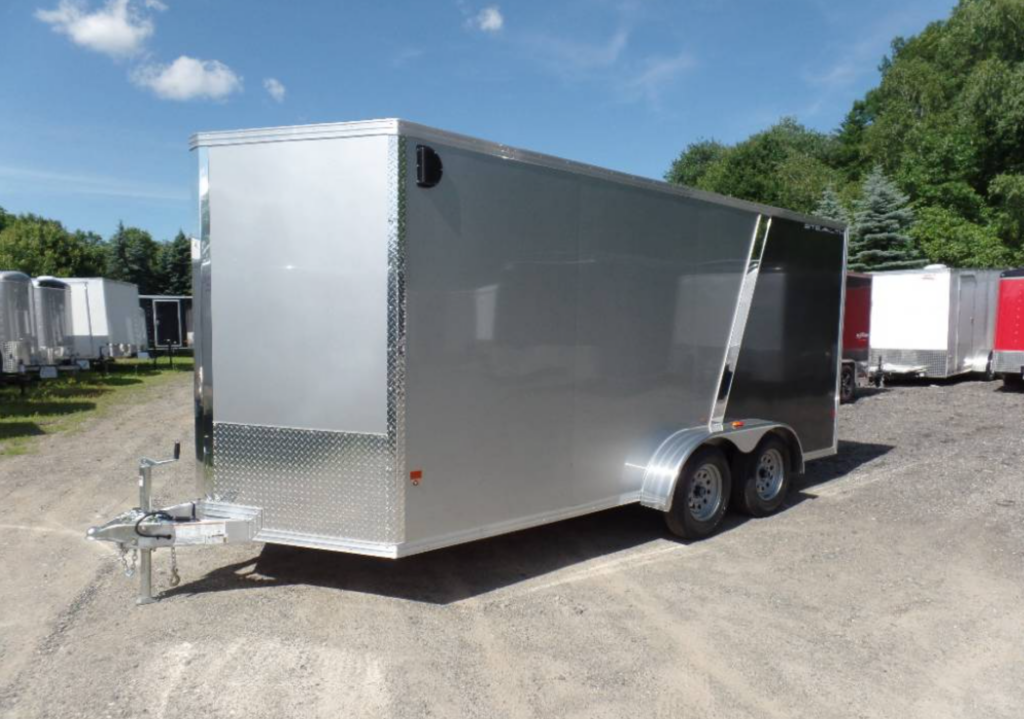
Open utility trailers are the most common. Their open deck design makes loading and unloading from multiple angles straightforward, which is why they’re a practical choice for bulky, irregular, or oversized cargo. Enclosed utility trailers trade that accessibility for weather protection and security, which matters when hauling tools, transporting equipment, furniture, or anything that shouldn’t get rained on or left exposed overnight.
Beyond those two broad categories, more specialized options exist:
- ATV/UTV haulers designed for secure off-road vehicle transport
- Dump trailers suited to loose materials like mulch, gravel, dirt, and debris
- Car haulers built for transporting vehicles
- Tube-top utility trailers with integrated rails that help contain cargo on the sides
- Vanguard-style trailers with taller solid side panels for additional cargo containment—Big Tex’s 35SV is one example of this configuration
No single configuration is the right answer for every job. The best setup depends on what you regularly haul, how often you use the trailer, and where it travels, and understanding what you need to know about utility trailers can help narrow those choices.
How should you size utility trailers around your load?
Utility trailers are available across a wide range of sizes, with some single-axle models carrying a GVWR around 2,995 pounds and heavier tandem-axle utility trailer configurations designed and reaching approximately 9,990 pounds, depending on the manufacturer and model. Trailer lengths can vary significantly, with some tandem-axle utility models extending to around 22 feet.
Smaller single-axle trailers are generally lighter and easier to maneuver—a good fit for lighter loads, landscaping supplies, lawn equipment, and everyday household projects. Tandem-axle trailers are typically selected when greater load capacity, stability on the highway, or more deck space is needed.
The key is matching your trailer to your most common loads rather than simply choosing the largest option available. More capacity doesn’t help if the trailer is harder to tow, park, or store than your situation requires.
Per NHTSA’s guidance on vehicle weight ratings and this deeper breakdown of GVWR and other crucial trailer metrics, GVWR represents the manufacturer-specified maximum loaded weight of the trailer—not just the cargo. That number needs to stay within your tow vehicle’s limits on every trip.
Choosing the Right Utility Trailer Setup for Your Towing Vehicle
Before adding a single accessory, confirm that your towing vehicle can safely handle the trailer you plan to use. Even a well-equipped trailer becomes a hazard when the vehicle pulling it isn’t rated for the job.
Check your vehicle manufacturer’s towing limits, then compare them against the trailer’s GVWR, payload rating, tongue weight, axle ratings, hitch class, and tire ratings. GVWR covers the total loaded weight of the trailer—not just the cargo you plan to put on it. Every accessory you bolt on or toss aboard counts toward that number. A toolbox, spare tire, loading ramps, and wheel chocks can add meaningful weight before you’ve loaded a single piece of cargo.
Plan around the actual loaded trailer, not an empty one. Available deck space doesn’t indicate available capacity.
10 Must-Have Utility Trailer Accessories
1. Spare Tire and Spare Tire Mount
A flat tire on a utility trailer, 40 miles from the nearest shop, is a miserable situation. A properly mounted spare tire solves that problem before it starts.
A dedicated spare tire mount keeps the spare secured to the trailer frame without consuming deck space or truck-bed room. When choosing a spare, match it to the same size, load rating, and type as the tires currently on the trailer. According to AAA’s guide to trailer tires, Discount Tire recommends replacing trailer tires as a set—including any spare—so they’re all the same age. For a tandem-axle trailer, carrying a spare for each axle is advisable, since a blowout on one side typically stresses the opposite tire as well.
AAA also notes that trailer tires generally lose roughly a third of their strength after three years of use, regardless of tread depth or appearance. Inspect the spare regularly and check its pressure before long hauls, not after you need it.
2. Quality Tie-Down Straps and Securement Points
Cargo that moves during transit is cargo that causes damage—or worse. Ratchet straps, D-ring anchor points, and chains rated to match the load are non-negotiable for hauling equipment, furniture, ATVs, landscaping tools, or anything that can shift, roll, or tip.
Select tie-downs with working load limits appropriate for your cargo. According to the FMCSA Cargo Securement Rules, the aggregate working load limit of any securement system must be at least half the weight of the cargo being secured. The FMCSA also specifies that articles 5 feet or shorter and weighing 1,100 pounds or less require at least one tiedown, while longer or heavier articles require two or more.
Inspect every strap before loading. Cuts, abrasion, damaged hooks, and frayed webbing are signs to replace rather than reuse. Cargo should be restrained against movement in multiple directions—forward, rearward, and lateral—not just held in place by its own weight.
Per FMCSA’s standards for securement devices, chain, wire rope, synthetic webbing, cordage, and steel strapping must meet minimum manufacturing standards, so check that your tie-downs carry appropriate ratings before using them for heavy or commercial loads.
3. Wheel Chocks
Wheel chocks are small, inexpensive, and easy to overlook—until the moment the trailer rolls unexpectedly during loading or unhitching.
A pair of rubber or urethane chocks placed against the trailer tires keeps it stationary while you load equipment, run a ramp, or hitch and unhitch. They’re especially useful when working with wheeled machinery, ATVs, or heavy power equipment on a slope or uneven surface. Keep them accessible, not buried at the bottom of a toolbox, so they’re actually used on every job.
4. Trailer Locks and Security Equipment
Trailers are a common theft target, particularly when parked at jobsites, campgrounds, storage facilities, or overnight stops. A coupler lock prevents the trailer from being hitched to an unauthorized vehicle. A wheel lock or boot immobilizes it entirely. A locking storage box keeps tools and straps from walking off between jobs.
Enclosed trailers provide an additional layer of weather and theft protection for cargo, but they’re not a substitute for proper locking hardware. The most effective approach is layering security measures rather than depending on any single device. Removing high-value tools from the trailer when it’s unattended is still the most reliable way to protect them.
5. Loading Ramps
Getting a riding mower, ATV, UTV, golf cart, or heavy power tool onto a trailer deck isn’t always straightforward without the right ramp. Removable aluminum ramps are a practical option for trailers that weren’t built with an integrated ramp gate. Fold-down ramp gates built into the rear of the trailer are a cleaner solution when the trailer will regularly carry wheeled equipment.
Check the ramp’s weight rating before loading anything. Exceeding it can cause the ramp to flex, buckle, or fail. Load on firm, level ground whenever possible, and keep people clear of the equipment’s path during loading and unloading.
Some utility trailer configurations—including certain tube-top models—also incorporate fold-down rails for side-loading wider or longer items that can’t easily be rolled up a rear ramp.
6. Trailer Toolbox
A weather-resistant toolbox mounted to the trailer tongue or frame keeps tie-down straps, chains, gloves, wheel chocks, hitch components, and basic tools organized and ready to use. Without one, those items end up scattered across the truck seat, buried under cargo, or simply forgotten at home.
Tongue-mounted boxes work well on trailers with sufficient tongue space. Side-mounted boxes are useful on longer utility trailers where the tongue is already occupied by a jack or other equipment. Whatever the configuration, account for the toolbox and its contents when calculating the trailer’s loaded weight.
7. Side Rails and Cargo Containment
Side rails add a containment boundary that keeps cargo from sliding or rolling off the sides during transit. Tube-top utility trailers come with integrated tube rails that provide this containment without eliminating the open-access convenience. Taller solid-sided configurations—like Vanguard-style trailers—are better suited to loads that need more substantial containment on multiple sides.
Removable or fold-down rail systems offer flexibility for trailers that carry different types of cargo from one job to the next. When hauling longer items that need to be loaded from the side, fold-down rails eliminate the obstacle without requiring you to remove the rails entirely.
Some manufacturers apply multi-step protective finishes to their trailer frames—Karavan, for example, uses a 17-step powder-coat process on certain models—designed to improve long-term durability and corrosion resistance. That kind of construction quality is worth considering when evaluating rail systems and trailer frames, as accessories attached to a well-protected frame are more likely to hold up over years of use.
8. LED Trailer Lights
Brake lights, turn signals, tail lights, and clearance lighting are legally required and practically essential. LED trailer lights consume less power than incandescent bulbs, last longer, and are more resistant to vibration and moisture—all meaningful advantages for trailer lighting that gets bounced around on rough roads.
Test the lighting system before every trip, particularly after the trailer has been stored for weeks or months. Check wiring harnesses and connectors for corrosion, cracking, or loose connections. A wiring problem that goes unnoticed on the driveway becomes a citation or worse on the highway. Per NHTSA’s trailer equipment guidance, federal safety requirements apply to trailer equipment and lighting, though specific state requirements may vary by trailer type and use.
9. Tarp or Cargo-Cover System
Loose materials—mulch, soil, gravel, landscaping debris, construction waste—can and do blow off open trailers at highway speeds. According to NHTSA’s Secure Your Load data, approximately 850 people are killed and nearly 19,000 more are injured each year in crashes involving objects in the road. All 50 states have laws governing unsecured loads, with fines reaching up to $5,000.
A fitted tarp system or cargo net is a straightforward solution for owners who regularly haul loose material. Tarps also protect certain loads from rain, wind, and road grime. The critical point: a tarp supplements proper securement—it doesn’t replace tie-down straps, chains, or other appropriate restraints. NHTSA recommends tying down all cargo with rope, netting, or straps before covering it with a tarp.
10. Tongue Jacks, Jack Stands, and Backup Cameras
A quality tongue jack makes hitching and unhitching far less physical, especially with a heavy loaded trailer. Stabilizing jacks are useful when the trailer needs to remain stationary during extended loading or unloading sessions. For trailers that see regular use in tight spaces, a backup camera is a practical upgrade—it improves rear visibility during hitching and maneuvering in confined areas.
Cameras don’t replace mirrors or a spotter. But for solo operators who frequently work in crowded jobsites, storage yards, or unfamiliar driveways, the added visibility is worth the installation cost.
Per FMCSA guidance on coupling devices and towing methods, safety chains or cables must be connected between the towing and towed vehicle to prevent the trailer from breaking loose if the tow-bar fails or becomes disconnected. Inspect your hitch, coupler, and safety chain connections before every trip.
Choosing Accessories Based on What You Haul
Moving furniture and household goods
An open utility trailer is a practical option when moving furniture, appliances, boxes, and bulky personal goods that won’t fit inside a passenger vehicle or truck cab. The open deck allows easy access for large and irregular items.
Recommended accessories for furniture hauling:
- Ratchet straps and D-ring anchor points
- Moving blankets to protect surfaces
- A cargo tarp or netting
- Side rails for additional containment
- Wheel chocks for secure loading and unloading
A properly sized trailer can reduce the number of trips during a move, which saves time and fuel. For loads that need weather or theft protection—particularly during overnight stops—an enclosed trailer is worth considering.
Landscaping and jobsite work
Contractors and landscapers regularly haul mowers, blowers, trimmers, hand tools, mulch, soil, plants, lumber, and debris. Loading ramps are especially useful for riding mowers and powered equipment. Side rails help contain smaller tools and loose materials. A trailer toolbox keeps straps, gloves, and frequently used hand tools organized and accessible.
When unloading efficiency is the priority—particularly for bulk material like mulch, gravel, or demolition debris—a dump trailer is typically a better fit than a flat utility model.
ATVs, UTVs, and small vehicles
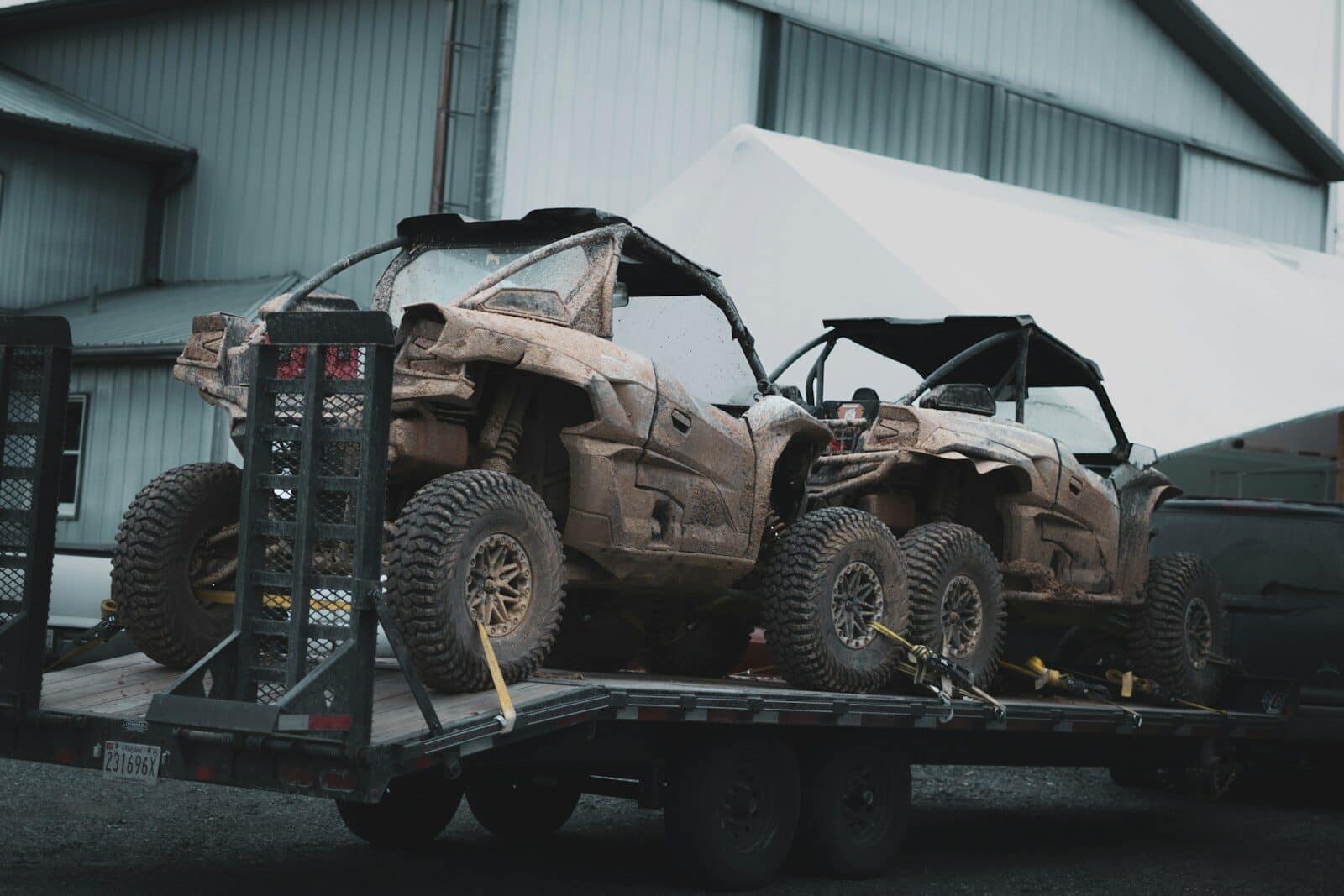
Utility trailers can transport ATVs, UTVs, golf carts, and lawn tractors that exceed the capacity of a standard truck bed. ATV/UTV-specific haulers and car haulers are worth considering when a specialized trailer better suits the load, and comparing the best types of trailers and their uses can clarify which platform fits your needs.
Whatever the trailer type, the ramps and tie-down points must be rated for the vehicle being loaded, and the trailer and tow vehicle together must handle the combined loaded weight safely.
Contractors and professional equipment
For contractors, maintenance crews, and small businesses hauling tools and equipment to recurring jobsites, one properly configured utility trailer can replace several truck-bed loads per day. Choose accessories based on the jobs you actually run—not on features you might use once. A trailer that’s organized, well-lit, and properly secured is a trailer that works efficiently from the first call to the last one.
Photo by Maxim Berg on Unsplash
How Trailer Construction and Configuration Affect Accessory Choices
Steel frames are heavier and generally more resistant to impact damage. Aluminum frames reduce overall trailer weight, which can improve fuel economy and leave more payload capacity for cargo. Neither material is universally better—the right choice depends on the intended use and budget.
Open designs prioritize accessibility. Enclosed designs prioritize protection. Some accessories that work well on an open trailer—extended side rails, fold-down ramps—may not be applicable or necessary on an enclosed model.
Trailer length, width, axle configuration, and deck height all influence which accessories will physically fit and function as intended. Longer trailers with tandem axles handle differently than shorter single-axle models and may benefit more from backup cameras, extended lighting, and additional tiedown points distributed across the deck.
The right utility trailer setup balances usable deck space, weight capacity, maneuverability, towing compatibility, and the accessories that actually support your work; exploring top utility trailer accessories to enhance hauling can help you fine-tune that configuration.
Don’t Forget Cargo Weight and Securement
Every accessory you add to a trailer contributes to its loaded weight. A pair of ramps, a toolbox, a spare tire, and a set of wheel chocks can add several hundred pounds before cargo is considered. That weight comes directly out of the available payload capacity.
Keep cargo positioned so the trailer stays balanced. Placing the majority of the weight too far rearward causes trailer sway. Too far forward puts excessive tongue weight on the hitch and tow vehicle. The general recommendation is to place approximately 60 percent of the cargo weight in the front half of the trailer’s deck.
Inspect straps and anchor points before departure and recheck the load during longer trips. Heavy cargo requires adequate restraint even when enclosed by side rails—rails are containment features, not securement systems. They help prevent cargo from falling off, but they do not substitute for straps, chains, or blocking.
Safe hauling depends on the complete towing setup: trailer ratings, cargo weight, tow vehicle capacity, hitch ratings, tires, cargo placement, and securement all working together.
When Professional Trailer Transport Makes More Sense
Towing a utility trailer locally with a properly matched vehicle is manageable for most experienced operators. Longer hauls, multiple state crossings, or complex trailer moves introduce a different set of challenges—routing, hours of service, regulatory compliance, mechanical readiness for extended travel, and the physical demands of driving a loaded trailer across the country—so it helps to understand how to ship a trailer with Interstate Haulers before committing to a DIY move.
Professional transport is worth considering when:
- A trailer needs to move across several states or to a distant destination
- Specialized or industrial trailers require handling beyond a standard pickup setup
- Dealers or manufacturers need reliable delivery without committing a company vehicle and driver
- No suitable towing vehicle is available at the origin
- The trailer is larger, heavier, or more complex than typical utility configurations
- Government agencies, municipalities, or emergency-response organizations need a time-sensitive, regulated haul
A well-prepared, properly accessorized trailer is also easier and safer for a professional driver to move—which is one more reason the accessories covered in this guide matter for owners who eventually need to arrange professional transport, whether for utility trailers or for specialized moves like professional boat transportation.
Why Interstate Haulers Is the Right Partner for Trailer Transportation
Since 1997, Interstate Haulers has specialized in moving trailers, boats, RVs, and industrial equipment across the continental United States. As a family-owned company with nearly three decades of experience, the Interstate Haulers team brings a level of care and personalized attention that larger freight operations rarely match.
The clients Interstate Haulers serves span a wide range of needs, including owners of travel trailers and RVs:
- Individual trailer owners looking for a safe, hassle-free way to move a trailer across state lines
- Dealers and manufacturers who need reliable, professional delivery for new inventory
- Freight forwarders and logistics partners coordinating specialty last-mile transport
- Public utilities, municipalities, and government agencies—including FEMA disaster-response operations—that require rapid, dependable mobilization
Every haul is backed by FMCSA compliance, personalized logistics planning, and consistent communication throughout the process, reflected in Interstate Haulers’ strong customer reviews and testimonials. Customers aren’t handed off to an anonymous dispatch system. They work directly with a team that understands the specific requirements of trailer transport.
When everyday hauling becomes a long-distance move, a complex delivery, or a job that exceeds what a standard tow setup can handle, Interstate Haulers is ready. Contact the Interstate Haulers team to discuss your trailer transportation needs and request a quote.
Build a Utility Trailer Setup That Works for You
The accessories that make the most sense for your trailer depend on what you haul, how often you use it, and where you travel. There’s no single universal kit—a landscaping contractor and a furniture mover have different priorities, even if both pull similar trailers.
Start with the essentials: a properly matched spare tire, rated tie-down straps, wheel chocks, and functional LED lighting. Add ramps, a toolbox, side rails, locks, a tarp system, and a tongue jack based on the specific jobs your trailer handles most often. Keep accessories from pushing the trailer over its rated capacity. And before any long-distance or complex haul, consider whether professional transport is the smarter call.
When the job outgrows what you can safely handle yourself, Interstate Haulers has the experience, equipment, and nationwide reach to get your trailer where it needs to go.

Photo by Amadeus Moga on Unsplash
Frequently Asked Questions About Utility Trailer Accessories
What accessories are essential for a utility trailer?
The most essential utility trailer accessories are spare tire with a dedicated mount, rated tie-down straps, wheel chocks, trailer locks, and functional LED lighting. These directly support safety and cargo securement on every trip. Ramps, toolboxes, side rails, tarps, and tongue jacks are also highly recommended depending on what the trailer hauls.
How do I know which tie-down straps to use for my utility trailer?
Choose tie-down straps with a working load limit that, in aggregate, is at least half the weight of the cargo being secured. Per FMCSA cargo securement rules, articles weighing 1,100 pounds or less and 5 feet or shorter require at least one tiedown. Heavier or longer items require two or more. Always inspect straps for cuts, abrasion, and hardware damage before use.
How often should trailer tires be replaced?
Discount Tire, cited by AAA, recommends replacing trailer tires every 3 to 4 years regardless of tread wear or appearance, because trailer tires lose approximately a third of their strength after 3 years of use. Always replace trailer tires as a set, including the spare, so all tires are the same age.
Do utility trailer accessories count toward the trailer’s payload capacity?
Yes. Every accessory added to the trailer—toolboxes, spare tires, ramps, wheel chocks, and side rails—contributes to the trailer’s loaded weight. Payload capacity is the difference between the GVWR and the trailer’s empty weight, so accessories reduce the weight available for actual cargo.
What is GVWR, and why does it matter for utility trailer accessories?
GVWR (Gross Vehicle Weight Rating) is the manufacturer-specified maximum loaded weight of the trailer, per NHTSA’s definition. It includes the trailer’s own weight plus everything loaded onto it—cargo, accessories, equipment, and fuel. Exceeding GVWR puts stress on tires, axles, brakes, and the hitch, and creates serious safety risks. Every accessory choice should be made with available payload capacity in mind.
When should I hire professional trailer transport instead of hauling it myself?
Professional trailer transport makes sense when the haul covers multiple states, when no suitable towing vehicle is available, when the trailer is too large or heavy for a standard setup, or when time-sensitive or regulated transport is required. Interstate Haulers has served individual owners, dealers, manufacturers, and government agencies since 1997.
Are tarps enough to secure loose materials on a utility trailer?
No. Tarps help contain loose materials and protect cargo from weather, but they do not substitute for proper tie-down straps, chains, or blocking. All 50 states have unsecured-load laws with fines up to $5,000, and NHTSA data shows that unsecured loads contribute to approximately 850 deaths and nearly 19,000 injuries each year. Always secure cargo with rated tie-downs before adding a tarp.